Baklava Cheesecake Recipe: A Beautiful Fusion Dessert
Last month, I stood in my kitchen torn between two dessert cravings. I wanted the creamy richness of New York cheesecake. But I also craved those crispy, honey-soaked layers of baklava my grandmother used to make. Then it hit me. Why choose when I could have both?
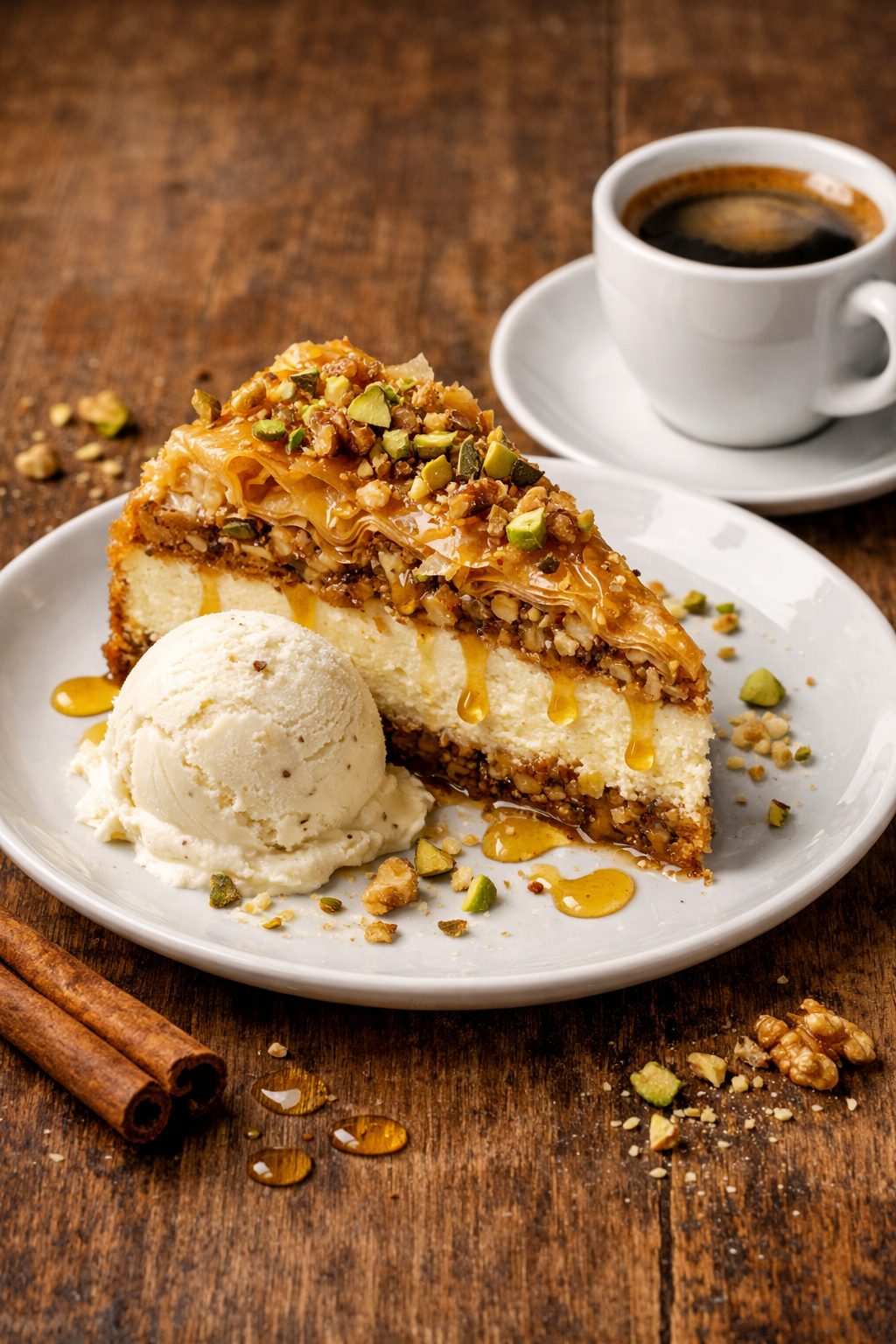
That’s exactly what a baklava cheesecake recipe delivers. It brings together two legendary desserts into one show-stopping creation. The smooth, tangy cream cheese filling meets buttery phyllo layers and crunchy nuts. Honey syrup ties everything together in a way that makes your taste buds sing.
This fusion dessert isn’t just delicious. It’s a conversation starter. When I served it at my sister’s birthday party, guests couldn’t stop talking about it. Some took photos before taking their first bite. Others went back for seconds before finishing their first slice. That’s the magic this dessert creates at any table.
If you love both baklava and cheesecake, this recipe will become your new favorite. It captures the best of both worlds without compromising either flavor. The creamy center stays rich and smooth. The phyllo layers stay crispy and golden. Each bite offers multiple textures and flavors that work together beautifully.
Making this dessert does take some time. But trust me when I say every minute is worth it. The look on people’s faces when they taste it makes all the effort worthwhile. Plus, you’ll feel proud knowing you created something truly special.
What is Baklava Cheesecake Made Of?
A traditional baklava cheesecake recipe combines ingredients from both classic desserts. The result is something familiar yet surprising. Let me break down what you’ll need to make this stunning creation.
The base starts with phyllo dough. These paper-thin sheets create those signature crispy layers. You’ll find phyllo in the frozen section of most grocery stores. I always keep an extra box in my freezer because these delicate sheets can tear easily. Having backup never hurts.
Cream cheese forms the heart of this dessert. You’ll need full-fat cream cheese at room temperature. Don’t skip the softening step. Cold cream cheese creates lumps that won’t blend smooth no matter how long you mix. I learned this the hard way during my first attempt.
Next comes the nuts. Traditional baklava uses walnuts, pistachios, or a mix of both. I prefer using half walnuts and half pistachios. The walnuts add earthiness while the pistachios bring color and a subtle sweetness. Chop them finely but not into powder. You want some texture in every bite.
Sugar sweetens the cream cheese filling. Most recipes call for granulated white sugar. Some variations use a touch of honey in the filling too. This creates a flavor bridge between the cheesecake layer and the baklava components.
Eggs bind the cheesecake filling together. They help create that smooth, sliceable texture we all love. Room temperature eggs blend better than cold ones. I take mine out about an hour before I start baking.
Butter is essential for brushing between phyllo layers. Use real butter, not margarine. The flavor difference is huge. I melt about a cup of butter and keep it warm while I work. Cold butter doesn’t spread well on delicate phyllo sheets.
The honey syrup makes this dessert truly special. You’ll need honey, water, sugar, and often a squeeze of lemon juice. Some recipes add cinnamon or vanilla to the syrup. This sweet mixture soaks into the baked dessert and adds moisture and flavor.
Vanilla extract enhances the cream cheese layer. Pure vanilla tastes better than imitation. A little goes a long way. I use about two teaspoons for a standard recipe.
Some baklava cheesecake everyday gourmet versions include additional spices. Cinnamon is the most common addition. A pinch of cardamom or nutmeg can add depth. Ground cloves work too but use them sparingly. They can overpower other flavors quickly.
Quality ingredients make a real difference here. Fresh nuts taste better than stale ones. Check the expiration date on your phyllo dough package. Old phyllo crumbles and tears more easily. Good honey matters too. I use local honey from the farmer’s market when I can find it.
Here’s a basic ingredient list for a standard recipe:
- 1 package phyllo dough (about 16 ounces)
- 2 pounds cream cheese (four 8-ounce packages)
- 2 cups mixed nuts (walnuts and pistachios)
- 1 cup melted butter
- 1 cup sugar for the filling
- 4 large eggs
- 2 teaspoons vanilla extract
- 1 cup honey for the syrup
- 1/2 cup water for the syrup
- 1/2 cup sugar for the syrup
Different versions exist for various dietary needs. A baklava cheesecake vegan version swaps regular cream cheese for cashew-based or coconut cream cheese. You’ll use vegan butter and replace eggs with flax eggs or aquafaba. The honey gets replaced with maple syrup or agave nectar.
Baklava cheesecake bars use the same ingredients but in a different format. They’re easier to make and serve. You skip the springform pan and use a rectangular baking dish instead. Perfect for potlucks and parties where you need lots of servings.
A deconstructed baklava cheesecake takes a more modern approach. You might serve cheesecake mousse in glasses topped with crushed phyllo and nuts. The honey syrup gets drizzled on top. Same flavors, different presentation.
Is Baklava Cheesecake Worth the Effort?
Let me be honest. Making baklava cheesecake takes more time than buying a dessert from the store. You’ll spend about 30 minutes on prep work. Then there’s baking time, cooling time, and chilling time. The whole process can take several hours or even a full day.
But is it worth it? Absolutely yes.
I remember the first time I made this dessert. My hands shook as I handled the delicate phyllo sheets. I worried about tearing them. I stressed about whether the cheesecake would set properly. I wondered if the flavors would actually work together.
Then I tasted the finished product. That first bite erased every worry. The crispy phyllo gave way to smooth, tangy cheesecake. Crunchy nuts added texture. Sweet honey syrup brought everything together. I actually said “wow” out loud in my empty kitchen.
The effort teaches you real baking skills. Working with phyllo dough builds patience and precision. Making cheesecake helps you understand how eggs and dairy work together. Creating the honey syrup shows you how simple ingredients transform into something special.
This dessert also makes people happy. Really happy. I’ve served it at dinner parties, holiday gatherings, and birthday celebrations. Every single time, guests ask for the recipe. They take photos. They tell stories about eating baklava as kids or their favorite cheesecake memories.
You can make parts ahead of time. I often prepare the honey syrup days in advance. It keeps well in the refrigerator. Some bakers make the nut mixture ahead too. This spreads the work across multiple days and makes the process less overwhelming.
The southern living baklava cheesecake recipe approach breaks the process into manageable steps. You don’t have to do everything at once. Take your time. Enjoy each stage. Listen to music or a podcast while you work. Make it an experience, not a chore.
Mistakes happen and that’s okay. My first attempt had soggy bottom layers. My second one cracked on top. By the third try, I figured out the tricks. Each mistake taught me something new. Now I can make this dessert with confidence.
The satisfaction of creating something unique matters. Anyone can buy a regular cheesecake. But how many people can say they made a baklava cheesecake from scratch? You’ll feel proud serving this to guests. You’ll feel accomplished after pulling it off.
If you’re short on time, baklava cheesecake bites offer a simpler option. They use the same flavors in smaller portions. You can make them in muffin tins. They bake faster and cool quicker. Perfect for busy weeknights when you want something special without the full commitment.
Some people wonder where to buy baklava cheesecake instead of making it. A few specialty bakeries sell versions. You might find baklava cheesecake for sale at Middle Eastern markets or gourmet dessert shops. But homemade always tastes better. You control the quality of ingredients and customize flavors to your taste.
The recipe also impresses people in a special way. When someone learns you made this complex dessert yourself, their respect for your skills grows. It shows you care enough to put in real effort. That means something in our quick-convenience world.
So yes, baklava cheesecake requires effort. But that effort brings rewards beyond just a delicious dessert. You gain skills, create memories, and share something truly special with people you care about. That makes every minute in the kitchen worthwhile.

How to Make Baklava Cheesecake
Now that you’re convinced this dessert deserves your time, let me walk you through actually making it. I’m going to break this down exactly the way I wish someone had explained it to me before my first attempt.
First things first, thaw your phyllo dough properly. Take it out of the freezer and leave it in the refrigerator overnight. Then let it sit at room temperature for about two hours before using. Rushing this step ruins everything. I once tried microwaving phyllo to speed things up. Big mistake. It turned into a crumbly mess that couldn’t be salvaged.
While your phyllo reaches room temperature, prepare your springform pan. I use a 9-inch pan with a removable bottom. Wrap the outside completely with aluminum foil. This prevents leaks and also protects the bottom layers from getting too dark. Grease the inside lightly with butter.
Start by making your nut mixture. Pulse walnuts and pistachios in a food processor until coarsely chopped. Don’t turn them into powder. You want pieces about the size of small peas. Mix in a couple tablespoons of sugar and a teaspoon of cinnamon. Set this aside in a bowl where you can easily reach it.
Here’s where things get interesting. Carefully unroll your phyllo dough. Keep it covered with a slightly damp towel. These sheets dry out incredibly fast. Even thirty seconds of exposure makes them brittle and impossible to work with. I keep a spray bottle of water nearby for misting the towel if it starts feeling dry.
Melt your butter and keep it warm. Cold butter doesn’t brush on smoothly. I use a silicone pastry brush because it holds butter better than natural bristles. Take one phyllo sheet and lay it in your prepared pan. The edges will hang over the sides. That’s perfectly normal. Brush it lightly with melted butter. Don’t soak it. Just a thin coating works best.
Repeat this process with about eight to ten sheets. Layer, brush, layer, brush. It becomes meditative after a few sheets. Once you have your base layers down, sprinkle about a third of your nut mixture evenly across the phyllo. Press it down gently with your hands.
Now comes the cheesecake filling. Beat your room-temperature cream cheese until completely smooth. This takes longer than you think. I usually beat it for about three minutes on medium speed. Any lumps now will still be there after baking. Nobody wants lumpy cheesecake.
Add sugar gradually while beating. Then mix in vanilla extract. If you’re feeling adventurous, add a teaspoon of rose water here. It echoes Middle Eastern flavors beautifully. Next, add eggs one at a time. Beat just until each egg incorporates. Overmixing at this stage adds too much air, which causes cracks later.
Pour half of your cheesecake batter over the nut layer. Spread it gently to the edges. Sprinkle another third of your nut mixture on top. Then add the remaining cheesecake batter. Smooth the top with a spatula.
Take another eight to ten phyllo sheets and repeat the layering process on top of the cheesecake. Brush each sheet with butter. The top layer gets a generous butter coating because it becomes that gorgeous golden crust everyone photographs. Trim any phyllo hanging more than an inch over the pan edges. Tuck what remains down into the sides.
The southern living baklava cheesecake recipe suggests scoring the top phyllo layers before baking. Use a sharp knife to cut diamond or square patterns. Cut only through the phyllo, not into the cheesecake. This makes slicing easier later and creates that classic baklava appearance.
Bake at 325°F for about 60 to 75 minutes. The edges should look golden and set. The center might jiggle slightly when you shake the pan. That’s okay. It will firm up as it cools. I learned this after overbaking my second attempt into a dry brick.
While the cheesecake bakes, make your honey syrup. Combine honey, water, and sugar in a saucepan. Bring it to a boil, then reduce heat and simmer for about ten minutes. Add a squeeze of lemon juice and maybe a cinnamon stick. Some people add orange blossom water here. The syrup should thicken slightly but stay pourable.
By the way, this syrup reminds me of making baileys cheesecake, where the topping sauce matters just as much as the filling itself. That Irish cream dessert taught me how important a good drizzle can be.
Here’s the crucial part that many recipes don’t emphasize enough. Let your baked cheesecake cool at room temperature for about thirty minutes. Then, while it’s still warm, pour the honey syrup evenly over the top. The warm dessert absorbs the syrup better than a cold one. I use about half the syrup right after baking and reserve the rest for serving.
Let everything cool completely at room temperature. This takes several hours. Then refrigerate for at least four hours, preferably overnight. I know waiting feels impossible when your kitchen smells amazing. But cold baklava cheesecake slices cleanly and tastes better. The flavors meld together during that chill time.
When you’re ready to serve, run a thin knife around the pan edges. Release the springform sides carefully. The phyllo might stick a bit. That’s normal. Transfer to a serving plate using two large spatulas for support. Drizzle the remaining honey syrup over individual slices. Sprinkle extra crushed pistachios on top if you want to get fancy.
Clean slices require a hot knife. I run my knife under hot water, wipe it dry, then make one cut. Rinse and repeat for each slice. Yes, it’s tedious. But it prevents the cheesecake from smooshing and the phyllo from shattering everywhere.
Variations and Adaptations
Funny enough, once you master the basic technique, this recipe becomes a playground for creativity. I’ve experimented with at least a dozen variations over the years. Some worked brilliantly. Others taught me what not to do.
Baklava cheesecake bars simplify everything. Instead of a round springform pan, use a 9×13 inch baking dish. Layer phyllo on the bottom, add all the cheesecake filling mixed with half the nuts, then top with more phyllo layers. Bake, soak with syrup, cool, and cut into squares. These transport better than wedges and work great for bake sales or potlucks. I made these for my nephew’s graduation party last year. They disappeared faster than regular brownies.
A deconstructed baklava cheesecake takes the fancy restaurant approach. Make a no-bake cheesecake filling using cream cheese, whipped cream, and a bit of gelatin. Bake phyllo sheets separately until crispy, then break them into shards. Toast your nuts and make the honey syrup. Layer everything in clear glasses or jars. The presentation looks stunning, especially for dinner parties where you want individual servings.
The baklava cheesecake radhi version adds interesting twists inspired by plant-based cooking. This adaptation uses coconut cream as part of the filling base. Saffron strands soaked in warm milk add color and exotic flavor. Cardamom replaces some of the cinnamon in the nut mixture. The result tastes lighter but still indulgent.
Speaking of lighter options, making baklava cheesecake vegan requires a few smart substitutions. Replace cream cheese with cashew cream cheese. You can make this yourself by blending soaked cashews with lemon juice and a bit of coconut cream. It creates surprisingly authentic tanginess. Swap regular eggs for a mixture of cornstarch and aquafaba. Use three tablespoons of aquafaba plus one tablespoon of cornstarch for each egg. Vegan butter works fine for brushing phyllo layers. Most phyllo dough is actually vegan already, but check the label just to be sure.
The honey in baklava cheesecake vegan versions gets replaced with maple syrup or agave nectar. I prefer maple syrup because it has more complex flavor. Date syrup works beautifully too if you can find it. The resulting dessert tastes different from the original but not inferior. Just different.
This reminds me of how I adapted strawberry cheesecake muffins for my lactose-intolerant friend. Sometimes constraints force you to get creative, and the results surprise everyone.
Baklava cheesecake bites offer portion control without sacrificing flavor. Use a muffin tin lined with cupcake papers. Cut phyllo sheets into squares that fit the cups. Layer three or four squares with butter between each. Press them into the muffin cups to form little nests. Add a spoonful of nut mixture, then fill with cheesecake batter. Top with another small phyllo square. Bake at 325°F for about 25 minutes. Drizzle with honey syrup after they cool. These bite-sized versions work perfectly for parties where people are standing and mingling.
You can also play with the nut combinations. Try using only pistachios for a vibrant green layer. Pecans instead of walnuts add buttery Southern flavor. Hazelnuts bring chocolate-friendly earthiness. I once made a version with macadamia nuts for a Hawaiian-themed party. It was unconventional but delicious.
Chocolate lovers can add cocoa powder to the cheesecake filling. About three tablespoons creates a subtle chocolate flavor that complements the nuts. Or drizzle melted dark chocolate over the finished dessert along with the honey syrup. This creates something similar to a strawberry cheesecake klondike bar in terms of decadence, though obviously much more sophisticated.
Fruit additions work surprisingly well. Dried figs chopped finely and mixed with the nuts add chewy sweetness. Dried apricots bring tartness. Fresh orange zest in both the filling and the syrup creates a Middle Eastern-inspired flavor profile. I add the zest of one large orange to the cheesecake batter and another to the honey syrup.
For breakfast-inspired versions that echo strawberry cheesecake overnight oats, try making mini versions with less sugar and more nuts. Serve them for brunch alongside coffee. The phyllo provides a satisfying crunch similar to croissants but with more interesting flavor layers.
Temperature variations change the experience too. Serve regular slices cold from the refrigerator for maximum creaminess. Or let them come to room temperature for softer texture and more pronounced flavors. I’ve even warmed slices briefly in the oven, which makes the phyllo extra crispy again and the filling almost pudding-like. Serve that with vanilla ice cream and you’ve got yourself a restaurant-quality dessert.
The possibilities really are endless once you understand the basic structure. Don’t be afraid to experiment and make this recipe your own.
Where to Buy Baklava Cheesecake
Look, I totally get it. Sometimes you want to taste this amazing dessert without spending hours in the kitchen. Maybe you’re short on time. Perhaps you’re intimidated by phyllo dough. Or maybe you just want to try it before committing to making it yourself. Nothing wrong with that.
Finding where to buy baklava cheesecake takes a bit of detective work, though. This isn’t like searching for regular cheesecake. You won’t find it at every corner bakery or grocery store. But several places do offer this fusion dessert, and I’ve tracked down quite a few over the years.
Start with Middle Eastern bakeries in your area. These shops understand baklava inside and out. Many have started experimenting with fusion desserts to attract broader audiences. I discovered my first purchased version at a Lebanese bakery about twenty minutes from my house. The owner told me she created it after her daughter married someone from New York who loved cheesecake. That personal touch made it taste even better.
Call ahead before driving across town. Not every Middle Eastern bakery makes baklava cheesecake regularly. Some only prepare it for special orders. Others might make it seasonally, especially during holidays like Ramadan or Easter when people buy more desserts. I learned this after driving forty minutes to a highly recommended shop only to find they’d stopped making it six months earlier.
Specialty cheesecake shops represent another good option. These boutique bakeries that focus exclusively on cheesecake often offer creative flavors. They might have a rotating menu that includes baklava cheesecake. The Cheesecake Factory has experimented with similar flavors in the past, though availability varies by location. Worth checking their seasonal menu if you have one nearby.
Greek bakeries sometimes carry it too. While baklava originated in the Ottoman Empire and spread across multiple cultures, Greek bakeries in America often make incredible versions. They’ve embraced the fusion dessert trend. I found a gorgeous version at a Greek bakery in a neighboring town. They served it topped with crushed pistachios and edible gold leaf. Totally over the top, but absolutely stunning for a special occasion.
Online ordering has opened up new possibilities for finding baklava cheesecake for sale. Several specialty dessert companies ship nationwide. Goldbelly carries various artisan versions from bakeries across the country. You’re paying premium prices plus shipping, but you’re getting authentic handmade desserts. I ordered one for my mother’s birthday last year because I was traveling and couldn’t bake. It arrived perfectly packed with dry ice and tasted incredible even after shipping.
Etsy has become an unexpected source for finding this dessert. Home bakers with cottage food licenses sell all kinds of creative treats. Search for baklava cheesecake and filter by sellers who ship to your location. Read reviews carefully and check their food handling certifications. Most home bakers take tremendous pride in their work and create beautiful, delicious desserts.
Here’s the thing about buying versus making. Purchased versions usually cost between $40 and $80 for a whole cheesecake. That’s significantly more than making it yourself, where ingredients run about $20 to $25. But you’re paying for convenience and expertise. Someone else dealt with the finicky phyllo dough. They perfected the texture. They cleaned up the mess.
Farmer’s markets sometimes surprise you. Vendors selling baked goods occasionally offer fusion desserts. I stumbled upon baklava cheesecake at a farmer’s market last summer. The baker made mini versions perfect for sampling. She sold them for $8 each, which felt reasonable for the quality and size.
Instagram and Facebook have become powerful tools for finding local bakers. Search hashtags like #baklava cheesecake or #fusiondesserts plus your city name. Many home bakers advertise through social media. They take custom orders and often deliver locally. I found an amazing baker this way who makes baklava cheesecake bars cut into generous squares. She delivers within a fifteen-mile radius every Saturday.
Wholesale clubs like Costco occasionally carry fusion desserts, though I’ve personally never seen baklava cheesecake there. Worth checking if you’re a member. Their buyer selections vary by region, so what’s available in California might not show up in Texas.
Restaurant dessert menus increasingly feature this fusion treat. Upscale Greek and Mediterranean restaurants often create their own versions. Some offer it as a seasonal special. Others keep it on the permanent menu if it’s popular enough. One restaurant near me serves individual portions in Mason jars layered beautifully for presentation. Each jar costs about $12, which seems steep until you taste how good it is.
If you’re buying for a special event, order at least three days ahead. Custom desserts require advance notice. Most bakeries need time to source ingredients and schedule baking around their regular production. Last-minute orders rarely work out well unless you’re very lucky.
When you find baklava cheesecake for sale, ask questions before buying. How long has it been refrigerated? When was it baked? What nuts do they use? Is the phyllo still crispy? Good bakeries appreciate informed customers and happily answer questions. If someone seems annoyed by your questions, maybe buy elsewhere.
Transport purchased cheesecake carefully. Bring a cooler with ice packs if you’re driving more than thirty minutes in warm weather. Cheesecake doesn’t handle heat well. The phyllo can get soggy from condensation if the temperature fluctuates too much. I learned this after leaving a beautiful purchased cheesecake in my car while running another errand. Big mistake.
By the way, buying a small version before attempting to make your own works as a smart strategy. You get to taste what you’re aiming for. You understand the texture combinations. You know what success looks like. Then when you bake your own, you have a reference point. I wish I’d done this before my first attempt. Would’ve saved me from some confusion about whether my results were correct.
Some cities have cake delivery services like Uber Eats or DoorDash partnering with local bakeries. Check their dessert sections. You might find baklava cheesecake available for delivery right to your door. The convenience factor can’t be beaten when you need dessert tonight.
Wedding and event planners often know the best sources for specialty desserts. If you’re planning a large gathering and want to serve this dessert, ask a local planner for bakery recommendations. They work with these vendors regularly and know who does the best work.
Honestly, whether you buy or bake depends on your situation. Both approaches have merit. Buying saves time and guarantees results. Making it yourself costs less and teaches valuable skills. I do both depending on circumstances. Sometimes I’m happy spending Saturday afternoon baking. Other times I’d rather pay someone else and spend that afternoon doing literally anything else.
The important thing is experiencing this incredible flavor combination one way or another. How you get there matters less than actually tasting this magical fusion of two beloved desserts. If you find yourself browsing through more cheesecake recipes and creative variations for inspiration, you’ll notice that fusion desserts have become a beautiful trend worth celebrating.
FAQ Section
What is baklava cheesecake made of?
Baklava cheesecake combines phyllo dough, cream cheese, chopped nuts like walnuts and pistachios, butter, eggs, and sugar with a sweet honey syrup poured over everything after baking. The phyllo creates crispy layers on top and bottom while the cream cheese filling stays smooth and tangy in the middle. Honey syrup soaks into the dessert adding moisture and sweetness. Some versions include cinnamon, cardamom, or rose water for extra flavor complexity. The result is a beautiful fusion that captures the best qualities of both classic desserts in every bite.
Is baklava cheesecake worth the effort?
Absolutely yes, though I’ll admit it requires patience and time. The process teaches you valuable baking skills like working with delicate phyllo dough and making smooth cheesecake filling. The taste payoff is incredible, with multiple textures and flavors working together beautifully. Guests always react with genuine excitement when they see and taste this dessert. You can break the work into manageable steps across multiple days if the full process feels overwhelming. The pride you feel serving something this special makes every minute worthwhile.
Where to buy baklava cheesecake?
Check Middle Eastern bakeries, Greek bakeries, and specialty cheesecake shops in your area first, though call ahead since many only make it by special order. Online sources like Goldbelly ship nationwide from artisan bakeries across the country. Etsy features home bakers with cottage food licenses who create custom orders. Local farmer’s markets sometimes have vendors selling fusion desserts including this one. Instagram and Facebook searches can connect you with local bakers who take orders through social media. Restaurant dessert menus at upscale Mediterranean establishments occasionally feature individual portions.
Can I make baklava cheesecake ahead of time?
Yes, and honestly it tastes better after sitting overnight in the refrigerator. Make the entire dessert up to two days ahead of serving. The flavors meld together beautifully during that time and the honey syrup fully absorbs into all the layers. Keep it covered loosely with plastic wrap in the fridge. You can also prepare components separately days in advance. The honey syrup keeps for weeks refrigerated. The nut mixture stores well in an airtight container. Just assemble and bake when you’re ready.
How do I prevent my phyllo from getting soggy?
Brush each phyllo layer with melted butter rather than soaking it completely. Use enough butter to create moisture but not so much that it pools. Bake at the correct temperature without undercooking. Pour the honey syrup while the dessert is still warm from the oven rather than cold. Let it cool completely at room temperature before refrigerating so condensation doesn’t form. Store leftovers covered but not in an airtight container since phyllo needs some air circulation to maintain crispness.
What was Frank Sinatra’s favorite cheesecake?
Frank Sinatra famously loved Jilly’s New York-style cheesecake, named after his friend Jilly Rizzo who owned a Manhattan nightclub. This classic version featured a simple graham cracker crust with dense, creamy filling made from cream cheese, eggs, sugar, and vanilla. Sinatra apparently requested it frequently and even had it shipped to him when traveling. The recipe became legendary among his fans. While not related to baklava cheesecake, it shows how passionate people can get about their favorite cheesecake styles.
Is cheesecake good for heart patients?
Traditional cheesecake isn’t ideal for heart health since it contains high amounts of saturated fat from cream cheese, butter, and eggs. However, enjoying small portions occasionally as part of a balanced diet won’t hurt most people. Lighter versions using reduced-fat cream cheese and Greek yogurt offer healthier alternatives. Adding nuts like those in baklava cheesecake actually provides heart-healthy fats, protein, and fiber. Proper hydration and overall dietary balance matter more than occasionally indulging in dessert. Consult your doctor about specific dietary restrictions if you have heart conditions.
Can I freeze baklava cheesecake?
Yes, but the phyllo texture changes after freezing and thawing. The cheesecake portion freezes beautifully for up to three months wrapped tightly in plastic wrap and aluminum foil. The phyllo layers become softer and less crispy though. If you plan to freeze it, consider adding fresh crispy phyllo shards on top after thawing for textural contrast. Thaw overnight in the refrigerator rather than at room temperature. Add fresh honey syrup before serving to refresh the flavors.
What nuts work best in baklava cheesecake?
Walnuts and pistachios are traditional and create the most authentic flavor profile. I prefer using half of each for color variety and balanced taste. Pecans work wonderfully and add buttery Southern flair. Hazelnuts bring earthy richness. Almonds taste good but can be a bit mild. Avoid overly soft nuts like cashews which don’t provide enough textural contrast. Always use fresh nuts since stale ones ruin the entire dessert. Toast them lightly before chopping to intensify their flavor.
How long does baklava cheesecake last in the refrigerator?
Properly stored baklava cheesecake keeps for about five days refrigerated. Cover it loosely since airtight containers trap moisture and make the phyllo soggy. The cheesecake stays food-safe longer but the phyllo quality declines after about three days. It still tastes delicious, just less crispy. The honey syrup acts as a preservative so the dessert doesn’t dry out like regular cheesecake might. Bring slices to room temperature before serving for best flavor, though some people prefer it cold.
Making or buying baklava cheesecake opens up a whole world of flavor possibilities you won’t find anywhere else. Whether you spend a Saturday afternoon layering phyllo sheets and beating cream cheese or you order from a talented local baker, you’re in for an unforgettable dessert experience. Trust me when I say this fusion creation deserves a spot on your table at least once. The combination of crispy, creamy, crunchy, and sweet will make you wonder why these two desserts waited so long to come together.
Equipment
- 9-inch Springform Pan
- Food Processor
- Measuring Cups and Spoons
- Mixing Bowls
- Pastry Brush
Ingredients
- 1 package phyllo dough
- 2 pounds cream cheese at room temperature
- 2 cups mixed nuts finely chopped (walnuts and pistachios)
- 1 cup melted butter
- 1 cup granulated sugar for the filling
- 4 large eggs at room temperature
- 2 teaspoons vanilla extract
- 1 cup honey for the syrup
- 1/2 cup water for the syrup
- 1/2 cup sugar for the syrup
- 1-2 teaspoons cinnamon optional, for the nut mixture
Instructions
- Thaw phyllo dough overnight in the refrigerator and let it sit at room temperature for 2 hours before use.
- Prepare a 9-inch springform pan by wrapping the outside in aluminum foil and greasing the inside with butter.
- Pulse walnuts and pistachios in a food processor until coarsely chopped, then mix in sugar and cinnamon; set aside.
- Unroll phyllo dough and keep covered with a damp towel to prevent drying.
- Melt the butter and keep it warm; use a pastry brush to apply a thin layer of butter on each phyllo sheet.
- Layer 8-10 sheets of phyllo in the prepared pan, brushing each with melted butter.
- Sprinkle about a third of the nut mixture over the phyllo layers and press down gently.
- Beat cream cheese until smooth, then gradually add sugar and vanilla extract.
- Add eggs one at a time, mixing just until combined to avoid incorporating too much air.
- Pour half of the cheesecake batter over the nut layer, spreading it to the edges.
- Add another third of the nut mixture on top of the cheesecake batter.
- Pour the remaining cheesecake batter on top and smooth it with a spatula.
- Layer another 8-10 sheets of phyllo on top, brushing each with butter and tucking in any overhanging edges.
- Score the top phyllo layers into diamond or square shapes for easier slicing later.
- Bake at 325°F for about 60 to 75 minutes until edges are golden and center jiggles slightly.
- Prepare honey syrup by combining honey, water, and sugar in a saucepan; bring to a boil, then simmer for 10 minutes.
- Add lemon juice to the syrup and let it cool slightly.
- Once the cheesecake is done, let it cool at room temperature for 30 minutes, then pour half the warm honey syrup over it.
- Allow the cheesecake to cool completely, then refrigerate for at least 4 hours or overnight.
- Before serving, slice with a hot knife and drizzle remaining honey syrup over individual portions.
Notes
Nutrition

Hello! I’m Sarah Mitchell, and I’m passionate about bringing creativity and innovation to baking. My love for baking started in high school when I first tried my hand at decorating cupcakes for a class project. What began as a fun hobby quickly became a full-time passion. I’ve spent the past decade working in bakeries and dessert shops, honing my skills in everything from simple cookies to intricate wedding cakes.
After working in some of the top bakeries across the country, I realized that baking was about more than just following recipes — it was about infusing your personality into each creation. At BakingSecret.com, I love creating recipes that push boundaries while staying true to the heart of classic baking. I specialize in creating delicious and visually stunning pastries that will wow your guests.
When I’m not baking, I enjoy teaching baking classes, trying out new cake decoration techniques, and traveling to find inspiration in global dessert traditions. I’m so excited to share my tips and tricks with you to help elevate your baking game!