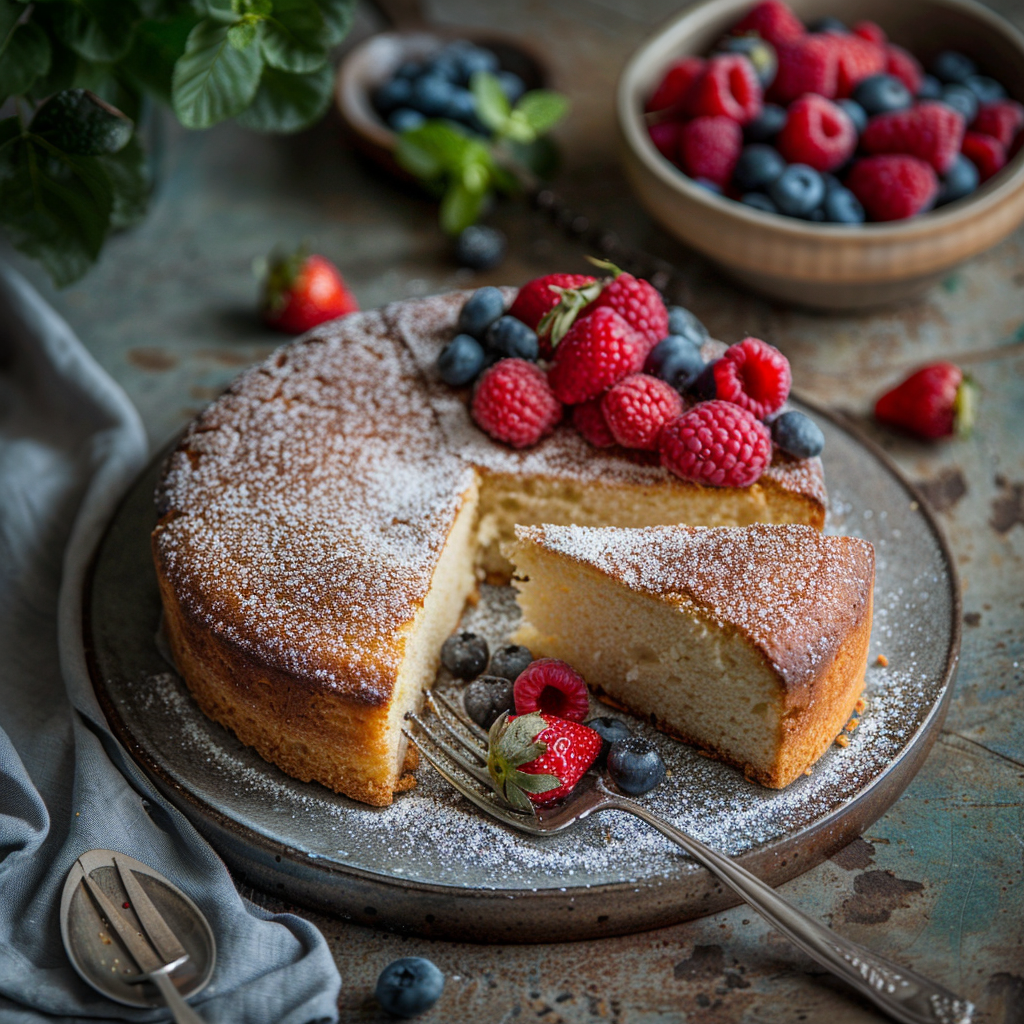
Servings: 8 people
Calories: 250kcal
Cost: $10
Equipment
- Mixing bowls
- Electric mixer or whisk
- Cake pan
- Spatula
- Toothpick or cake tester
Ingredients
- 1 cup all-purpose flour
- 1 cup granulated sugar
- 1/2 cup unsalted butter (softened)
- 2 large eggs
- 1 teaspoon vanilla extract
- 1 teaspoon baking powder
- 1/2 teaspoon salt
- 1/2 cup milk
Instructions
- Preheat your oven to 350°F (175°C) and grease your cake pan lightly with butter or non-stick spray.
- In a large mixing bowl, cream together the softened butter and sugar until light and fluffy.
- Crack the eggs one at a time into the bowl, mixing well after each addition, then stir in the vanilla extract.
- In another bowl, whisk together the flour, baking powder, and salt.
- Gradually add the dry ingredients to the wet mixture, alternating with the milk, mixing gently until combined.
- Pour the batter into your prepared pan and smooth the top with a spatula, then bake for 25-30 minutes.
Notes
Always measure your ingredients accurately; baking is a science and small errors can affect results.
Use room temperature ingredients for better blending.
For an extra flavor boost, brush the cooled cake with simple syrup made from equal parts sugar and water to keep it moist.
Store in an airtight container at room temperature for up to three days or refrigerate in warmer climates. For longer preservation, wrap and freeze slices individually.
Don’t rush the cooling process—patience is key to a perfect cake!
Nutrition
Calories: 250kcal | Carbohydrates: 35g | Protein: 3g | Fat: 12g | Saturated Fat: 7g | Monounsaturated Fat: 4g | Cholesterol: 50mg | Sodium: 150mg | Potassium: 100mg | Sugar: 15g | Vitamin A: 300IU | Calcium: 50mg | Iron: 1mg
Tried this recipe?Let us know how it was!