
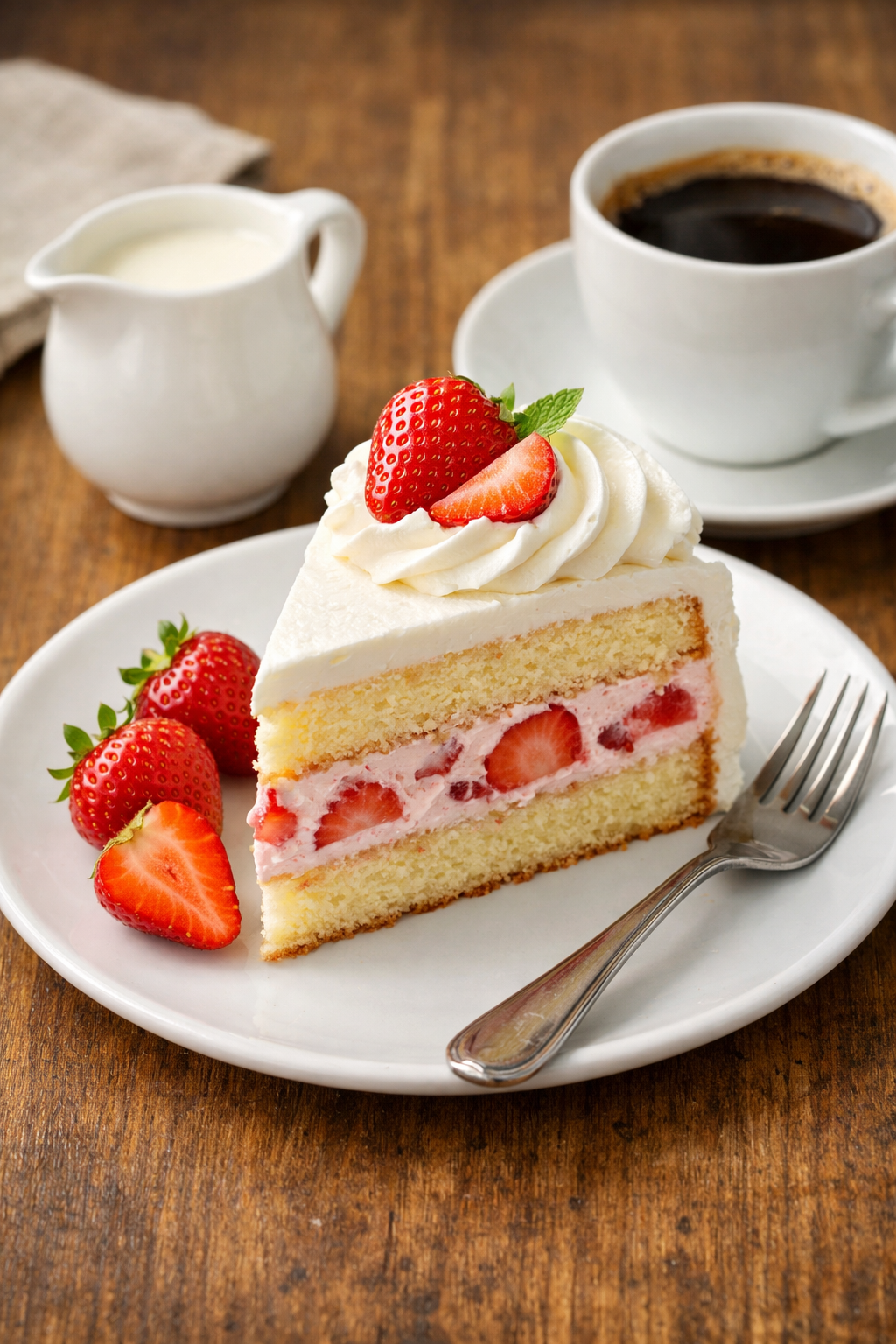
Last summer, I brought a strawberry whipped cream cake to a family barbecue. Within minutes, the entire cake vanished. My aunt grabbed my arm and demanded the recipe. That’s when I knew I had stumbled onto something special. This wasn’t just another dessert. It was the kind of cake that makes people close their eyes and smile with every bite.
There’s something magical about the combination of soft, fluffy cake layers, sweet fresh strawberries, and clouds of whipped cream. The strawberry whipped cream cake sits perfectly between casual and elegant. You can serve it at a backyard party or dress it up for a birthday celebration. Either way, people will ask for seconds.
In this article, I’ll walk you through everything you need to know about making this stunning dessert. We’ll cover the essential ingredients, the simple steps to prepare your cake batter, and how to select the best strawberries. I’ll also answer common questions like whether you can mix strawberries into whipped cream and what the 1234 cake rule means. By the end, you’ll have all the knowledge to create a cake that disappears as fast as mine did.
The best part? This recipe doesn’t require fancy techniques or hard-to-find ingredients. If you can mix, pour, and spread, you can make this cake.
What You Need for a Strawberry Whipped Cream Cake
Getting your ingredients and tools ready before you start makes the whole process smoother. I learned this the hard way after realizing halfway through a recipe that I was missing a key item. Now I always gather everything first.
For the cake layers, you’ll need:
- 2 ½ cups all-purpose flour
- 2 ½ teaspoons baking powder
- ½ teaspoon salt
- 1 cup unsalted butter, softened
- 2 cups granulated sugar
- 4 large eggs, room temperature
- 1 cup whole milk
- 2 teaspoons pure vanilla extract
For the strawberry cream filling and frosting:
- 2 pounds fresh strawberries
- 3 cups heavy whipping cream
- ½ cup powdered sugar
- 1 teaspoon vanilla extract
- Optional: 8 ounces cream cheese for a richer strawberry cream cheese cake filling
Some people prefer using cool whip for their strawberry cake cool whip frosting. It’s a time-saver and holds up well in warm weather. I’ve used both homemade whipped cream and cool whip. Each has its place. Homemade tastes lighter and fresher. Cool whip is stable and convenient.
Equipment you’ll need:
- Two 9-inch round cake pans
- Parchment paper
- Electric mixer (stand or hand)
- Mixing bowls
- Rubber spatula
- Wire cooling rack
- Offset spatula for frosting
- Sharp knife for slicing strawberries
Selecting the Best Fresh Strawberries
The quality of your strawberries makes or breaks this cake. I’ve learned to be picky about my berry selection. Here’s what I look for when shopping:
Choose strawberries that are bright red all the way to the stem. Avoid berries with white or green shoulders. These aren’t fully ripe and will taste sour. The strawberries should smell sweet and fragrant. If you can’t smell anything, they probably won’t taste like much either.
Size doesn’t matter as much as you’d think. Medium berries often have more flavor than those giant ones. Check the bottom of the container for mold or mushy berries. One bad berry can ruin the whole batch quickly.
For a cake with fresh strawberries in the middle, you want firm berries that won’t get watery and make your layers soggy. If you’re planning a cake with strawberries on top, you can use the prettiest berries for decoration and save the slightly imperfect ones for the filling.
Buy your strawberries as close to baking day as possible. They don’t last long once picked. If you must store them, keep them unwashed in the refrigerator. Wash them only right before you’re ready to use them.
Preparing the Cake Batter
Making the perfect cake batter is simpler than most people think. I remember being scared of baking from scratch. Then I realized it’s just about following steps in order and not rushing.
Start by preheating your oven to 350°F. Grease your two cake pans with butter and line the bottoms with parchment paper. This extra step prevents sticking and makes removing the cakes so much easier.
In a medium bowl, whisk together your flour, baking powder, and salt. Set this aside. In your mixer bowl, beat the softened butter and sugar together for about 3 minutes. The mixture should look light and fluffy. This step is called creaming, and it creates air pockets that make your cake tender.
Add your eggs one at a time, beating well after each addition. Don’t rush this part. Each egg needs time to fully incorporate. Scrape down the sides of the bowl between additions.
Now comes the alternating part. Add one-third of your flour mixture to the butter mixture. Mix on low speed just until combined. Pour in half the milk. Mix again. Continue alternating, ending with the flour mixture. The key here is not to overmix. Stop as soon as you don’t see any dry flour streaks.
Stir in the vanilla extract. Divide the batter evenly between your prepared pans. I use a kitchen scale to make sure each pan gets the same amount. This helps your layers bake evenly and look professional when stacked.
Bake for 25 to 30 minutes. The cakes are done when a toothpick inserted in the center comes out clean or with just a few moist crumbs. Let the cakes cool in the pans for 10 minutes, then turn them out onto wire racks to cool completely.
Can I Add Whipped Cream to Cake Batter?
This question pops up often. The short answer is yes, but it changes the texture. Adding whipped cream to cake batter makes the final product denser and moister. Some strawberry italian cream cake recipes use this technique.
If you want to try it, fold in about one cup of whipped cream at the very end of mixing. Use gentle folding motions to keep some of the air in the whipped cream. The cake will have a tighter crumb and richer taste. It’s different from a traditional fluffy layer cake but delicious in its own way.
Understanding the 1234 Cake Rule
The 1234 cake rule is an old-fashioned ratio that bakers used before printed recipes were common. It stands for 1 cup butter, 2 cups sugar, 3 cups flour, and 4 eggs. This basic formula creates a simple pound cake.
Many classic cake recipes, including some versions of strawberry cake, follow variations of this ratio. The recipe I shared above is adapted from this traditional formula. Understanding this rule helps you adjust recipes or even create your own.
When you know the basic proportions, you can scale recipes up or down. You can also troubleshoot when something goes wrong. Too dry? You might need more fat or liquid. Too dense? Maybe you need more leavening or eggs.
This rule taught me that baking isn’t mysterious. It’s just chemistry with delicious results.

Making the Strawberry Cream Filling
Now that your cake layers are cooling, it’s time to create the star of the show—the strawberry cream filling. This is where the magic really happens, where simple ingredients transform into something people dream about for weeks after tasting it.
How to Make a Strawberry Cream Cake Filling Using Fresh Strawberries
I’ve tried at least a dozen different methods for making strawberry filling over the years. Some were too runny and made the cake soggy. Others were so thick they squeezed out when I cut slices. After lots of trial and error, I found the perfect balance.
Start by washing and hulling about a pound of your strawberries. Pat them completely dry with paper towels. Any excess water will thin out your whipped cream and create a mess. Slice them into thin pieces, maybe a quarter-inch thick. I like keeping some slices a bit thicker for texture variation.
Here’s where people usually make their first mistake. They mix the berries straight into the cream, which releases all that strawberry juice and turns everything pink and watery within an hour. Instead, sprinkle your sliced strawberries with about two tablespoons of granulated sugar and let them sit in a colander for fifteen minutes. The sugar draws out the excess moisture. Drain that liquid off completely—you can save it to add to lemonade or cocktails if you want.
For the cream portion, pour your cold heavy whipping cream into a chilled bowl. Cold everything makes better whipped cream. Add the powdered sugar and vanilla, then whip on medium-high speed until you get stiff peaks. This takes about three to four minutes with a stand mixer. You’ll know it’s ready when you lift the beaters and the cream holds its shape without drooping.
Gently fold your drained strawberry slices into about two-thirds of the whipped cream. Use a rubber spatula and fold with care, like you’re tucking a baby into bed. Too much stirring breaks down the cream structure. You want to see distinct swirls of white cream and red berries. Save the remaining third of plain whipped cream for frosting the outside of your cake.
Tips on Using Fresh Strawberries in Cake Filling
The drainage step I mentioned isn’t optional. I learned this the hard way when I made a strawberry cake for my neighbor’s baby shower. I skipped draining the berries because I was running late. By the time they cut the cake two hours later, there was a puddle of pink liquid on the serving plate. Embarrassing doesn’t even cover it.
Another trick is choosing the right strawberries for filling versus decoration. For the filling, slightly smaller berries work better because they distribute more evenly. Those gorgeous, Instagram-worthy giant berries? Save those beauties for the top decoration.
If your strawberries taste a bit tart, don’t be shy with the sugar in that draining step. You can add up to three tablespoons if needed. The sugar doesn’t just pull out moisture—it also sweetens the berries themselves. Just remember that powdered sugar in your whipped cream adds sweetness too, so taste as you go.
Some bakers add a tablespoon of cornstarch to their macerated berries to absorb extra liquid. I’ve done this when I absolutely need the cake to hold up for several hours in warm weather. It works, but it changes the texture slightly. The filling becomes more pudding-like. Not bad, just different from that fresh, light feel I usually prefer. Speaking of creative techniques, if you’re interested in different rolling and filling methods, you might find inspiration from how bakers handle delicate layers in a chocolate peppermint cake roll, which requires similar precision when spreading filling.
Recipe for a Delectable Strawberry Cream Cheese Cake Filling
Sometimes you want something richer than plain whipped cream. That’s when I make a strawberry cream cheese cake filling instead. The cream cheese adds tanginess and stability, which means your cake holds up better at room temperature.
Beat eight ounces of softened cream cheese with a quarter cup of powdered sugar until it’s smooth and fluffy. In a separate bowl, whip one and a half cups of heavy cream with another quarter cup of powdered sugar until you get medium peaks. Fold the whipped cream into the cream cheese mixture in three additions. Be patient here—rushing creates lumps.
Prepare your strawberries the same way as before with the draining step. Fold them into your cream cheese mixture. This filling is denser and more stable than plain whipped cream. It actually gets better after sitting in the fridge overnight, which makes it perfect for make-ahead situations.
The cream cheese version tastes amazing, but it’s definitely richer. I usually serve slightly smaller slices when I use this filling. It pairs wonderfully with a lighter cake base like angel food, which balances out that richness.
Assembling the Cake
Assembly is where your cake goes from good to stunning. I get more nervous during this step than any other, probably because one wrong move can send a layer sliding onto the floor. Trust me, I’ve been there.
Make absolutely certain your cake layers are completely cool before you start. I usually bake mine in the morning and assemble in the afternoon, or bake the night before and refrigerate overnight. A warm cake will melt your whipped cream faster than ice cream on hot pavement.
Place your first layer on a cake stand or serving plate. If you want to be fancy, put strips of parchment paper under the edges of the cake to keep your plate clean while frosting. You can slide them out later.
Spread about half of your strawberry cream filling on top of the first layer, going right to the edges. Don’t be stingy here. A generous filling layer makes for dramatic slices and happy faces. If you’re using the plain whipped cream and strawberry mixture, pile it on about an inch thick. Gently press your second cake layer on top. It should sit level and steady.
Techniques for Adding the Whipped Cream Topping and Cool Whip Frosting
For the outside, you have options. The traditional approach uses the remaining plain whipped cream to frost the entire cake. I start by spreading a thin layer all over—this is called a crumb coat. It traps any loose crumbs so they don’t show in your final frosting. Pop the whole thing in the fridge for twenty minutes to let that layer firm up.
Then add your final layer of whipped cream. Use an offset spatula and work from the top down. I do swoopy motions around the sides, which creates pretty texture and hides any imperfections. Perfection is overrated anyway. Homemade should look homemade.
If you’re going the strawberry cake cool whip frosting route, the process is basically the same but easier. Cool whip doesn’t need to be whipped—it comes ready to use. It’s also more forgiving in warm temperatures, which is why I use it for outdoor summer events. Just fold your drained strawberries into the cool whip if you want a strawberry filling, or use it plain for frosting. Much like the simple assembly approach used in an Oreo dump cake, using cool whip can streamline your process without sacrificing taste.
The downside? Cool whip has a slightly different taste and texture. It’s sweeter and has that distinct processed quality. My grandmother would probably lecture me for even mentioning it as an option, but I’m practical. If cool whip gets you to make the cake instead of buying one from a grocery store, then cool whip wins.
Is Strawberries and Cream Cake the Same as Strawberry Shortcake?
People ask me this constantly, and the answer is no, but they’re close cousins. Strawberry shortcake traditionally uses a biscuit-like base—tender but crumbly, similar to a scone. You split the biscuit, add strawberries and cream, and serve it immediately because those biscuits get soggy fast.
A strawberries and cream cake uses actual cake layers, which are softer and more delicate than biscuits. The cake can be assembled ahead of time and refrigerated. It holds its structure much better. The flavors are similar—strawberries, cream, sweetness—but the textures are completely different experiences.
I think of shortcake as the casual backyard cousin and layer cake as the elegant dinner party relative. Both delicious, just different occasions.
Decorating the Cake
Funny enough, decorating intimidated me for years. I thought you needed to be an artist or have special skills. Then I realized that with a strawberry cake, the strawberries do most of the decorating work for you.
Creative Ideas for Decorating the Cake with Strawberries on Top
The simplest approach is also the prettiest. Take your remaining fresh strawberries—the best-looking ones you set aside—and arrange them on top of your frosted cake. I like slicing some in half lengthwise to show off those pretty seeds and red interiors, then arranging them in a circular pattern starting from the outside edge and working toward the center.
You can create a rose pattern by placing strawberry halves in tight circles, overlapping them slightly. Or go random and scattered for a more rustic look. Sometimes I hull some berries and leave them whole, placing them strategically around the top with their pointed ends facing up. It creates nice height variation.
Here’s a pro move: right before serving, dust the whole thing lightly with powdered sugar. It looks like snow and adds a touch of elegance. You can also add fresh mint leaves between some of the strawberries for color contrast. The green against the red is gorgeous.
For special occasions, I’ve drizzled melted white chocolate in thin lines across the top. Dark chocolate works too, though it competes visually with the strawberries. A simple glaze made from powdered sugar and a tiny bit of milk can create beautiful drips down the sides. The richness you might find in cakes using condensed milk can inspire you to add complementary elements like caramel or extra cream layers to your strawberry creation.
How to Achieve a Professional Look with Simple Tools
You don’t need fancy equipment to make your cake look bakery-worthy. An offset spatula is my number one tool. It costs maybe ten dollars and makes frosting so much easier than using a regular knife. The angled blade lets you get smooth sides and top without your knuckles dragging through the frosting.
If you want perfectly smooth sides, dip your spatula in hot water, dry it off, then run it along the frosting. The slight warmth helps everything glide together seamlessly. I learned this trick from a YouTube video at two in the morning when I couldn’t sleep.
A turntable isn’t essential but makes life easier. You can buy a basic one for under twenty dollars, or improvise by placing your cake stand on an upside-down bowl. Spin it as you frost instead of walking around your counter.
For piping borders, a simple star tip and disposable piping bag give you bakery-style rosettes around the base or top edge. I’m not great at piping, so I usually skip it, but when I want to impress my mother-in-law, I add a simple border of whipped cream stars.
A Nod to Mary Berry’s Strawberry and Cream Cake
If you’ve ever watched The Great British Baking Show, you’ve seen Mary Berry’s face light up at a good strawberry and cream cake. Her version is classic British elegance—simple sponge cake, loads of cream, and beautiful fresh strawberries. No fuss, just perfect execution of basic elements.
What I love about Mary Berry’s approach is her emphasis on quality ingredients over complicated techniques. She’d rather have a slightly wonky-looking cake made with fresh cream and ripe berries than a perfectly decorated cake made with artificial flavors. That philosophy changed how I bake.
Her strawberry and cream cake typically uses a Victoria sponge base, which is lighter and less sweet than American-style cake. If you want to try that variation, reduce the sugar in the cake recipe I gave you by about a quarter cup. The result is more delicate and lets the strawberry flavor shine even brighter. British bakers also tend to use less frosting overall, which I actually prefer on hot days when heavy frosting feels like too much.
Whether you go full American layer cake or lean toward British restraint, the key is the same: fresh strawberries, real cream, and cake made with care. Everything else is just details.
Serving and Storing Your Strawberry Whipped Cream Cake
Here’s the thing about a fresh strawberry cake with cream cheese frosting or whipped cream—it’s absolutely stunning when you first make it, but it requires some attention to keep it that way. I learned this lesson the hard way when I made my first strawberry whipped cream cake for a potluck and left it sitting on the counter for three hours in July. Let’s just say the presentation went from gorgeous to tragic real fast.
Keeping Your Cake Fresh and Beautiful
The moment your strawberry cake is assembled, your clock starts ticking. Unlike a buttercream-frosted cake that can sit out for hours, whipped cream needs cold temperatures to maintain its structure. I always keep mine refrigerated until about twenty minutes before serving. That brief time at room temperature takes the chill off and lets the flavors bloom without compromising the cream’s stability.
If you’re not serving the cake right away, cover it loosely with plastic wrap or place it under a cake dome in the refrigerator. Don’t wrap it tightly—the plastic will stick to your beautiful frosting and ruin all your hard work when you peel it off. I bought a tall cake keeper from a kitchen store for about fifteen dollars, and it’s been worth every penny. No more frosting casualties.
Your strawberry whipped cream cake stays at peak freshness for about 24 hours in the fridge. After that, the strawberries start releasing more moisture and the cake layers can get a bit soggy. It’s still edible for up to three days, but it won’t have that perfect texture you worked so hard to create. Honestly though, in my experience, leftover strawberry cake rarely makes it past day two. People find it in the fridge and suddenly remember they’re hungry.
Here’s a trick I picked up from a bakery owner I met at a farmer’s market: if you know you’re making the cake a day ahead, assemble everything except the top layer of strawberries. Add those fresh berries right before serving. They’ll look brighter and fresher, and you avoid any extra moisture seeping into your frosting overnight.
Can You Freeze a Strawberry Whipped Cream Cake?
Short answer—I wouldn’t recommend it. Whipped cream doesn’t freeze and thaw gracefully. It separates and gets weepy and loses that fluffy texture that makes it so wonderful. If you absolutely must freeze something, freeze the unfrosted cake layers wrapped tightly in plastic wrap and aluminum foil. They’ll keep for up to two months. Thaw them in the fridge overnight, then assemble with fresh cream and strawberries the day you plan to serve.
I actually prefer this make-ahead method when I’m planning for a big event. Bake the layers when I have a free afternoon, freeze them, then do the fun part of filling and decorating when the party’s closer. It spreads out the work and reduces my stress level considerably.
Perfect Occasions for This Cake
I’ve served this strawberry cake at everything from casual Sunday dinners to fancy graduation parties. It works everywhere, which is part of its charm. The combination of elegant appearance and approachable flavor means nobody feels intimidated by it, but everyone feels special eating it.
Mother’s Day is probably my number one occasion for this cake. Something about the fresh strawberries and delicate cream just screams “celebrating mom.” I made one for my mother last year with a simple “Mom” written in chocolate on top, and she literally cried. Might’ve been the hormones from her new medication, but I’m taking credit.
Spring and summer birthdays are obvious choices. The cake feels seasonal and light, unlike those heavy chocolate cakes that sit in your stomach like a brick in August. I’ve also brought it to baby showers, bridal showers, Easter dinners, and Fourth of July barbecues. Every single time, people ask for the recipe.
By the way, this cake also works beautifully for a casual Tuesday when you just want something special. Not every cake needs an occasion. Sometimes you just want to eat cake with strawberries on top while watching reality TV in your pajamas. No judgment here.
Sharing This Cake Creates Memories
Last spring, my neighbor Sarah knocked on my door around nine at night. She was in tears because she’d forgotten her daughter’s bake sale contribution, which was due the next morning. I happened to have a strawberry cake in my fridge that I’d made for photos. I wrapped it up, handed it over, and told her to say she made it. Her daughter’s class raised the most money that day because everyone kept coming back for more slices. Sarah still brings it up at neighborhood gatherings.
My favorite memory with this cake involves my dad, who claimed for years that he didn’t like whipped cream. Turns out he’d only ever had the canned stuff, which I agree is pretty terrible. When he tried my strawberry whipped cream cake at my nephew’s baptism, he ate two slices and asked if there was more. Now he requests it for his birthday every year instead of his usual German chocolate.
There’s something about homemade cake that just brings people together differently than store-bought. Maybe it’s knowing someone spent their time and energy making something just for you. Maybe it’s the little imperfections that show it was made by human hands instead of machines. Whatever it is, I’ve seen this cake start conversations, create traditions, and make ordinary moments feel a little more special. Similar to exploring other classic cake and cupcake recipes that bring joy to gatherings, this strawberry creation has a way of making people smile before they even take a bite.
Additional Tips and Tricks for the Perfect Strawberry Whipped Cream Cake
After making this cake probably fifty times over the years, I’ve picked up some random tips that don’t fit neatly anywhere else but are too useful not to share.
First, the temperature of your ingredients really does matter. Room temperature eggs and butter mix more smoothly into your batter, creating better texture. I take mine out of the fridge about an hour before I start baking. If I forget and need to rush it, I place eggs in a bowl of warm water for five minutes, and I cut the butter into small cubes so it warms faster.
For the cleanest cake slices, use a long, sharp knife dipped in hot water and wiped dry between each cut. This melts through the whipped cream instead of dragging it and creating a mess. My slices went from looking like they’d been attacked by a raccoon to actually presentable once I started doing this.
If your whipped cream isn’t getting stiff enough, your cream might not be cold enough, or you might be using cream with too low a fat percentage. Heavy whipping cream should have at least 36% fat content. Some stores sell “whipping cream” with lower fat, and it just doesn’t whip as well. Check the label. Also, metal bowls get colder than glass or plastic, which helps tremendously. I stick mine in the freezer for ten minutes before whipping cream.
Funny enough, the quality of your vanilla extract makes a noticeable difference in this cake. Since the flavor profile is relatively simple—cake, cream, strawberries—every ingredient gets to shine. I splurged on real vanilla extract instead of imitation, and I could actually taste the difference. If you bake regularly, it’s worth the investment.
Here’s something interesting I discovered: the fiber and natural compounds in fresh strawberries can actually benefit your digestive health compared to heavily processed desserts, making this cake a slightly more wholesome indulgence. Not that we’re eating cake for health reasons, but it’s nice to know those fresh berries bring something to the table besides good looks.
One more thing about strawberries—if they’re in season and locally grown, they’ll have so much more flavor than those giant imports from who-knows-where. I shop at my farmer’s market from May through July, and the difference is honestly dramatic. The berries are smaller but intensely sweet and fragrant. When strawberries are out of season, I’ve successfully used thawed frozen berries for the filling. Just make sure to drain them really, really well. Like, let them sit in a colander for half an hour and press gently with paper towels.
If you want to get creative, try adding a layer of strawberry jam between the cake and cream filling. Just spread a thin layer on each cake round before adding the whipped cream mixture. It intensifies the strawberry flavor and adds a nice jammy texture. I’ve also sprinkled chopped pistachios over the whipped cream before adding the top layer for a fancy touch and subtle crunch.
For serving a crowd, I’ve found that a 9-inch two-layer cake serves about 12 people comfortably. If you need more, it’s easier to make two cakes than to attempt a giant three or four-layer monster. Those tall cakes look impressive but are genuinely difficult to keep stable with whipped cream frosting. Trust me, I’ve had one slide apart mid-party. Not my finest moment.
When you cut the first slice, use a cake server and have a plate ready immediately. Whipped cream cakes are delicate. That first slice often determines whether the rest of the cake holds together nicely or becomes a free-for-all. I cut decisively and lift quickly, supporting the slice from underneath with the server.
The beauty of this strawberry cake is that it welcomes experimentation. I’ve added lemon zest to the whipped cream for brightness. I’ve mixed in a tablespoon of strawberry liqueur for an adult version. I’ve swapped half the strawberries for blueberries and raspberries for a mixed berry situation. Every variation has worked because the basic formula is so solid.
Don’t let perfection stop you from making this cake. My first attempt had lopsided layers and the frosting looked like a toddler did it. But you know what? It still tasted amazing, and my family devoured it anyway. Each time you make it, you’ll get a little better at some aspect—smoother frosting, more even layers, prettier strawberry arrangement. That’s the fun of baking. It’s a practice, not a performance.
So go ahead and give this strawberry whipped cream cake a try. Your kitchen will smell wonderful, your hands will get a little messy, and you’ll end up with something beautiful and delicious that you made yourself. There’s real satisfaction in that, beyond just the eating part—though the eating part is pretty great too.
Frequently Asked Questions
Can you mix strawberries into whipped cream?
Yes, you absolutely can mix strawberries into whipped cream, but there’s a crucial step you can’t skip. You need to drain the strawberries first by tossing sliced berries with sugar and letting them sit in a colander for about fifteen minutes. This draws out excess moisture that would otherwise make your whipped cream runny and watery. After draining thoroughly, gently fold the berries into stiff whipped cream. The mixture will hold up for several hours when refrigerated, making it perfect for filling a strawberry whipped cream cake.
How far in advance can I make this strawberry cake?
I recommend assembling your strawberry cake no more than 24 hours before serving for the best texture and appearance. The cake layers themselves can be baked up to two days ahead and kept wrapped in the refrigerator, or frozen for up to two months. You can also make the whipped cream and prepare the strawberries the morning of your event, then assemble the cake a few hours before serving. This gives you flexibility without sacrificing quality. Just remember that whipped cream-frosted cakes don’t have the shelf life of buttercream versions, so fresher is always better.
What’s the best way to transport this cake?
Transporting a cake with whipped cream frosting takes some planning since it’s more delicate than buttercream. Keep the cake refrigerated until the last possible moment, then place it in a sturdy box or carrier with a flat bottom. I use a cake carrier with a locking lid and tall dome that gives plenty of clearance. Drive carefully and avoid sudden stops if possible. If you’re traveling more than thirty minutes, bring a cooler with ice packs and put the cake inside to maintain temperature. For long distances, honestly, I’d rather assemble the cake at the destination if possible.
Can I use Cool Whip instead of homemade whipped cream?
Yes, Cool Whip works as a substitute and actually has some advantages for certain situations. It’s more stable in warm weather and doesn’t deflate as quickly as homemade whipped cream. It also saves time since you don’t need to whip anything. The trade-off is taste and texture—Cool Whip is sweeter and has a different mouthfeel than fresh whipped cream. I use Cool Whip for outdoor summer events where temperature control is tricky, but I prefer real whipped cream when I’m serving the cake in a climate-controlled environment. Both versions make a delicious strawberry cake cool whip frosting or filling.
Why did my whipped cream turn out runny?
Runny whipped cream usually happens because the cream wasn’t cold enough, you didn’t whip it long enough, or you used cream with too low a fat content. Heavy whipping cream should be at least 36% fat and kept ice-cold before whipping. Make sure your bowl and beaters are also cold—I stick mine in the freezer for ten minutes first. Whip on medium-high speed until you see stiff peaks that hold their shape when you lift the beaters. If your cream is already runny, unfortunately, you can’t fix it. Start over with fresh, cold cream and proper technique.
What if I can’t find good fresh strawberries?
If fresh strawberries aren’t in season or don’t look good at your store, you have a couple options. Frozen strawberries can work for the filling if you thaw them completely and drain away all the liquid—and I mean all of it, which takes time and patience. Press them gently with paper towels to remove excess moisture. For decoration, frozen berries don’t work well since they get mushy when thawed. In that case, I’d make a different cake entirely rather than using subpar strawberries. The strawberry flavor is so central to this cake that mediocre berries will result in a mediocre cake.
Can I make this cake gluten-free?
Yes, you can substitute a gluten-free flour blend for the all-purpose flour in equal amounts. Look for blends that include xanthan gum, which helps provide structure that gluten normally gives. The cake might be slightly more crumbly and delicate, but the flavor will still be excellent. I’ve had success with Bob’s Red Mill 1-to-1 Gluten-Free Baking Flour. Everything else in the recipe—the strawberries, whipped cream, sugar—is naturally gluten-free. Just double-check that your baking powder doesn’t contain any gluten additives, though most brands don’t.
My cake layers came out dry. What went wrong?
Dry cake usually means it was overbaked, you used too much flour, or you overmixed the batter. Make sure you’re measuring flour correctly by spooning it into the measuring cup and leveling it off, not scooping directly from the bag which packs it down. Check your oven temperature with an oven thermometer since many ovens run hot. Start checking for doneness at 25 minutes rather than waiting the full 30. When you mix the batter, stop as soon as the flour disappears. Overmixing develops too much gluten, making the cake tough and dry.
How do I prevent my cake layers from sticking to the pans?
The best insurance against sticking is a combination of greasing and parchment paper. I butter my pans thoroughly, then cut circles of parchment paper to fit the bottoms exactly. Butter the parchment too. This double protection means your cakes will release easily every single time. Let the cakes cool in the pans for about ten minutes before turning them out—this gives them time to firm up slightly. If you try to remove them while they’re piping hot, they might fall apart even if they’re not stuck.
Can I add other fruits to this cake along with strawberries?
Absolutely, mixed berries work beautifully in this cake. I’ve added raspberries, blueberries, and blackberries alongside the strawberries with great success. Just apply the same draining technique to all the berries to prevent excess moisture. Sliced peaches or nectarines also pair nicely with strawberries in summer. Avoid fruits with high water content like watermelon or overly juicy citrus segments, as they’ll make your filling too wet. Bananas can work but they brown quickly, so add them at the last minute if you go that route.
Equipment
- Two 9-inch round cake pans
- Parchment paper
- Electric mixer
- Mixing bowls
- Wire cooling rack
Ingredients
- 2 ½ cups all-purpose flour
- 2 ½ teaspoons baking powder
- ½ teaspoon salt
- 1 cup unsalted butter, softened
- 2 cups granulated sugar
- 4 large eggs, room temperature
- 1 cup whole milk
- 2 teaspoons pure vanilla extract
- 2 pounds fresh strawberries
- 3 cups heavy whipping cream
- ½ cup powdered sugar
- 1 teaspoon vanilla extract
- 8 ounces cream cheese (optional) for richer filling
Instructions
- Preheat your oven to 350°F (175°C).
- Grease two 9-inch round cake pans and line the bottoms with parchment paper.
- In a medium bowl, whisk together flour, baking powder, and salt; set aside.
- In a mixing bowl, cream together softened butter and granulated sugar for about 3 minutes until light and fluffy.
- Add eggs one at a time, beating well after each addition and scraping down the sides of the bowl.
- Alternate adding one-third of the flour mixture and half the milk, mixing on low speed until just combined. Repeat until all flour and milk are incorporated.
- Stir in vanilla extract. Divide the batter evenly between prepared pans.
- Bake for 25-30 minutes or until a toothpick inserted in the center comes out clean. Allow cakes to cool in the pans for 10 minutes, then turn out onto wire racks to cool completely.
- For the filling, wash and hull strawberries, then slice them and sprinkle with sugar. Let sit in a colander for 15 minutes to drain excess moisture.
- In a chilled bowl, whip heavy cream with powdered sugar and vanilla until stiff peaks form.
- Gently fold the drained strawberry slices into two-thirds of the whipped cream.
- Spread half of the strawberry cream filling on top of the first cake layer, then place the second layer on top.
- Use the remaining plain whipped cream to frost the outside of the cake.
- Decorate the top of the cake with fresh strawberry slices and optional powdered sugar before serving.
Notes
Nutrition

Hello! I’m Sarah Mitchell, and I’m passionate about bringing creativity and innovation to baking. My love for baking started in high school when I first tried my hand at decorating cupcakes for a class project. What began as a fun hobby quickly became a full-time passion. I’ve spent the past decade working in bakeries and dessert shops, honing my skills in everything from simple cookies to intricate wedding cakes.
After working in some of the top bakeries across the country, I realized that baking was about more than just following recipes — it was about infusing your personality into each creation. At BakingSecret.com, I love creating recipes that push boundaries while staying true to the heart of classic baking. I specialize in creating delicious and visually stunning pastries that will wow your guests.
When I’m not baking, I enjoy teaching baking classes, trying out new cake decoration techniques, and traveling to find inspiration in global dessert traditions. I’m so excited to share my tips and tricks with you to help elevate your baking game!