
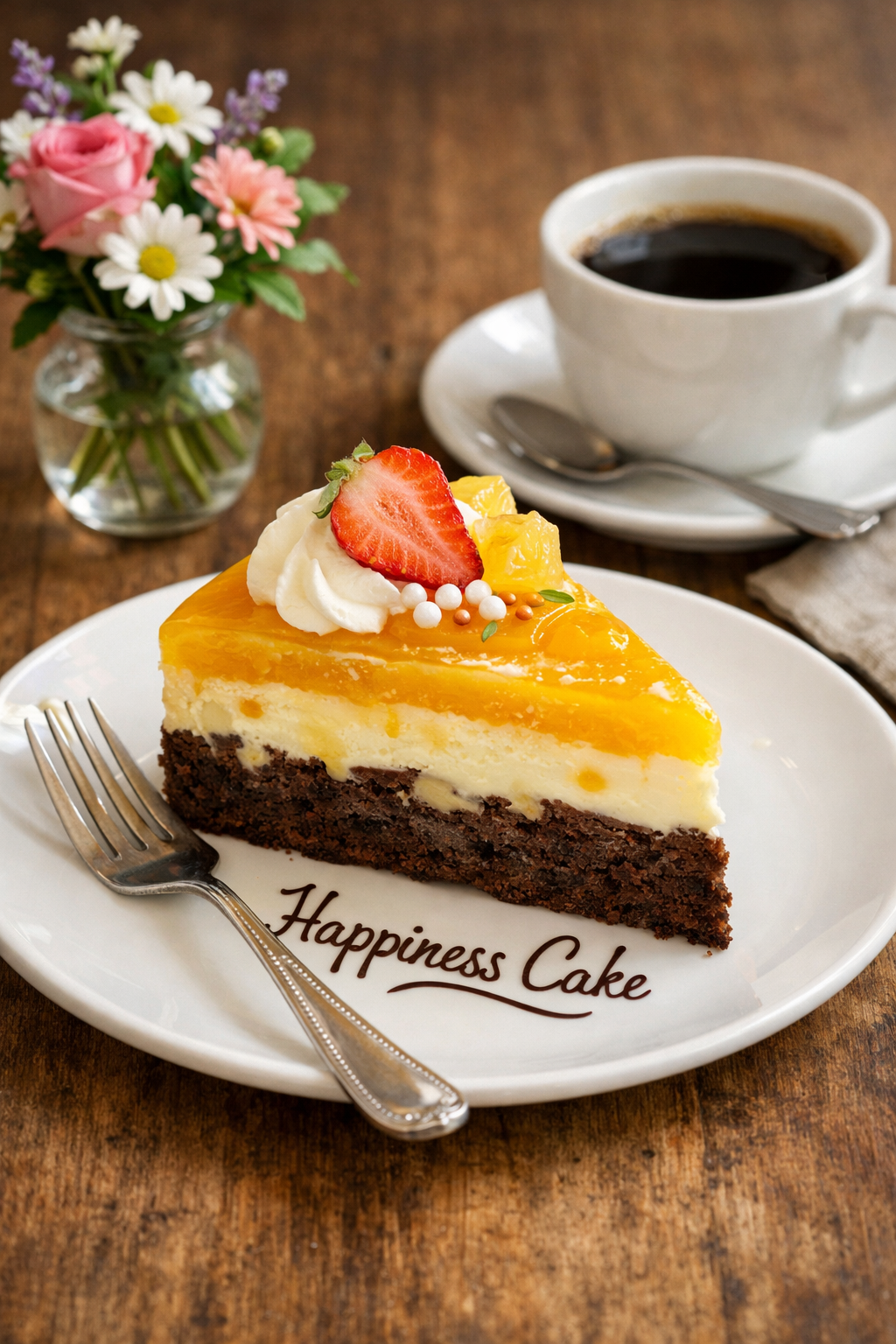
Introduction: Why Happiness Cake Will Change Your Day
Last week, I watched my daughter’s face light up like a Christmas tree when she saw her birthday cake. It wasn’t just the cake itself. It was the bright colors, the fun decorations, and the pure joy it brought to everyone at the party. That’s when I realized something special about certain desserts. They don’t just satisfy our sweet tooth. They create memories and spread happiness in ways we don’t always expect.
Welcome to my blog, where we explore the delightful world of happiness cake! I’ve spent years baking for family gatherings, birthday parties, and simple weekend treats. Through all of that, I’ve learned that some cakes do more than taste good. They bring people together and create moments worth remembering.
Today, I’m excited to share with you why this special treat is a must-try and how it can bring a smile to your face. Whether you’re planning a celebration or just want to brighten someone’s day, this cake delivers on all fronts. I’ve tested countless recipes and visited many bakeries to understand what makes this dessert so unique.
Let’s dive into the sweet journey of happiness cake and discover its magic together. By the end of this article, you’ll know exactly why people search for a cake shop near me when they want something truly special. You’ll also learn how to make your own version at home or where to find the best ones in your area.
What is a Happiness Cake?
Happiness cake is not just any ordinary cake. It’s a confection that embodies joy and celebration in every bite. Think of it as edible sunshine wrapped in frosting and topped with a smile. The first time I tried one, I understood why people get so excited about it.
This cake stands apart from traditional desserts in several ways. It’s often associated with vibrant colors, unique flavors, and a touch of whimsy that makes it stand out on any dessert table. You might see rainbow layers, colorful sprinkles, or creative designs that catch your eye before you even taste it.
The concept of happiness cake is all about creating a dessert that brings people together and spreads happiness. I remember reading various happiness quotes that talk about finding joy in simple pleasures. This cake captures that philosophy perfectly. It reminds us that sometimes the best moments come from sharing something sweet with the people we love.
Many people wonder about the happiness cake price when they first hear about it. The cost varies depending on where you buy it and what decorations you choose. From my experience, prices range from simple homemade versions that cost around $15 in ingredients to elaborate custom cakes from specialty shops that can run $50 or more. The investment is worth it when you see the joy it brings.
The Origin Story Behind This Joyful Dessert
Every great recipe has a story, and happiness cake is no exception. While researching this dessert, I discovered that the idea grew from a simple desire to create something that makes people smile. Some bakers started experimenting with colors and flavors that evoke positive emotions.
The movement gained steam when social media exploded with photos of these gorgeous, colorful cakes. People started sharing their creations online, and suddenly everyone wanted to try making or buying one. I joined this trend about three years ago, and I haven’t looked back since.
Interestingly, when you check the happiness menu at certain bakeries, you’ll find different interpretations. Some focus on classic vanilla with rainbow layers. Others experiment with unique flavor combinations like lemon blueberry or strawberry champagne. The variety keeps things exciting and gives you options for different occasions.
Key Features That Make This Cake Special
What exactly sets happiness cake apart from your standard birthday cake? Let me break down the main characteristics that define this special dessert:
- Vibrant colors: Most happiness cakes feature bright, cheerful colors that instantly lift your mood. I love using natural food coloring to create stunning rainbow effects.
- Light and fluffy texture: The best versions have a tender crumb that melts in your mouth. This texture comes from careful mixing and the right ingredient ratios.
- Creative decorations: From edible flowers to whimsical toppers, these cakes showcase artistic flair. I’ve seen everything from simple sprinkles to elaborate fondant designs.
- Positive messaging: Many bakers incorporate happiness quotes or uplifting messages right onto the cake. It adds a personal touch that resonates with people.
- Shareable size: These cakes work well for groups, making them perfect for celebrations and gatherings.
Finding Happiness Cake Near You
If you’re ready to try this amazing dessert, you have several options. Many cities now have specialty shops dedicated to this style of baking. In Mumbai, for example, you can find the happiness cake shop Malad West and happiness cake shop Borivali West locations that have built strong reputations.
I always recommend checking reviews on platforms like Zomato before trying a new bakery. These reviews give you honest feedback from real customers about taste, quality, and service. I’ve discovered some of my favorite local spots this way.
When searching for a cake shop near me, look for places that offer custom orders. This flexibility lets you create exactly what you want for your special occasion. I once ordered a happiness cake for my mom’s retirement party, and the baker worked with me to incorporate her favorite flavors and colors.
Fascinating Facts About Cakes and Happiness
You might be curious about What is Kamala Harris’ favorite cake? The Vice President has mentioned enjoying a good pound cake, though happiness cake with its joyful presentation would certainly fit her positive public image. Many public figures appreciate desserts that bring people together.
Speaking of cake traditions, have you heard of What is the 1234 cake rule? This classic baking formula uses 1 cup butter, 2 cups sugar, 3 cups flour, and 4 eggs. It’s an easy way to remember basic cake proportions. I use variations of this rule when creating my happiness cake recipes.
Another interesting question is Why is it called a depression cake? This refers to cakes made during the Great Depression without eggs, milk, or butter. While happiness cake is the opposite in spirit, both show how baking adapts to circumstances and needs.
People also ask What dessert is best for anxiety? Research suggests that certain foods can help manage stress. Dark chocolate, which you can incorporate into happiness cake, contains compounds that may improve mood. The act of baking itself can also be therapeutic and calming.

Discovering the Best Happiness Cake Locations in Your Area
Now that you know what makes these cakes so special, let’s talk about actually getting your hands on one. I know that excited feeling when you’re craving something specific and you just need to find the perfect place to get it.
If you happen to live in the Mumbai area, especially around Malad West or Borivali West, you’re genuinely fortunate. These neighborhoods have become mini hubs for fantastic bakeries specializing in happiness cakes. I visited both areas last summer during a trip to India, and honestly, I was blown away by the quality and creativity I found.
The happiness cake shop Malad West location I tried had this incredible storefront with bright yellow walls and a display case that looked like a rainbow exploded inside it. The baker there told me she started her business from home five years ago, making cakes for her daughter’s school friends. Word spread quickly, and now she runs a full shop with customers lining up on weekends. Her signature happiness cake comes with alternating layers of vanilla and strawberry, covered in the smoothest buttercream I’ve ever tasted. The experience reminded me of when I tried gluten free strawberry cake for the first time and realized that dietary restrictions don’t mean sacrificing flavor.
Over in Borivali West, there’s another gem of a happiness cake shop that takes a slightly different approach. They focus more on custom designs and personalized messages. I watched them create a cake for someone’s graduation, complete with edible photos and inspiring quotes piped around the edges. The attention to detail was similar to what I’ve seen in specialty cakes for religious ceremonies, like first communion cakes, where every element carries meaning and intention.
Here’s the thing about finding local shops though. You really need to do your homework before committing. Not every bakery calling themselves a happiness cake specialist actually delivers on the promise. I’ve had my share of disappointments where the cake looked gorgeous but tasted like cardboard covered in sugar.
That’s where Zomato becomes your best friend. I’m not exaggerating when I say this app has saved me from countless bakery disasters. Before trying any new cake shop near me, I spend at least ten minutes scrolling through reviews and photos from actual customers. Look for recent reviews especially, because quality can change when bakeries switch ownership or hire new staff.
When browsing Zomato, pay attention to comments about freshness and taste, not just appearance. Pretty photos don’t tell you if the cake was dry or if the frosting was too sweet. I always read the three-star reviews first because they usually give the most balanced perspective. Five-star reviews might be overly enthusiastic, and one-star reviews often come from people having a bad day.
Speaking of menus, checking out the happiness menu before you visit saves time and helps you plan better. Most good bakeries post their standard offerings online, along with starting prices for custom orders. I appreciate when shops are transparent about pricing upfront. Nothing’s worse than falling in love with a design only to discover it’s way outside your budget.
By the way, don’t limit yourself to just dedicated happiness cake shops. I’ve found amazing versions at regular bakeries that happen to have talented decorators. Sometimes the little neighborhood bakery that’s been around for thirty years can create something just as beautiful as the trendy new spot. They might not use the exact term “happiness cake,” but if you describe what you want, good bakers can deliver.
For those dealing with dietary restrictions, ask about ingredient modifications. I’ve successfully ordered happiness cakes made with dairy free cake mix for lactose-intolerant friends, and nobody could tell the difference. Modern baking has come so far that you can accommodate almost any need without sacrificing the joy factor.
The Heartwarming History Behind Happiness Cake
Every time I bake or order a happiness cake, I think about how this tradition connects to something deeper in our human experience. Cakes have always been more than just food. They’re edible symbols of celebration and comfort.
The actual history of happiness cake isn’t documented in old cookbooks or culinary archives. It’s a relatively modern concept that emerged from our collective desire to create intentional joy. From what I’ve researched and learned from talking to veteran bakers, this style really took off in the early 2010s when Instagram and Pinterest made visual presentation crucial.
But funny enough, the philosophy behind it goes back centuries. People have always turned to sweet treats during both good times and challenging moments. My grandmother used to say that baking a cake was her way of showing love when words weren’t enough. That’s essentially what happiness cake does on a broader scale.
I’ve seen these cakes used for every occasion imaginable. Birthday parties obviously, but also retirement celebrations, new job announcements, breakup recovery parties (yes, those are a thing), and even just random Tuesday afternoons when someone needed cheering up. Last month, my coworker ordered one just because her teenage daughter was struggling with exam stress. They ate it together while watching movies, and she said it helped more than any pep talk could have.
The significance of happiness cake lies in its intentionality. You’re not just buying dessert. You’re making a conscious choice to create a positive experience. It’s like those happiness quotes people share on social media, except you can actually eat this one. And honestly, that makes it way more satisfying.
During weddings, I’ve noticed more couples choosing happiness cakes instead of traditional white tiered cakes. The vibrant colors photograph beautifully and reflect the couple’s personality better than formal designs. My cousin had a rainbow happiness cake at her outdoor wedding, and it became the centerpiece that everyone talked about. It matched the joyful, relaxed vibe she wanted for her special day.
There’s also something meaningful about how these cakes bring people together during tough times. When my neighbor lost her job last year, a group of us surprised her with a happiness cake and an afternoon tea party. It didn’t solve her employment situation, but it reminded her that she had support. The cake became a symbol of community and caring.
This brings me to an interesting historical parallel. You asked earlier why is it called a depression cake? Well, depression cake got its name because it was created during the Great Depression when ingredients like eggs, milk, and butter were scarce or too expensive. Bakers invented recipes using substitutes like vinegar and water to create something sweet despite hardship.
In a way, happiness cake and depression cake represent opposite ends of the same emotional spectrum, but both serve similar purposes. Depression cake brought comfort during scarcity. Happiness cake brings celebration during abundance. Both remind us that humans need sweetness in their lives, regardless of circumstances. The morning I learned this connection, I was actually having my coffee with a slice of sara lee coffee cake and thinking about how certain flavors trigger nostalgia and emotional responses.
The quotes and messages often added to happiness cakes add another layer of significance. I’ve written everything from “You’ve got this!” to “Best mom ever” to simple hearts and smiley faces on cakes. These words, combined with the sweet taste, create a multisensory experience of positivity. The visual, the taste, and the message all work together to lift someone’s spirits.
What really gets me is how this simple concept has spread globally. Bakeries from New York to Tokyo to Mumbai are creating their own versions. Each culture adds its own twist while maintaining the core idea of spreading joy through cake. It proves that happiness is a universal language, and sometimes that language is spoken through frosting and sprinkles.
Creating Your Own Happiness Cake at Home
Here’s the thing about making your own happiness cake. It’s actually way less intimidating than you might think. I spent years assuming these gorgeous, colorful cakes required professional equipment and culinary school training. Then one rainy Saturday afternoon, I decided to just go for it with what I had in my kitchen. The result wasn’t Instagram-perfect, but you know what? My kids devoured it and asked me to make it again the following weekend.
The beauty of making happiness cake at home is that you get complete control over everything. The flavors, the colors, the decorations, and most importantly, the love that goes into it. No bakery, no matter how talented, can replicate the feeling of serving something you created with your own hands. Plus, you’ll save quite a bit compared to the happiness cake price at specialty shops.
Let me walk you through my tried-and-true process. First, you’ll need to decide on your base cake flavor. I usually stick with vanilla because it’s universally loved and serves as a blank canvas for whatever you want to add. But there’s absolutely no rule against chocolate, red velvet, or even funfetti as your starting point. Last month, I experimented with a lemon base and people went crazy for it. The citrus brightness paired perfectly with the cheerful concept.
For a standard three-layer eight-inch cake, here’s what I gather before starting. Three cups of all-purpose flour, two and a half cups of sugar, one cup of softened butter, four large eggs, one cup of whole milk, a tablespoon of vanilla extract, a tablespoon of baking powder, and half a teaspoon of salt. These measurements give you that tender, fluffy texture that makes happiness cake so enjoyable. By the way, room temperature ingredients mix better and create a smoother batter, so pull everything out of the fridge about an hour before you start.
Now comes the fun part that separates regular cake from happiness cake. The colors! I prefer gel food coloring over liquid because it doesn’t thin out your batter and gives more vibrant results. Divide your batter into separate bowls, one for each color you want. For a classic rainbow effect, I do six colors: red, orange, yellow, green, blue, and purple. Yes, it creates a lot of dishes to wash, but the end result is absolutely worth it.
Here’s a trick I learned the hard way. Don’t overmix the batter once you add the coloring. I made this mistake during my first attempt and ended up with tough, dense layers instead of light, airy ones. Fold the color in gently with a spatula just until combined. A few streaks are fine and actually create interesting patterns when baked.
For baking, preheat your oven to 350°F. Grease your pans really well and consider lining the bottoms with parchment paper. I’ve had too many beautiful layers stick to the pan and fall apart during removal. According to the USDA guidelines on safe cooking temperatures, the internal temperature of fully baked cake should reach about 210°F, though most home bakers just use the toothpick test. Insert a toothpick in the center, and if it comes out clean or with just a few crumbs, you’re good to go.
Each layer bakes for about 25 to 30 minutes, depending on your oven. This is where patience becomes crucial. You might be tempted to bake all the layers simultaneously if you have multiple pans, but I’ve found that baking them in batches gives more consistent results. While you wait, you can start on the frosting.
My go-to frosting is American buttercream because it’s stable, easy to work with, and tastes fantastic. Beat together one cup of softened butter with four cups of powdered sugar, adding two tablespoons of milk and a teaspoon of vanilla. You want it smooth but thick enough to hold its shape. If it’s too stiff, add more milk a teaspoon at a time. Too runny? Add more powdered sugar gradually.
Some people on the happiness menu at bakeries prefer cream cheese frosting or Swiss meringue buttercream. Those are both delicious options if you’re comfortable with slightly more advanced techniques. I tried Swiss meringue once and honestly, the American buttercream is just easier for home bakers and kids don’t really notice the difference anyway.
Assembly is where your creation really comes together. Make sure your layers are completely cool before stacking. I cannot stress this enough. Warm cake plus frosting equals a melted disaster. Ask me how I know. Place your first layer on a cake board or serving plate, spread a generous amount of frosting on top, then add the next layer. Repeat until all layers are stacked.
Now apply what bakers call a crumb coat. This is a thin layer of frosting spread over the entire cake to trap any loose crumbs. It doesn’t need to look pretty because nobody will see it. Pop the whole thing in the fridge for about thirty minutes to let that layer set. This step makes the final frosting layer so much smoother and more professional-looking.
For the final frosting coat, use an offset spatula if you have one, or a regular butter knife works fine too. I like to leave some texture in my frosting because it gives the cake a homemade charm. If you want it perfectly smooth, you’ll need a bench scraper and a turntable, plus some practice. YouTube has excellent tutorials on different frosting techniques if you want to level up your skills.
Decorations are where you really make this cake your own. Sprinkles are the easiest option and instantly make any cake look festive. I buy the large containers from warehouse stores because we go through them fast. You can press them into the sides of the cake, scatter them on top, or create patterns. Edible flowers, fresh fruit, chocolate shavings, and candy pieces all work beautifully too.
Adding happiness quotes or personal messages takes your cake to another level. You can buy letter stamps specifically for fondant, use a piping bag with a small round tip to write in frosting, or purchase edible markers to write directly on fondant plaques. My handwriting with a piping bag is honestly terrible, so I usually make fondant cutouts and write on those instead.
Funny enough, one of my most popular additions has been simple smiley faces made from candy. M&Ms for eyes and a curved line of small candies for the smile. Kids especially love this, and it requires zero artistic ability. Sometimes the simplest decorations make the biggest impact.
If you’re wondering what dessert is best for anxiety, there’s actually some interesting research here. Dark chocolate contains compounds that can help reduce stress hormones and boost mood-enhancing endorphins. Adding dark chocolate ganache or chocolate chips to your happiness cake might provide some actual anxiety-relieving benefits beyond just the comfort of eating something delicious. The act of baking itself can be incredibly therapeutic too. The focused, repetitive motions and the creative process help many people manage stress and anxious thoughts.
Storage is important to maintain freshness. A properly frosted cake keeps well at room temperature for about two days, covered loosely with plastic wrap or a cake dome. For longer storage, refrigerate it for up to a week. Just bring it back to room temperature before serving because cold cake doesn’t taste as good and the texture suffers.
I’ve discovered that making happiness cake at home works wonderfully for teaching kids basic baking skills. My eight-year-old can now measure ingredients, crack eggs, and mix batter with minimal supervision. The colorful layers keep her engaged in ways that regular cakes never did. She’s even started creating her own flavor combinations, like her recent strawberry-vanilla swirl that turned out surprisingly good.
Don’t be discouraged if your first attempt isn’t bakery-perfect. Mine certainly wasn’t. The layers were uneven, the frosting had visible crumbs in it, and the colors bled together in some spots. But everyone still loved it because it was made with care and tasted delicious. That’s what really matters at the end of the day.
One last tip from my experience. Take photos of your creation before cutting into it. You’ll want to remember what you made, and it’s fun to look back and see your progress over time. I have a whole folder on my phone documenting my happiness cake journey, from that first messy attempt to the more polished versions I make now. The improvement is visible and honestly pretty motivating. If you’re looking for more inspiration and creative ideas, there are tons of amazing recipes in the cakes and cupcakes section that might spark your imagination for your next baking project.
The satisfaction of pulling a homemade happiness cake out of your oven and seeing the joy on people’s faces when they try it is genuinely unmatched. It’s a reminder that spreading happiness doesn’t require perfection. It just requires effort, love, and a willingness to try something new.
So grab your mixing bowls, pick out some cheerful colors, and give it a shot this weekend. Your kitchen might end up looking like a rainbow exploded, but the smiles you’ll create make every bit of cleanup worthwhile. Trust me on this one.
Frequently Asked Questions About Happiness Cake
What is Kamala Harris’ favorite cake?
While Vice President Kamala Harris hasn’t publicly declared an official favorite cake, she’s mentioned enjoying classic pound cake in various interviews. She’s also shared memories of family gatherings where traditional desserts played important roles. Given her appreciation for bringing people together, a colorful happiness cake would certainly align with her positive public persona. Many politicians appreciate desserts that create community moments and celebration.
What is the 1234 cake rule?
The 1234 cake rule is an old-fashioned memory trick for basic cake proportions: 1 cup butter, 2 cups sugar, 3 cups flour, and 4 eggs. This formula creates a simple, reliable pound cake that bakers have used for generations. It’s incredibly helpful when you want to bake without constantly checking recipes. You can modify this basic ratio with different flavorings, extracts, or add-ins to create countless variations. I use adjusted versions of this rule when experimenting with new happiness cake flavors.
Why is it called a depression cake?
Depression cake earned its name because it was invented during the Great Depression of the 1930s when common baking ingredients were scarce or expensive. Bakers created recipes without eggs, milk, or butter, using substitutes like vinegar, water, and vegetable oil instead. Despite these limitations, the cake still tasted good and provided comfort during difficult times. It’s also sometimes called wacky cake or crazy cake. This resourceful recipe shows how people adapted and still found ways to create sweetness during hardship.
What dessert is best for anxiety?
Dark chocolate-based desserts may help with anxiety because dark chocolate contains compounds that can reduce stress hormones and boost endorphins. Foods rich in omega-3 fatty acids, like desserts made with walnuts, also show promise for mood regulation. Complex carbohydrates in cakes can temporarily increase serotonin levels, which helps promote calmness. However, the act of baking itself is often more beneficial than any specific dessert, as the focused, creative process provides therapeutic stress relief. Moderation is key since too much sugar can actually increase anxiety symptoms.
How long does homemade happiness cake stay fresh?
A properly stored homemade happiness cake stays fresh for about 2-3 days at room temperature if covered well. Refrigerated, it lasts up to a week, though the texture may become slightly firmer. For best results, store it in an airtight container or under a cake dome to prevent drying. Unfrosted layers can be wrapped tightly and frozen for up to three months. Always bring refrigerated cake to room temperature before serving for the best flavor and texture.
Can I make happiness cake ahead of time?
Yes, you can definitely make happiness cake components ahead of time to reduce stress on the day you need it. Bake the layers up to two days in advance, wrap them tightly in plastic wrap, and store at room temperature. You can also freeze unfrosted layers for up to three months. Make the frosting a day ahead and keep it refrigerated, then bring it to room temperature and re-whip before using. I often prep everything the day before and just do final assembly and decoration on serving day.
What’s the difference between happiness cake and regular birthday cake?
The main difference is intentionality and presentation rather than specific ingredients. Happiness cake focuses on vibrant colors, joyful decorations, and creating positive experiences. Regular birthday cakes can be any flavor or style without necessarily emphasizing the emotional impact. Happiness cakes typically feature rainbow layers, bright frosting, cheerful messages, and decorations designed to lift spirits. The concept is more about the philosophy and feeling behind the cake than a strict recipe. Both can taste identical but serve slightly different emotional purposes.
Do I need special equipment to make happiness cake at home?
No, you don’t need fancy equipment to make a beautiful happiness cake at home. Basic items like mixing bowls, measuring cups, round cake pans, and a hand mixer or whisk are sufficient. An offset spatula helps with frosting but isn’t essential. Most home kitchens already have everything needed. If you want perfectly smooth frosting, a turntable and bench scraper are helpful but not required. I made my first several happiness cakes with just basic tools I already owned and they turned out great.
Can happiness cake be made with dietary restrictions?
Absolutely! Happiness cake adapts well to various dietary needs. You can make gluten-free versions using gluten-free flour blends. Dairy-free versions work with plant-based milk and vegan butter. Egg-free versions are possible using flax eggs or commercial egg replacers. Sugar-free options use alternative sweeteners, though results vary. The vibrant, joyful concept of happiness cake works with any dietary modification. I’ve successfully made versions for friends with allergies and nobody felt like they were missing out on the experience.
How much does it cost to make happiness cake at home versus buying one?
Making happiness cake at home typically costs between $12-20 in ingredients for a standard three-layer cake serving 12-16 people. This includes flour, sugar, butter, eggs, milk, food coloring, and decorations. Buying a similar cake from a bakery usually runs $40-80 depending on your location and customization. The homemade version saves money but requires time and effort. Store-bought offers convenience and professional presentation. I alternate between both depending on the occasion and how much time I have available.
Equipment
- Mixing bowl
- Whisk
- Spatula
- Cake pans
- Parchment paper
Ingredients
- 3 cups all-purpose flour
- 2.5 cups sugar
- 1 cup softened butter
- 4 large eggs
- 1 cup whole milk
- 1 tablespoon vanilla extract
- 1 tablespoon baking powder
- 0.5 teaspoon salt
- q.s. gel food coloring for vibrant colors
- q.s. sprinkles for decoration
Instructions
- Preheat the oven to 350°F (175°C).
- Grease three 8-inch round cake pans and line the bottoms with parchment paper.
- In a mixing bowl, cream together the softened butter and sugar until light and fluffy.
- Add the eggs, one at a time, mixing well after each addition.
- Stir in the vanilla extract.
- In another bowl, whisk together the flour, baking powder, and salt.
- Gradually add the dry ingredients to the wet mixture, alternating with the milk. Mix until just combined.
- Divide the batter into separate bowls, one for each color you want to use.
- Add gel food coloring to each bowl and fold gently until combined.
- Pour each colored batter into the prepared cake pans.
- Bake for 25-30 minutes, or until a toothpick comes out clean.
- Allow the cakes to cool completely in the pans before turning them out onto a wire rack.
- Once cool, prepare the frosting by beating together 1 cup of softened butter and 4 cups of powdered sugar, adding milk and vanilla to achieve desired consistency.
- Place the first layer of cake on a serving plate and spread a generous amount of frosting on top.
- Repeat with the remaining layers, stacking them on top of each other.
- Apply a crumb coat (a thin layer of frosting) around the entire cake and refrigerate for 30 minutes.
- After chilling, apply the final coat of frosting and decorate as desired with sprinkles and other decorations.
- Add any personal messages or quotes on the cake.
Notes
Nutrition

Hello! I’m Sarah Mitchell, and I’m passionate about bringing creativity and innovation to baking. My love for baking started in high school when I first tried my hand at decorating cupcakes for a class project. What began as a fun hobby quickly became a full-time passion. I’ve spent the past decade working in bakeries and dessert shops, honing my skills in everything from simple cookies to intricate wedding cakes.
After working in some of the top bakeries across the country, I realized that baking was about more than just following recipes — it was about infusing your personality into each creation. At BakingSecret.com, I love creating recipes that push boundaries while staying true to the heart of classic baking. I specialize in creating delicious and visually stunning pastries that will wow your guests.
When I’m not baking, I enjoy teaching baking classes, trying out new cake decoration techniques, and traveling to find inspiration in global dessert traditions. I’m so excited to share my tips and tricks with you to help elevate your baking game!