
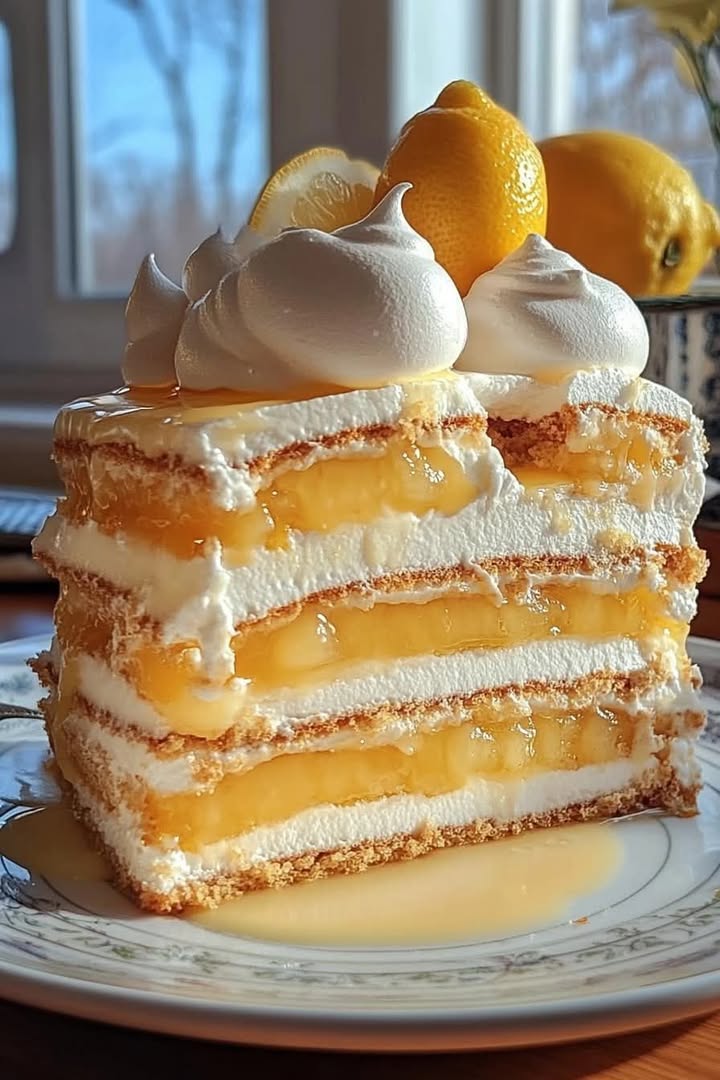
Why This Lemon Meringue Delight is a Must-Try
I still remember the first time I made this Lemon Meringue Delight. It was for my best friend’s birthday, and she’s obsessed with anything lemon. When I pulled it out of the oven, the house smelled like sunshine—bright, tangy, and oh-so-sweet. The layers of moist lemon cake, creamy lemon curd, and fluffy meringue topping were an instant hit. Everyone at the party kept asking, “Where did you buy this?” Little did they know, I had whipped it up in my own kitchen! If you’re looking for a dessert that wows without needing to be a pastry chef, this recipe is your golden ticket.
The Sweet History Behind Lemon Meringue Desserts
Lemon desserts have been around for centuries, but the pairing of lemon and meringue became popular in the 19th century. Lemon curd, originally a British favorite, found its way into pies and tarts across Europe and America. Meringue, on the other hand, has French roots, with its airy texture making it a perfect topping for rich fillings. Over time, bakers got creative, combining these elements into cakes, pies, and even cupcakes. My version of this classic combo—a Lemon Meringue Delight—takes inspiration from both traditions while adding a modern twist with its layered presentation.
Why You’ll Love This Recipe
This Lemon Meringue Cake is a flavor powerhouse. The zesty lemon cake pairs perfectly with the creamy, tangy lemon curd, while the toasted meringue adds a light, marshmallow-like sweetness. Plus, it’s surprisingly easy to make! Even if you’re new to baking, the step-by-step instructions will guide you through like a pro. And let’s not forget how beautiful it looks—swirled meringue on top makes it a showstopper at any gathering. Trust me, once you try it, you’ll want to make it again and again.
Perfect Occasions for This Lemon Meringue Delight
This cake is perfect for spring brunches, summer picnics, or holiday celebrations. Imagine serving it at Easter, Mother’s Day, or even a bridal shower. Its bright flavors scream “celebration,” and its stunning appearance ensures all eyes are on the dessert table. I’ve also made it for casual family dinners when I wanted something special but not overly complicated. Whether it’s a fancy event or just a cozy night in, this Lemon Meringue Delight fits the bill.
Ingredients
- For the Lemon Cake:
- 2 cups (315g) all-purpose flour
- 2 tsp baking powder
- ½ tsp salt
- 1 cup (230g) unsalted butter, softened
- 2 cups (400g) granulated sugar
- 4 large eggs
- 1 cup (240ml) whole milk
- 2 tbsp fresh lemon juice
- 1 tbsp lemon zest
- 1 tsp vanilla extract
- For the Lemon Curd:
- ¾ cup (150g) granulated sugar
- 2 tbsp cornstarch
- 1 cup (240ml) water
- 3 large egg yolks, lightly beaten
- ⅔ cup (120ml) fresh lemon juice
- 2 tbsp unsalted butter
- 1 tbsp lemon zest
- For the Meringue Topping:
- 4 large egg whites
- ¼ tsp cream of tartar
- ¾ cup (100g) granulated sugar
- ¼ tsp vanilla extract
Substitution Options
If you don’t have fresh lemons, bottled lemon juice works in a pinch, though fresh always tastes better. For the milk, you can use almond or oat milk for a dairy-free option. Instead of whole eggs, pasteurized egg whites from a carton work well for the meringue. And if you’re out of cornstarch, tapioca starch is a great substitute for thickening the lemon curd.
Step 1: Prepare the Lemon Cake
Start by preheating your oven to 350°F (175°C). Grease and flour two 9-inch round cake pans, then line the bottoms with parchment paper. In a medium bowl, whisk together the flour, baking powder, and salt. Set aside. In a large mixing bowl, beat the butter and sugar until light and fluffy—it should look like pale yellow clouds. Add the eggs one at a time, beating well after each addition. Mix in the lemon juice, zest, and vanilla extract. Gradually add the dry ingredients and milk, alternating between them, and mix until smooth. Divide the batter evenly between the pans and bake for 25-30 minutes. The aroma of lemon filling your kitchen is pure magic!
Pro tip: To check if the cake is done, insert a toothpick into the center. If it comes out clean, it’s ready!
Step 2: Make the Lemon Curd
In a medium saucepan, whisk together the sugar and cornstarch. Slowly pour in the water, stirring constantly to avoid lumps. Cook over medium heat until the mixture thickens and starts bubbling. Remove it from the heat and slowly whisk the hot mixture into the beaten egg yolks to temper them. Return everything to the saucepan and cook for another 2-3 minutes, stirring constantly. Stir in the lemon juice, butter, and zest. Let the curd cool completely—it thickens as it cools, creating a silky texture.
Chef’s tip: Cover the curd with plastic wrap directly on the surface to prevent a skin from forming.
Step 3: Prepare the Meringue Topping
In a clean mixing bowl, beat the egg whites and cream of tartar until soft peaks form. Gradually add the sugar, one tablespoon at a time, beating on high speed until stiff peaks form. Beat in the vanilla extract. Your meringue should be glossy and hold its shape like a cloud waiting to float away.
Pro tip: Make sure your bowl and beaters are grease-free; even a drop of oil can ruin the meringue.
Step 4: Assemble the Cake
Place one layer of the lemon cake on a serving plate. Spread an even layer of lemon curd over the top. Add the second cake layer and spread a thin layer of curd on top. Pile the meringue generously, spreading it to the edges and swirling it decoratively with a spatula. This is where you can get creative—make swoops and peaks for a dramatic effect!
Step 5: Toast the Meringue
Preheat your oven’s broiler and place the cake under it for 1-2 minutes, watching closely, until the meringue turns golden. Alternatively, use a kitchen torch for even toasting. Be careful not to burn it—the meringue browns quickly!
Timing
Here’s a quick breakdown of the timing:
- Prep Time: 30 minutes
- Cooking Time: 30 minutes
- Resting Time: 1 hour (for cooling)
- Total Time: 2 hours
Chef’s Secret
To enhance the lemon flavor, rub the sugar and lemon zest together before adding them to the batter. This releases the essential oils and intensifies the aroma.
Extra Info
Did you know that lemons are one of the most versatile fruits? They’re packed with vitamin C and have been used for centuries in cooking, cleaning, and even skincare. Their bright flavor makes them a star ingredient in desserts like this Lemon Meringue Delight.
Necessary Equipment
You’ll need a few basic tools: a stand mixer or hand mixer, two 9-inch round cake pans, a saucepan, a spatula, and a whisk. A kitchen torch is optional but fun for toasting the meringue.
Storage
Store the Lemon Meringue Cake in the refrigerator for up to 2 days. Keep it covered with plastic wrap or in an airtight container to prevent the meringue from drying out. While the meringue is best fresh, it holds up surprisingly well in the fridge.
If you need to freeze the cake, skip the meringue topping. Wrap the assembled cake tightly in plastic wrap and aluminum foil, then freeze for up to 1 month. Thaw it in the fridge overnight before adding the meringue.
Always bring the cake to room temperature before serving—it enhances the flavors and textures.
Tips and Advice
- Use room-temperature eggs for the meringue—they whip up better.
- Zest your lemons before juicing them to avoid wasting any precious zest.
- Don’t rush the cooling process; warm cake layers can cause the curd to slide off.
Presentation Tips
Serve the cake on a decorative platter and garnish with extra lemon slices or zest for a pop of color. Add a sprig of mint for freshness. Dim the lights and serve it with a side of candles for a romantic touch!
Healthier Alternative Recipes
Looking for lighter options? Try these variations:
- Gluten-Free Version: Swap the all-purpose flour with a gluten-free blend.
- Dairy-Free Version: Use coconut oil instead of butter and almond milk instead of whole milk.
- Low-Sugar Version: Replace half the sugar with a sugar substitute like stevia.
- Vegan Version: Use flax eggs and vegan butter substitutes.
- Mini Cupcake Version: Bake the batter in cupcake liners for individual servings.
- Fruit Swirl Version: Add a layer of raspberry jam for a fruity twist.
Mistake 1: Overmixing the Batter
Overmixing the batter can lead to a dense cake instead of a light and fluffy one. This happens because overworking the gluten in the flour makes the texture tough. To avoid this, mix the batter just until the ingredients are combined. Stop as soon as you no longer see streaks of flour.
Mistake 2: Skipping the Cooling Step
Adding warm lemon curd to the cake layers can cause them to slide apart. Always let the curd cool completely before assembling the cake. Patience pays off here!
Mistake 3: Burning the Meringue
Meringue burns easily under the broiler. Keep a close eye on it and toast it for no more than 1-2 minutes. If you’re unsure, use a kitchen torch for more control.
FAQ
Can I make this cake ahead of time?
Absolutely! You can prepare the lemon curd up to 3 days in advance and store it in the fridge. The cake layers can also be baked a day ahead. Just assemble and add the meringue before serving.
What if I don’t have a kitchen torch?
No problem! Use your oven’s broiler to toast the meringue. Watch it closely to avoid burning.
Can I use store-bought lemon curd?
Yes, but homemade curd has a fresher, brighter flavor. If you’re short on time, store-bought works fine.
How do I know when the meringue is ready?
The meringue is ready when it forms stiff, glossy peaks and the sugar is fully dissolved. Rub a bit between your fingers—if it feels gritty, keep beating.
Why is my cake dry?
Dry cake often results from overbaking. Check the cake a few minutes before the recommended time. A toothpick should come out clean but not overly dry.
Can I freeze this cake?
Yes, but freeze it without the meringue. Wrap it tightly and thaw in the fridge before adding the topping.
What’s the best way to zest a lemon?
Use a microplane grater for fine zest. Avoid the white pith underneath, as it’s bitter.
Why did my meringue deflate?
This can happen if the meringue isn’t beaten long enough or if there’s grease in the bowl. Make sure everything is clean and beat until stiff peaks form.
Can I use bottled lemon juice?
Bottled juice works, but fresh lemons provide a brighter, more authentic flavor.
How do I store leftover cake?
Cover the cake with plastic wrap or store it in an airtight container in the fridge for up to 2 days.
Final Thoughts
This Lemon Meringue Delight is more than just a dessert—it’s a celebration of flavors and textures. Whether you’re baking it for a special occasion or just because, it’s sure to bring smiles to everyone who tries it. So grab your lemons, fire up the oven, and let’s make some magic in the kitchen!
Equipment
- Stand mixer or hand mixer
- Two 9-inch round cake pans
- Medium saucepan
- Spatula
- Whisk
- Kitchen torch (optional)
Ingredients
- 2 cups all-purpose flour
- 2 tsp baking powder
- 1/2 tsp salt
- 1 cup unsalted butter, softened
- 2 cups granulated sugar
- 4 large eggs
- 1 cup whole milk
- 2 tbsp fresh lemon juice
- 1 tbsp lemon zest
- 1 tsp vanilla extract
- 3/4 cup granulated sugar
- 2 tbsp cornstarch
- 1 cup water
- 3 large egg yolks, lightly beaten
- 2/3 cup fresh lemon juice
- 2 tbsp unsalted butter
- 1 tbsp lemon zest
- 4 large egg whites
- 1/4 tsp cream of tartar
- 3/4 cup granulated sugar
- 1/4 tsp vanilla extract
Instructions
- Preheat your oven to 350°F (175°C) and grease/flour two 9-inch round cake pans.
- Whisk together the flour, baking powder, and salt in a medium bowl and set aside.
- Beat the butter and sugar until light and fluffy in a large mixing bowl.
- Add the eggs one at a time, beating well after each addition.
- Mix in the lemon juice, zest, and vanilla extract.
- Gradually add the dry ingredients and milk, alternating, and mix until smooth.
- Divide the batter between the pans and bake for 25-30 minutes.
- For the lemon curd, whisk together sugar and cornstarch in a saucepan, then slowly add water while stirring.
- Cook over medium heat until thickened, then temper with beaten egg yolks and return to heat for 2-3 minutes.
- Stir in lemon juice, butter, and zest, then let cool completely.
- For the meringue, beat egg whites and cream of tartar until soft peaks form, then gradually add sugar.
- Beat until stiff peaks form and add vanilla extract.
- Assemble by placing one cake layer on a plate, spreading curd on top, adding the second layer, and adding more curd.
- Pile the meringue on top and create decorative peaks.
- Toast the meringue under the broiler for 1-2 minutes or use a kitchen torch.