
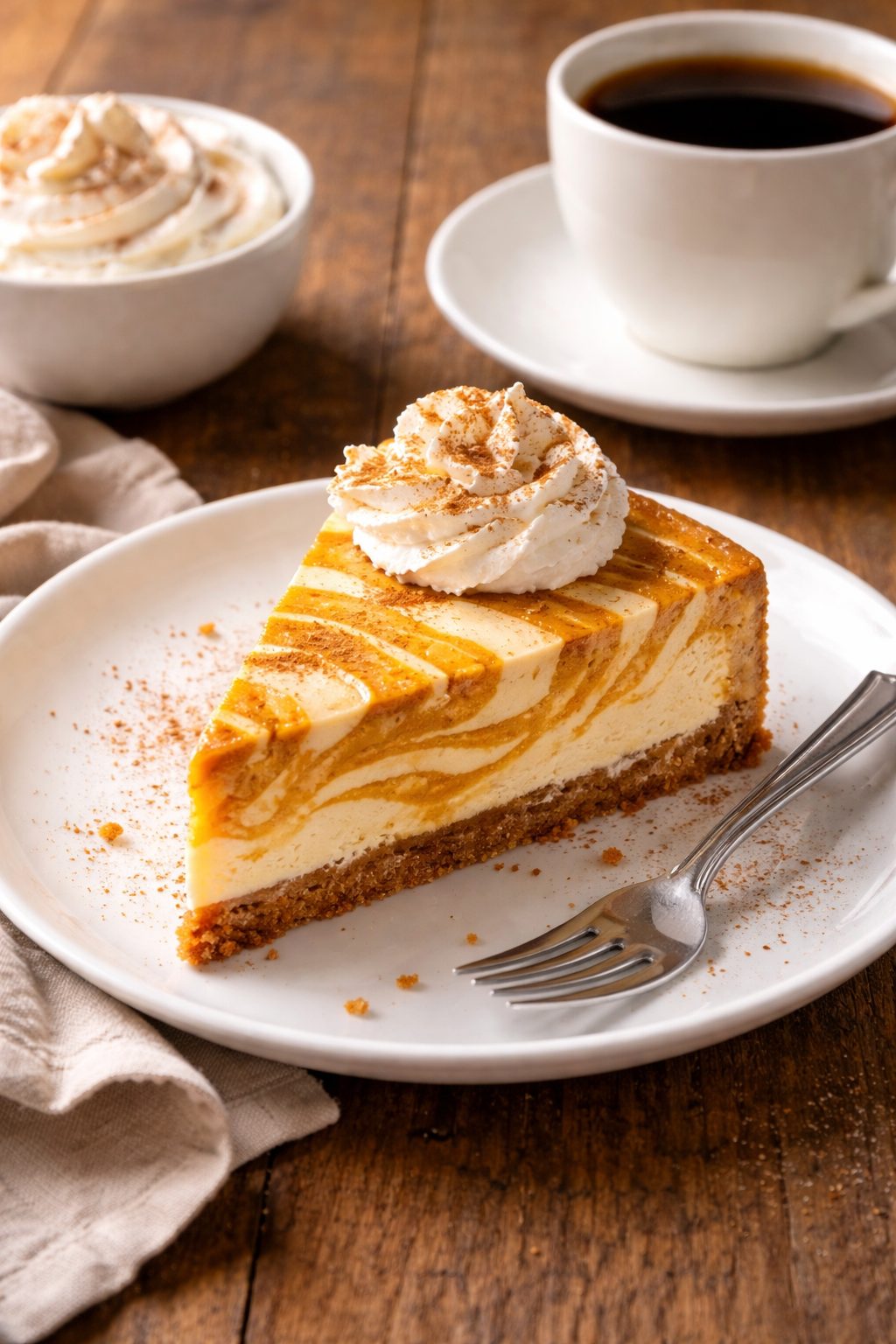
Last Thanksgiving, my sister took one bite of my pumpkin swirl cheesecake and declared it the best dessert she’d ever tasted. She wasn’t exaggerating either. The plate was empty within minutes, and I spent the rest of the evening texting the recipe to half my family. That moment reminded me why I love baking so much. There’s something magical about watching people enjoy food you made with your own hands.
Welcome to my kitchen, where I love sharing my favorite recipes with you. Today, I’m excited to share a recipe that’s perfect for the fall season: pumpkin swirl cheesecake. This gorgeous dessert combines two of autumn’s best flavors into one showstopping treat. The creamy vanilla cheesecake paired with spiced pumpkin creates a flavor combination that feels like a warm hug on a cool day.
This dessert is not only delicious but also versatile, as you can make it in various ways to suit different dietary needs and preferences. Whether you need a gluten free pumpkin swirl cheesecake or prefer a no bake pumpkin swirl cheesecake, I’ve got you covered. You can even make pumpkin swirl cheesecake mini versions for individual servings at parties. The possibilities are endless, and that’s what makes this recipe so special.
Why You’ll Love Pumpkin Swirl Cheesecake
If you’ve never made pumpkin cheesecake before, you’re in for a real treat. This dessert takes everything wonderful about traditional cheesecake and adds a seasonal twist that makes it absolutely irresistible. The contrast between the smooth vanilla base and the spiced pumpkin swirl creates a flavor profile that’s complex yet comforting.
It’s a delightful combination of creamy cheesecake and rich pumpkin flavor. Each bite offers the best of both worlds. The tangy cream cheese balances perfectly with the sweet, earthy pumpkin. You get hints of cinnamon, nutmeg, and ginger that make your kitchen smell like a cozy bakery. My husband says it tastes like fall in dessert form, and I couldn’t agree more.
The texture is another reason this dessert wins hearts. The filling is silky smooth and melts on your tongue. The swirled pattern isn’t just pretty to look at either. It means every slice has the perfect ratio of vanilla to pumpkin. You don’t have to choose between flavors because you get both in every forkful.
Perfect for holiday gatherings or just a cozy night in, this cheesecake fits any occasion. I’ve served it at Thanksgiving dinner, Christmas parties, and casual Sunday suppers. It always gets rave reviews. The southern living pumpkin swirl cheesecake version is especially popular at potlucks because it feeds a crowd and looks impressive on the dessert table.
But you don’t need a special occasion to make this recipe. Sometimes I whip up a pumpkin swirl cheesecake mini batch just because it’s October and I’m craving something sweet. There’s no rule that says you can only enjoy pumpkin desserts on holidays. Life’s too short to wait for special occasions to eat good food.
There are many variations, from no-bake to gluten-free, so there’s something for everyone. Let me break down some of the popular options:
- No bake pumpkin swirl cheesecake: Perfect for when you don’t want to turn on the oven or need a quick dessert
- Pumpkin swirl cheesecake with vanilla wafer crust: Adds a unique flavor twist to the traditional graham cracker base
- Gluten free pumpkin swirl cheesecake: Uses alternative crusts so everyone can enjoy a slice
- Pumpkin chocolate swirl cheesecake: For chocolate lovers who want an extra layer of indulgence
- Pumpkin swirl cheesecake mini: Individual portions that are ideal for parties or portion control
The pumpkin swirl cheesecake good housekeeping version is fantastic if you like a classic approach. Meanwhile, the spruce pumpkin swirl cheesecake offers a slightly different technique that some bakers prefer. The taste of home pumpkin swirl cheesecake recipe brings that comforting, homestyle quality that reminds me of grandma’s kitchen.
What makes pumpkin swirl cheesecake a great fall dessert? The answer goes beyond just the pumpkin flavor. This dessert captures the essence of autumn in every element. The warm spices evoke memories of crisp leaves and cozy sweaters. The rich, creamy texture provides comfort as the weather turns cold. The beautiful marbled appearance makes it a centerpiece worthy of your best china.
Pumpkin is also packed with vitamins and adds natural sweetness to the filling. You’re getting some nutritional value along with your indulgence. Not that anyone’s eating cheesecake for health reasons, but it’s a nice bonus. The canned pumpkin puree makes this recipe accessible year-round, though it tastes especially right when fresh pumpkins appear at the market.
Another reason I love this dessert is how forgiving it is for beginner bakers. Yes, cheesecake has a reputation for being tricky. But once you learn a few basic techniques, it’s actually quite simple. The swirl pattern looks fancy but requires no artistic skill. You just drop spoonfuls of pumpkin batter onto the vanilla base and drag a knife through it. Even imperfect swirls look beautiful once the cheesecake is baked.
The make-ahead nature of this dessert is a lifesaver during busy holiday seasons. You can bake it a day or two before your event and let it chill in the fridge. In fact, cheesecake actually tastes better after sitting for a while. The flavors meld together and the texture becomes even creamier. This means less stress on the day of your party and more time to spend with guests.
I also appreciate how this recipe adapts to different serving sizes. You can make one large cheesecake in a springform pan for a big gathering. Or divide the batter into muffin tins to create mini cheesecakes for a book club meeting. The pumpkin swirl cheesecake mini versions are adorable and eliminate the need for slicing and serving.
The crust options alone give you plenty of room for creativity. Traditional graham crackers work beautifully, but don’t stop there. A pumpkin swirl cheesecake with vanilla wafer crust adds a lighter, more delicate flavor. Gingersnap crusts bring extra spice that complements the pumpkin filling. For a gluten free pumpkin swirl cheesecake, you can use crushed gluten-free cookies or almond flour mixed with butter and sugar.
This dessert also bridges the gap between pumpkin pie lovers and cheesecake fans. Maybe your family can’t agree on which to serve at Thanksgiving. Problem solved. This recipe gives you both flavors in one gorgeous dessert. It’s the peacekeeper of the dessert table.

How to Make the Classic Pumpkin Swirl Cheesecake
Now that you understand why this dessert is such a crowd-pleaser, let’s roll up our sleeves and actually make it. I promise it’s easier than you might think. The first time I attempted this recipe, I was convinced I’d mess it up somehow. But you know what? It turned out perfectly, and I’ve been making it confidently ever since.
The foundation of any great cheesecake starts with the crust. For the classic version, I’m a huge fan of using a pumpkin swirl cheesecake with vanilla wafer crust. Vanilla wafers bring a subtle sweetness and lighter texture compared to graham crackers. They don’t compete with the pumpkin flavor but instead support it beautifully. My neighbor Mrs. Chen taught me this trick, and it completely changed how I think about cheesecake bases.
To make the vanilla wafer crust, you’ll need about two cups of crushed vanilla wafers. I usually buy the box and crush them myself in a food processor. It takes maybe three minutes and tastes so much better than store-bought crumbs. Mix those crumbs with six tablespoons of melted butter and two tablespoons of sugar. Press this mixture firmly into the bottom of your springform pan. Really pack it down with the bottom of a measuring cup. This creates a solid base that won’t crumble when you slice the cheesecake later.
Here’s something I learned the hard way: wrap the outside of your springform pan with aluminum foil before you start. This prevents any butter from leaking out during baking and protects the pan if you decide to use a water bath. Trust me, cleaning burnt butter off your oven floor is not how you want to spend your evening.
Once your crust is ready, pop it in the oven for about ten minutes at 325 degrees. This pre-baking step helps the crust hold together better. While it’s baking and cooling, you can prepare your filling. The timing works out perfectly, which is one reason I love this recipe. There’s minimal downtime where you’re just standing around waiting.
For the cheesecake batter, you’ll beat together three packages of cream cheese until it’s completely smooth. Make sure your cream cheese is at room temperature before you start. Cold cream cheese creates lumps that are nearly impossible to smooth out. I usually set mine on the counter about an hour before I plan to bake. Some people microwave it for a few seconds, but I find that makes the texture weird.
Add one cup of sugar to your cream cheese and beat until fluffy. Then mix in three eggs, one at a time. This is important because adding them gradually prevents the batter from becoming too thin. Stir in a teaspoon of vanilla extract and a cup of sour cream. The sour cream might seem like an odd addition, but it creates the most incredible tangy richness. If you’ve ever wondered why restaurant cheesecakes taste different from homemade ones, sour cream is often the secret.
Now comes the fun part. Take out about one and a half cups of your plain cheesecake batter and put it in a separate bowl. To this portion, add one cup of pumpkin puree, a teaspoon of cinnamon, half a teaspoon of nutmeg, and a quarter teaspoon each of ginger and cloves. Some recipes also include a pinch of allspice. I personally think that makes it taste too much like pumpkin pie, but you do you. Mix this pumpkin portion until the spices are fully incorporated and the color is uniform.
Pour the plain vanilla batter over your cooled crust. Then drop spoonfuls of the pumpkin batter on top. I usually do about eight to ten dollops scattered across the surface. Don’t worry about making them even or perfectly placed. The beauty of this dessert is in its organic, natural swirl pattern.
Grab a butter knife or a skewer and drag it through the batters in a figure-eight or zigzag pattern. Don’t overmix or you’ll lose the distinct swirls and end up with a muddy color. Three or four passes through the batter is plenty. My daughter calls this the “fun dragging part” and always wants to help. It’s actually a great task for kids because there’s no wrong way to do it. Even if you’re totally new to this style of dessert, you might also enjoy trying a guava cheesecake for a tropical twist on the swirled technique.
Bake your cheesecake at 325 degrees for about fifty-five to sixty-five minutes. You’re looking for the edges to be set while the center still has a slight jiggle. This is crucial because cheesecake continues cooking as it cools. If you bake it until the center is completely firm, you’ll end up with an overbaked, cracked cheesecake. Nobody wants that. The jiggle should be about the size of a quarter in the very center.
When your cheesecake is done baking, turn off the oven but leave the cheesecake inside with the door cracked open for about an hour. This gradual temperature change prevents the dreaded cracks that can form when cheesecake cools too quickly. After an hour, transfer it to the counter to cool completely, then refrigerate for at least four hours or overnight. Patience is hard, I know. But rushing this step means a runny, not-quite-set cheesecake that won’t slice nicely.
No-Bake Pumpkin Swirl Cheesecake Option
Let me tell you about the time I needed to bring dessert to a summer potluck but didn’t want to heat up my kitchen. Enter the no bake pumpkin swirl cheesecake. Yes, you can absolutely make this dessert without turning on your oven, and it tastes just as incredible as the baked version. Different texture, sure, but equally delicious.
The no-bake version works particularly well when you’re making individual portions. In fact, if you’re interested in single-serving autumn treats, check out this mini pumpkin cheesecake recipe that shares similar techniques. The individual format makes serving so much easier at parties.
For a no-bake crust, graham crackers work better than vanilla wafers because they firm up nicely in the fridge. Crush about two cups of graham crackers and mix with six tablespoons of melted butter. Press this into the bottom of your pan or into individual serving glasses. I’ve made these in mason jars for a rustic presentation that people absolutely love. No baking required for the crust, just press and chill.
The filling is where things get interesting. You’ll still use cream cheese as your base, but instead of eggs, you’ll use heavy whipping cream to create structure. Beat two packages of softened cream cheese with three-quarters cup of powdered sugar until smooth. In a separate bowl, whip one and a half cups of heavy cream until stiff peaks form. Fold this whipped cream gently into your cream cheese mixture. This creates an incredibly light, mousse-like texture that’s honestly addictive.
Divide your cream cheese mixture, keeping about two-thirds plain and mixing one-third with pumpkin puree and spices. The ratios are slightly different from the baked version because the pumpkin mixture needs to be thicker to hold its shape without baking. Use about three-quarters cup of pumpkin puree mixed with your spices and a tablespoon of powdered sugar.
Layer the vanilla mixture over your chilled crust. Then add dollops of pumpkin mixture on top and create your swirl using the same technique as the baked version. The difference is that the no-bake version needs at least six hours in the fridge to set properly. I usually make it the night before I need it. By the way, if you’re looking for other no-bake fall desserts, those pecan pie cheesecake bars can also be adapted to skip the oven.
One advantage of the no-bake method is that you avoid any risk of cracks or overbaking. The texture comes out perfectly smooth every single time. It’s also lighter and fluffier than traditional baked cheesecake, which some people actually prefer, especially after a heavy meal. My kids like the no-bake version better because it reminds them of ice cream cake.
You can get creative with toppings on the no-bake version too. A dollop of whipped cream, a sprinkle of cinnamon, or even some candied pecans add nice finishing touches. Sometimes I’ll drizzle a little caramel sauce over the top for extra decadence. The pumpkin pie cheesecake recipe on my site uses similar flavor profiles if you want to explore more variations.
Funny enough, I’ve served both versions at the same party before, and people couldn’t agree on which they liked better. Some loved the dense, rich texture of the baked cheesecake. Others preferred the airy, mousse-like quality of the no-bake. Both camps went back for seconds, so I consider that a win. The best part is that now you know how to make both, so you can decide which suits your needs on any given day.
Variations and Special Diets
Here’s the thing about baking in 2024: everyone has different dietary needs, and that’s totally okay. At my last potluck, I had guests who were gluten-free, dairy-free, and vegan. It used to stress me out trying to accommodate everyone, but now I actually enjoy the challenge. The wonderful news about pumpkin swirl cheesecake is that it adapts beautifully to just about any dietary restriction without sacrificing flavor.
Gluten-Free Pumpkin Swirl Cheesecake
Let’s start with what’s probably the easiest modification: making a gluten free pumpkin swirl cheesecake. The filling itself is naturally gluten-free since it’s primarily cream cheese, eggs, sugar, and pumpkin. Your only concern is the crust, and honestly, you have so many delicious options that you might prefer them to the original.
My go-to method is using gluten-free graham crackers. Most grocery stores now carry at least one brand, and they taste virtually identical to regular graham crackers. I’ve done blind taste tests with my family, and nobody could tell the difference. You prepare them exactly the same way: crush about two cups of gluten-free graham crackers, mix with melted butter and a touch of sugar, press into your pan, and bake.
Another fantastic option that I actually discovered by accident involves almond flour. I was out of graham crackers one day and improvised with what I had in the pantry. Mix two cups of almond flour with a quarter cup of melted coconut oil, three tablespoons of maple syrup, and a pinch of salt. Press this mixture into your pan and bake for about twelve minutes. The result is a slightly nutty, naturally sweet crust that complements the pumpkin filling beautifully. Plus, it adds some protein and healthy fats, which makes the dessert a tiny bit more substantial. Not that we’re eating cheesecake for nutrition, but it doesn’t hurt.
Crushed gluten-free gingersnaps create another winning combination. The spicy ginger flavor echoes the warm spices in the pumpkin filling, creating this cohesive autumn taste that feels intentional and sophisticated. My mother-in-law, who has celiac disease, said this version was better than any regular cheesecake she’d had in years. That compliment made my entire week.
One thing to watch with gluten-free baking is that some alternative flours absorb moisture differently than wheat flour. If you’re experimenting with a crust recipe, you might need to adjust the butter or oil slightly. Start with a little less liquid than you think you need, then add more if the mixture seems too dry. You want it to hold together when you press it but not be greasy or swimming in butter.
The southern living pumpkin swirl cheesecake approach can easily be adapted for gluten-free diets by simply swapping the crust ingredients. Everything else about the recipe stays exactly the same. This is great news because it means you don’t have to learn an entirely new technique or worry about the filling turning out differently.
Pumpkin Chocolate Swirl Cheesecake
Now, if you want to take this dessert in a completely different direction, let me introduce you to the wonder that is pumpkin chocolate swirl cheesecake. The first time I made this was for my daughter’s birthday. She loves pumpkin but is absolutely obsessed with chocolate, so I figured why not combine them? Best parenting decision I made that month.
The technique is similar to the regular pumpkin swirl, but you’re working with three batters instead of two. Keep about half your cheesecake batter plain as the base. Mix one-quarter with pumpkin and spices. Then take the remaining quarter and mix it with melted chocolate. I use about four ounces of good quality dark chocolate, melted and slightly cooled. Make sure it’s not too hot or it’ll scramble the eggs in your batter.
Pour your vanilla base into the pan first. Then alternate dollops of pumpkin and chocolate batter across the surface. When you drag your knife through to create the swirl, you end up with this gorgeous marbled pattern of cream, orange, and brown. It looks like abstract art, and it tastes even better than it looks. The slight bitterness of dark chocolate balances the sweetness of the pumpkin perfectly.
My nephew, who claims to hate pumpkin anything, devoured two slices of the chocolate version before admitting it might be his new favorite dessert. Sometimes you just need to meet people where they are. If someone’s hesitant about pumpkin, the chocolate variation can be a gateway. By the way, white chocolate also works beautifully if you prefer something sweeter and less intense.
You can also create a chocolate crust for this version using crushed chocolate graham crackers or Oreos with the filling scraped out. The all-chocolate experience is pretty incredible for serious chocolate lovers. I served this at a Halloween party last year, and three different people asked if I’d consider starting a bakery. I laughed, but honestly, it was tempting.
Mini Pumpkin Swirl Cheesecakes
Let’s talk about portion control and party convenience. The pumpkin swirl cheesecake mini format has become my preferred way to serve this dessert at gatherings. There’s something adorable about individual cheesecakes, and they solve so many practical problems. No cutting, no serving utensils needed, no arguments about slice sizes.
To make mini versions, line a muffin tin with paper or foil liners. Press about a tablespoon of your crust mixture into the bottom of each cup. I use a shot glass to pack it down evenly. Then fill each liner about three-quarters full with your vanilla cheesecake batter. Add a small spoonful of pumpkin batter on top and use a toothpick to create tiny swirls.
The baking time drops significantly for mini cheesecakes. You’re looking at about eighteen to twenty-two minutes at 325 degrees. They should still have a slight jiggle in the center when you remove them. Let them cool completely in the pan, then refrigerate for at least three hours. I usually make these the day before I need them because they’re easier to handle when they’re fully chilled.
Mini cheesecakes are perfect for portion control if you’re trying to be somewhat mindful about dessert. Having a predetermined serving size helps prevent that “just one more slice” situation that happens with a full-sized cheesecake. Though I’ll admit, the predetermined portion doesn’t stop me from eating two minis instead of one large slice. But at least I’m aware of what I’m doing.
These little guys are also fantastic for variety. You can make a batch where some are regular pumpkin swirl, some are chocolate pumpkin, and some are plain vanilla. Everyone gets to choose their favorite flavor. At my son’s school bake sale, the variety pack sold out first because parents appreciated being able to try different options.
For a really impressive presentation, top each mini cheesecake with a small dollop of whipped cream and a light dusting of cinnamon just before serving. Or get fancy with a tiny piece of candied ginger or a chocolate curl. The individual format lets you give each dessert special attention in a way that’s not practical with a full-sized cake. If you’re enjoying these techniques and want to explore more creative presentations, the cheesecake recipes section has dozens of other swirl patterns and flavor combinations worth trying.
Dairy-Free and Vegan Options
I’ll be honest: making a truly great dairy-free cheesecake took me several attempts to master. Cheesecake is, by definition, mostly cream cheese, so removing dairy is a bigger challenge than removing gluten. But it’s absolutely possible, and the results can be genuinely delicious.
The key is finding a good quality vegan cream cheese. The market has improved dramatically in recent years. I’ve had success with cashew-based and almond-based cream cheeses. Coconut-based versions work too, though they have a more noticeable coconut flavor that doesn’t bother me but might not appeal to everyone.
You’ll also need to replace the eggs, which provide structure in traditional cheesecake. A mixture of cornstarch and non-dairy milk works surprisingly well. For a standard recipe, whisk together three tablespoons of cornstarch with a quarter cup of almond or oat milk until smooth, then mix this into your vegan cream cheese along with your other ingredients.
The pumpkin actually helps with texture in dairy-free versions because it adds natural thickness and moisture. I find that dairy-free pumpkin swirl cheesecake turns out better than plain dairy-free vanilla cheesecake for this reason. The pumpkin puree helps bind everything together and creates a creamier mouthfeel.
For the crust, most standard graham crackers aren’t vegan because they contain honey. Check labels carefully or use a crust made from dates and nuts. Process about a cup of pitted dates with a cup and a half of raw almonds or pecans until the mixture sticks together when pressed. This creates a naturally sweet, no-bake crust that’s both vegan and gluten-free.
Funny enough, my vegan neighbor tried my dairy version and my vegan version side by side and said she honestly couldn’t pick a clear winner. They taste different, sure, but both are delicious in their own right. The vegan version is slightly less tangy and a bit lighter in texture, which some people actually prefer.
Reducing Sugar Content
For those watching their sugar intake, pumpkin swirl cheesecake can be adapted to use less sugar without completely falling apart. I’ve experimented with this because my dad has diabetes and I wanted him to be able to enjoy dessert at family gatherings. While incorporating nutrient-dense ingredients into everyday meals helps manage blood sugar overall, occasionally enjoying a modified dessert should be part of a balanced approach to eating.
You can typically reduce the sugar in cheesecake by about one-third without drastically affecting texture. Instead of one cup of sugar, try two-thirds cup. The cream cheese and pumpkin both have natural richness that carries the flavor even with less sweetness. You can also substitute part of the sugar with a natural sweetener like monk fruit or stevia designed for baking.
Another trick is increasing the vanilla extract slightly and adding a tiny pinch of salt to the filling. Both of these enhance perceived sweetness without adding sugar. The warm spices in the pumpkin portion also contribute sweetness through their aromatic qualities, even though they don’t actually contain sugar.
Just know that if you reduce sugar significantly, the texture might be slightly less creamy and the cheesecake won’t brown as much during baking. These are minor trade-offs that might be worth it depending on your health goals. My dad was thrilled to have a dessert he could eat without guilt, and honestly, I didn’t miss the extra sweetness as much as I expected.
Testing Your Own Variations
Once you’ve mastered the basic pumpkin swirl cheesecake technique, the world is your oyster. I encourage you to experiment based on what you love and what’s in your pantry. Some of my best recipes came from happy accidents or “I wonder what would happen if…” moments.
Try different spice combinations in your pumpkin layer. Add cardamom for a Scandinavian twist or a tiny bit of black pepper for unexpected warmth. Swap pumpkin puree for sweet potato puree if that’s what you have on hand. The taste of home pumpkin swirl cheesecake philosophy is all about making recipes work with what you have, not stressing over perfection.
Experiment with mix-ins too. Fold mini chocolate chips into your pumpkin batter. Sprinkle chopped pecans over the top before baking. Create a gingersnap streusel topping for extra crunch. The pumpkin swirl cheesecake good housekeeping test kitchens always emphasize that home baking should be fun, not stressful.
Document your experiments so you remember what worked. I keep a beaten-up notebook in my kitchen where I scribble notes like “added extra cinnamon – too much” or “almond extract in crust – AMAZING.” This record has become invaluable over the years. Sometimes I flip through it and rediscover a variation I’d forgotten about.
Remember that even “failures” usually taste pretty good when you’re working with quality ingredients like cream cheese, pumpkin, and butter. The worst that happens is your swirl doesn’t look perfect or the texture is slightly off. But it’ll still be edible, probably delicious, and definitely a learning experience for next time.
I hope this section has shown you that dietary restrictions don’t mean missing out on amazing desserts. Whether you need a gluten free pumpkin swirl cheesecake, want to try a pumpkin chocolate swirl cheesecake, or prefer the convenience of pumpkin swirl cheesecake mini versions, there’s an approach that will work beautifully for your situation. The core recipe is flexible enough to accommodate almost any modification while still delivering that wonderful combination of creamy vanilla and spiced pumpkin that makes this dessert so special.
Don’t be afraid to make this recipe your own. Baking should be joyful, not stressful. Start with the basic version to get comfortable with the technique, then branch out into variations that excite you. Your kitchen, your rules. And honestly? Even if your cheesecake cracks or your swirls look messy or you accidentally add too much nutmeg, it’s still going to taste wonderful. That’s the beauty of working with such delicious base ingredients.
FAQs About Pumpkin Swirl Cheesecake
What makes pumpkin swirl cheesecake a great fall dessert?
Pumpkin swirl cheesecake captures autumn in every bite through warm spices like cinnamon, nutmeg, and ginger that evoke the season’s cozy feeling. The pumpkin itself is a quintessential fall ingredient that’s packed with vitamins and adds natural sweetness. The rich, creamy texture provides comfort as weather turns cooler. The beautiful marbled appearance makes it an impressive centerpiece for holiday tables. Plus, it bridges the gap between pumpkin pie and cheesecake lovers, offering both flavors in one gorgeous dessert that everyone can enjoy.
How long does pumpkin swirl cheesecake need to chill?
Pumpkin swirl cheesecake needs at least four hours in the refrigerator to set properly, though overnight is ideal. The chilling time allows the texture to firm up and the flavors to meld together beautifully. If you’re making a no-bake version, plan for at least six hours of refrigeration time. Rushing this step results in a cheesecake that’s too soft to slice cleanly. The good news is that cheesecake actually tastes better after sitting for a day, so making it ahead is not just convenient but preferred. It can be refrigerated for up to five days if covered properly.
Can I freeze pumpkin swirl cheesecake?
Yes, pumpkin swirl cheesecake freezes beautifully for up to three months, making it perfect for advance holiday preparation. Wrap the cooled cheesecake tightly in plastic wrap, then again in aluminum foil to prevent freezer burn. For best results, freeze it without toppings like whipped cream. Thaw the cheesecake in the refrigerator overnight before serving, never at room temperature which can cause condensation and texture issues. Individual mini cheesecakes freeze especially well and can be thawed individually as needed. This is my secret weapon during busy holiday seasons when I need to prepare multiple desserts in advance.
Why did my cheesecake crack on top?
Cheesecake cracks usually happen because of rapid temperature changes or overbaking. The center should still have a slight jiggle when you remove it from the oven because it continues cooking as it cools. Opening the oven door frequently during baking can cause temperature fluctuations that lead to cracking. The cooling process matters too; turning off the oven and leaving the cheesecake inside with the door cracked for an hour helps prevent cracks. Using a water bath adds moisture to the oven environment, which also helps. If your cheesecake does crack, don’t worry—top it with whipped cream, fruit, or caramel sauce and nobody will notice.
Are there any gluten-free options for pumpkin swirl cheesecake?
Absolutely! The filling is naturally gluten-free, so you only need to modify the crust. Gluten-free graham crackers work perfectly and are prepared exactly like regular graham crackers. Almond flour mixed with melted butter or coconut oil creates a delicious, naturally gluten-free crust with a subtle nutty flavor. Crushed gluten-free gingersnaps add complementary spice notes to the pumpkin filling. You can also use a nut-based crust made from ground pecans or walnuts mixed with dates for a no-bake option. All of these alternatives taste fantastic, and many people actually prefer them to traditional graham cracker crusts.
How do I know when my cheesecake is done baking?
A properly baked cheesecake should have set edges while the center still jiggles slightly, about the size of a quarter. The jiggle test is crucial because cheesecake firms up considerably as it cools. An instant-read thermometer inserted into the center should read between 150-155 degrees Fahrenheit. The top might look slightly puffed and may have a matte finish rather than shiny. If you see cracks forming or the entire surface is completely firm, it’s overbaked. Remember that the residual heat continues cooking the cheesecake after removal from the oven, so it’s better to slightly underbake than overbake.
Can I use fresh pumpkin instead of canned?
Yes, you can use fresh pumpkin puree, but canned actually works better for baking in most cases. Fresh pumpkin has more water content and variable texture, which can make your cheesecake watery or inconsistent. If you’re set on using fresh, choose a sugar pumpkin (not a carving pumpkin), roast it, puree the flesh, and then strain it through cheesecloth to remove excess moisture. You’ll need about twice as much fresh pumpkin to yield the same amount of puree after straining. Canned pumpkin is consistent, convenient, and specifically processed for baking. Just make sure you buy pure pumpkin puree, not pumpkin pie filling which already contains spices and sweeteners.
What’s the difference between a water bath and baking without one?
A water bath, or bain-marie, involves placing your cheesecake pan inside a larger pan filled with hot water during baking. This creates a humid environment that helps the cheesecake bake evenly and prevents cracking. The moisture keeps the top from drying out and the gentle, indirect heat prevents overbaking. Without a water bath, you risk a drier texture and more likelihood of cracks, though the cheesecake will still taste delicious. If you skip the water bath, the gradual cooling method becomes even more important. Many bakers find water baths fussy and prefer to simply accept minor imperfections in exchange for easier preparation.
Where can I find more pumpkin swirl cheesecake recipes?
Besides this detailed guide, you can find excellent variations in publications like Southern Living, Good Housekeeping, Taste of Home, and The Spruce Eats. Each source offers slightly different techniques and flavor combinations worth exploring. Food blogs often feature creative spins on the classic recipe, including chocolate variations, no-bake versions, and dietary modifications. YouTube has countless video tutorials if you’re a visual learner who benefits from seeing the swirling technique in action. Cookbooks focused on autumn desserts or cheesecake specialties typically include at least one pumpkin swirl variation. Pinterest is also useful for gathering multiple recipes and comparing approaches side by side.
Can I make pumpkin swirl cheesecake without a springform pan?
Yes, though a springform pan makes removal and serving much easier. You can use a regular cake pan lined with parchment paper, leaving long edges that act as handles for lifting out the cheesecake. A 9×13-inch baking dish works well for bar-style cheesecake that you cut into squares rather than slices. For individual servings, muffin tins lined with paper cups eliminate the need for a springform entirely. Glass or ceramic pie plates work too, though removing slices neatly becomes trickier. If you’re making a no-bake version, you can even use a trifle dish or individual serving glasses. The vessel changes the presentation but not the delicious flavor.
Equipment
- Mixing Bowl
- Electric Mixer
- Rubber Spatula
- Springform Pan
- Knife or Skewer
Ingredients
- 2 cups crushed vanilla wafers
- 6 tablespoons melted butter
- 2 tablespoons sugar
- 3 packages cream cheese 8 oz each
- 1 cup granulated sugar
- 3 large eggs
- 1 teaspoon vanilla extract
- 1 cup sour cream
- 1 cup pumpkin puree
- 1 teaspoon ground cinnamon
- 0.5 teaspoon ground nutmeg
- 0.25 teaspoon ground ginger
- 0.25 teaspoon ground cloves
Instructions
- Preheat oven to 325°F (163°C).
- Mix crushed vanilla wafers, melted butter, and sugar in a bowl.
- Press the mixture firmly into the bottom of a springform pan.
- Bake the crust for 10 minutes, then let cool.
- Beat cream cheese in a large bowl until smooth.
- Gradually add sugar and beat until fluffy.
- Add eggs one at a time, mixing well after each addition.
- Stir in vanilla extract and sour cream until combined.
- In a separate bowl, mix pumpkin puree, cinnamon, nutmeg, ginger, and cloves.
- Take 1.5 cups of the plain cheesecake batter and mix it with the pumpkin mixture.
- Pour the plain cheesecake batter over the cooled crust.
- Drop spoonfuls of the pumpkin batter over the plain batter.
- Use a knife to swirl the batters together gently.
- Bake for 55-65 minutes until the edges are set but the center has a slight jiggle.
- Turn off the oven and leave the cheesecake inside with the door cracked for 1 hour.
- Cool completely, then refrigerate for at least 4 hours or overnight before serving.
Notes
Nutrition

Hello! I’m Sarah Mitchell, and I’m passionate about bringing creativity and innovation to baking. My love for baking started in high school when I first tried my hand at decorating cupcakes for a class project. What began as a fun hobby quickly became a full-time passion. I’ve spent the past decade working in bakeries and dessert shops, honing my skills in everything from simple cookies to intricate wedding cakes.
After working in some of the top bakeries across the country, I realized that baking was about more than just following recipes — it was about infusing your personality into each creation. At BakingSecret.com, I love creating recipes that push boundaries while staying true to the heart of classic baking. I specialize in creating delicious and visually stunning pastries that will wow your guests.
When I’m not baking, I enjoy teaching baking classes, trying out new cake decoration techniques, and traveling to find inspiration in global dessert traditions. I’m so excited to share my tips and tricks with you to help elevate your baking game!