
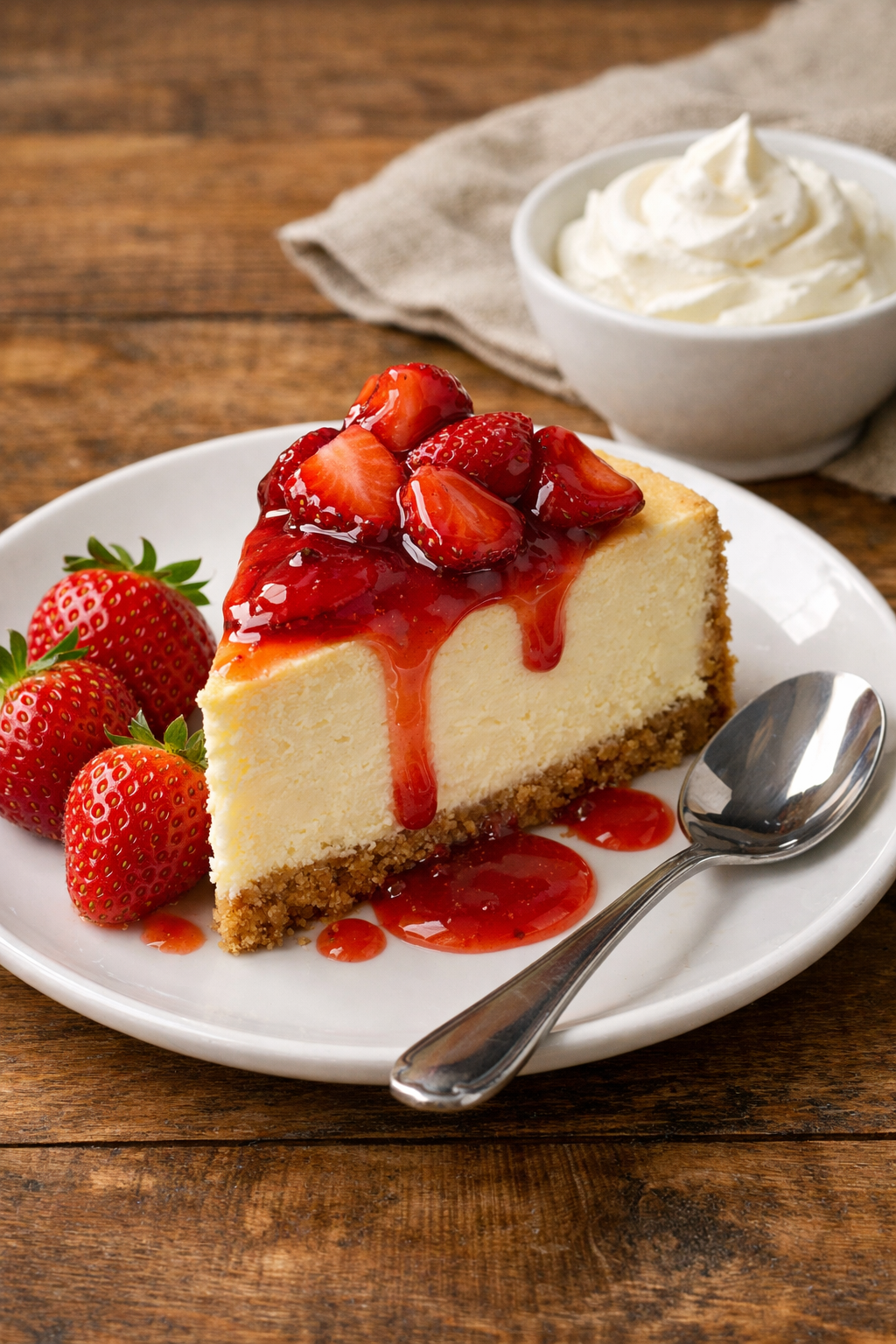
My Love Affair with Strawberry Cheesecake Topping
I’ll never forget the first time I made a cheesecake from scratch. It came out of the oven looking beautiful, cooled to perfection, and then I just stared at it. Something was missing. That’s when I realized a plain cheesecake is like a blank canvas waiting for color. The moment I added that first homemade strawberry cheesecake topping, everything changed. The bright red sauce transformed my simple dessert into something that looked like it came from a fancy bakery.
Welcome to my kitchen! Today, I’m excited to share everything I know about creating the perfect strawberry topping for your cheesecake. Whether you’ve been baking for years or you’re just starting your dessert journey, this guide will help you master this essential skill. Trust me, once you learn how easy it is to make your own topping, you’ll never go back to store-bought.
What is the Strawberry Stuff on Top of Cheesecake?
Let’s talk about what that gorgeous red layer actually is. The strawberry stuff on top of cheesecake is basically a sweet and tangy sauce that brings life to your dessert. It adds flavor, color, and that professional touch that makes people think you spent hours in the kitchen.
The classic version is a simple strawberry sauce made with fresh or frozen berries, sugar, and sometimes a little lemon juice. But there are several variations you can try:
- Fresh strawberry sauce: Made with ripe strawberries cooked down with sugar until they release their juices and thicken slightly
- Strawberry cheesecake topping gelatin: A firmer, glossier version that uses gelatin or cornstarch to create that shiny, professional look
- Strawberry glaze for cake: A thinner, more liquid version that soaks into the cake slightly while adding sweetness
- Strawberry shortcake topping glaze: Similar to the sauce but with a lighter consistency, perfect for layering
The beauty of making your own topping is that you control the sweetness, thickness, and flavor intensity. Some people like it chunky with visible strawberry pieces. Others prefer a smooth, restaurant-style sauce. Both are delicious, and I’ll show you how to make either version.
If you’ve ever wondered about the Cheesecake Factory strawberry cheesecake topping recipe, you’re not alone. Their version is thick, glossy, and perfectly sweet. While they keep their exact recipe secret, I’ve developed a version that comes pretty close. The key is getting the right balance of fresh fruit flavor and just enough thickening to make it stay put on your cheesecake.
How to Make Strawberry Sauce for the Top of a Cheesecake
Making your own strawberry sauce for cheesecake is easier than you think. I promise you don’t need fancy equipment or hard-to-find ingredients. You probably have everything you need in your kitchen right now.
The Fresh Strawberry Method
When strawberries are in season, nothing beats using fresh berries. Here’s my go-to method that takes about 15 minutes from start to finish.
Start with about two cups of fresh strawberries. Wash them well and remove the green tops. I like to cut larger berries in half or quarters so they cook evenly. Toss them in a saucepan with half a cup of sugar. Some recipes call for less sugar, but I find this amount gives you that perfect sweet-tart balance.
Add a tablespoon of lemon juice. This might seem small, but it makes a huge difference. The acidity brightens the strawberry flavor and keeps the sauce from tasting flat. Cook everything over medium heat, stirring occasionally.
Here’s what happens next. The sugar pulls moisture out of the strawberries, creating a natural syrup. The berries start to break down and release their beautiful red color. After about 10 minutes, you’ll have a bubbling, fragrant sauce.
At this point, you have a choice. For a chunky strawberry topping for cheesecake, just remove it from heat and let it cool. For a smooth sauce, use a potato masher to break down the berries further. Want it really smooth? Blend it or push it through a fine mesh strainer.
If your sauce seems too thin, mix a teaspoon of cornstarch with a tablespoon of cold water. Stir this into the hot sauce and cook for another minute. It will thicken as it cools too, so don’t worry if it looks a bit runny at first.
The Frozen Strawberry Shortcut
Let me share a secret. Strawberry topping for cheesecake using frozen strawberries works just as well as fresh, and sometimes even better. Frozen berries are picked at peak ripeness and flash-frozen, which means they’re often sweeter and more flavorful than off-season fresh berries.
The method is almost identical to using fresh berries. Use two cups of frozen strawberries straight from the freezer. No need to thaw them first. Since frozen berries release more liquid, you might want to reduce the sugar slightly to three-quarters of a cup.
Put everything in your saucepan and cook over medium heat. The frozen berries will take a bit longer to break down, maybe 15 minutes instead of 10. Stir often to prevent sticking. The extra liquid from frozen berries means your sauce might be thinner, so that cornstarch slurry I mentioned earlier becomes more important.
I actually prefer making frozen strawberry topping for cheesecake during winter months when fresh berries cost a fortune and taste like cardboard. Your guests will never know the difference.
Making it Healthier
Looking for a healthy strawberry sauce option? I’ve got you covered. Replace the white sugar with honey or maple syrup. Use about one-third cup since these natural sweeteners are more concentrated. You can also add a pinch of vanilla extract or a touch of balsamic vinegar for depth.
Another trick is to use less sweetener overall and let the natural fruit flavor shine. Ripe strawberries are already quite sweet. Start with a quarter cup of sugar, taste, and add more if needed.
The Martha Stewart Approach
The strawberry sauce for cheesecake Martha Stewart style typically involves a bit more precision. Her method often includes straining the seeds for an ultra-smooth finish and adding a touch of kirsch or orange liqueur for complexity. If you want that elevated, gourmet taste, add a tablespoon of your favorite liqueur to the finished sauce.
Beyond Cheesecake
This versatile topping isn’t just for cheesecake. Use it as a strawberry topping for angel food cake, drizzle it over ice cream, or layer it in parfaits. The same basic recipe works for all these applications. You might just adjust the thickness depending on what you’re serving.
Once you master the basic technique, you can experiment with additions. Try adding a handful of fresh basil leaves while cooking for an herbal note. Mix in some chopped rhubarb for extra tartness. Stir in a spoonful of strawberry jam for intense flavor and color.
The sauce keeps in the refrigerator for up to a week in an airtight container. You can also freeze it for up to three months. Just thaw it in the fridge overnight and give it a good stir before using.

Taking Your Strawberry Topping Game to the Next Level
Now that you’ve got the basics down, let’s dive into some creative twists that’ll make your cheesecakes truly memorable. I’ve spent years experimenting with different approaches, and honestly, some of my best discoveries came from happy accidents in the kitchen. Like the time I accidentally doubled the gelatin in my topping and ended up creating something that looked exactly like what they serve at fancy restaurants.
The Famous Restaurant-Style Strawberry Topping
You know that gorgeous, thick strawberry cheesecake topping at certain chain restaurants that somehow stays perfectly in place and has that incredible shine? I became obsessed with recreating it at home. After about a dozen attempts and way too many cheesecakes, I finally cracked the code.
The secret ingredient is strawberry cheesecake topping gelatin. Here’s the thing though—you don’t need much. Just a teaspoon of unflavored gelatin powder bloomed in cold water makes all the difference. Start by sprinkling the gelatin over two tablespoons of cold water and let it sit for five minutes until it looks spongy. Meanwhile, cook your strawberries with sugar just like I described earlier. When the mixture is hot and bubbling, remove it from heat and stir in that bloomed gelatin until it completely dissolves.
The transformation happens as it cools. What starts as a regular sauce becomes this luxurious, spoonable topping that holds its shape beautifully. It’s got that signature wobble without being rubbery. Pour it over your cooled cheesecake and watch it set into that professional-looking finish. If you’re planning to make a strawberry cheesecake cake recipe, this gelatin version works perfectly because it won’t slide off the layers.
My neighbor swears the Cheesecake Factory strawberry cheesecake topping recipe uses cornstarch instead of gelatin. She might be right—both work wonderfully. For a cornstarch version, mix two tablespoons of cornstarch with a quarter cup of cold water until smooth. Add this to your cooking strawberries during the last two minutes of cooking. Stir constantly because cornstarch can get lumpy if you’re not careful. The result is slightly less firm than the gelatin version but equally delicious and has that same glossy appearance.
When Life Gives You a Freezer Full of Berries
Funny enough, I actually prefer making frozen strawberry topping for cheesecake during most of the year. Fresh strawberries from the grocery store in February? They’re pretty but tasteless and cost about as much as gold. But those big bags of frozen berries? They’re consistent, affordable, and already washed and hulled.
Here’s my foolproof method that’s slightly different from what I mentioned before. Take a pound of frozen strawberries—don’t thaw them—and dump them straight into a heavy-bottomed pot. Add three-quarters cup of sugar and turn the heat to medium-low. This is important: start with lower heat for frozen berries because you want them to release their liquid gradually rather than scorching on the bottom.
As they thaw, they’ll create a pool of bright red juice. Let this bubble away for about twenty minutes, stirring every few minutes. The longer cooking time helps evaporate excess moisture, which is the main difference between fresh and frozen. You want to reduce that liquid until the sauce coats the back of a spoon. Test it by dipping a wooden spoon in the mixture and running your finger through it—if the line holds without the sauce running back together immediately, you’re golden.
For a thicker consistency, here’s a trick I learned from my aunt who ran a bakery. After cooking down the berries, transfer everything to a blender and pulse a few times. Not a full blend—you want some texture. Return it to the pot and cook for another five minutes with a tablespoon of cornstarch mixed into cold water. The combination of blending some berries and adding starch creates this amazing texture that’s neither too chunky nor too smooth. This method also works beautifully as a frozen strawberry sauce for ice cream sundaes.
The Quick Version for Busy Weeknights
Sometimes I need a strawberry topping for cheesecake using frozen strawberries but don’t have thirty minutes to babysit a pot. My shortcut? Use a microwave. Combine two cups of frozen berries with half a cup of sugar in a large microwave-safe bowl—and I mean large because this mixture bubbles up like crazy. Microwave on high for three minutes, stir, then another three minutes. Mash with a fork, stir in a teaspoon of cornstarch mixed with water, and microwave one more minute. Done. It won’t win any awards, but it’s perfectly acceptable and saves so much time.
Making It Shine Like Glass
Let’s talk about creating that mirror-like finish with a proper strawberry glaze for cake. This is different from a chunky sauce or even a smooth puree. A true glaze is thin enough to pour but thick enough to coat evenly without running off your dessert entirely.
The technique changes slightly here. You’ll need two cups of strawberries, a cup of sugar, and half a cup of water. Cook everything together until the berries completely break down—about fifteen minutes of good bubbling. Then strain the mixture through a fine-mesh sieve, pressing hard on the solids to extract every drop of flavor. Discard the pulp and seeds. What you’re left with is this gorgeous, clear red liquid.
Return this liquid to the pot and add a tablespoon of corn syrup. I know, I know—corn syrup gets a bad rap. But it creates an incredible shine that sugar alone can’t achieve. Bring it to a boil and cook for exactly three minutes. The timing matters because you want it to reduce just enough to thicken slightly without becoming sticky. While it’s still hot, brush or pour this glaze over your cake. It dries to a beautiful, professional finish within minutes.
This strawberry glaze for cake works wonderfully on my lemon blueberry cheesecake cake too, even though that might sound like mixing too many fruits. Trust me, the combination is fantastic. The glaze is also perfect as a strawberry shortcake topping glaze because its thinner consistency soaks into the cake just enough without making it soggy.
The Lighter Side of Strawberry Toppings
By the way, if you’re watching your sugar intake or just want something less sweet, a healthy strawberry sauce is absolutely achievable without sacrificing flavor. I’ve made this version countless times for friends who are diabetic or just trying to eat better.
Start with three cups of ripe strawberries—the riper, the better because natural sweetness matters here. Add just two tablespoons of honey or agave nectar, a tablespoon of fresh orange juice, and a pinch of salt. The salt sounds weird but it enhances the strawberry flavor dramatically. Cook this mixture over medium heat for about twelve minutes, mashing the berries as they soften.
The result has about a third of the sugar of traditional toppings but still tastes indulgent. The natural pectin in strawberries provides some thickening, though it won’t be as thick as versions with added starch. If you need more body, try adding a tablespoon of chia seeds toward the end of cooking. They absorb liquid and create thickness while adding a nutritional boost. Let it sit for ten minutes after cooking and you’ll be amazed at how much it thickens naturally.
This lighter version pairs perfectly with a no bake peanut butter cheesecake because it provides sweetness and tang without overwhelming the nutty flavors. It’s also fantastic on Greek yogurt for breakfast—not everything needs to be dessert, right?
Adapting Your Topping for Different Desserts
Here’s something I wish someone had told me years ago: not every dessert needs the same type of topping. A strawberry topping for angel food cake should be lighter and more liquid than what you’d put on cheesecake. Angel food cake is delicate and airy, so a heavy, thick sauce weighs it down and makes it soggy.
For angel food cake, cook your strawberries with sugar until they break down, then strain out about half the solids. You want mostly the sweet syrup with just some berry pieces for texture. This creates a sauce that soaks into the spongy cake just enough to flavor it without making it heavy. Add a splash of vanilla extract and maybe a tiny bit of almond extract for complexity. Spoon this over individual slices rather than the whole cake, and serve immediately.
The same concept applies if you’re making pumpkin and cheesecake bars and want to add a fruit element. A thinner strawberry sauce drizzled over the top adds color and brightness that cuts through the richness of both pumpkin and cream cheese. You want just enough to add visual interest without masking the main flavors.
Sometimes I make what I call a “halfway topping” that’s neither sauce nor glaze but somewhere in between. Cook strawberries with sugar until soft, mash half of them and leave the rest chunky, then add just enough cornstarch to thicken slightly. This versatile consistency works on almost anything and looks homemade in the best possible way—rustic and inviting rather than overly polished.
Beyond Strawberries: Creative Toppings That’ll Make Your Cheesecake Unforgettable
Here’s the thing about cheesecake—it’s amazing on its own, but the right topping takes it from “that was nice” to “please give me the recipe immediately.” While we’ve been focused on strawberry perfection, I’d be doing you a disservice if I didn’t share some of my other favorite toppings that get just as much love at my dinner table.
Last Thanksgiving, I made four different cheesecakes with four different toppings because I couldn’t decide on just one. My family thought I’d lost my mind, but guess what? Every single one disappeared, and each person had a different favorite. That’s when I realized the beauty of variety—there’s truly a topping for every taste preference and occasion.
Caramel: The Rich and Buttery Option
Salted caramel sauce on cheesecake is basically heaven in dessert form. The combination of sweet, salty, and creamy hits all the right notes. I make mine by melting a cup of sugar in a heavy saucepan until it turns amber—no stirring, just swirling the pan occasionally. Then I add half a cup of heavy cream (it’ll bubble like crazy, so be careful), four tablespoons of butter, and a full teaspoon of sea salt. Let it cool slightly and drizzle away. The contrast between the tangy cheesecake and that buttery caramel is something special.
For a twist, try dulce de leche instead. You can buy it in a can, or make your own by simmering a can of sweetened condensed milk in water for three hours. It’s less work than making caramel from scratch and has this deep, almost toffee-like flavor that pairs beautifully with cream cheese.
Chocolate Ganache: Because Chocolate Makes Everything Better
Sometimes you need chocolate. My go-to ganache is ridiculously simple—equal parts heavy cream and good quality chocolate chips. Heat the cream until it just starts to simmer, pour it over the chocolate, wait two minutes, then stir until smooth and glossy. Pour this over your cheesecake while it’s still slightly warm for a thin coating, or let it cool to room temperature for a thicker, fudgier layer.
Want to get fancy? Add a tablespoon of espresso powder to the hot cream for a mocha version. Or stir in some orange zest for a chocolate-orange combination that reminds me of those fancy chocolate oranges we get at Christmas. My nephew, who claims he doesn’t like fruit on desserts, devours this version every time.
Fruit Medleys That Go Beyond Berries
While strawberries are classic, don’t sleep on other fruits. A mixed berry topping using raspberries, blueberries, and blackberries creates this gorgeous jewel-toned situation that photographs like a dream. Use the same technique as the strawberry sauce—cook them with sugar and a touch of lemon juice until they break down.
Mango puree is surprisingly incredible on cheesecake, especially a coconut or lime-flavored one. Blend fresh or frozen mango chunks with a bit of sugar and lime juice until smooth, then drizzle it over your chilled cheesecake. It’s like a tropical vacation on a plate. I served this at a summer barbecue last year, and people still ask me to make it.
Cherry topping deserves a mention too. Use sweet or tart cherries—I prefer tart because they cut through the richness better. Cook them just like strawberries but add a tiny splash of almond extract at the end. The almond-cherry combination is classic for a reason.
Unexpected Savory-Sweet Combinations
This might sound weird, but hear me out. A balsamic reduction drizzled over plain cheesecake with fresh berries scattered on top is sophisticated and delicious. Simmer a cup of balsamic vinegar with a quarter cup of honey until it reduces by half and becomes syrupy. It’s tangy, sweet, and makes your cheesecake look like it came from a restaurant with cloth napkins.
Honey and toasted nuts work beautifully too. Drizzle good quality honey over your cheesecake and sprinkle with chopped pistachios, pecans, or walnuts that you’ve toasted in a dry pan. Add some fresh thyme leaves for an herbal note that surprises people in the best way. If you’re interested in incorporating more nutritious elements into your baking, consider using whole grain foods in your crust to add fiber and nutrients without sacrificing flavor.
Creamy Toppings for Texture Lovers
Sometimes the best topping isn’t a sauce at all. Whipped cream might seem boring, but homemade whipped cream is a completely different experience from the stuff in a can. Beat heavy cream with a bit of powdered sugar and vanilla until soft peaks form. Pile it on top of your cheesecake and add fresh berries or a dusting of cocoa powder.
Sour cream topping is traditional in some cheesecake recipes. Mix a cup of sour cream with three tablespoons of sugar and half a teaspoon of vanilla. Spread this over your cheesecake for the last ten minutes of baking. It creates this beautiful white layer that’s tangy and rich. Then you can add fruit or sauce on top of that for multiple layers of flavor and texture.
Cookie and Candy Toppings for the Kid in All of Us
My niece requests “cookies and cream” cheesecake topping every birthday. I crush Oreos and mix them with melted butter, then press this mixture on top of a chilled cheesecake. It’s crunchy, sweet, and ridiculously easy. You could do the same with any cookie—graham crackers mixed with cinnamon sugar, shortbread cookies, or even brownies crumbled on top.
Peanut butter cups chopped and scattered over chocolate ganache creates something that tastes like a fancy candy bar. Heath bar pieces with caramel sauce? Amazing. The key is adding these crunchy elements right before serving so they don’t get soggy.
Seasonal Variations to Keep Things Interesting
I like matching my cheesecake toppings to the seasons. Fall means apple cider caramel or spiced pear compote. Winter calls for cranberry-orange sauce or peppermint bark pieces. Spring is perfect for lemon curd or rhubarb compote. Summer is obviously berry territory, but don’t forget about peach sauce or grilled pineapple.
Speaking of seasonal baking, if you’re looking for more inspiration throughout the year, I’ve collected tons of ideas in my cheesecake recipe collection that covers everything from classic flavors to adventurous combinations you might not have considered.
Mix and Match Philosophy
The best part about all these options? You can combine them. Chocolate ganache with fresh raspberries. Caramel sauce with toasted pecans and a sprinkle of sea salt. Whipped cream with multiple fruit purees for a fruit salad effect. I’ve even done layers—a thin chocolate ganache, then whipped cream, then fresh berries on top. It looks impressive and gives you multiple flavors in each bite.
One thing I’ve learned is that the topping should complement your cheesecake base, not compete with it. If you’ve made a rich, dense New York-style cheesecake, something bright and fruity cuts through that richness perfectly. If your cheesecake is lighter and fluffier, maybe a rich chocolate or caramel topping provides that nice contrast.
Don’t be afraid to experiment with flavors you love in other contexts. Like coffee? Try a coffee-flavored sauce. Love maple syrup? Reduce it with some butter and pecans for a maple-pecan topping. The worst that happens is you learn what doesn’t work, and honestly, even “failed” cheesecake experiments usually taste pretty good.
Before you start worrying about getting everything perfect, remember that homemade always beats store-bought, and the fact that you made something from scratch makes it special regardless of how it looks. Some of my favorite food memories involve slightly imperfect desserts made with love and shared with people I care about. That’s what really matters in the end.
Common Questions About Cheesecake Toppings
How to make strawberry sauce for the top of a cheesecake?
The simplest method involves cooking two cups of fresh or frozen strawberries with half a cup of sugar and a tablespoon of lemon juice over medium heat for about ten to fifteen minutes. Stir occasionally until the berries break down and release their juices. For a thicker consistency, mix one teaspoon of cornstarch with a tablespoon of cold water and stir it into the hot sauce during the last minute of cooking. Let it cool before spooning it over your cheesecake. You can leave it chunky or blend it smooth depending on your preference.
What is the strawberry stuff on top of cheesecake?
That beautiful red layer is typically a strawberry sauce or glaze made from strawberries cooked down with sugar until they form a thick, sweet topping. Some versions use gelatin or cornstarch to create a firmer, glossier finish that holds its shape nicely. The Cheesecake Factory version that everyone loves is likely made with either gelatin or cornstarch to achieve that signature thick, shiny appearance. You can make it as smooth or as chunky as you like by adjusting how much you mash or blend the cooked berries. It adds both visual appeal and a burst of fresh fruit flavor that balances the richness of the cream cheese.
What toppings can I put on cheesecake?
The possibilities are honestly endless, but some popular options include fresh fruit sauces like strawberry, blueberry, cherry, or mixed berry. Caramel sauce, chocolate ganache, and salted caramel are rich alternatives that add decadence. You can try whipped cream, sour cream topping, lemon curd, or fruit glazes for lighter options. For something different, consider crushed cookies, chopped candy bars, toasted nuts with honey, or even a balsamic reduction with fresh berries. The key is choosing something that complements your cheesecake flavor and provides either a contrast in texture or a flavor that enhances what you’ve already got going on.
What sauce goes on top of cheesecake?
Fruit sauces are the most traditional choice, with strawberry being the classic favorite. Other excellent options include raspberry, blueberry, blackberry, cherry, or mixed berry sauces. Chocolate ganache and caramel sauce are popular non-fruit alternatives that add richness. Lemon curd works beautifully for a tangy, bright topping. You could also use dulce de leche, fruit coulis, or even a simple honey drizzle with nuts. The best sauce depends on your personal taste and the occasion—fruit sauces feel lighter and more summery, while chocolate and caramel feel more indulgent and winter-appropriate.
Can I use frozen strawberries for the topping?
Absolutely, and frozen strawberries often work just as well or even better than fresh ones, especially during off-season months. Frozen berries are picked at peak ripeness and flash-frozen, which means they’re consistently sweet and flavorful. Use them straight from the freezer without thawing first. They’ll release more liquid than fresh berries, so you may need to cook them a bit longer to reduce the excess moisture, usually about fifteen to twenty minutes instead of ten. Adding a cornstarch slurry helps thicken the extra liquid into a beautiful, glossy sauce.
Is there a healthy version of the strawberry sauce?
Yes, you can make a lighter version by reducing the sugar significantly or replacing it with natural sweeteners like honey, maple syrup, or agave nectar. Use about a third of a cup of honey instead of the usual half cup of sugar since natural sweeteners are more concentrated. The riper your strawberries are, the less added sweetness you’ll need overall. For extra thickness without cornstarch, try adding a tablespoon of chia seeds during cooking—they absorb liquid naturally and add nutritional benefits. The resulting sauce has fewer calories and less processed sugar while still tasting delicious and indulgent.
How do I make a strawberry glaze for a cake?
A true glaze is thinner than a sauce and creates that beautiful shiny finish. Cook two cups of strawberries with a cup of sugar and half a cup of water until the berries completely break down, about fifteen minutes. Strain the mixture through a fine-mesh sieve to remove all pulp and seeds, pressing hard to extract every drop of flavor. Return the clear liquid to the pot, add a tablespoon of corn syrup for extra shine, and boil for exactly three minutes to reduce slightly. While still hot, brush or pour this over your cake. It dries to a gorgeous, professional-looking glossy finish within minutes.
Can I use the same topping for angel food cake?
You can, but I recommend making it thinner and more sauce-like rather than thick and chunky. Angel food cake is delicate and airy, so a heavy topping can weigh it down and make it soggy. Cook your strawberries with sugar as usual, then strain out about half the solids so you’re left with mostly sweet syrup with just a few berry pieces for texture. Add a splash of vanilla extract for depth. Spoon this lighter sauce over individual slices right before serving rather than over the whole cake to prevent sogginess. This way the cake absorbs just enough flavor without losing its signature light texture.
What’s the best way to store the leftover topping?
Store any leftover strawberry topping in an airtight container in the refrigerator for up to one week. Make sure it’s completely cooled before refrigerating to prevent condensation, which can make it watery. If you want to keep it longer, freeze it in a freezer-safe container or zip-top bag for up to three months. Thaw frozen topping overnight in the refrigerator and give it a good stir before using, as some separation is normal. You might need to reheat it gently and add a tiny bit of water if it’s thickened too much during storage. It works great on ice cream, pancakes, yogurt, or your next cheesecake.
Are there any non-dairy alternatives for the topping?
Fruit-based toppings like strawberry sauce are naturally non-dairy as long as you don’t add butter or cream. Stick with sugar or plant-based sweeteners and use cornstarch instead of gelatin if you need thickening, since gelatin is an animal product. For creamy non-dairy toppings, try coconut whipped cream made from chilled full-fat coconut milk whipped with powdered sugar. Chocolate ganache can be made dairy-free by using coconut cream instead of heavy cream. Caramel can be made with coconut cream and coconut oil instead of dairy butter and cream. These alternatives work beautifully and often taste so good that no one even notices they’re dairy-free.
Whatever topping you choose, remember that your homemade creation will always taste better than anything from a store because you made it with care. So grab those strawberries—fresh or frozen—and start experimenting until you find your perfect combination.
Equipment
- Saucepan
- Potato masher optional
- Blender optional
- Fine mesh strainer optional
- Measuring cups
Ingredients
- 2 cups fresh strawberries or frozen
- 1/2 cup sugar or 3/4 cup for frozen strawberries
- 1 tablespoon lemon juice
- 1 teaspoon cornstarch optional, for thickening
- 1 tablespoon cold water optional, for cornstarch slurry
- 1 tablespoon corn syrup optional, for a glaze
Instructions
- Wash and hull the strawberries, cutting larger ones in half or quarters.
- In a saucepan, combine strawberries with sugar and lemon juice.
- Cook over medium heat, stirring occasionally for about 10-15 minutes.
- For a chunky topping, remove from heat and let cool. For a smooth sauce, mash the berries or blend until desired consistency.
- If the sauce is too thin, mix cornstarch with cold water and stir into the sauce; cook for an additional minute.
- For a glaze, strain the sauce through a fine mesh sieve to remove solids, add corn syrup, boil for 3 minutes, and then brush over the dessert.