
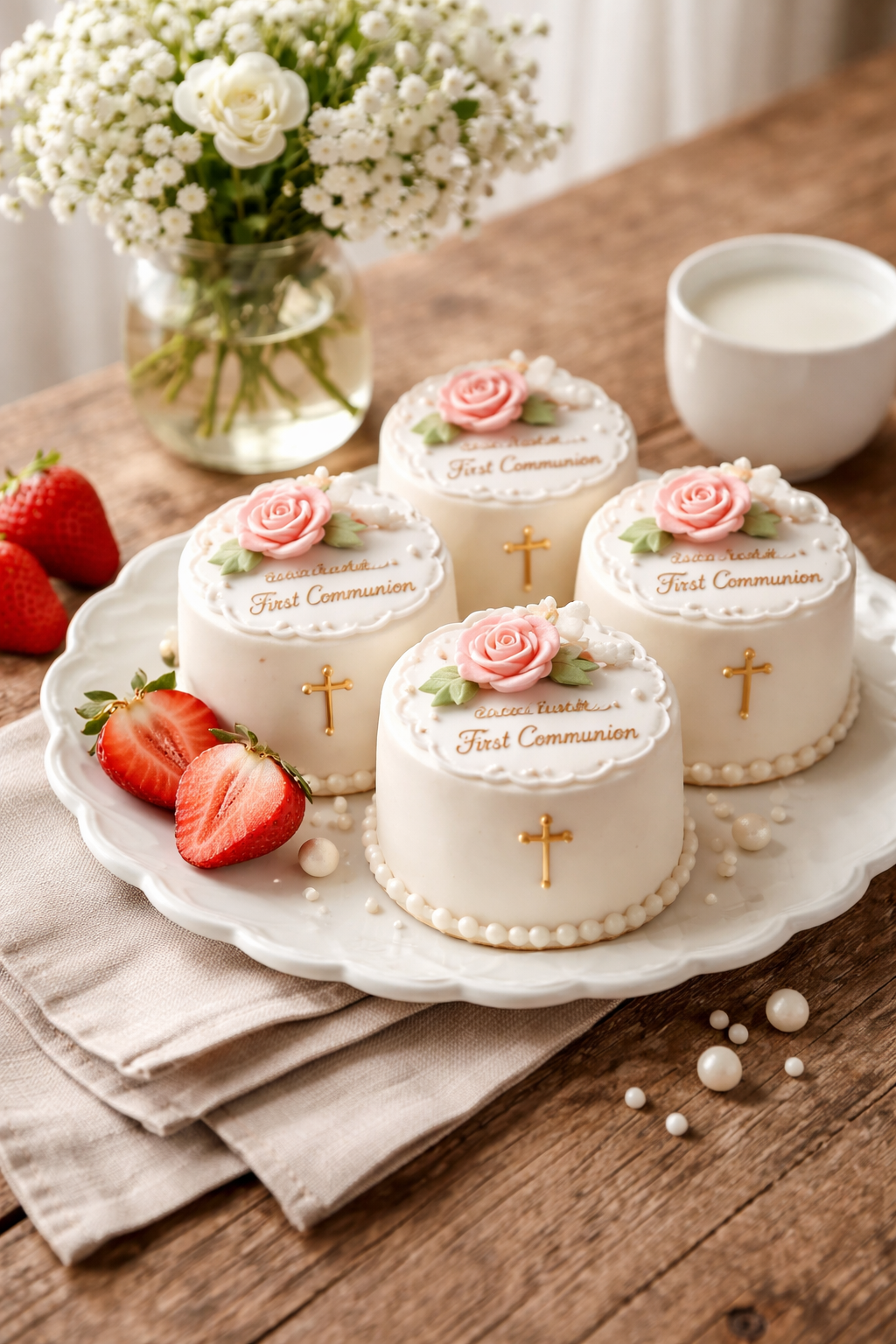
I still remember the panic in my sister’s eyes two weeks before her daughter’s First Communion. She had the dress, the venue, and the guest list ready. But she had completely forgotten about the cake. We spent that evening scrolling through pictures of first communion cakes, trying to find something that felt just right for such a meaningful day. That experience taught me how important it is to plan ahead for this special celebration.
Welcome to my blog where I share my love for special occasions and faith-filled celebrations. Today, I’m excited to talk about first communion cakes and how to choose one that will make your child’s big day even more memorable. Whether you’re planning a small family gathering with just grandparents and godparents or a larger celebration with extended family and friends, the right cake can become a beautiful centerpiece that ties everything together.
The cake you choose isn’t just dessert. It’s part of the memory your child will carry for years to come. I’ve seen kids light up when they see a cake decorated with religious symbols that match their faith journey. I’ve also watched families gather around dessert tables, taking photos and sharing stories while admiring a beautifully designed communion cake.
What is the Best Cake for First Holy Communion?
Choosing the best cake for this sacred occasion means finding the right balance between meaningful design and delicious taste. The cake should reflect the religious significance of the day while also being something your guests will actually enjoy eating. I’ve been to communion parties where the cake looked stunning but tasted like cardboard, and that’s not what you want for your celebration.
The visual appeal of first holy communion cakes matters because this dessert often becomes the focal point of your party table. Your cake should complement your overall theme and color scheme. Many families coordinate their cake design with the communion outfit, the party decorations, and even the invitations. This creates a cohesive look that makes everything feel intentional and special.
When it comes to meaningful elements, religious symbols make your communion cake different from any other celebration cake. Common designs include crosses, chalices, Bibles, rosary beads, praying hands, and doves. Some bakers can even recreate your church’s architecture in fondant or create an edible replica of your child’s prayer book. I once saw a cake decorated with the actual Bible verse the child had chosen for their communion cards, and it was absolutely beautiful.
The flavor profile you select can make or break your dessert experience. Here are the most popular options for first holy communion cake ideas:
- Classic vanilla with buttercream frosting remains the top choice for many families
- Chocolate cake with chocolate ganache appeals to kids and adults alike
- Marble cake gives you the best of both worlds
- Lemon or almond flavors offer a sophisticated taste for spring celebrations
- Red velvet with cream cheese frosting has become increasingly popular
- Funfetti or confetti cake adds a festive touch kids absolutely love
I always recommend doing a tasting session if you’re ordering from a bakery. Many places that come up when you search for “first communion cakes near me” offer complimentary tastings. Bring your child along so they can help pick their favorite flavor. After all, it’s their special day.
For first holy communion cakes for girl celebrations, soft colors dominate the design world. Think pastels like blush pink, lavender, mint green, or powder blue. White and gold combinations create an elegant look that photographs beautifully. Pearl accents, delicate flowers, and lace patterns add feminine touches without being too over the top. I’ve noticed that cross designs combined with floral elements work particularly well for girls’ communion cakes.
Boys’ communion cakes tend to feature bolder colors like navy blue, silver, white, and gold. The designs usually lean toward simpler, cleaner lines with crosses, chalices, or wheat symbols. Some families choose sports-themed elements if their son has a particular interest, though this works best when balanced with traditional religious symbols.
The trend of combining first communion cakes and cupcakes has taken off in recent years, and I completely understand why. This approach gives you flexibility and solves several common party problems at once. You can have a smaller display cake for photos and the ceremonial cutting, then serve cupcakes to your guests. This makes portion control easier, speeds up serving time, and eliminates the need for plates and forks.
Cupcakes also let you offer variety. You might have vanilla, chocolate, and strawberry flavors so everyone finds something they like. The individual servings mean less mess, which parents of young children definitely appreciate. Plus, cupcakes are easier to transport if you’re celebrating at a venue away from home.
When you go with the cake and cupcake combination, make sure the designs coordinate. Your display cake might feature elaborate decorations while the cupcakes have simpler toppers like fondant crosses or edible pearls. Some bakeries create stunning cupcake towers with a small cutting cake on top, giving you the best of both presentation styles.
First holy communion cake topper options have expanded beyond basic crosses. You can now find custom toppers with your child’s name and communion date, figurines of praying children, or symbolic items like communion wafers and chalices. Some families use fresh flowers as toppers for a natural, elegant look. Others choose meaningful verses or simple phrases like “Blessed” or “First Holy Communion” in beautiful script.
If you’re crafty, DIY toppers can add a personal touch. I’ve made simple cross toppers using floral wire and pearls, and they turned out lovely. You can also print photos of your child on edible paper for a truly personalized design.
The size of your cake depends on your guest count. A standard rule is one slice per guest, but I always suggest ordering slightly more. People sometimes want seconds, especially if your cake is delicious. For a party of 30 people, I’d recommend a cake that serves 35 to 40. When combining cakes and cupcakes, plan for each guest to have either one slice or one cupcake, plus a few extras.
Searching for holy communion cakes designs online will give you endless inspiration, but don’t feel pressured to choose something extremely complicated. Sometimes the most beautiful cakes feature simple, clean designs with one or two special elements. A white cake with a gold cross and some fresh flowers can look absolutely stunning without being fussy or overdone.
Budget considerations matter too. Communion cakes can range from affordable grocery store options to custom creations from specialty bakeries. Set your budget early and be honest with bakers about what you can spend. Many talented bakers can work within various price points and still create something beautiful.

First Holy Communion Cake Ideas and Designs
Once you’ve nailed down your flavor preferences and basic style direction, the real fun begins with exploring actual design possibilities. I spent hours looking through communion cakes for girls when my niece was preparing for her big day, and honestly, the options can feel overwhelming at first. But here’s the thing – narrowing down your choices becomes much easier when you understand the different design categories available.
Traditional designs never go out of style for a reason. These classic communion cake designs typically feature white fondant or buttercream as the base, accented with religious symbols in gold, silver, or soft pastels. Think of a simple two-tier white cake with a handcrafted fondant cross on top, surrounded by delicate sugar flowers. My neighbor ordered one last spring that had tiny rosary beads cascading down one side, and it looked like something from a professional magazine photo shoot.
What I love about traditional designs is their timeless quality. When your child looks back at photos twenty years from now, a classic communion cake won’t feel dated. These designs photograph beautifully and work with virtually any venue décor. A baker once told me that traditional doesn’t have to mean boring – it’s all about the execution and attention to detail.
Modern interpretations have really changed the game though. I’m talking about geometric patterns, watercolor effects painted directly onto fondant, and metallic accents that catch the light. One design I saw recently featured a naked cake style with minimal frosting on the sides, fresh berries, and a simple gold cross. It felt fresh and contemporary while still honoring the religious significance. These modern approaches work especially well if you’re having your celebration at a trendy venue or if your family appreciates minimalist aesthetics.
Creative themed designs let you incorporate your child’s personality into the celebration. Maybe your daughter loves butterflies – you could have a communion cake decorated with white and gold butterflies alongside traditional crosses. Or perhaps your son is passionate about a particular sport. I’ve actually seen families successfully blend interests like a soccer ball cake design that incorporated communion elements, though you have to be careful not to overshadow the religious meaning of the day.
For first holy communion cakes for girl celebrations, floral themes dominate the design landscape. Real flowers or sugar flowers in whites, blushes, and lavenders create stunning visual impact. I watched a baker create sugar peonies so realistic I wanted to smell them. She placed them around each tier of a three-layer cake, with delicate pearl strands connecting each bloom. The effect was absolutely breathtaking.
Lace patterns work wonderfully for girls’ cakes too. Edible lace can be applied to fondant to create texture and elegance. Some bakers use actual lace as a stencil, dusting it with edible powder to transfer the pattern onto the cake surface. This technique creates a vintage, romantic feel that parents often love. I tried this myself once on a smaller cake – it’s trickier than it looks, but totally worth the effort when it turns out right.
Angel and dove motifs appear frequently in communion cakes for girls. These symbols represent purity and the Holy Spirit, making them particularly meaningful for this sacrament. A white dove perched atop the cake or angels crafted from fondant around the base can transform a simple cake into something truly special. One design I’ll never forget featured a dove with wings spread wide, appearing to descend onto the cake – the baker had used wire supports to create the illusion of flight.
By the way, color gradients have become incredibly popular lately. Instead of solid colors, many communion cake designs now feature ombre effects that transition from white to soft pink, or from cream to gold. This adds visual interest without requiring complicated decorating skills. Even if you’re making a knock knock cake at home for a practice run before the big day, you can experiment with these gradient techniques using different shades of buttercream.
The role of first holy communion cakes decorations can’t be overstated. These elements transform a regular cake into a communion-specific creation. Edible pearls scattered across tiers create an elegant, sophisticated look. Fondant bibles opened to specific verses add personalization and meaning. Chalice designs molded from gum paste serve as both decoration and conversation starters.
Ribbon work adds another dimension to your cake presentation. Satin ribbons in white, gold, or colors matching your theme can wrap around each tier. Some families choose ribbons that match the ribbon on their daughter’s communion dress or veil. I’ve used this coordination technique for several celebrations, and it really does tie everything together visually. The photos end up looking professionally styled.
Funny enough, some of the most effective decorations are the simplest. A cascade of fresh white roses down one side of a plain white cake needs nothing else. Sometimes restraint creates more impact than elaborate designs. I learned this lesson when planning my cousin’s communion party – we initially wanted everything on the cake, but scaled back to just a few meaningful elements. The result looked far more sophisticated.
Exploring different communion cake designs means understanding your structural options. Tiered cakes make a statement and work beautifully for larger gatherings. A three-tier design gives you space for varied decorations on each level – perhaps crosses on the bottom tier, flowers on the middle, and a special topper on top. The height creates visual drama that guests notice immediately when they enter your party space.
I remember helping set up a four-tier communion cake that stood nearly three feet tall. It was genuinely impressive, though I’ll admit I was terrified someone would bump the table. Tiered cakes do require stable support systems and careful transportation. If you’re not experienced with stacked cakes, definitely leave this to professionals or use dummy tiers (styrofoam covered in fondant) with only the top tier being actual cake.
Single-tier cakes offer simplicity without sacrificing beauty. A large sheet cake can serve many guests and provides a perfect canvas for detailed decoration. I’ve seen single-tier designs that rivaled multi-tiered cakes in visual appeal. The key is using the full surface area creatively – perhaps a large cross design made entirely of piped roses, or a hand-painted religious scene covering the top.
Sheet cakes also solve practical problems. They’re easier to cut and serve, less likely to have structural issues, and typically cost less than tiered options. If you’re working with recipes like cakes using condensed milk, a single tier lets you focus on perfecting the flavor and moisture without worrying about engineering challenges.
Themed cakes that tell a story have gained popularity recently. I saw one design that recreated the child’s journey to communion – the bottom tier showed baptism symbols, the middle tier featured confirmation elements, and the top tier celebrated first communion. This narrative approach creates meaning beyond just pretty decorations. It becomes an edible representation of your child’s faith journey.
Character-based themes work if handled tastefully. Some bakeries create communion cakes featuring child-like figures in prayer, angels reading scripture, or scenes from Bible stories. These designs appeal to younger children who might find traditional symbols less engaging. The trick is maintaining the sacred nature of the occasion while acknowledging that you’re celebrating a child’s milestone.
Texture variation adds another design element worth considering. Smooth fondant combined with ruffled buttercream creates visual contrast. Quilted patterns pressed into fondant add depth without requiring additional decorations. I once attended a communion where the cake featured alternating smooth and textured sections in white and cream – the play of light across those surfaces was gorgeous in photographs.
If you want something lighter and fresher tasting, consider a strawberry whipped cream cake decorated with white chocolate crosses and fresh berries. This style works particularly well for spring and summer communions when heavier fondant cakes might feel too rich. The natural elegance of fresh fruit complements the purity symbolism of the communion celebration.
Color blocking has emerged as a trendy design technique. Instead of traditional all-white cakes, some designs feature distinct sections of color – perhaps white, gold, and blush arranged in geometric patterns. This contemporary approach appeals to families who want something current while still maintaining elegance. Just make sure your chosen colors align with the religious significance rather than looking like a generic birthday celebration.
Don’t forget about the cake board and presentation platform. A beautiful cake deserves an equally beautiful foundation. Covered cake boards wrapped in coordinating ribbons, elevated cake stands, or even custom-made wooden platforms can enhance your overall presentation. I’ve used vintage silver platters, modern acrylic stands, and rustic wooden slices depending on the party theme – each choice completely changed the cake’s impact.
Finding the Perfect First Holy Communion Cake Near You
Let me tell you about the time I waited until five days before my nephew’s communion to start looking for a baker. Big mistake. Every decent bakery within thirty miles was already booked solid. I ended up driving to a town forty minutes away and paying rush fees on top of the regular price. Learn from my disaster – start your search early, ideally two to three months before the celebration date.
When you’re searching for first communion cakes near me, you’re probably staring at dozens of results and wondering where to even begin. I get it. The overwhelming number of options can make a simple decision feel complicated. Here’s what I’ve learned works best: start by asking for recommendations from friends, family members, or your church community. Someone in your parish has likely celebrated a communion recently and can point you toward bakeries they loved or warn you away from ones that disappointed them.
Local bakeries often provide the most personalized service. When you walk into a small, family-owned shop, you’re typically dealing directly with the person who will actually create your cake. I’ve found these bakers more willing to accommodate special requests, like matching the exact shade of your daughter’s communion dress or incorporating a specific prayer your child loves. They also tend to be more flexible about last-minute adjustments if your guest count changes.
Grocery store bakeries deserve consideration too, especially if you’re working with a tight budget. I’ve seen some genuinely beautiful communion cakes come from major grocery chains. The designs might be simpler and more standardized, but the quality can surprise you. Plus, you can usually pick up your cake the morning of the celebration without scheduling weeks in advance. The cost difference is substantial – you might pay $30-50 instead of $150-300.
Online bakeries have exploded in popularity, and some ship custom cakes nationwide. This option works if you’ve found a specific design you absolutely love from a baker who isn’t local. However, shipping cakes makes me nervous. I’d only go this route for the display cake if you’re doing the cake and cupcake combination, then make or buy simpler cupcakes locally for actual serving.
Specialty religious bakeries exist in some areas and focus specifically on sacramental celebrations. These shops understand the significance of the occasion in ways general bakeries might not. They often have pre-designed communion cake designs that incorporate appropriate symbolism without you needing to explain what a chalice represents. Search terms like “Catholic bakery near me” or “religious celebration cakes” might help you find these specialty options.
Here’s the thing about custom cake ordering – you need to go into consultations prepared. I always bring a folder with inspiration photos, color swatches from party decorations, and even a fabric sample from the communion outfit if possible. This visual reference helps bakers understand exactly what you’re envisioning. I also write down my must-haves versus nice-to-haves. Maybe the cross topper is non-negotiable, but you’re flexible about flower colors.
When evaluating bakeries, consider these important factors before committing:
- Portfolio review: Look at photos of previous communion cakes they’ve created, not just their general work
- Taste testing: Never order a cake without trying the actual flavors first
- Price transparency: Make sure you understand exactly what’s included in the quoted price
- Delivery or pickup options: Will they deliver to your venue, or do you need to transport it yourself?
- Cancellation policies: Life happens – understand what happens to your deposit if you need to reschedule
- References: Don’t hesitate to ask for contact information from recent customers
- Ingredient quality: Ask about what they use – real butter versus shortening makes a difference
- Timeline flexibility: Can they accommodate your date, or are they already overbooked?
Budget conversations feel awkward, but good bakers appreciate honesty upfront. If you can only spend $75 on a cake, say that immediately. A skilled baker can work within almost any budget by adjusting size, simplifying decorations, or suggesting alternatives like buttercream instead of fondant. I’ve seen gorgeous communion cakes at every price point – it’s really about working with someone creative who understands your constraints.
Design preferences should balance your vision with the baker’s expertise. I learned this the hard way when I insisted on a specific design I’d seen online, even though my baker suggested it wouldn’t work well. She was right – the fondant didn’t hold up in the warm venue, and the whole thing looked droopy by cake-cutting time. Now I share my inspiration but trust the professional’s judgment about execution.
Delivery options matter more than you might think. Professional delivery means the baker transports, sets up, and ensures everything looks perfect at your venue. This service typically costs extra but removes enormous stress from your day. I watched my sister try to transport a three-tier cake in her SUV, and I aged about five years during that twenty-minute drive. Every bump in the road felt like potential disaster. If you must transport it yourself, invest in a non-slip mat, drive slowly, and bring emergency decorating supplies just in case.
The significance of first holy communion cake toppers extends beyond just decoration. These elements can transform a simple cake into something deeply personal and meaningful. Custom toppers with your child’s name and the date create a keepsake you can save long after the cake is eaten. I still have the cross topper from my own communion cake that my mom preserved – seeing it always brings back memories of that special day.
Personalized toppers come in countless styles now. Acrylic toppers with laser-cut designs offer a modern aesthetic. Wooden toppers with burned lettering give rustic charm. Fondant figures can be crafted to look like your actual child in their communion outfit. I’ve even seen families commission small watercolor paintings mounted on food-safe supports to top their cakes. The options really are endless.
Religious symbol toppers carry meaning that resonates beyond the party itself. A beautiful cross, a delicate chalice, or praying hands remind everyone present why you’re gathered together. These symbols connect your celebration to centuries of faith tradition. When I see a communion cake topped with a simple white cross, it immediately distinguishes the celebration from a birthday or other secular event.
By the way, some families choose fresh flowers as toppers and absolutely love the natural elegance this brings. White roses, lilies, or hydrangeas coordinate beautifully with most color schemes. Just make sure any flowers touching the cake are pesticide-free and food-safe. I once used grocery store flowers without thinking, and a bakery friend gently informed me that commercial flowers are often treated with chemicals you definitely don’t want near food. Oops. Order from florists who supply edible flowers, or use organic blooms from your own garden.
Searching for holy communion cakes designs online gives you inspiration, but don’t feel locked into exactly replicating something you see. Use those images as starting points. Maybe you love the color scheme from one cake and the cross design from another. Combine elements that speak to you personally. The baker I work with most often says her favorite projects come from clients who bring ideas but allow creative interpretation.
Timing your order correctly can actually save you money. Some bakeries offer discounts for orders placed several months in advance or for celebrations on less popular dates. Spring communion season gets crazy busy with bookings, so if you’re flexible about your party date, ask whether a Friday evening or weekday celebration might come with pricing benefits. I’ve seen families save 15-20% this way.
Don’t forget to ask about allergy accommodations if needed. Many bakeries now offer gluten-free, dairy-free, or nut-free options. The quality of these specialty cakes has improved dramatically in recent years. I’ve tasted gluten-free communion cakes that honestly rivaled traditional versions. If your child or close family members have dietary restrictions, this consideration ensures everyone can enjoy the celebration fully.
Contract details might seem boring, but read everything before signing. Make sure the agreement specifies your exact design, flavor, size, delivery time, and total cost including any fees. I know someone who thought delivery was included, only to get hit with a surprise $50 charge on party day. Get everything in writing to avoid misunderstandings that could dampen your celebration.
If you’re considering making the cake yourself, honestly assess your skill level and available time. Baking a simple sheet cake is totally manageable for most home bakers. Creating a multi-tiered fondant masterpiece requires advanced skills and equipment you might not have. There’s absolutely no shame in outsourcing this part of the celebration. I’m a pretty confident baker, but I still hire professionals for major events because I’d rather enjoy the party than stress about cake engineering. When you’re ready to expand your baking skills for future celebrations, exploring different cakes and cupcakes recipes can help you develop techniques at your own pace.
FAQs and Final Thoughts
Planning your child’s communion celebration involves juggling many details, and I hope these insights about cakes help make at least one decision easier. Remember that while the cake creates beautiful memories and photographs, the true meaning of the day centers on your child’s growing faith journey. Choose a cake that brings joy, feeds your guests well, and reflects the sacred nature of the occasion, but don’t let cake stress overshadow the spiritual significance. Trust your instincts, work with people who understand your vision, and give yourself permission to enjoy this milestone without demanding perfection.
Frequently Asked Questions
Do you get a cake for First Communion?
Yes, serving a cake at your First Communion celebration is a beloved tradition for most families, though it’s not religiously required. The cake serves as a centerpiece for your party and gives guests something sweet to enjoy while celebrating your child’s spiritual milestone. I’ve attended dozens of communion parties, and I can only remember one that didn’t have cake, and honestly, people did mention its absence. A cake helps create the festive atmosphere that marks this as a special occasion rather than just an ordinary gathering. Whether you choose an elaborate custom design or a simple homemade creation, having some kind of dessert makes the celebration feel complete.
What is a traditional First Communion gift?
Traditional communion gifts typically center on religious items that support the child’s continued faith development. Common choices include rosary beads, prayer books, religious jewelry like crosses or medals, children’s Bibles, or framed religious artwork for their room. Keepsake boxes engraved with their name and communion date provide a place to store mementos from the day. Some families give more practical gifts like savings bonds or contributions to college funds. My goddaughter received a beautiful charm bracelet with a tiny chalice charm that she still wears years later. The most meaningful gifts connect to faith while also showing you understand the child’s personality and interests.
How much money to give for a First Communion?
The appropriate monetary gift varies based on your relationship to the child and your own financial situation, but generally ranges from $20 to $150. Close family members like grandparents might give $50-150, while family friends or distant relatives often give $20-50. There’s no wrong amount as long as it’s given with genuine good wishes for the child’s spiritual journey. I usually give around $50 for godchildren or nieces and nephews, and $25-30 for friends’ children. Some families appreciate checks made out to a religious education fund or donation to charity in the child’s name instead of cash. The thought and prayer behind the gift matter far more than the dollar amount.
What flavors work best for communion cakes in warm weather?
For spring and summer communions, lighter flavors tend to work better than heavy options. Lemon, almond, vanilla, and fruit-based cakes hold up better in warmth than dense chocolate or rich buttercream-heavy designs. I’m particularly fond of white cake with fresh strawberry or raspberry filling for May communions. Whipped cream frostings taste wonderfully light but require refrigeration until shortly before serving. If your party is outdoors, consider how heat affects different frostings – fondant holds up better than buttercream in direct sun. You might also want to check information about how different ingredients affect metabolism if you’re choosing lighter options to help guests feel energized rather than overly full, especially if your celebration includes activities for children.
Can I use a non-religious cake design for First Communion?
While you technically can choose any cake design, I’d encourage including at least some religious elements to honor the sacred nature of the sacrament. This doesn’t mean your entire cake needs to look like a church altar, but incorporating a cross, chalice, or dove helps distinguish this celebration from a regular birthday party. I’ve seen families successfully blend personal interests with religious symbols – like a cake decorated with flowers and butterflies that also features a prominent cross. The balance keeps the focus on the spiritual significance while still reflecting your child’s personality. Remember that communion celebrates a major step in your child’s faith life, and the cake can help communicate that meaning to guests.
How far in advance should I order my communion cake?
I recommend ordering your communion cake at least 6-8 weeks before your celebration date, especially if your party falls during peak communion season in April or May. Popular bakeries book up quickly during these months, and waiting until the last minute severely limits your options. Ordering early also gives you time for design consultations, flavor tastings, and any adjustments without feeling rushed or stressed. For very elaborate custom designs, some bakers appreciate even more lead time – up to three months. If you’re working with a grocery store bakery, you might only need one to two weeks’ notice, though I’d still recommend more time if possible to ensure they can accommodate your specific design requests.
Should the cake match the communion party theme exactly?
Your cake should coordinate with your overall theme but doesn’t need to match it exactly. Think of the cake as complementing your decorations rather than duplicating them. If your party features purple and gold colors, your cake might incorporate those shades while adding its own unique elements like fresh flowers or specific religious symbols. I’ve found that cakes look most sophisticated when they relate to the theme without trying to replicate every detail. A white cake with gold accents works beautifully with almost any color scheme and photographs wonderfully. Trust that guests will appreciate the cohesive feeling without needing everything to match perfectly. Sometimes subtle coordination creates more visual interest than exact matching.
What’s the difference between buttercream and fondant for communion cakes?
Buttercream is a creamy frosting made from butter and sugar that tastes delicious but shows texture from spreading and piping. Fondant is a smooth, pliable sugar paste that covers cakes for a flawless, polished appearance but many people find it less tasty. I personally prefer buttercream because flavor matters most to me, though I’ll admit fondant creates those picture-perfect finishes you see in magazines. Buttercream works wonderfully for simpler designs, textured finishes, and piped decorations. Fondant excels for sharp edges, elaborate sculpted details, and designs requiring perfect smoothness. Many modern bakers offer a compromise – fondant covering with buttercream filling, or buttercream frosting with fondant decorations. Ask your baker which they recommend for your specific design vision.
How do I transport a communion cake safely?
Transporting a cake requires careful planning and the right supplies to prevent disaster. Place your cake on a non-slip mat or damp towel in a flat area of your vehicle, preferably the floor behind the front seat where it won’t shift. Keep the car cool with air conditioning, and avoid sudden stops or sharp turns. For tiered cakes, ask your baker whether they’ve used internal supports that allow transport, or if the tiers need assembly on-site. I always bring an emergency kit with extra frosting, a spatula, and paper towels in case minor repairs are needed upon arrival. Drive slowly and give yourself extra time – rushing increases the chances of problems. Honestly though, paying for professional delivery eliminates this stress entirely and is worth every penny if it fits your budget.
Can I freeze leftover communion cake?
Yes, you can freeze communion cake for later enjoyment, and it’s actually a lovely way to save a piece for your child to eat on their one-year communion anniversary. Wrap individual slices tightly in plastic wrap, then place them in freezer bags with as much air removed as possible. Properly wrapped cake stays good for 2-3 months in the freezer. Thaw frozen cake in the refrigerator overnight, then bring to room temperature before serving for best texture and flavor. Buttercream freezes better than whipped cream frostings, and simple cakes freeze more successfully than those with fresh fruit or cream fillings. I’ve saved the top tier of communion cakes this way multiple times, and the tradition of enjoying a piece months later always brings back sweet memories of the celebration day.
Equipment
- Mixing Bowls
- Measuring Cups
- Electric Mixer
- Cake Pans
- Cooling Rack
Ingredients
- 1 box cake mix various flavors like vanilla, chocolate, marble, lemon, almond, or red velvet
- 3 eggs amount as per cake mix instructions
- 1 cup water amount as per cake mix instructions
- 1/3 cup oil amount as per cake mix instructions
- 1 container buttercream or fondant for frosting
- 1 cake decorations e.g., edible pearls, fondant crosses, sugar flowers
- optional fresh flowers for decoration
- 1 cake board for presentation
Instructions
- Preheat the oven according to the cake mix instructions.
- Prepare the cake mix by combining it with eggs, water, and oil as instructed on the package.
- Pour the batter into greased cake pans.
- Bake the cakes in the preheated oven for the time specified on the mix instructions.
- Once baked, allow the cakes to cool completely.
- Frost the cooled cakes with buttercream or cover with fondant.
- Decorate using desired elements like edible pearls, crosses, or fresh flowers.
- Create a beautiful presentation by placing the cake on a decorated cake board or stand.
- Coordinate with cupcakes if desired for variety and easier serving.
- Serve at the First Communion celebration.
Notes
Nutrition

Hello! I’m Sarah Mitchell, and I’m passionate about bringing creativity and innovation to baking. My love for baking started in high school when I first tried my hand at decorating cupcakes for a class project. What began as a fun hobby quickly became a full-time passion. I’ve spent the past decade working in bakeries and dessert shops, honing my skills in everything from simple cookies to intricate wedding cakes.
After working in some of the top bakeries across the country, I realized that baking was about more than just following recipes — it was about infusing your personality into each creation. At BakingSecret.com, I love creating recipes that push boundaries while staying true to the heart of classic baking. I specialize in creating delicious and visually stunning pastries that will wow your guests.
When I’m not baking, I enjoy teaching baking classes, trying out new cake decoration techniques, and traveling to find inspiration in global dessert traditions. I’m so excited to share my tips and tricks with you to help elevate your baking game!