
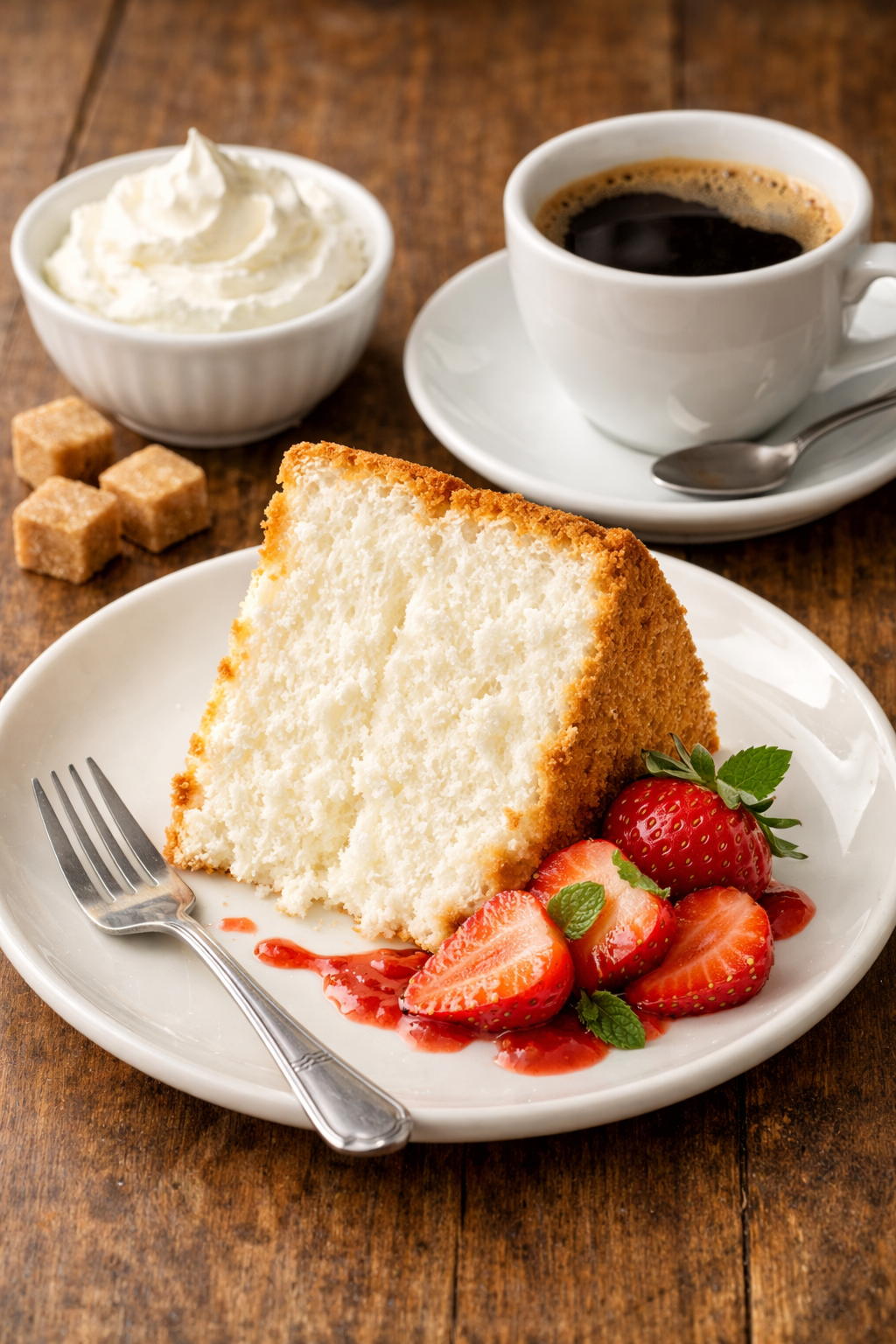
Welcome to My Angel Food Cake Calories Guide
I still remember the first time I ate angel food cake at my grandmother’s house. She’d dust it with powdered sugar and serve it with fresh strawberries. I thought I’d discovered heaven in cake form. The best part? She told me it was one of the “lighter” desserts she made. That stuck with me for years, but I never really knew if it was true until I started paying attention to nutrition labels.
If you’re here, you’re probably wondering about angel food cake calories just like I was. Maybe you’re trying to watch your weight, manage diabetes, or simply make smarter dessert choices. I get it. We all want to enjoy something sweet without feeling guilty afterward.
Today, I’m breaking down everything you need to know about the nutritional side of this fluffy white cake. We’ll look at calorie counts, carbs, sugar content, and how it stacks up against other desserts. I promise to keep things simple and honest. No confusing nutrition jargon or impossible-to-follow advice.
Understanding Angel Food Cake Calories: The Basic Facts
Let’s get right to what you came here for. How many calories are in a slice of angel food cake? A typical slice weighing about 57 grams contains roughly 70 to 80 calories. That’s it. Compare that to a slice of chocolate cake at 350 calories or cheesecake at 400 calories, and you’ll see why people call angel food cake a lighter option.
I was honestly surprised when I first checked the numbers. It seemed too good to be true. But here’s the thing: angel food cake is made primarily from egg whites, sugar, and flour. No butter. No oil. No heavy cream. That’s why the calorie count stays relatively low.
Now, if you’re curious about how many calories are in a whole angel food cake, the answer depends on the size and recipe. Most whole cakes contain between 1200 and 1500 calories total. A standard store-bought cake typically sits around 1400 calories. When you slice it into 12 pieces (which is pretty standard), you get those 70-80 calorie slices I mentioned earlier.
Angel Food Cake Calories and Carbs Breakdown
Calories tell only part of the story. If you’re tracking macros or managing blood sugar, you need to know about angel food cake calories and carbs together. One slice contains approximately 16 to 18 grams of carbohydrates. Most of those carbs come from sugar and flour.
For people asking about how many net carbs in angel food cake, the news isn’t as good. Since angel food cake contains almost zero fiber (usually less than 0.5 grams per slice), the net carbs equal the total carbs. That means you’re looking at about 16-18 net carbs per slice.
Here’s a quick breakdown of angel food cake nutrition facts for one standard slice:
- Calories: 70-80
- Total Fat: 0-0.5 grams
- Protein: 2-3 grams
- Total Carbohydrates: 16-18 grams
- Dietary Fiber: 0-0.5 grams
- Sugars: 12-14 grams
- Sodium: 200-300 milligrams
How Much Sugar in Angel Food Cake?
Sugar content is a big concern for many people, and rightfully so. How much sugar in angel food cake will you find? A single slice typically contains 12 to 14 grams of sugar. That’s about 3 teaspoons worth.
I know that might sound like a lot for such a small slice. But remember, sugar is what gives angel food cake its sweet taste and helps create that signature texture. The egg whites need sugar to stabilize and hold air when whipped.
Some brands offer sugar free angel food cake nutrition options made with artificial sweeteners. These versions can drop the sugar content to zero or near zero. The calorie count also drops slightly, usually to around 50-60 calories per slice. However, the texture can be different. I’ve tried a few, and they’re decent but not quite the same as the traditional version.
Is Angel Food Cake Healthier Than Other Cakes?
This is the million-dollar question. Is angel food cake healthier than other cakes? The short answer is yes, in most cases. But let me explain why.
Angel food cake wins on several fronts. First, it’s virtually fat-free. You won’t find butter, oil, or egg yolks in a traditional recipe. Second, the calorie count per slice is significantly lower than most other cakes. Third, the portion sizes tend to be more reasonable because the cake itself is so light and airy.
Let me show you a comparison. Devils food cake calories clock in at about 340 per slice. Red velvet cake? Around 400 calories. Even carrot cake (which sounds healthy) packs about 350 calories per slice. Angel food cake at 70-80 calories is clearly the winner here.
When people ask which cake is lowest in calories, angel food cake consistently tops the list. I haven’t found any other traditional cake that comes close to this calorie count.
But here’s where I need to be honest with you. Lower calories don’t automatically mean “healthy.” Angel food cake still contains refined flour and quite a bit of sugar. It offers very little protein, fiber, vitamins, or minerals. It’s a treat, not a health food.
Angel Food Cake for Special Diets
Many people wonder, is angel food cake okay to eat if you’re diabetic? This requires a careful answer. While angel food cake has fewer calories than other cakes, it still contains a significant amount of sugar and carbs. The 16-18 grams of carbs per slice will definitely impact blood sugar levels.
If you have diabetes, you can eat angel food cake occasionally and in moderation. The key is portion control and pairing it with protein or healthy fats to slow down sugar absorption. I’ve seen people enjoy a small slice with some nuts or a bit of Greek yogurt to balance things out.
For those following a low carb angel food cake plan, traditional angel food cake won’t fit your macros. The angel food cake carbs per slice are too high for keto or very low-carb diets. You’d need to find a specialized recipe using almond flour and sugar substitutes.
What About Toppings and Add-Ons?
Plain angel food cake keeps the calorie count low. But most of us don’t eat it plain, do we? I certainly don’t. So let’s talk about what happens when you add toppings.
The calories in angel food cake with strawberries and whipped cream increase based on how much you add. A quarter cup of sliced strawberries adds about 12 calories. Two tablespoons of whipped cream add roughly 25 calories. So your 75-calorie slice becomes about 112 calories total. Still reasonable compared to other desserts.
I like to keep my toppings simple. Fresh berries add natural sweetness, color, and some vitamins without many extra calories. A light dusting of powdered sugar adds sweetness and looks pretty for only about 10 extra calories.
Some popular toppings and their approximate calorie additions:
- Fresh strawberries (1/4 cup): 12 calories
- Whipped cream (2 tablespoons): 25 calories
- Chocolate syrup (1 tablespoon): 50 calories
- Lemon curd (1 tablespoon): 30 calories
- Fresh blueberries (1/4 cup): 20 calories
The bottom line? Angel food cake gives you flexibility. You can enjoy it plain and keep calories super low, or dress it up a bit while still staying under 150 calories total. That’s hard to do with most other desserts.

Breaking Down the Nutrition Even Further
We’ve covered the basics, but I want to get into the real nitty-gritty details because honestly, that’s what makes the difference when you’re trying to make informed choices. I spent way too many years just looking at calories and ignoring everything else. Big mistake.
When we talk about angel food cake calories and carbs together, you need to see the complete picture. One slice gives you roughly 15-20 grams of total carbohydrates, depending on the specific recipe and how thick you cut it. My grandmother used to cut hers pretty thin, which meant maybe 15 grams. The bakery down the street? They cut massive slices that probably hit closer to 22 grams. Size matters here.
The carb breakdown isn’t particularly complicated. Most of those carbs come straight from two sources: the cake flour and the sugar. There’s no complex carbs hiding in there, no whole grains sneaking their way in. Just simple, straightforward carbohydrates that your body will break down pretty quickly.
Understanding Net Carbs in Angel Food Cake
Here’s where things get interesting for anyone counting carbs seriously. The question how many net carbs in angel food cake matters a lot if you’re watching your intake for medical reasons or following specific diet plans.
Net carbs are calculated by taking total carbohydrates and subtracting the fiber content. Simple math, right? The problem with angel food cake is that it contains virtually no dietary fiber. We’re talking less than half a gram per slice, sometimes even zero depending on the recipe. That means your net carbs equal your total carbs. No magical reduction happening here.
So you’re looking at approximately 14-18 net carbs per standard slice. That’s not terrible in the grand scheme of daily carb intake for most people, but it’s definitely something to consider. I remember when my cousin started following a strict low-carb plan, she was devastated to learn that angel food cake didn’t fit her macros anymore. She tried making a low carb angel food cake version with almond flour and ended up with something that looked more like a science experiment gone wrong than dessert.
Funny enough, some specialty brands have started making lower-carb versions, but they require artificial sweeteners and alternative flours that completely change the texture. I’ve tested a few for comparison, and they’re just not the same fluffy, cloud-like experience.
The Sugar Situation Explained
Let’s have an honest conversation about sugar because this deserves more attention than just a quick number. When people ask how much sugar in angel food cake, they usually want to know if it’s going to spike their blood sugar or derail their healthy eating goals.
A typical slice contains between 12-15 grams of sugar. That variation depends on whether you’re eating homemade, store-bought, or bakery-made cake. I’ve noticed that commercial brands sometimes add a bit more sugar to ensure consistency and longer shelf life. Homemade versions can be slightly lower if you’re brave enough to reduce the sugar in the recipe, though I’ll warn you right now that it affects the texture significantly.
To put this in perspective, 12-15 grams of sugar equals roughly three to four teaspoons. Is that a lot? Well, it’s definitely less than what you’d find in other cakes. The devils food cake calories come with about 25-30 grams of sugar per slice, nearly double what you get from angel food cake. Same story with most frosted layer cakes.
By the way, I tested my blood sugar once after eating a slice of angel food cake because I was curious. I’m not diabetic, but I wanted to see what happened. My glucose went up, no surprise there, but it came back down within about an hour and a half. When I tried the same experiment with chocolate cake, I felt sluggish for hours afterward. Your experience might be different, but it gave me some personal insight.
Sugar-Free Alternatives Worth Considering
For anyone managing diabetes or just trying to cut back on sugar, sugar free angel food cake nutrition options exist nowadays. These versions substitute artificial sweeteners or sugar alcohols for regular granulated sugar.
The nutrition facts change pretty dramatically. You’re looking at roughly 50-60 calories per slice instead of 70-80. Sugar content drops to zero or maybe 1-2 grams depending on what sweetener they use. The angel food cake carbs per slice also decrease slightly, usually landing around 12-14 grams total.
Here’s the thing though. I’ve baked with sugar substitutes before, and it’s tricky. Sugar doesn’t just sweeten the cake; it actually helps create that characteristic texture and structure. Some sugar-free versions turn out denser or have a slightly chemical aftertaste. Others work surprisingly well. I’d recommend trying a small store-bought sugar-free version before committing to baking a whole one yourself. Save yourself the disappointment I experienced when I served a sugar-free version at my nephew’s birthday and everyone politely nibbled while side-eyeing the cake.
How Angel Food Cake Compares to Other Popular Cakes
I love a good comparison because it puts everything in context. We’ve mentioned devil’s food cake already, but let’s line up several popular options side by side. When people search for which cake is lowest in calories, they’re usually shocked by the differences.
Take a standard slice of each popular cake type. Angel food cake sits comfortably at 70-80 calories. Red velvet cake, which has become wildly popular in recent years, typically runs about 390-420 calories per slice once you account for that cream cheese frosting. Carrot cake with cream cheese frosting? We’re talking 350-400 calories minimum. Even pound cake, which seems innocent enough, delivers around 220-280 calories per slice.
The angel food cake nutrition facts win pretty much every comparison when it comes to calories and fat content. It’s virtually the only traditional cake you’ll find with less than one gram of fat per serving. That’s wild when you think about it. Most cakes pack in anywhere from 15 to 25 grams of fat per slice from butter, oil, and eggs.
I actually made a comparison chart last year when I was helping my sister plan her wedding reception. She wanted dessert but didn’t want guests feeling weighed down. We calculated that serving angel food cake with fresh berries instead of traditional wedding cake would save each guest about 250-300 calories. For a wedding with 150 guests, that’s a significant difference if anyone’s watching their intake.
Speaking of simple dessert options, sometimes the easiest recipes make the biggest impact at gatherings. Though if you’re looking for something with more indulgence, you might want to explore options like a citrus-flavored cheesecake that still feels special without requiring hours in the kitchen.
What Makes Angel Food Cake Different Nutritionally
The secret to angel food cake’s lower calorie count lies entirely in what it’s missing. No egg yolks means no cholesterol and virtually no fat. No butter or oil keeps those calories down even further. The recipe relies entirely on whipped egg whites for structure and lift.
This creates an interesting nutritional profile that’s kind of unique in the cake world. You get a small amount of protein from those egg whites, usually 2-3 grams per slice. Not enough to call it a protein source, but more than most other cakes offer. The sodium content tends to be a bit higher than you might expect, around 200-300 milligrams per slice, because salt and cream of tartar help stabilize the egg whites.
The angel food cake carbs per slice consist almost entirely of simple sugars and refined flour. No getting around that fact. There’s minimal nutritional value beyond calories. You won’t find significant amounts of vitamins, minerals, or any other nutrients worth mentioning. It’s dessert, plain and simple.
For anyone thinking about incorporating this into a balanced diet, just remember it’s a treat. I eat it occasionally and enjoy every bite without guilt because I know exactly what I’m getting. Some weeks I’ll have a slice twice, other weeks not at all. Balance is everything.
If you’re interested in rolled cake techniques or want to explore different cake textures entirely, there’s a whole world of baking methods that create various nutritional profiles. And if you’ve been experimenting with desserts and want to share your progress, you might relate to the feeling of celebrating small victories in your baking journey.
The bottom line with angel food cake nutrition is this: it’s the lightest traditional cake option available, but it’s still a refined-carb, sugary dessert. Treat it like one, enjoy it mindfully, and you’ll probably feel pretty good about your choice compared to most other cake options out there.
Dressing Up Your Angel Food Cake: Toppings That Won’t Derail Your Goals
Here’s where things get fun. I mean, plain angel food cake is nice and all, but let’s be real—most of us want to jazz it up a little. The good news? You can add plenty of delicious toppings without turning your light dessert into a calorie bomb. I’ve experimented with dozens of combinations over the years, some successful and others… well, let’s just say my family still jokes about the time I tried to make a balsamic reduction and ended up with something resembling tar.
The classic combo everyone asks about is calories in angel food cake with strawberries and whipped cream. This is probably the most popular way to serve it, and for good reason. The combination just works. Fresh strawberries add a bright, juicy sweetness that cuts through the cake’s simplicity. Whipped cream provides richness without going overboard.
Here’s what you’re looking at calorie-wise: your base slice starts at roughly 75 calories. Add a half-cup of sliced fresh strawberries, and you’re adding about 25 calories. A dollop of real whipped cream—let’s say two tablespoons—adds another 25-30 calories. Your total comes to around 120-130 calories. That’s still incredibly reasonable for a dessert that feels indulgent and looks beautiful on a plate.
By the way, I learned the hard way that Cool Whip and real whipped cream have different calorie counts. Cool Whip is actually slightly lower at about 20 calories for two tablespoons, but I personally prefer the taste of real whipped cream. Sometimes those extra five calories are worth it for the flavor difference. Your call.
Want to keep things even lighter? Try these combinations I’ve tested:
- Fresh berries alone (no cream): adds only 15-30 calories depending on quantity
- A drizzle of honey with lemon zest: adds about 20 calories for a teaspoon of honey
- Sugar-free chocolate syrup: adds roughly 5 calories per tablespoon
- Greek yogurt instead of whipped cream: adds about 35 calories for a quarter cup, plus you get some protein
- Crushed pineapple: adds about 30 calories for a quarter cup
The Greek yogurt trick is something I started doing last summer when I wanted more protein in my desserts. I’ll mix it with a tiny bit of vanilla extract and maybe a drop of honey, then dollop it on top. Feels fancier than it actually is, and the tanginess pairs surprisingly well with the sweetness of the cake.
Creating a Low Carb Angel Food Cake That Actually Works
I mentioned earlier that my cousin had a disaster trying to make low carb angel food cake. But since then, I’ve actually cracked the code after several attempts. It’s possible to make a lower-carb version that doesn’t taste like cardboard, though I’ll be honest—it requires some patience and the right ingredients.
The traditional recipe relies heavily on cake flour and sugar, both high-carb ingredients. To create a genuinely lower-carb version, you need to replace both. I’ve had the best success using a combination of almond flour and coconut flour, along with a granulated sweetener like erythritol or monk fruit sweetener.
The tricky part isn’t the ingredients themselves—it’s the technique. Angel food cake depends on properly whipped egg whites for its structure. When you introduce almond flour, which is heavier and fattier than cake flour, you risk deflating those beautiful air bubbles you worked so hard to create. I learned to fold the dry ingredients in even more gently than usual, almost ridiculously gently, and to use slightly more egg whites than a traditional recipe calls for.
My modified version brings the angel food cake carbs per slice down to about 6-8 grams, which is significantly better for anyone watching their intake. The texture isn’t identical to traditional angel food cake—it’s slightly denser and has a hint of nuttiness from the almond flour—but it’s honestly pretty good. My cousin, the one who failed the first time, tried my version at Thanksgiving and actually went back for seconds.
Here’s the thing though. Making a low-carb version requires specialty ingredients that cost more than regular flour and sugar. You’ll spend probably three times as much on ingredients. For some people, that’s worth it. For others, they’d rather just eat a smaller portion of traditional angel food cake and call it a day. No judgment either way.
Angel Food Cake for Diabetics: What You Really Need to Know
The question is angel food cake okay to eat if you’re diabetic comes up constantly, and I want to address it thoroughly because it matters. My father-in-law was diagnosed with type 2 diabetes three years ago, so I’ve lived through the reality of navigating desserts with blood sugar considerations.
First, the straightforward answer: yes, people with diabetes can eat angel food cake, but it requires mindfulness. The cake contains about 14-18 grams of carbohydrates per slice, and virtually all of those are simple carbs that will raise blood sugar. That’s just the reality. Pretending otherwise would be dishonest.
What I’ve learned from watching my father-in-law manage his diabetes is that context matters enormously. Eating a slice of angel food cake by itself on an empty stomach will spike blood sugar faster than eating that same slice after a balanced meal with protein and healthy fats. The fiber, protein, and fat from the meal slow down how quickly the sugar enters the bloodstream.
Here are some strategies that actually work in real life:
- Eat a smaller portion—cut your slice in half and you’ve halved the carb impact
- Pair it with a handful of nuts for protein and healthy fat
- Serve it alongside or after a protein-rich meal
- Choose a sugar-free version if available and palatable to you
- Make it a special occasion treat rather than a daily dessert
The National Institutes of Health provides extensive resources about managing diabetes through diet, including how to balance treats with essential nutrients your body needs. I actually printed out some of their guidelines and keep them on my refrigerator for reference when I’m planning family dinners.
My father-in-law has found that he can enjoy a half-slice of angel food cake with fresh strawberries about once a week without it significantly affecting his A1C levels. His doctor approved this approach because he keeps everything else in check. But everyone’s diabetes is different, so anyone dealing with this should definitely consult their healthcare provider before making dessert decisions based on what worked for someone else.
My Tried-and-True Angel Food Cake Recipe
Alright, I promised you an angel food cake recipe that actually works, so here it is. I’ve made this probably fifty times over the years, tweaking it until it became foolproof. Even my sister, who once burned water (don’t ask), has successfully made this recipe.
Here’s what you need:
- 1 cup cake flour (sifted three times—yes, three, it matters)
- 1½ cups granulated sugar, divided
- 12 large egg whites, at room temperature (this is crucial)
- 1½ teaspoons cream of tartar
- ¼ teaspoon salt
- 1½ teaspoons vanilla extract
- ½ teaspoon almond extract (optional, but I always include it)
The process is pretty straightforward, but timing matters. First, preheat your oven to 350°F. Do not grease your tube pan—the cake needs to grip the sides as it rises, and greasing prevents that. I learned this the hard way when my first attempt slid right down and became a dense pancake at the bottom of the pan.
Sift together the cake flour and ¾ cup of the sugar. Set this aside. In your largest, cleanest mixing bowl—and I mean spotlessly clean because any fat residue will prevent the egg whites from whipping properly—beat the egg whites until they’re foamy. Add the cream of tartar and salt, then continue beating until soft peaks form. This takes about three to four minutes with a stand mixer.
Gradually add the remaining ¾ cup of sugar, about two tablespoons at a time, while continuing to beat. Once all the sugar is incorporated, beat until you have stiff, glossy peaks. This is where patience pays off. Don’t rush this step. The egg whites should stand up straight when you lift the beater, with just a slight curl at the tip.
Gently fold in the vanilla and almond extracts. Then, here’s the part where most people mess up—carefully fold in the flour mixture, about ¼ cup at a time. Use a large spatula and fold from the bottom of the bowl up and over, rotating the bowl as you go. You’ll be tempted to stir because folding feels like it’s taking forever. Don’t do it. Stirring deflates the air bubbles, and you’ll end up with a dense cake.
Pour the batter into your ungreased tube pan and smooth the top gently. Bake for 35-40 minutes, until the top springs back when lightly touched and a toothpick inserted comes out clean. Here’s the weird part that confuses everyone: immediately invert the pan and let it cool completely upside down. Most tube pans have little feet for this purpose. If yours doesn’t, balance it upside down on a wine bottle through the center hole. Sounds crazy, looks crazy, works perfectly.
This prevents the cake from collapsing as it cools. The first time I made this, I didn’t invert it because I thought the instructions were wrong. The cake deflated into a sad, dense thing that nobody wanted to eat. Learn from my mistakes.
Once completely cool—and I mean completely, which takes about an hour—run a thin knife around the edges and the center tube. Invert onto a serving plate and it should release easily. This recipe makes about 12 servings, keeping each slice at that lovely 70-80 calorie range we’ve been talking about.
Making It Your Own Without Adding Tons of Calories
Funny enough, the best flavor variations I’ve discovered don’t add many calories at all. They’re usually extracts or citrus zests that pack flavor without the calorie punch. Here are my favorites:
- Replace the almond extract with lemon extract and fold in a tablespoon of lemon zest—adds maybe 5 calories total
- Use orange extract and add orange zest—same minimal calorie addition
- Add a teaspoon of lavender extract for a sophisticated twist—essentially zero calories
- Fold in a tablespoon of unsweetened cocoa powder for a hint of chocolate—adds about 10 calories to the whole cake
I made the lavender version for a bridal shower last year, and people lost their minds over it. They thought I’d spent hours on some complicated recipe. Nope, just added lavender extract. Sometimes the simplest modifications make the biggest impression.
By the way, if you’re getting more adventurous with your baking and want to explore different cake and cupcake recipes, there’s a whole world of techniques and flavor combinations that can keep your dessert routine interesting without always defaulting to high-calorie options.
The Reality of “Light” Desserts
I want to wrap this up with something I wish someone had told me years ago when I first started paying attention to nutrition. Angel food cake is genuinely lighter than most other cakes—we’ve proven that with all the numbers and comparisons. But “lighter” doesn’t mean you should eat twice as much or have it every single day.
I remember going through a phase where I thought, “Hey, this is only 75 calories, I can eat two slices!” And technically, yes, two slices at 150 calories is still less than one slice of chocolate cake. But I was missing the point. Dessert is meant to be savored and enjoyed, not rationalized and justified. The best approach I’ve found is to serve myself one beautiful slice, add some fresh berries, sit down without distractions, and actually taste every bite.
The angel food cake nutrition facts support enjoying it as a regular treat if you want to. It fits into most eating plans when consumed reasonably. It won’t derail your health goals. But it also won’t provide much nutritional benefit beyond enjoyment, and enjoyment absolutely counts for something. Life’s too short to never eat cake.
Whether you’re making a traditional version, trying a low-carb adaptation, or serving it with your favorite toppings, angel food cake remains one of the most forgiving desserts for anyone watching their calorie intake. Keep your portions reasonable, balance it with nutrient-dense foods the rest of the day, and enjoy every fluffy, sweet bite without guilt.
Final Thoughts
At the end of the day, angel food cake proves that you don’t have to sacrifice flavor for a lighter dessert option. With some creativity in your toppings and a bit of knowledge about what you’re eating, you can satisfy your sweet tooth while still honoring your health goals. Make it from scratch when you have time, grab a store-bought version when you don’t, and always remember that balance beats perfection every single time.
Frequently Asked Questions
Is angel food cake healthier than other cakes?
Yes, angel food cake is generally healthier than most traditional cakes when comparing calories and fat content. A typical slice contains only 70-80 calories and virtually no fat, while chocolate cake, red velvet cake, and other frosted varieties can pack 350-400 calories and 15-25 grams of fat per slice. However, angel food cake still contains refined flour and sugar, so it’s not a health food—just a lighter dessert option. It offers minimal protein, fiber, or micronutrients, so enjoy it as an occasional treat rather than a nutritious food choice.
How many calories are in a whole angel food cake?
A whole angel food cake typically contains between 1200 and 1500 calories total, depending on the recipe and size. Most store-bought cakes sit around 1400 calories for the entire cake. When you divide this into the standard 12 slices, you get approximately 70-80 calories per slice, which is remarkably low for cake. Homemade versions might vary slightly based on your specific recipe and how much sugar you use, but they generally fall within this same range.
Which cake is lowest in calories?
Angel food cake consistently wins as the lowest-calorie traditional cake option, with only 70-80 calories per slice. No other mainstream cake comes close to this calorie count. Pound cake, which might seem simple, still contains 220-280 calories per slice. Carrot cake delivers about 350 calories, and devil’s food cake packs around 340 calories per slice. The secret to angel food cake’s low calorie count is the complete absence of butter, oil, and egg yolks, relying instead on whipped egg whites for structure.
Is angel food cake okay to eat if you’re diabetic?
People with diabetes can eat angel food cake in moderation, but it requires careful consideration. Each slice contains about 14-18 grams of carbohydrates, mostly from simple sugars that will affect blood glucose levels. The best approach is eating smaller portions, pairing the cake with protein or healthy fats to slow sugar absorption, and enjoying it as an occasional treat rather than a regular dessert. Sugar-free versions can reduce the impact somewhat. Always consult with your healthcare provider about how specific foods fit into your individual diabetes management plan, as everyone’s needs differ.
Can I freeze angel food cake?
Absolutely, angel food cake freezes beautifully for up to three months. I recommend wrapping individual slices in plastic wrap and then placing them in a freezer bag for easy portion control. You can also freeze the whole cake by wrapping it tightly in plastic wrap followed by aluminum foil. When you’re ready to eat it, just thaw it at room temperature for about an hour. The texture remains remarkably similar to fresh cake, which makes it perfect for preparing ahead for gatherings or keeping on hand for when a dessert craving hits.
Why did my angel food cake fall or deflate?
The most common reason angel food cake deflates is failure to invert it immediately after baking. The cake must cool upside down to maintain its structure, or gravity will compress all those air bubbles you created. Other culprits include underbeating the egg whites, overmixing when folding in the flour, or using a greased pan. Even a tiny bit of egg yolk or fat in your egg whites can prevent proper whipping. Make sure your bowl and beaters are completely clean and dry before starting, and resist the urge to peek in the oven during baking, as temperature fluctuations can cause collapse.
What’s the difference between angel food cake and sponge cake nutritionally?
Angel food cake and sponge cake might look similar, but their nutrition profiles differ significantly. Angel food cake uses only egg whites, resulting in virtually zero fat and about 70-80 calories per slice. Sponge cake includes whole eggs (both whites and yolks) and sometimes butter, bringing the calorie count to around 110-140 per slice with 3-5 grams of fat. Sponge cake also tends to have slightly more protein due to the egg yolks. Both are lighter than frosted layer cakes, but if you’re strictly counting calories and fat, angel food cake comes out ahead.
Can I make angel food cake without cream of tartar?
You can substitute cream of tartar, though it serves an important purpose in stabilizing the egg whites and maintaining the cake’s structure. The best substitute is white vinegar or lemon juice—use about half a teaspoon per egg white instead of the cream of tartar. I’ve tried this when I ran out of cream of tartar mid-recipe, and it works reasonably well. The cake might be slightly less stable and the texture marginally different, but it’s still perfectly edible and enjoyable. Some people use a pinch of salt only, though this provides less stabilization than acidic alternatives.
How should I store leftover angel food cake?
Store angel food cake loosely covered at room temperature for up to two days, or wrap it well and refrigerate for up to a week. I prefer the refrigerator method because it keeps the cake fresher longer, though some people think refrigeration dries it out slightly. If you’ve added toppings like whipped cream or fresh fruit, definitely refrigerate and consume within two to three days. The cake tends to absorb odors from the fridge, so make sure it’s well wrapped. Bringing refrigerated cake to room temperature before serving improves the texture and brings out the flavors better.
Why does my angel food cake have brown spots or streaks?
Brown spots usually indicate that the sugar wasn’t fully dissolved into the egg whites during beating, or the dry ingredients weren’t sifted enough times. Sugar needs to dissolve completely to create that pure white color we associate with angel food cake. Those streaks can also come from inadequate folding of the flour mixture, leaving pockets of concentrated flour that brown more quickly during baking. While these spots don’t affect taste significantly, they do impact appearance. Make sure to sift your flour mixture at least three times and beat the egg whites until the sugar completely dissolves for the best visual results.
Equipment
- Mixing Bowl
- Electric Mixer
- Spatula
- Tube Pan
- Sifter
Ingredients
- 1 cup cake flour sifted three times
- 1.5 cups granulated sugar divided
- 12 large egg whites at room temperature
- 1.5 teaspoons cream of tartar
- 0.25 teaspoon salt
- 1.5 teaspoons vanilla extract
- 0.5 teaspoon almond extract optional
Instructions
- Preheat your oven to 350°F.
- Do not grease your tube pan.
- Sift together the cake flour and ¾ cup of the sugar; set aside.
- In a clean mixing bowl, beat the egg whites until foamy.
- Add the cream of tartar and salt, and beat until soft peaks form (about 3-4 minutes).
- Gradually add the remaining ¾ cup of sugar, 2 tablespoons at a time, while continuing to beat until stiff, glossy peaks form.
- Gently fold in the vanilla and almond extracts.
- Carefully fold in the flour mixture, ¼ cup at a time, without deflating the egg whites.
- Pour the batter into the ungreased tube pan and smooth the top.
- Bake for 35-40 minutes until the top springs back when lightly touched and a toothpick comes out clean.
- Immediately invert the pan and let it cool completely upside down.
- Once cool, run a knife around the edges and the center tube, then invert onto a serving plate.
Notes
Nutrition

Hello! I’m Sarah Mitchell, and I’m passionate about bringing creativity and innovation to baking. My love for baking started in high school when I first tried my hand at decorating cupcakes for a class project. What began as a fun hobby quickly became a full-time passion. I’ve spent the past decade working in bakeries and dessert shops, honing my skills in everything from simple cookies to intricate wedding cakes.
After working in some of the top bakeries across the country, I realized that baking was about more than just following recipes — it was about infusing your personality into each creation. At BakingSecret.com, I love creating recipes that push boundaries while staying true to the heart of classic baking. I specialize in creating delicious and visually stunning pastries that will wow your guests.
When I’m not baking, I enjoy teaching baking classes, trying out new cake decoration techniques, and traveling to find inspiration in global dessert traditions. I’m so excited to share my tips and tricks with you to help elevate your baking game!