
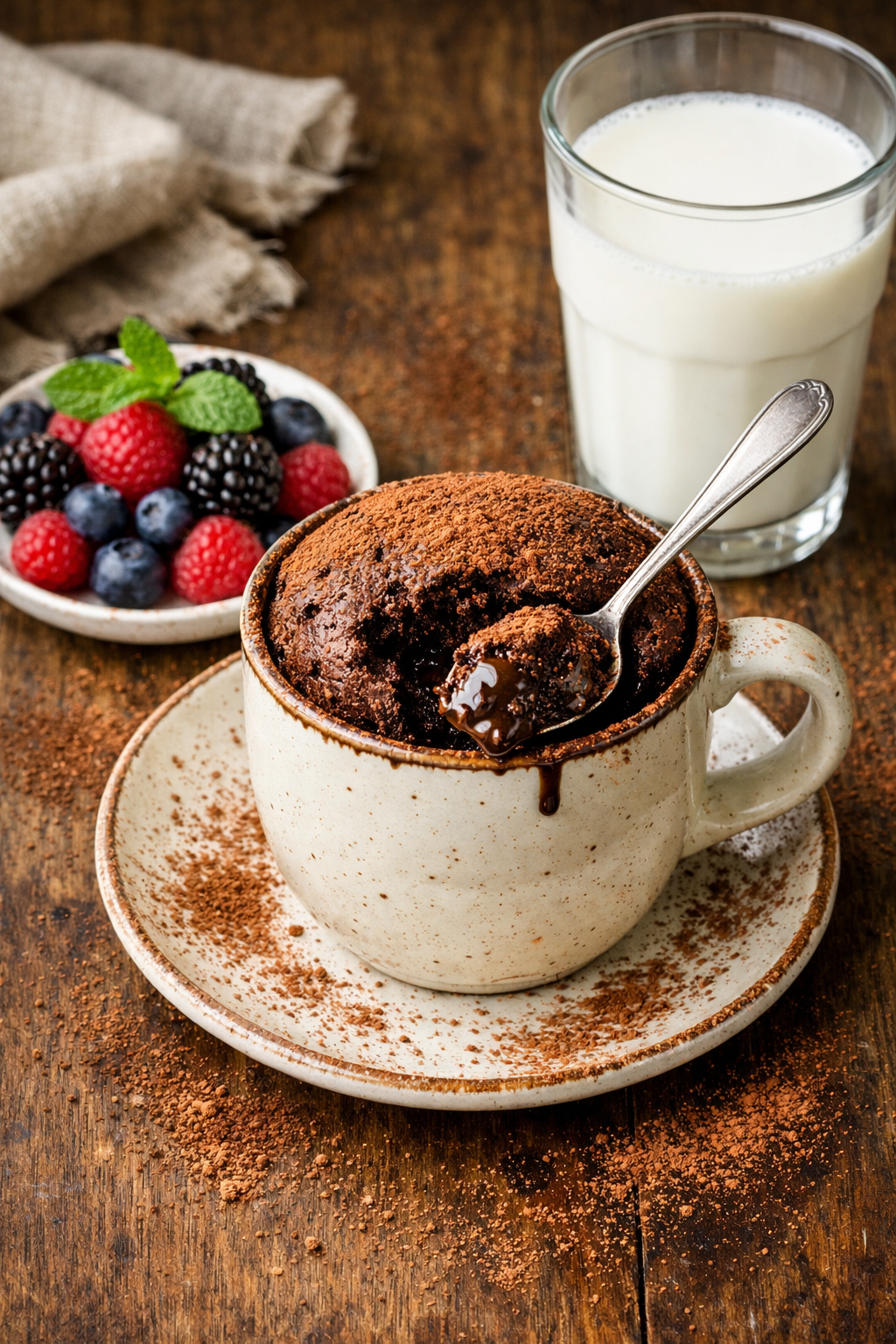
I’ll never forget the night I discovered mug cakes. It was 11 PM, I had a serious chocolate craving, and the thought of pulling out mixing bowls and preheating the oven felt like way too much work. That’s when I stumbled across the magic of mug cakes. Five minutes later, I was eating warm, gooey cake straight from my favorite mug. Game changer doesn’t even begin to describe it.
Welcome to my kitchen! Today, I’m super excited to share everything I know about gluten free mug cake. Whether you’re a seasoned baker or just starting out, this treat is perfect for those moments when you crave something sweet and comforting. Maybe you’re avoiding gluten for health reasons, or perhaps you just want a quick dessert that won’t leave your kitchen looking like a flour bomb went off.
Here’s what we’ll cover today: different types of gluten free mug cakes, the ingredients that work best, and some tried-and-true tips to make your baking experience even better. I’ve tested these recipes more times than I’d like to admit, and I’m ready to share all my secrets with you.
Exploring Different Varieties of Gluten Free Mug Cakes
The beauty of mug cakes is their flexibility. You can customize them in so many ways. I’ve experimented with countless combinations over the years. Some were absolutely delicious, and others, well, let’s just say they taught me valuable lessons. The good news is that you get to learn from my mistakes and enjoy the best versions right from the start.
When it comes to best gluten free mug cakes, the type of flour you choose makes a huge difference. Each flour brings its own personality to the recipe. Some create light and fluffy cakes, while others produce denser, more satisfying treats. Let me walk you through my favorite options.
Gluten Free Mug Cake Almond Flour
Almond flour has become my go-to choice for so many reasons. First off, it adds a subtle nutty flavor that pairs beautifully with chocolate, vanilla, or fruit. The texture is naturally moist and tender, which means your gluten free mug cake almond flour version won’t turn out dry or crumbly.
I love using almond flour because it’s packed with protein and healthy fats. This means your mug cake will actually keep you satisfied instead of leaving you hungry thirty minutes later. When I make a late-night treat, I want it to count.
Here’s what makes almond flour special for gluten free baking:
- It creates a naturally moist crumb without extra oil or butter
- The flavor is mild but adds depth to your cake
- It’s nutrient-dense with protein, fiber, and vitamin E
- The texture stays soft even after cooling
One tip I’ve learned the hard way: don’t pack almond flour into your measuring cup. Spoon it in lightly and level it off. I once made a mug cake so dense it could have been used as a doorstop. Trust me on this one.
My favorite gluten free mug cake almond flour recipe uses just a quarter cup of flour, one egg, a tablespoon of honey, and some chocolate chips. Mix it right in the mug, microwave for ninety seconds, and you’re done. The cake comes out fluffy on top and gooey in the middle.
Gluten Free Mug Cake Vanilla
Sometimes simple is best. A gluten free mug cake vanilla is like a blank canvas you can enjoy as is or dress up however you like. I make this version when I want something comforting without being too rich.
The key to an amazing vanilla mug cake is using real vanilla extract. I know it costs more than the imitation stuff, but the difference is incredible. Just a half teaspoon of pure vanilla transforms your cake from boring to bakery-worthy.
Here are my tricks for enhancing vanilla flavor in your mug cake:
- Add a tiny pinch of salt to make the vanilla taste stronger
- Try vanilla bean paste for extra flavor and those pretty speckles
- Mix in a teaspoon of cream cheese for a richer vanilla taste
- Top with vanilla yogurt or whipped cream after baking
I like to make my gluten free mug cake vanilla with almond flour because the two flavors work so well together. Sometimes I’ll throw in fresh blueberries or sliced strawberries before cooking. The fruit gets warm and jammy, and it turns a simple vanilla cake into something special.
For an extra treat, I’ll sometimes make a quick vanilla glaze by mixing powdered sugar with a splash of milk and vanilla. Drizzle it over the warm cake and you’ve got yourself a fancy dessert that took less than ten minutes total.
Gluten Free Mug Cake Coconut Flour
Coconut flour is a completely different animal from other gluten free flours. The first time I tried substituting it measure-for-measure in a regular recipe, I ended up with something that resembled a dry sponge. Not my finest moment in the kitchen.
But once I learned how to use it properly, gluten free mug cake coconut flour became one of my favorite options. Coconut flour absorbs liquid like crazy, so you need way less of it. Usually just two tablespoons of coconut flour replaces a quarter cup of regular flour.
The texture coconut flour creates is unique. Your cake will be a bit denser and more substantial than almond flour versions. Some people love this heartier texture, especially for breakfast treats. I think of it as the difference between cake and a muffin.
The taste of coconut flour is slightly sweet with a mild coconut flavor. It’s not overwhelming at all. In fact, it pairs really well with chocolate, banana, and peanut butter. When I make a gluten free mug cake banana version, I always reach for coconut flour.
Important things to know about coconut flour mug cakes:
- You need more eggs or liquid than other flour types
- Let the batter sit for a minute before cooking so the flour can absorb everything
- Don’t overbake or it will get too dry
- The cake continues cooking slightly after you remove it from the microwave
My favorite gluten free mug cake coconut flour recipe uses two tablespoons of flour, one egg, two tablespoons of milk, and a tablespoon of maple syrup. I add a quarter teaspoon of baking powder and a pinch of cinnamon. After mixing everything together, I let it sit for about thirty seconds, then microwave for sixty to seventy-five seconds.
For a 3 ingredient gluten free mug cake, coconut flour works great. You can make a simple version with just coconut flour, an egg, and mashed banana. It’s not fancy, but it satisfies sweet cravings while keeping things healthy and simple.
If you’re looking for variety, try making a gluten free mug cake peanut butter version with coconut flour. The combination is amazing. Mix two tablespoons of coconut flour with one egg, two tablespoons of peanut butter, and a little honey. The result tastes like a warm peanut butter cookie in cake form.
You can even make a gluten free mug cookie or gluten free mug muffin using the same basic principles. Just adjust the ratios slightly and change your mix-ins. I’ve made everything from double chocolate versions to lemon blueberry muffins this way.
For those who prefer convenience, brands like Pamelas gluten free mug cake offer pre-made mixes. They’re handy for travel or when you don’t want to measure anything. I keep a few in my desk at work for emergency chocolate situations.

Gluten Free Mug Cake Banana
Now let’s talk about one of my absolute favorite additions to any mug cake – bananas. I always have overripe bananas sitting on my counter, those ones with brown spots that nobody wants to eat for breakfast anymore. Perfect mug cake material right there.
A gluten free mug cake banana brings two incredible benefits to your dessert. First, bananas add natural sweetness, which means you can cut back on sugar or honey. Second, they make everything incredibly moist. I’m talking about that perfect tender crumb that melts in your mouth. No dry, disappointing cake here.
Here’s the thing about bananas in mug cakes – you don’t need much. About two tablespoons of mashed banana is plenty for a single serving. Too much and your cake gets gummy and heavy. I learned this when I dumped half a banana into my mug and ended up with something that had the texture of, well, let’s not go there.
The riper your banana, the sweeter and more flavorful your cake will be. Those super spotty ones that look past their prime? They’re actually at their peak for baking. I sometimes freeze overripe bananas specifically for making mug cakes later. Just thaw them out, mash them up, and you’re good to go.
When I make banana mug cakes, I like combining the fruit with warm spices like cinnamon or nutmeg. Sometimes I’ll add a handful of chocolate chips because chocolate and banana is basically a match made in heaven. Other times I keep it simple and top the finished cake with a dollop of Greek yogurt and a drizzle of honey.
The beauty of banana in gluten free baking is how it naturally binds everything together. You can actually use it to replace eggs if you need to, though I find the texture works best when you use both. Speaking of alternative ingredients, if you’re into experimenting with different cake variations, you might enjoy trying something completely different like a cream cheese coffee cake when you have more time on your hands.
Gluten Free Mug Cake Peanut Butter
Peanut butter is probably my most-used ingredient for gluten free mug cake peanut butter recipes. There’s something incredibly comforting about warm peanut butter in cake form. It’s rich, it’s satisfying, and it makes your kitchen smell amazing.
The texture peanut butter brings is phenomenal. It adds creaminess and helps create that fudgy consistency we all crave in a good mug cake. Plus, it packs in protein and healthy fats, so you’re getting actual nutrition along with your treat. Not that I’m suggesting mug cake counts as health food, but it doesn’t hurt.
I typically use two tablespoons of peanut butter per mug cake. Natural peanut butter works great, though I’ll admit I sometimes reach for the regular stuff when I want extra sweetness. Either one gets the job done. Just make sure you stir natural peanut butter really well before using it, because nobody wants that separated oil floating around in their cake.
One trick I discovered by accident – slightly warming the peanut butter before mixing makes everything blend together so much easier. I just microwave it for about ten seconds until it’s barely runny. Game changer for getting smooth batter without lumps.
Peanut butter pairs amazingly well with banana, chocolate, or even just vanilla. Sometimes I’ll make a peanut butter and jelly mug cake by swirling in a spoonful of raspberry jam before cooking. The jam gets all melty and creates these wonderful pockets of fruity sweetness against the rich peanut butter. If you’re into fun themed desserts for special occasions, you might also get a kick out of making a hello kitty cake for birthday celebrations, though that’s obviously a bigger project.
For those with peanut allergies, almond butter or sunflower seed butter work exactly the same way. I’ve tried them all, and honestly, they’re all delicious in their own right.
3 Ingredient Gluten Free Mug Cake
Funny enough, some of my favorite recipes are the simplest ones. When you’re standing in your kitchen at midnight craving cake, the last thing you want is a complicated ingredient list. That’s where the 3 ingredient gluten free mug cake comes in clutch.
My go-to three ingredient combination is banana, egg, and almond flour. Mash two tablespoons of banana, mix in one egg and three tablespoons of almond flour, microwave for about a minute. Done. It’s not fancy, but it absolutely hits the spot when you need something sweet right now.
Another winning combination is peanut butter, egg, and a sweetener of choice. The peanut butter provides both fat and structure, the egg binds everything, and a tablespoon of honey or maple syrup adds sweetness. Mix it all together and you’ve got yourself a protein-packed treat that actually tastes indulgent.
You could also try coconut flour, egg, and mashed sweet potato for something different. I know sweet potato might sound weird in dessert, but trust me on this. It adds moisture and natural sweetness while keeping everything gluten free and relatively healthy. Well, as healthy as cake can be anyway.
The beauty of these minimal ingredient recipes is that they’re almost impossible to mess up. Less ingredients means less that can go wrong. Plus, you probably already have everything sitting in your kitchen right now. No special trip to the store required.
By the way, keeping things simple doesn’t mean boring. You can still add mix-ins like chocolate chips, nuts, or dried fruit. Those don’t count toward your three base ingredients, so technically you’re still making a simple recipe. That’s my story and I’m sticking to it.
Gluten Free Mug Cookie and Muffin Variations
Once you’ve mastered the basic mug cake, the possibilities really open up. I started playing around with making gluten free mug cookie versions, and let me tell you, they’re incredible. The main difference is adjusting the ratios to create a denser, chewier texture instead of light and fluffy.
For mug cookies, I use slightly less liquid and add more fat. A tablespoon of butter or coconut oil makes a huge difference in achieving that cookie texture. I also undercook them just a bit – about ten to fifteen seconds less than a regular mug cake. You want them to be slightly gooey in the center, just like a fresh-from-the-oven cookie.
My favorite gluten free mug cookie combo is almond flour, brown sugar, butter, a splash of vanilla, chocolate chips, and a tiny bit of egg. It comes out tasting exactly like chocolate chip cookie dough, but safely cooked through. Sometimes I’ll eat it straight from the mug with a spoon, pretending it’s ice cream.
Muffin variations work differently. For a gluten free mug muffin, you want something a bit sturdier that can handle mix-ins like berries or nuts. I increase the flour slightly and add a touch more baking powder for a better rise. The texture should be somewhere between cake and bread – substantial but still tender.
Blueberry muffins are probably my most-made version. I’ll fold in fresh or frozen blueberries right before microwaving, then top the finished muffin with a sprinkle of coarse sugar for crunch. It’s perfect for breakfast, though I’ve definitely eaten them as midnight snacks too. No judgment here. And if you’re feeling adventurous with animal-themed treats, there’s even such a thing as cake for cats for your furry friends, though obviously that’s a completely different kind of recipe.
The cooking time for muffins tends to run slightly longer than regular mug cakes – usually around ninety seconds to two minutes depending on your microwave. You want a toothpick inserted in the center to come out mostly clean with maybe a few moist crumbs.
Pamelas Gluten Free Mug Cake
Look, I love making things from scratch, but sometimes convenience wins. That’s where Pamelas gluten free mug cake mixes come into play. I discovered them during a particularly busy work week when even measuring four ingredients felt like too much effort.
These pre-made mixes are genuinely good. They’re not quite as customizable as making your own, but they’re consistent and reliable. You basically just add water or milk and an egg, stir, and microwave. Takes maybe three minutes total from start to eating.
I keep a few packets in my pantry for emergencies. You know those days when everything goes wrong and you just need cake? That’s what these are for. They’re also great for travel – I’ve taken them on camping trips and to hotel rooms when I needed a late-night snack.
The vanilla and chocolate flavors are both solid. They taste like actual cake, not some weird gluten free approximation. The texture is light and moist, which can be tricky to achieve with gluten free baking. Whatever blend of flours they’re using, it works.
That said, I still customize these mixes sometimes. I’ll add chocolate chips, fresh berries, or a spoonful of nut butter before cooking. You can also use them as a base for more complex desserts. I’ve crumbled the finished cake over yogurt, used it as a layer in parfaits, and even turned it into a quick trifle situation with whipped cream and fruit.
The price point is reasonable too, especially considering you’re getting the exact right portions already measured out. No waste, no leftover ingredients going stale in your pantry. If you enjoy easy dessert shortcuts, you might also like trying something like cherry cobbler with cake mix when you’re feeding a crowd instead of just yourself.
Whether you choose to make your best gluten free mug cakes from scratch or go the convenience route with a mix, the important thing is that you end up with a delicious treat that fits your lifestyle. Both approaches are totally valid, and honestly, I use both depending on my mood and energy level.
Making the Best Gluten Free Mug Cakes
After making probably hundreds of mug cakes over the years, I’ve picked up quite a few tricks that make the difference between “meh” and “wow, I can’t believe I made this in the microwave.” Let me share what I’ve learned through trial and error so you can skip straight to the amazing results.
The biggest game-changer for me was understanding that gluten free baking isn’t just about swapping flours. It’s a completely different approach. Once I stopped trying to make gluten free versions behave exactly like regular wheat flour, everything got so much easier and way more delicious.
Can I Make a Mug Cake with Gluten Free Flour?
Absolutely, yes. In fact, mug cakes might be one of the easiest ways to start experimenting with gluten free baking because you’re working with such small quantities. If something doesn’t turn out perfectly, you’ve only wasted a few tablespoons of ingredients instead of an entire batch.
The versatility of gluten free flours actually surprised me when I first started. I thought I’d be super limited, but it turns out there are tons of options. Almond flour, coconut flour, oat flour, rice flour, cassava flour – the list goes on. Each one brings something different to the table.
Here’s what I’ve learned about different gluten free flours in mug cakes:
- Almond flour creates the moistest texture and works one-to-one with most regular recipes
- Coconut flour is super absorbent, so you need way less but more liquid
- Oat flour (make sure it’s certified gluten free) gives a hearty, almost bread-like texture
- Rice flour can work but sometimes needs a binder like xanthan gum to prevent crumbliness
- Pre-made gluten free flour blends usually contain stabilizers already, making them foolproof
I keep multiple types of gluten free flour in my pantry now because I like having options. Sometimes I even blend them together. A mix of half almond flour and half oat flour creates this amazing texture that’s somewhere between fluffy and dense in the best possible way.
One important thing I wish someone had told me earlier – not all gluten free flours are created equal, even within the same category. Different brands of almond flour can have totally different textures. Some are super fine and powdery, while others are more coarse. The finer ones generally work better for cakes, while coarser ones are great for more rustic textures.
When you’re making a gluten free mug cake with any flour alternative, pay attention to the batter consistency. It should be pourable but thick, kind of like yogurt. Too thin and your cake will be rubbery. Too thick and it won’t cook evenly. I usually add liquid a teaspoon at a time until it looks right.
What to Use Instead of Flour in a Mug Cake?
This is where things get really interesting. You don’t actually need traditional flour at all to make an incredible mug cake. I’ve made some of my favorite versions using ingredients you’d never expect.
Nut butters can completely replace flour in certain recipes. I’ve made entire mug cakes using just peanut butter, an egg, and honey. The fat content in nut butter provides structure while keeping everything super moist. It’s honestly mind-blowing how well it works.
Mashed banana is another flour substitute that shocked me with how effective it is. Mix two tablespoons of very ripe mashed banana with one egg and you’ve basically got cake batter. Add some cocoa powder and sweetener, and you’ve got a chocolate cake. Add vanilla and cinnamon, and you’ve got a vanilla spice cake. The banana flavor isn’t even that strong once it’s cooked.
Protein powder is something I started experimenting with when I wanted more protein in my snacks. A couple tablespoons of vanilla or chocolate protein powder can act as your dry ingredient base. Just be careful because protein powder can make things dry if you’re not careful. I always add an extra tablespoon of milk or yogurt when using it.
Greek yogurt is another surprising flour replacement. It’s got protein, moisture, and creates a really tender crumb. I’ve made mug cakes with just Greek yogurt, an egg, baking powder, and sweetener. Sometimes simple really is better.
Here are some creative flour alternatives I’ve successfully used:
- Ground oats (just blend regular oats in a blender until powdery)
- Almond butter or other nut butters thinned slightly with milk
- Mashed sweet potato mixed with cocoa powder for a fudgy brownie-like cake
- Cottage cheese blended smooth with an egg and sweetener
- Cream cheese as a base for ultra-rich, dense cakes
The cool thing about using non-flour bases is that they often add extra nutrition. You’re sneaking in protein, healthy fats, or even vegetables without sacrificing taste. Not that I’m claiming mug cakes are health food, but hey, every little bit helps.
By the way, when you’re working with these alternative ingredients, the cooking method matters too. Some bases do better with slightly lower power and longer cooking times. I learned this when I tried making a cream cheese based mug cake on high power and it basically exploded all over my microwave. Not my finest moment. Now I use 70% power for about two minutes when working with dairy-heavy batters.
How to Make a 2 Ingredient Mug Cake?
Okay, this is where I kind of geek out because I love the challenge of making things as simple as possible. Can you really make a legitimate mug cake with just two ingredients? The answer is yes, and it’s weirdly satisfying.
My absolute simplest version is banana plus egg. One small very ripe banana mashed up with one egg, mixed together, microwaved for about sixty to seventy-five seconds. That’s it. The banana provides sweetness, structure, and moisture. The egg binds everything and creates lift. It tastes like banana bread in cake form.
Another winning two-ingredient combo is self-rising flour and Greek yogurt. Wait, you’re thinking, isn’t this supposed to be gluten free? Well, you can actually make or buy gluten free self-rising flour, which is just gluten free flour blend plus baking powder and salt already mixed in. Combine equal parts self-rising gluten free flour and Greek yogurt, and you’ve got instant cake batter. I usually do three tablespoons of each for a single serving.
Chocolate chips plus egg is another weird but effective combination. It sounds crazy, but if you melt about a quarter cup of chocolate chips with a tiny splash of milk, then mix in one beaten egg, you get this incredible molten chocolate cake situation. It’s basically a flourless chocolate cake in mug form.
The trick with two-ingredient recipes is understanding that you’re sacrificing some flexibility for simplicity. You can’t customize them as much, and the texture might not be exactly what you’d get from a more complex recipe. But when you want something quick that still tastes like an actual dessert, they totally deliver.
Here’s how to make the most of your two-ingredient experiments:
- Choose ingredients that complement each other in both flavor and function
- Make sure at least one ingredient provides moisture and one provides structure
- Don’t expect traditional cake texture – embrace whatever unique result you get
- Season generously since you’re working with minimal ingredients
- Toppings become extra important for adding variety
I’ve found that two-ingredient cakes are perfect for those nights when I’m exhausted but still want something sweet. There’s something really freeing about not having to think too hard or measure carefully. Just dump, mix, cook, eat.
What is the Secret to Gluten Free Baking?
If I had to boil down everything I’ve learned about gluten free baking into one concept, it would be this: stop trying to replicate gluten and start working with what you’ve got. Gluten provides structure and elasticity in regular baking, but gluten free ingredients create structure in completely different ways.
The real secret is understanding moisture balance. Gluten free flours handle liquid differently than wheat flour. Some absorb way more (hello coconut flour), while others need less binding. I always let my gluten free batters rest for about thirty seconds before cooking. This gives the flour time to fully hydrate, which prevents that gritty texture nobody wants.
Here’s something that took me forever to figure out – fat is your friend in gluten free baking. Like, really your friend. Adding an extra teaspoon of butter, oil, or nut butter makes everything so much more tender and moist. Gluten free cakes tend to dry out faster than regular ones, so that extra fat creates insurance against dryness.
Eggs are also super important. They provide structure that gluten would normally create. Most of my best gluten free mug cakes use one whole egg even though it might seem like a lot for such a small portion. The egg is doing heavy lifting here, creating lift and binding everything together. If you’re avoiding eggs, flax eggs or chia eggs work, but you might need to add a touch more baking powder for lift.
Temperature control matters more than you’d think. I used to just blast everything on high in the microwave and wonder why my cakes came out rubbery or unevenly cooked. Now I typically use medium-high power (around 70-80%) for gluten free mug cakes. They cook more evenly and the texture is way better. Every microwave is different though, so you might need to experiment.
Here are my essential tips for perfect gluten free mug cakes every single time:
- Don’t overmix – stir just until combined or you’ll get a tough texture
- Use a mug that’s bigger than you think you need to prevent overflow
- Start with less cooking time and add more if needed in ten-second increments
- Let the cake cool for at least a minute before eating – it continues cooking slightly
- When in doubt, add more fat for moisture and richness
- A pinch of xanthan gum can help bind everything if your cake seems crumbly
- Fresh baking powder makes a huge difference in rise – check your expiration dates
One thing that really improved my gluten free baking was paying attention to ingredient temperature. Cold eggs straight from the fridge don’t incorporate as well as room temperature ones. I usually crack my egg into the mug first and let it sit for a few minutes while I gather other ingredients. Makes everything blend together so much smoother.
The other secret weapon is acid. A tiny splash of lemon juice or apple cider vinegar reacts with baking powder to create extra lift. I’m talking like a quarter teaspoon – you won’t taste it at all, but your cake will be noticeably fluffier. This is especially helpful when using denser flours like coconut flour.
Funny enough, I learned that different cooking methods can affect the final result too. While microwaving is the classic approach, I’ve successfully made mug cakes in the oven and even using sautéing techniques in a covered pan on the stovetop when my microwave was broken – though that’s definitely a more involved process and changes the texture to something closer to a pancake.
Sweetener choice impacts texture more than I realized. Regular sugar creates more structure than liquid sweeteners like honey or maple syrup. If you’re using liquid sweeteners, you might need to reduce other liquids slightly or add a touch more flour. I usually adjust by about a tablespoon when swapping between sugar types.
For anyone looking to expand beyond mug cakes and explore more cakes and cupcakes recipes, the same principles apply – understanding your ingredients, respecting moisture balance, and not being afraid to experiment.
The beautiful thing about mug cakes is that they’re so forgiving. The stakes are low. If something doesn’t turn out perfectly, you’ve spent three minutes and a few cents worth of ingredients. Try again with small adjustments. That’s how I learned everything I know – through lots of experiments, some fails, and plenty of delicious successes.
One last tip that changed everything for me – keep notes. I started taking quick photos of my successful mug cakes and jotting down what I used. Nothing fancy, just a note in my phone. Now I have a whole collection of recipes I’ve perfected over time, and I can recreate my favorites without having to remember exactly what I did.
Making incredible gluten free mug cakes isn’t about following rules perfectly. It’s about understanding the basics and then playing around until you find what works for your taste preferences and the ingredients you have on hand. Some nights I want something light and fluffy. Other nights I want dense and fudgy. The flexibility to create exactly what you’re craving in just a few minutes – that’s the real magic here.
So grab your favorite mug, pick a flour or flour alternative, and start experimenting. You’re literally minutes away from warm, delicious cake. And honestly? That’s pretty amazing.
Frequently Asked Questions
Can I make a mug cake with gluten free flour?
Yes, absolutely. Gluten free flours work wonderfully in mug cakes. Almond flour, coconut flour, oat flour, and pre-made gluten free blends all create delicious results. Each flour type has different absorption rates, so you might need to adjust liquid amounts slightly. Start with recipes specifically designed for the flour you’re using, then experiment once you understand how that particular flour behaves. Mug cakes are actually perfect for gluten free baking since the small portions make it easy to test and adjust.
What to use instead of flour in a mug cake?
You have tons of options beyond traditional flour. Mashed banana works surprisingly well as a base, as do nut butters like peanut or almond butter. Greek yogurt or cottage cheese can provide structure while adding protein. Protein powder makes a great flour substitute if you want extra protein. Ground oats, mashed sweet potato, or even cream cheese can form the base of your mug cake. The key is choosing ingredients that provide both moisture and structure, then adjusting other ingredients accordingly.
How to make a 2 ingredient mug cake?
The easiest two-ingredient combination is one mashed ripe banana plus one egg. Simply mash the banana, mix in the egg, and microwave for sixty to seventy-five seconds. Another option is equal parts Greek yogurt and gluten free self-rising flour – about three tablespoons of each works well. You can also melt chocolate chips with a splash of milk, then mix in an egg for a flourless chocolate version. While these simple versions won’t have complex flavors, they satisfy sweet cravings with minimal effort.
What is the secret to gluten free baking?
The biggest secret is understanding that gluten free baking works differently than regular baking, not worse. Focus on moisture balance since gluten free flours absorb liquids differently. Let batters rest for thirty seconds before cooking so flours can fully hydrate. Add extra fat like butter or oil to keep things moist and tender. Use eggs generously for structure and binding. Cook at slightly lower power for more even results, and don’t overmix your batter or the texture will suffer.
How long should I microwave a gluten free mug cake?
Most gluten free mug cakes need between sixty and ninety seconds in the microwave, but this varies based on your microwave’s power and the specific recipe. Start with sixty seconds, then check by inserting a toothpick in the center. If it comes out wet, add ten to fifteen second increments until done. The top should look set but still slightly moist. Remember that the cake continues cooking for about a minute after you remove it, so slightly underdone is better than overdone and rubbery.
Why is my gluten free mug cake rubbery?
Rubbery texture usually means overcooking or too much egg without enough fat to balance it. Try reducing your cooking time by ten to fifteen seconds and adding an extra teaspoon of oil, butter, or nut butter to your recipe. Make sure you’re not overmixing the batter, which can also create tough texture. Using medium-high power instead of full power helps prevent the edges from overcooking while the center finishes. Also check that you’re using enough leavening agent like baking powder for proper rise.
Can I make gluten free mug cake without eggs?
Yes, you can substitute eggs with various options. A flax egg (one tablespoon ground flaxseed mixed with three tablespoons water, left to sit for five minutes) works well. Mashed banana can replace eggs while adding moisture and sweetness. Applesauce works similarly, using about three tablespoons per egg. Commercial egg replacers designed for baking also work great. Keep in mind that egg-free versions might be slightly denser and may need an extra pinch of baking powder for proper rise.
How do I prevent my mug cake from overflowing?
Use a larger mug than you think you need – your batter should only fill it about halfway maximum. As the cake cooks, it rises significantly and can overflow if there’s not enough room. I learned this the hard way cleaning melted cake off my microwave turntable. Also, make sure you’re using the right amount of baking powder – too much creates excessive rise and overflow. If your cake tends to rise too much, try reducing baking powder by a quarter teaspoon or using a lower power setting.
Can I prepare gluten free mug cake batter ahead of time?
While you can mix dry ingredients ahead and store them in a jar or baggie, I don’t recommend mixing the complete batter in advance. Once you add liquid and egg, the baking powder starts reacting, and you’ll lose that rise if you wait too long. However, pre-measuring dry ingredients into small containers or bags makes quick assembly easy. When you’re ready, just add your wet ingredients, stir, and cook immediately. This gives you the convenience of a mix with the freshness of made-from-scratch baking.
What’s the best way to add chocolate chips without them sinking?
Toss your chocolate chips in a tiny bit of the flour you’re using before adding them to the batter. This coating helps suspend them throughout the cake instead of letting them sink to the bottom. Another trick is to add half the batter to your mug, sprinkle some chips, add the remaining batter, then top with more chips. This creates chocolate throughout different layers. Also, slightly frozen chocolate chips tend to stay suspended better than room temperature ones because they’re heavier and drop into the batter more slowly as it cooks.
Equipment
- Microwave
- Microwave-safe mug
- Spoon for mixing
Ingredients
- 1/4 cup almond flour
- 1 egg
- 1 tablespoon honey
- 2 tablespoons chocolate chips (optional) for chocolate version
Instructions
- In a microwave-safe mug, mix almond flour, egg, and honey until well combined.
- Stir in chocolate chips if using.
- Microwave on high for 90 seconds, or until the cake has risen and is set on top.
- Allow to cool for a minute before enjoying directly from the mug.