
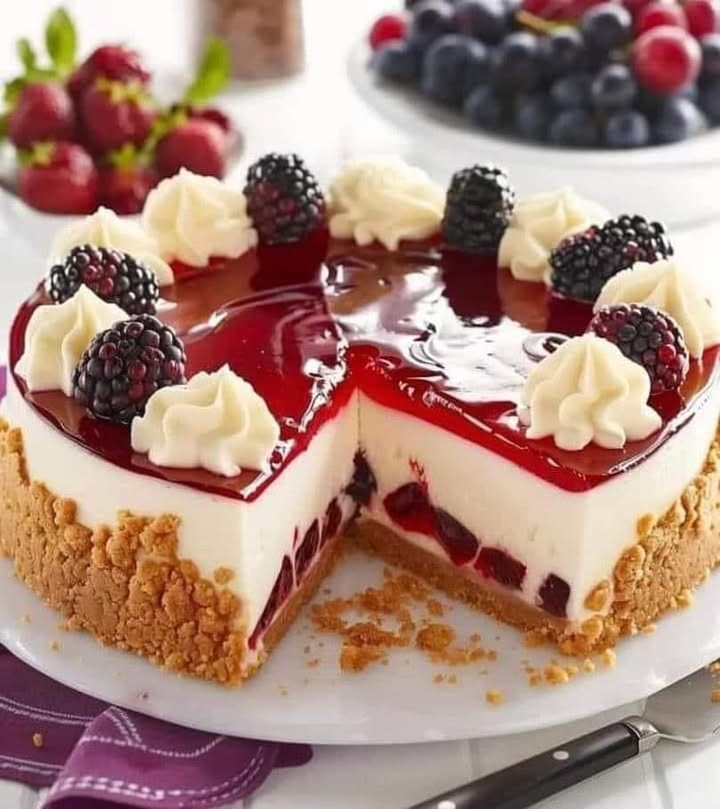
A Dessert That Tastes Like Childhood Magic
I have a confession. My love for peanut butter and jelly sandwiches knows no bounds. I used to sneak them as a midnight snack. One day, I looked at my classic cheesecake recipe and thought, “What if?”. The result is pure, nostalgic joy in a slice. This Peanut Butter Cheesecake Delight is my ultimate triumph. It marries the creamy richness of cheesecake with the iconic flavor of PB&J. It’s a dessert that makes everyone at my table smile, from my kids to my book club friends.
The Story Behind This Sweet Mash-Up
Where did this idea come from? I credit my son’s lunchbox. He would only eat peanut butter and jelly for what felt like years. I started wondering how to turn that lunchtime staple into a show-stopping dessert. The classic no-bake peanut butter pie was a start, but I wanted something more elegant. I played with my trusted baked cheesecake base. After a few (delicious) trials, I found the perfect balance. The salty-sweet peanut butter filling needs the tang of cream cheese. The jelly swirl brings a fruity pop. It’s a modern twist on two beloved classics.
Why You’ll Fall in Love With This Recipe
This recipe is a winner for so many reasons. First, the flavor is unbeatable. It’s like your favorite sandwich grew up and put on a fancy dress. Second, it’s surprisingly simple. If you can mix things in a bowl, you can make this cheesecake. The marbled jelly top looks professional but requires zero skill. Finally, it’s incredibly versatile. Use grape jelly for true nostalgia or strawberry for a brighter note. It’s always a crowd-pleaser, guaranteed to earn you compliments.
When to Serve This Showstopper
This cheesecake is perfect for so many occasions. It’s a hit at birthday parties, especially for kids (and kids at heart). Bring it to a potluck and watch it disappear first. It’s my go-to for holiday gatherings like Thanksgiving or Fourth of July. The red and white swirl is so festive! Even a simple Sunday family dinner feels special with this dessert on the menu. It turns any day into a celebration.
Gathering Your Ingredients
Here is your shopping list for this creamy dream. Make sure everything is at room temperature for the smoothest filling!
- 1 cup graham cracker crumbs
- ¼ cup granulated sugar (for the crust)
- ¼ cup unsalted butter, melted
- 3 packages (8 oz each) cream cheese, softened
- 1 cup creamy peanut butter
- 1 cup granulated sugar (for the filling)
- 1 tsp vanilla extract
- 3 large eggs
- ½ cup sour cream
- ½ cup grape or strawberry jelly
- Fresh berries and whipped cream (for garnish, optional)
Easy Ingredient Swaps
No worries if you’re missing something! Here are simple swaps:
- Graham Cracker Crumbs: Use crushed digestive biscuits or vanilla wafers.
- Peanut Butter: Any nut or seed butter works. Try almond or sunflower butter for a different twist.
- Sour Cream: Plain, full-fat Greek yogurt is a perfect substitute.
- Jelly: Jam or preserves work great. For a chunkier fruit texture, use a seedless raspberry jam.
Your Guide to the Perfect Peanut Butter Cheesecake Delight
Follow these steps for a flawless, creamy cheesecake every single time.
Step 1: Build Your Crust Foundation
First, preheat your oven to 325°F (165°C). Grab a medium bowl. Combine the graham cracker crumbs, sugar, and melted butter. Mix it with a fork until all the crumbs are evenly coated and look like wet sand. This buttery mixture is the base of your dessert. Press it firmly and evenly into the bottom of a 9-inch springform pan. I like to use the bottom of a measuring cup to press it down flat and tight. A solid crust prevents crumbling later. Pro tip: Make sure your butter is just melted, not hot. Hot butter can make the crust greasy.
Step 2: Bake to Set the Base
Place your crust in the preheated oven. Bake it for just 10 minutes. This short bake time helps the crust set. It gives it a lovely toasty flavor and a sturdy structure. You want it to hold up under the weight of the creamy filling. When you take it out, the kitchen will smell like sweet, buttery goodness. Let the crust cool completely on a wire rack while you make the filling. Putting a warm filling on a hot crust can cause it to crack. Patience is key here!
Step 3: Create the Creamy Filling
This is where the magic happens. In a large mixing bowl, beat the softened cream cheese and peanut butter together. Use an electric mixer on medium speed. Beat until the mixture is completely smooth and has no lumps. You’ll see the colors blend into a lovely pale tan. Then, add the sugar and vanilla extract. Beat again until everything is creamy and well combined. Scrape down the sides of the bowl with a spatula to ensure everything is mixed in. The aroma of peanut butter and vanilla will start to fill your kitchen.
Step 4: Incorporate the Eggs & Sour Cream
Now, add the eggs one at a time. Beat well after each egg is added before adding the next one. This step is crucial for a smooth texture. Over-beating after the eggs are in can incorporate too much air. This might cause the cheesecake to crack while baking. Finally, mix in the sour cream. It adds a wonderful tang and makes the filling incredibly lush. The batter will be thick, silky, and utterly irresistible. Try not to eat it all with a spoon at this stage!
Step 5: Assemble Your Masterpiece
Pour your beautiful peanut butter filling over the cooled crust. Use a spatula to spread it into an even, smooth layer. Gently tap the pan on the counter a few times. This releases any air bubbles trapped inside the filling. Now, get ready for the fun part. Drop small spoonfuls of your jelly evenly across the top of the filling. Don’t worry about being perfect.
Step 6: Create the Stunning Swirl
Take a thin knife or a toothpick. Gently drag it through the dollops of jelly and the filling. Make zig-zags, circles, or figure-eights. You are creating a beautiful marbled effect. The purple or red streaks will swirl into the golden filling. It looks like edible art. Chef’s tip: Don’t over-swirl! Just a few passes is enough. You want distinct ribbons of jelly, not a blended pink mess.
Step 7: The Gentle Bake
Carefully place the pan in the center of your oven. Bake for 50 to 60 minutes. The cake is done when the edges are set, but the center still has a slight jiggle. It will look puffed and golden around the edges. Turn off the oven. Crack the oven door open with a wooden spoon. Let the cheesecake cool slowly inside for one hour. This gradual cooling is the best trick to prevent ugly cracks on the surface of your creamy peanut butter dessert.
Step 8: The Chill Time Patience Test
After the hour in the oven, take the cheesecake out. Run a knife around the edge of the pan to loosen it. This helps prevent cracking as it shrinks while cooling. Let it cool completely on the counter. Then, cover it and refrigerate for at least 4 hours. I strongly recommend letting it chill overnight. This long rest allows the flavors to meld and the texture to become perfectly firm and sliceable. Trust me, it’s worth the wait.
Step 9: Serve and Savor!
The moment of truth! Unlock the springform pan and remove the ring. You can slide the cheesecake onto a plate or serve it from the pan base. Garnish with a dollop of whipped cream and a handful of fresh berries. The bright berries add a fresh contrast to the rich slice. Then, cut with a warm, clean knife for perfect slices. Get ready for the oohs and aahs. Each bite is a perfect mix of creamy, nutty, and sweet fruit flavors.
Time Investment for Your Delight
Good things take a little time, but it’s mostly hands-off!
- Prep Time: 25 minutes
- Cook Time: 60 minutes
- Cooling Time in Oven: 1 hour
- Chilling Time: 4 hours (or overnight)
- Total Time: About 6.5 hours (including chill time)
The One Secret to Silky Perfection
My biggest secret? Room temperature ingredients are non-negotiable. Take your cream cheese, eggs, and sour cream out of the fridge at least 1-2 hours before baking. Cold ingredients don’t blend smoothly. They can cause lumps in your batter and lead to over-mixing. Over-mixing adds too much air, which then deflates and cracks in the oven. A smooth, lump-free batter bakes into the creamiest, dreamiest texture imaginable.
A Little Peanut Butter Fun Fact
Did you know peanut butter was originally promoted as a health food? In the early 1900s, it was served in sanitariums as a protein source for patients. Now it’s a pantry superstar. When paired with the dairy in this cheesecake, it makes for a satisfying dessert. For more on balancing indulgent treats with a nutritious diet, the MyPlate guide offers great tips for healthy eating.
Tools You’ll Need
You likely have most of this in your kitchen:
- 9-inch springform pan
- Electric hand mixer or stand mixer
- Mixing bowls (large and medium)
- Measuring cups and spoons
- Spatula
- Wire cooling rack
Storing Your Cheesecake Creation
Once served, any leftover cheesecake needs proper storage. Cover it tightly with plastic wrap or place it in an airtight container. It will keep beautifully in the refrigerator for up to 5 days. The flavors actually improve after a day or two.
You can also freeze this cheesecake for longer storage. Wrap the whole cheesecake or individual slices tightly in plastic wrap. Then, wrap it again in aluminum foil or place it in a freezer bag. It will keep for up to 2 months. This is perfect for planning ahead for parties.
To thaw, simply move the cheesecake from the freezer to the refrigerator. Let it thaw slowly overnight. This prevents condensation from making the crust soggy. Do not thaw at room temperature.
My Best Tips for Guaranteed Success
- No Peeking: Don’t open the oven door during the first 45 minutes of baking. Sudden temperature changes can make the cake fall or crack.
- Water Bath Option: For ultimate creaminess with no cracks, bake your cheesecake in a water bath. Wrap the outside of your springform pan in heavy-duty foil. Place it in a larger roasting pan. Pour hot water into the roasting pan until it comes halfway up the springform pan.
- Jelly Jam: If your jelly is very thick, warm it for 10 seconds in the microwave. This makes it easier to dollop and swirl.
Make It Look Like It Came From a Bakery
Presentation is the final touch! Try these ideas:
- Drizzle melted chocolate or extra warmed jelly over each slice on the plate.
- Pipe rosettes of whipped cream around the edge of the whole cake.
- Create a border with whole peanuts or crushed graham crackers.
- Serve with a small side of extra jelly for dipping.
Explore More Cheesecake Adventures
If you loved this recipe, you have to try other variations. I adore creating new easy peanut butter desserts and unique cheesecakes. For more inspiration, browse our entire collection of decadent cheesecake recipes here. You’ll find everything from fruity to chocolatey delights. Here are six tasty twists on this recipe:
- Chocolate Peanut Butter Cup: Add 1 cup of chopped Reese’s cups to the batter. Use a chocolate cookie crust for a double chocolate hit.
- Banana PB&J Cheesecake: Layer sliced bananas over the baked crust before adding the filling. The banana flavor is incredible with the peanut butter and jelly.
- No-Bake Version: Use a no-bake cheesecake filling base with whipped cream. Set it in the fridge. It’s perfect for hot summer days when you don’t want to turn on the oven.
- Gluten-Free Delight: Simply use certified gluten-free graham crackers or crushed gluten-free cookies for the crust. All other ingredients are naturally gluten-free.
- Triple Berry Swirl: Mix together raspberry, strawberry, and blueberry jam. Swirl this tri-berry mix into the filling for a patriotic or fruity explosion.
- Salty Pretzel Crust: Replace the graham crackers with crushed salted pretzels. The salty-sweet combo with the peanut butter is absolutely addictive.
Common Mistakes to Avoid
Learn from my early baking trials! Steer clear of these common pitfalls.
Mistake 1: Using Cold Ingredients
This is the number one reason for a lumpy or cracked cheesecake. Cold cream cheese doesn’t blend smoothly with sugar. It forces you to over-mix, which adds too much air. The eggs also blend poorly. Plan ahead. Take your dairy and eggs out of the fridge at least an hour before you start. They should feel cool to the touch but not cold. Your batter will be silky smooth and your bake will be even.
Mistake 2: Over-Baking the Cheesecake
Many bakers think a cheesecake should be completely firm like a cake when it comes out of the oven. This is wrong! An over-baked cheesecake becomes dry and grainy. It can also crack badly. The key is the jiggle test. When the baking time is almost up, gently shake the pan. The edges should be set, but the center (about the size of a lemon) should have a slight, gentle wobble. It will firm up as it cools. Remember, it continues to cook from residual heat.
Mistake 3: Skipping the Gradual Cool-Down
Pulling a hot cheesecake out of the oven and plopping it on the counter is a shock. The sudden temperature drop makes it contract quickly. This almost always causes a big crack down the middle. Always use the “off oven with door ajar” method. Letting it cool slowly in the turned-off oven is the best insurance for a flawless top. It’s a simple step that makes a huge difference.
Mistake 4: Not Loosening the Cheesecake from the Pan
When the cheesecake cools, it shrinks a little. If it’s stuck to the sides of the springform pan, it has nowhere to go but down. This creates tension and can cause it to crack from the sides in. As soon as you take it out of the oven, run a thin knife or offset spatula around the inner edge of the pan. This separates the cake from the ring and allows it to shrink freely as it cools.
Frequently Asked Questions
Can I use natural peanut butter for this recipe?
I don’t recommend using the kind of natural peanut butter that separates (with oil on top). It can make the filling oily and affect the texture. If you want to use natural peanut butter, make sure it’s the “no-stir” kind that has a consistent texture similar to commercial brands. The stabilizers in regular creamy peanut butter help give the cheesecake its perfect, sliceable consistency. For the best results, stick with a standard brand like Jif or Skippy.
Why did my cheesecake crack on top?
Cracking usually happens for a few key reasons. The most common is over-baking. If the cheesecake bakes too long or at too high a temperature, it over-sets and cracks. Another reason is rapid cooling. Moving a hot cheesecake to a cold counter shocks it. Using cold ingredients can also cause cracks because they lead to over-mixing. Finally, not loosening the cake from the pan edge can cause side cracks. Follow the tips in this guide—room temp ingredients, the jiggle test, slow cooling, and running a knife around the edge—to prevent cracks.
How do I know when the cheesecake is done baking?
Don’t rely on time alone. Ovens vary. Start checking at the 50-minute mark. Gently shake the springform pan. You are looking for a specific texture. The edges of the cheesecake should look puffed and set. The center, about a 3-inch circle, should have a slight wobble. It should jiggle like Jell-O, not look liquidy. The center will firm up completely during the long chilling time. If the center is soupy, it needs more time. If the whole top is firm and doesn’t move, it’s over-baked.
Can I make this cheesecake ahead of time?
Absolutely! In fact, I highly recommend it. Cheesecake needs time to chill and set properly. Making it the day before you plan to serve it is ideal. This allows the flavors to fully develop and meld together. Simply bake it as directed, let it cool, and refrigerate it overnight. Keep it covered in the springform pan until you’re ready to serve. This makes party planning so much easier. You can even garnish it just before your guests arrive.
What’s the best way to cut clean cheesecake slices?
Use a long, thin, non-serrated knife. For perfectly clean slices, run the knife under very hot water. Wipe it dry with a clean towel before each cut. The heat helps the knife glide smoothly through the dense, creamy filling without dragging or tearing it. Make clean, straight cuts without using a sawing motion. Wipe the knife clean and reheat it between each slice. This professional trick gives you beautiful, picture-perfect pieces every time.
Can I freeze the whole cheesecake?
Yes, you can freeze this cheesecake very successfully. Make sure it is completely chilled first. Do not garnish it. Wrap the whole chilled cheesecake (still on the pan base) tightly in plastic wrap. Then, wrap it again in a layer of heavy-duty aluminum foil. Label it with the date. Freeze for up to 2 months. To serve, thaw it, unwrapped, in the refrigerator overnight. Add your whipped cream and berry garnish just before serving.
What other jellies or jams work well?
Almost any fruit spread will work beautifully. Grape and strawberry are classic. For a more grown-up twist, try seedless raspberry jam or blackberry preserves. You could even use orange marmalade for a bright, citrusy note. If you want less sweetness, try a tart cherry jam. The key is to use a jelly or jam that is smooth or seedless. Chunky preserves can be harder to swirl delicately. Feel free to get creative with your favorite flavors!
Do I have to use a springform pan?
A springform pan is highly recommended. The removable sides make it easy to release the cheesecake without flipping it over. If you don’t have one, you can use a regular 9-inch cake pan. You must line the bottom with parchment paper. This creates a “sling” to help lift the cheesecake out. It’s trickier, but it can be done. The water bath method is also harder with a regular pan. For best results, a springform pan is worth the investment.
My filling is lumpy! Can I fix it?
If you have small lumps in your batter from cold cream cheese, don’t panic. You can try to fix it. Strain the batter through a fine-mesh sieve into another bowl. Press it through with a spatula. This will catch most of the little lumps. It’s a bit messy but effective. To avoid this next time, remember to soften your cream cheese fully. You can also beat the cream cheese alone for a full minute before adding anything else. This helps break down any lumps first.
Is there a way to make this recipe less sweet?
You can slightly reduce the sugar in the filling, but be careful. Sugar contributes to the texture and structure. I wouldn’t reduce it by more than ¼ cup. You can also choose a natural peanut butter with no added sugar. Using a tart jelly like raspberry instead of super-sweet grape jelly will also balance the sweetness. Another option is to garnish with unsweetened whipped cream instead of sweetened. Small adjustments can tailor it to your taste.
This Peanut Butter Cheesecake Delight is more than just a dessert. It’s a memory on a plate, a conversation starter, and a guaranteed smile-bringer. It combines the simple joy of a childhood favorite with the elegance of a classic cheesecake. Don’t be intimidated. The steps are straightforward, and the result is spectacular. Whether it’s for a special celebration or just a sweet Wednesday night, this recipe is a keeper. If you’re looking for another creamy showstopper, you must try our Chocolate Flan for a rich, decadent treat. Or, for a lighter but equally delicious option, this Cheesecake Fruit Salad is refreshing and beautiful. For holiday gifting, these Cranberry Pistachio Truffles are always a hit. And if you love citrus, our Lemon-Lime Cheesecake Bars offer a perfect tangy crunch. I hope you bake this peanut butter masterpiece and share it with people you love. Now, go preheat that oven and let’s get baking!
Equipment
- Grand bol
- Fouet
- Spatule
- Moule à charnière
- Grille de refroidissement
Ingredients
- 1 tasse miettes de biscuits Graham
- ¼ tasse sucre (pour la croûte)
- ¼ tasse beurre non salé, fondu
- 3 paquets fromage à la crème, ramolli
- 1 tasse beurre de cacahuète crémeux
- 1 tasse sucre (pour la garniture)
- 1 cuil. extrait de vanille
- 3 grands œufs
- ½ tasse crème aigre
- ½ tasse gelée de raisin ou de fraise
Instructions
- Préchauffez votre four à 165°C (325°F).
- Dans un grand bol, combinez les miettes de biscuits Graham, le sucre et le beurre fondu; mélangez jusqu'à ce qu'ils soient bien enrobés.
- Appuyez fermement sur le mélange au fond d'un moule à charnière de 9 pouces et faites cuire pendant 10 minutes.
- Laissez la croûte refroidir complètement sur une grille.
- Dans un grand bol, battez ensemble le fromage à la crème ramolli et le beurre de cacahuète jusqu'à consistance lisse.
- Ajoutez le sucre et l'extrait de vanille; mélangez jusqu'à ce que le tout soit crémeux et bien combiné.
- Ajoutez les œufs un par un, en battant bien après chaque ajout, puis incorporez la crème aigre.
- Versez la garniture de beurre de cacahuète sur la croûte refroidie, en lissant avec une spatule.
- Déposez la gelée uniformément sur le dessus de la garniture et tournez-la doucement avec un couteau ou un cure-dent.
- Faites cuire pendant 50 à 60 minutes jusqu'à ce que les bords soient pris et que le centre ait un léger tremblement; éteignez le four et entrouvrez la porte pour refroidir pendant une heure.
- Passez un couteau autour des bords pour détacher, puis laissez refroidir complètement et réfrigérez pendant au moins 4 heures ou toute la nuit avant de servir.