
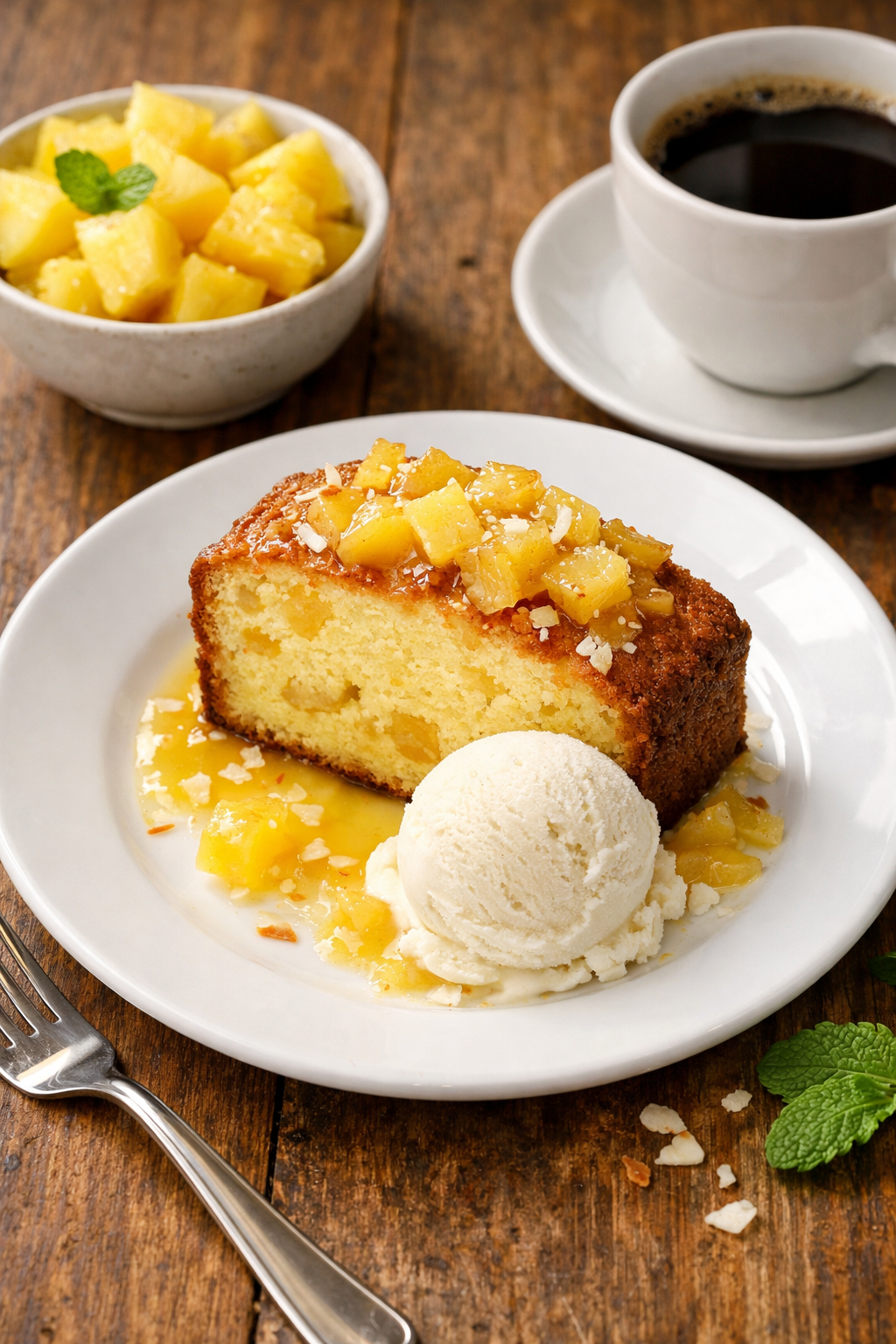
Introduction: My Love for Pineapple Pound Cake
Last summer, I brought a pineapple pound cake to my neighbor’s cookout. I watched as people took their first bite and their eyes lit up. Three different guests asked for the recipe before the afternoon ended. That’s the magic of this cake—it surprises everyone who tries it.
The funny thing is, I almost didn’t bake it that day. I was tired and tempted to grab something from the store. But I’m so glad I didn’t. There’s something about homemade pound cake that just can’t be matched. The smell alone had my kitchen smelling like a tropical paradise.
Welcome to my kitchen, where today we’re diving into the wonderful world of pineapple pound cake. Whether you’re a seasoned baker or just starting out, this sweet and tangy treat is sure to be a hit at your next gathering. I’ve been making this cake for years, and it never fails to impress.
The best part? You don’t need fancy equipment or hard-to-find ingredients. Just a good recipe, basic baking supplies, and a little patience. I promise the results are worth every minute you spend mixing and baking.
What Makes Pineapple Pound Cake Special?
Let’s talk about why pineapple pound cake stands out from other desserts. The combination of rich, buttery cake with the zesty sweetness of pineapple creates a flavor that’s both comforting and refreshing. It’s like summer and tradition had a delicious baby.
Traditional pound cake is already amazing on its own. The dense, moist texture and buttery taste make it a classic for good reason. But add pineapple to the mix, and you take it to a whole new level. The fruit adds moisture, natural sweetness, and a bright flavor that cuts through the richness.
I love how versatile this cake is. You can serve it plain with coffee for breakfast. Dress it up with whipped cream for dessert. Or toast a slice and butter it for an afternoon snack. My kids like it cold straight from the fridge. I prefer mine at room temperature with a cup of tea.
This cake shines at summer gatherings and special occasions. It’s lighter than chocolate cake but more interesting than vanilla. The pineapple gives it a tropical vibe that feels perfect for warm weather. But honestly, I make it year-round because it brings a little sunshine to any season.
One of my favorite things about pineapple pound cake is how well it keeps. Unlike fluffy layer cakes that dry out quickly, a good pound cake stays moist for days. I’ve had slices taste just as good on day four as they did fresh from the oven. That makes it perfect for meal prep or making ahead for parties.
The texture sets this cake apart too. It’s not as heavy as traditional pound cake because the pineapple juice and fruit keep it tender. But it’s still dense enough to feel substantial. Each bite is satisfying without being overwhelming.
Allrecipes Pineapple Pound Cake: A Classic Recipe
If you’re looking for a tried-and-true recipe, Allrecipes pineapple pound cake is fantastic. I’ve tested plenty of versions over the years, and this one consistently delivers great results. The recipe has thousands of positive reviews for good reason—it just works.
What I love about the Allrecipes version is its simplicity. You don’t need exotic ingredients or complicated techniques. The recipe uses crushed pineapple, which you can find at any grocery store. I always keep a few cans in my pantry just in case I get a baking urge.
The key to success with this recipe is not draining the pineapple completely. You want to remove most of the juice, but leave the fruit a bit moist. That liquid helps keep the cake tender. I learned this the hard way after making a dry cake my first time. Now I know better.
Here’s what makes the Allrecipes approach work so well:
- The recipe calls for room temperature ingredients, which blend together smoothly
- You cream the butter and sugar thoroughly, creating a light base
- Adding eggs one at a time prevents the batter from curdling
- The pineapple gets folded in gently at the end to maintain moisture
- A long, slow bake ensures the center cooks without burning the edges
I’ll walk you through the steps and share my personal tips to make this classic version perfect every time. The first thing to know is that pound cake takes patience. Don’t rush the creaming process. I set a timer for at least five minutes when beating the butter and sugar together. This creates air pockets that make the cake lighter.
The baking time varies depending on your oven and pan size. I use a 10-inch tube pan, which takes about 75 minutes. A regular loaf pan might need less time. The cake is done when a toothpick inserted in the center comes out clean or with just a few moist crumbs.
One trick I’ve learned is to tent the cake with foil if the top starts browning too quickly. This protects the surface while the inside finishes cooking. I usually do this around the 50-minute mark.
The glaze is optional but highly recommended. The Allrecipes pineapple pound cake often gets topped with a simple powdered sugar glaze mixed with pineapple juice. It adds extra sweetness and makes the cake look bakery-worthy. I pour it on while the cake is still slightly warm so it soaks in a bit.
Some bakers add variations to make the recipe their own. I’ve tried adding coconut for a coconut pineapple pound cake. The tropical combination is amazing. My sister swears by adding cream cheese to the batter, creating a pineapple and cream cheese cake hybrid that’s incredibly rich.
If you’re watching carbs, there are keto pineapple pound cake versions that use almond flour and sugar substitutes. I haven’t perfected a keto version myself, but I’ve seen some promising recipes online. The texture is different, but the pineapple flavor still shines through.
For a fun presentation, try making an upside down pineapple pound cake. You arrange pineapple rings in the bottom of the pan before pouring in the batter. When you flip it out, you get a gorgeous caramelized top. It’s a showstopper at parties.
The beauty of starting with a solid base recipe like the one from Allrecipes is that you can experiment once you’re comfortable. Add berries for a strawberry pineapple pound cake or blueberry pineapple pound cake. Mix in sour cream for extra moisture in a pineapple sour cream pound cake. The possibilities are endless.
No matter which version you choose, the fundamentals stay the same. Quality ingredients, proper technique, and patience create the best results. This isn’t a quick throw-together dessert, but it’s not difficult either. Just follow the steps and trust the process.

Explore Different Flavors of Pineapple Pound Cake
Now that we’ve covered the basics, let’s get creative with some amazing variations that’ll keep your baking exciting.
I’ll be honest—once I mastered the classic version, I got a little obsessed with trying different combinations. My husband jokes that I went through a phase where every weekend featured a new pineapple pound cake experiment. He wasn’t complaining though, especially when I nailed the strawberry version.
The beautiful thing about pound cake is its flexibility. The sturdy base can handle all sorts of additions without falling apart. I’ve learned which variations work best through plenty of trial and error, and I’m excited to share what I’ve discovered.
Strawberry Pineapple Pound Cake
This combination happened by accident in my kitchen. I had fresh strawberries that needed to be used, and I was already making pineapple pound cake. I figured, why not throw them in? Best impulse decision ever.
The strawberry pineapple pound cake brings together two fruits that just belong together. The strawberries add little pockets of jammy sweetness that contrast beautifully with the tangy pineapple. Every slice looks gorgeous with those red specks throughout.
Here’s what I do differently: Dice about a cup of fresh strawberries into small pieces. Toss them with a tablespoon of flour before folding them into the batter. This flour coating prevents the berries from sinking to the bottom. I learned that trick after making a cake where all the strawberries formed a layer at the base. Still tasted good, but it looked weird.
The key is using fresh strawberries, not frozen. Frozen ones release too much liquid and make the batter watery. I’ve tried it both ways, and fresh wins every time. If you only have frozen, thaw them completely and pat them dry with paper towels first.
Timing matters too. I add the strawberries at the very end, right after the pineapple. Gentle folding keeps them intact instead of turning into mush. You want whole berry pieces in the finished cake, not pink streaks.
This version reminds me a bit of the colorful combinations you see in a firework cake, except the bursts of flavor are fruit instead of sprinkles. My daughter loves helping me make this one because it feels festive and fun.
Pineapple Sour Cream Pound Cake
If you want the moistest cake you’ve ever tasted, sour cream is your secret weapon. The pineapple sour cream pound cake stays fresh longer than any other version I make. I’ve had slices taste incredible even five days after baking.
Sour cream does something magical to pound cake. It adds tang that balances the sweetness perfectly. The acid also tenderizes the crumb, creating this melt-in-your-mouth texture that’s hard to describe until you’ve tried it.
I replace about half a cup of the butter with sour cream in the standard recipe. Some people use full-fat Greek yogurt instead, which works okay, but sour cream gives better results in my experience. The fat content makes a difference.
By the way, don’t skimp and use low-fat sour cream. We’re making pound cake here, not diet food. The full-fat version creates that rich, dense texture we’re after. Save the calorie counting for another day.
The mixing technique changes slightly with sour cream. I cream the butter and sugar as usual, then alternate adding the dry ingredients and the sour cream. This prevents the batter from getting too thick or too thin. The consistency should be smooth but substantial, like thick pancake batter.
One thing I’ve noticed is that sour cream cakes brown faster on top. I always tent mine with foil about halfway through baking. Otherwise you end up with a dark crust that tastes slightly bitter.
Upside Down Pineapple Pound Cake
This is the showstopper version that makes people think you’re a professional baker. The upside down pineapple pound cake looks like something from a fancy bakery, but it’s honestly not that hard to pull off.
The concept is simple: arrange pineapple slices in the bottom of the pan with some brown sugar and butter, pour the batter on top, bake, then flip. The sugar caramelizes during baking, creating this gorgeous glaze that makes your cake look Instagram-worthy.
Here’s my method. Melt about four tablespoons of butter in your cake pan. Sprinkle half a cup of brown sugar evenly over the butter. Arrange pineapple rings in a pretty pattern—I usually fit about seven in my 10-inch pan. Put a maraschino cherry in the center of each ring if you want that classic retro look. My mom always did this when I was growing up, and it brings back memories.
The tricky part is the flip. You have to do it while the cake is still warm, or the topping sticks to the pan. But if you do it too soon, the cake might break. I wait about ten minutes after removing it from the oven. Then I run a knife around the edges, place my serving plate on top, and flip the whole thing in one confident motion.
Funny enough, the first time I made this, I chickened out and waited too long. The topping stayed glued to the pan, and I had to scrape it off and spread it back on top of the cake. It still tasted amazing, but it looked messy. Confidence and timing are everything here.
This version works great for special occasions. I made one for my nephew’s graduation party alongside a cupcake wedding cake display, and it held its own as a centerpiece dessert.
Keto Pineapple Pound Cake
Let me be straight with you—making a keto pineapple pound cake presents some challenges. Pineapple is naturally high in sugar, so you’re working against the fruit itself. But I’ve figured out a version that works for my friends who eat low-carb.
The trick is using pineapple extract instead of actual pineapple, or using just a tiny amount of crushed pineapple for flavor. I know, I know, it’s not quite the same. But when you’re avoiding carbs, you make compromises.
For the flour, I use a combination of almond flour and coconut flour. Almond flour alone makes the cake too dense and greasy. Coconut flour alone makes it dry and crumbly. The mix of both creates something closer to traditional texture.
Sugar substitutes matter here. I’ve had good luck with erythritol-based sweeteners that measure like sugar. Avoid the liquid sweeteners—they throw off the moisture balance. The cake won’t rise properly if the batter is too wet.
One adjustment I make is adding extra eggs. Keto baking needs more binding since we’re missing the gluten. I use five eggs instead of the usual four. This helps the cake hold together and rise better.
The taste is different, there’s no getting around that. But for my diabetic aunt who can’t have regular cake, it’s a lifesaver. She gets to enjoy dessert without spiking her blood sugar. That makes the extra effort worthwhile.
Coconut Pineapple Pound Cake
This is my personal favorite variation. The coconut pineapple pound cake tastes like vacation in cake form. It’s like a piña colada you can eat with a fork.
I add coconut three different ways for maximum flavor. First, I replace some of the butter with coconut oil. About a quarter cup does the trick without making the cake taste oily. Second, I fold in sweetened shredded coconut—roughly three-quarters of a cup. Third, I use coconut extract in the glaze.
The texture gets interesting with all that coconut. You get little chewy bits throughout that add variety to each bite. Some people toast the coconut first for deeper flavor. I’ve done it both ways and honestly prefer it untoasted. The toasted version can taste a little dry.
Here’s the thing—make sure you’re using sweetened coconut, not unsweetened. The sugar in the coconut adds little pockets of sweetness that complement the pineapple. Unsweetened coconut can taste papery and strange in pound cake.
This cake pairs incredibly well with tropical drinks or afternoon coffee. It’s less formal than something like a chocolate coffee cake but still sophisticated enough for company. I bring this to summer potlucks constantly.
The coconut-pineapple combo also stays moist longer than plain versions. Something about the oil in the coconut keeps everything tender. I’ve eaten slices a week after baking that still tasted fresh.
If you want to go really over the top, try making a cream cheese frosting with coconut extract. Spread it on top like you would with a custom cookie cake. It’s rich, but sometimes you just need that level of indulgence.
No matter which variation speaks to you, remember that baking should be fun. Don’t stress about making it perfect. Even my messiest attempts have tasted delicious. The worst that happens is you eat slightly imperfect cake, which is still way better than no cake at all.
From Kentucky to Southern Living: Regional and Special Varieties
Here’s where things get really interesting. Different regions across America have put their own spin on pineapple pound cake, and some of these versions are absolute treasures. I’ve hunted down recipes from various corners of the country, and each one has something special to offer.
What fascinates me about regional baking is how the same basic concept transforms based on local tastes and traditions. A pound cake in Kentucky looks different from one in Georgia, even when they both use pineapple. These differences aren’t random—they reflect generations of home cooks tweaking recipes to suit their families.
Kentucky Pineapple Pound Cake
The Kentucky pineapple pound cake has a secret that sets it apart from every other version I’ve tried. They add buttermilk. I know what you’re thinking—buttermilk and pineapple? Trust me on this one.
I discovered this version when visiting my college roommate’s family in Louisville. Her grandmother made it for Sunday dinner, and I practically begged for the recipe. She laughed and said it had been in their family since the 1950s, passed down from her mother who got it from a church cookbook.
The buttermilk creates this incredible tenderness that’s hard to achieve otherwise. It reacts with the baking soda to create tiny air pockets throughout the cake. The result is lighter than traditional pound cake but still has that signature density. The tang from the buttermilk also plays beautifully against the sweet pineapple.
Here’s what makes the Kentucky version unique: they use a full cup of buttermilk along with crushed pineapple. The liquid content seems high when you’re mixing it, and I panicked the first time because the batter looked thin. But don’t add extra flour to compensate. The batter should be slightly looser than regular pound cake batter.
Another Kentucky trick is adding a touch of vanilla and almond extract together. Just half a teaspoon of almond extract transforms the flavor profile completely. It adds this subtle nuttiness that makes people ask, “What’s that flavor I can’t quite identify?” That’s your secret weapon right there.
The baking temperature runs slightly lower for this version—about 325°F instead of 350°F. The extra moisture needs gentle heat to set properly. I bake mine for about 80 minutes, checking with a toothpick around the 70-minute mark. Patience pays off with a perfectly cooked center.
One more thing about the Kentucky style—they often serve it with a bourbon glaze. Now we’re talking. A simple mix of powdered sugar, a tablespoon of bourbon, and pineapple juice creates this grown-up topping that’s perfect for evening gatherings. Skip the bourbon if you’re serving kids, obviously.
Southern Living Pineapple Pound Cake
If you want to talk about authoritative Southern baking, Southern Living pineapple pound cake is basically the gold standard. Their test kitchen has perfected this recipe through countless trials, and it shows in every bite.
What I love about the Southern Living approach is their attention to technique. They’re very specific about creaming times, mixing methods, and baking temperatures. Following their instructions exactly produces consistent results every single time. There’s no guesswork involved.
The Southern Living version uses more butter than most recipes—we’re talking two full sticks plus some cream cheese. Yeah, it’s indulgent. But that’s kind of the point. This isn’t everyday cake; this is special occasion cake. The butter-to-flour ratio creates this melt-in-your-mouth quality that cheaper cakes can’t match.
They also call for cake flour instead of all-purpose flour. I resisted this for a while because who wants to buy specialty flour? But I finally caved and tried it. The difference is noticeable. Cake flour has less protein, which means less gluten development, which means a more tender crumb. It’s worth keeping a box in your pantry.
By the way, the Southern Living recipe includes detailed instructions about pan preparation. They recommend greasing and flouring your pan thoroughly, then lining the bottom with parchment paper. This might seem excessive, but it guarantees the cake releases cleanly. I learned this lesson after having a gorgeous cake stick to the pan and fall apart during removal. Heartbreaking.
The signature move in their version is the glaze. They simmer pineapple juice with sugar until it reduces and thickens slightly, then pour it over the warm cake. The cake absorbs the glaze like a sponge, creating pockets of sweet pineapple flavor throughout. It’s different from a powdered sugar glaze—more subtle and sophisticated.
Making this version reminds me why cooking at home with quality ingredients matters so much. You control exactly what goes into your food, and the results taste miles better than anything from a package mix.
Blueberry Pineapple Pound Cake
Now here’s a combination I didn’t expect to love as much as I do. The blueberry pineapple pound cake brings together two fruits that seem like they shouldn’t work, but somehow they’re perfect together.
I stumbled onto this pairing during blueberry season when my neighbor gave me a huge container of fresh berries from her bushes. I was already planning to make pineapple pound cake, so I threw in a cup of blueberries just to use them up. Happy accident turned into regular rotation.
The key with blueberries is the same as with strawberries—toss them in flour first. But blueberries have an extra challenge. They burst during baking and can create purple streaks throughout your cake. Some people like this look. I think it’s pretty. But if you want to minimize bleeding, use frozen blueberries straight from the freezer without thawing. The cold berries hold their shape better.
Fresh blueberries work great too, just know you’ll get more juice release. The purple swirls actually taste amazing—almost jammy. My kids think it looks cool, like tie-dye cake. Whatever makes them eat fruit, right?
The flavor combination is more complex than you’d expect. Blueberries have an earthy sweetness that grounds the bright pineapple. Together they create this balanced fruity flavor that isn’t too tart or too sweet. It reminds me of a fancy fruit tart in cake form.
Here’s a tip I discovered by accident: add a little lemon zest to the batter when you’re making this version. Just a teaspoon of finely grated lemon zest brightens both fruits and ties the flavors together. It’s subtle but it makes a difference.
This version looks stunning when you slice it. The golden cake dotted with blue and yellow fruit pieces is genuinely pretty. I made one for a baby shower once, and people kept commenting on how beautiful it was before they even tasted it.
Pineapple and Cream Cheese Cake
If you want to take richness to the next level, the pineapple and cream cheese cake is where it’s at. This is not for calorie counters. This is for people who want dessert to feel like an event.
Adding cream cheese to pound cake batter creates this incredible density and moisture. The texture becomes almost cheesecake-like in the best possible way. Each bite feels luxurious and substantial. You definitely don’t need a huge slice to feel satisfied.
I use a full 8-ounce block of cream cheese, softened to room temperature. This is crucial—cold cream cheese creates lumps that never quite blend in. I actually set mine out the night before, or if I forget, I’ll microwave it in short 10-second bursts until it’s soft.
The mixing process changes when you add cream cheese. I beat it together with the butter and sugar during the creaming stage. This takes longer than usual—maybe seven or eight minutes instead of five. You want everything completely smooth and fluffy before adding eggs.
Funny enough, my most popular version of this cake happened when I accidentally bought pineapple cream cheese thinking it was regular. I used it anyway, figuring it would just add extra pineapple flavor. The result was incredible. Now I seek out flavored cream cheese on purpose. Some grocery stores carry tropical or pineapple cream cheese, and it amplifies the whole flavor profile.
This cake is particularly good with a cream cheese frosting on top. I know, cream cheese in the cake and cream cheese on the cake seems redundant. But it’s so good. Mix softened cream cheese with powdered sugar, a splash of pineapple juice, and maybe some crushed pineapple for texture. Spread it thick.
The pineapple and cream cheese cake keeps exceptionally well because of the fat content. I’ve had slices stay moist for over a week in the refrigerator. The cold actually firms up the texture nicely. Some mornings I’ll eat a cold slice with my coffee and feel absolutely no guilt about dessert for breakfast.
One thing to watch with cream cheese cakes is oven temperature. They can brown quickly on the outside while staying raw inside. I always bake at 325°F and check frequently after the hour mark. The toothpick test is your friend here—it should come out with a few moist crumbs but no wet batter.
If you’re looking for more inspiration on cakes and cupcakes that showcase creative flavor combinations, experimenting with cream cheese versions opens up a whole world of possibilities.
These regional and special varieties prove that pineapple pound cake is anything but boring. Each version tells a story about the place it comes from or the creativity of the baker who invented it. Don’t be afraid to try them all and figure out which one becomes your signature recipe. Or better yet, use these as inspiration to create your own family version that gets passed down someday.
Final Thoughts
The beauty of baking is that every cake you make teaches you something new. Maybe your first pineapple pound cake doesn’t turn out perfect, and that’s completely okay. I’ve made plenty of lopsided, over-browned, slightly dry cakes over the years. But I learned from each one, and now baking this cake feels like second nature. Give yourself permission to experiment, make mistakes, and enjoy the process. The best part of homemade cake isn’t perfection—it’s the love and effort you put into creating something special for the people around you.
Frequently Asked Questions
Can I use canned pineapple instead of fresh pineapple?
Absolutely, and honestly, I prefer canned for pound cake. Canned crushed pineapple has consistent moisture and sweetness, which makes your results more predictable. Fresh pineapple can be too watery and varies in sweetness depending on ripeness. Just drain most of the juice before adding it to your batter, leaving the fruit slightly moist. I keep several cans in my pantry specifically for this cake.
How do I store pineapple pound cake?
Room temperature storage works great for up to five days if you keep it in an airtight container or wrapped tightly in plastic wrap. The cake actually tastes better after a day because the flavors meld together. For longer storage, refrigerate it for up to a week. I sometimes prefer it cold straight from the fridge. Just let it sit out for about 20 minutes before serving if you want to take the chill off.
Can I freeze pineapple pound cake?
Yes, pound cake freezes beautifully! Wrap individual slices or the whole cake tightly in plastic wrap, then wrap again in aluminum foil to prevent freezer burn. It’ll keep for up to three months frozen. Thaw overnight in the refrigerator or at room temperature for a few hours. I actually think frozen slices thaw perfectly during a morning commute if you pack them for lunch. The texture stays remarkably good after freezing.
What can I serve with pineapple pound cake?
This cake is delicious on its own, but there are plenty of ways to dress it up. Whipped cream is classic and light. Vanilla ice cream turns it into a proper dessert. I love a drizzle of caramel sauce for extra sweetness, or fresh berries for color and freshness. Toasted coconut flakes add nice texture. For breakfast, try it with a pat of butter and your morning coffee. There really aren’t any wrong answers here.
Why did my pineapple pound cake turn out dry?
The most common culprit is overbaking. Pound cakes continue cooking a bit after you remove them from the oven, so take yours out when a toothpick comes out with a few moist crumbs, not completely clean. Another issue might be draining your pineapple too thoroughly. You want it mostly drained but still slightly moist. Also check that you measured flour correctly—too much flour creates a dry, dense cake. I always spoon flour into my measuring cup and level it off rather than scooping directly from the bag.
Can I make pineapple pound cake in a different pan?
Definitely, but you’ll need to adjust baking times. A bundt pan works great and looks beautiful—bake for about 60-75 minutes. Two loaf pans divide the batter nicely and bake in about 50-60 minutes. A 9×13 sheet pan works too, though it won’t be as tall—check it around 45 minutes. The important thing is using a similar total volume to what your recipe calls for. Dark pans bake faster than light-colored ones, so reduce your oven temperature by 25°F if using dark nonstick pans.
How do I know when my pineapple pound cake is done?
The toothpick test is your best friend. Insert a wooden toothpick or cake tester into the center of the cake. It should come out with a few moist crumbs clinging to it, but no wet batter. The top should be golden brown and spring back when lightly pressed. The cake will also start pulling away slightly from the sides of the pan when it’s done. If you have an instant-read thermometer, the internal temperature should reach about 200-210°F in the center.
Why did my pineapple pound cake sink in the middle?
A sunken center usually means the cake wasn’t fully baked, even if it looked done on top. Pound cakes are thick, so the center takes longer to set. Another cause is opening the oven door too early or too often, which drops the temperature suddenly. I never open my oven before the 50-minute mark. Overmixing the batter can also cause sinking because you develop too much gluten, creating structure that collapses. Finally, make sure your leavening agents aren’t expired—old baking powder or baking soda won’t provide enough lift.
Can I reduce the sugar in pineapple pound cake?
You can reduce it slightly, but understand that sugar does more than just sweeten. It helps create tender texture and moisture, and it contributes to browning. I wouldn’t recommend cutting more than a quarter of the sugar or you’ll notice textural changes. The cake might turn out tougher and drier. If you’re watching sugar intake, consider making a smaller cake or cutting smaller slices rather than changing the recipe proportions. The pineapple already adds some natural sweetness, so this cake isn’t as sugar-heavy as some desserts.
What’s the difference between pound cake and regular cake?
Traditional pound cake gets its name from the original recipe that called for a pound each of butter, sugar, eggs, and flour. This creates a dense, rich cake that’s sturdier than regular layer cakes. Pound cake uses more fat and eggs relative to flour, resulting in that tight, fine crumb. Regular cakes often use chemical leaveners like baking powder for a lighter, fluffier texture. Pound cake relies more on the air you beat into the butter and eggs. The result is more substantial and holds up better over several days without drying out.
Equipment
- 10-inch Tube Pan
- Mixing Bowls
- Electric Mixer
- Whisk
- Rubber Spatula
Ingredients
- 4 large eggs
- 227 g granulated sugar
- 360 g all-purpose flour
- 5 g baking powder
- 2.5 g baking soda
- 2.5 g salt
- 240 g crushed pineapple (drained) drained but slightly moist
- q.s. powdered sugar (for glaze) mixed with a bit of pineapple juice
Instructions
- Preheat your oven to 350°F (175°C).
- Grease and flour a 10-inch tube pan or bundt pan.
- In a large bowl, cream together the butter and sugar for at least five minutes until light and fluffy.
- Add the eggs one at a time, mixing well after each addition.
- In a separate bowl, whisk together the flour, baking powder, baking soda, and salt.
- Gradually add the dry ingredients to the wet ingredients, mixing just until combined.
- Gently fold in the crushed pineapple.
- Pour the batter into the prepared pan and smooth the top.
- Bake for about 75 minutes, or until a toothpick inserted in the center comes out clean or with a few moist crumbs.
- Allow the cake to cool in the pan for 10 minutes before inverting it onto a wire rack to cool completely.
- Optionally, drizzle with a powdered sugar glaze while the cake is still warm.