
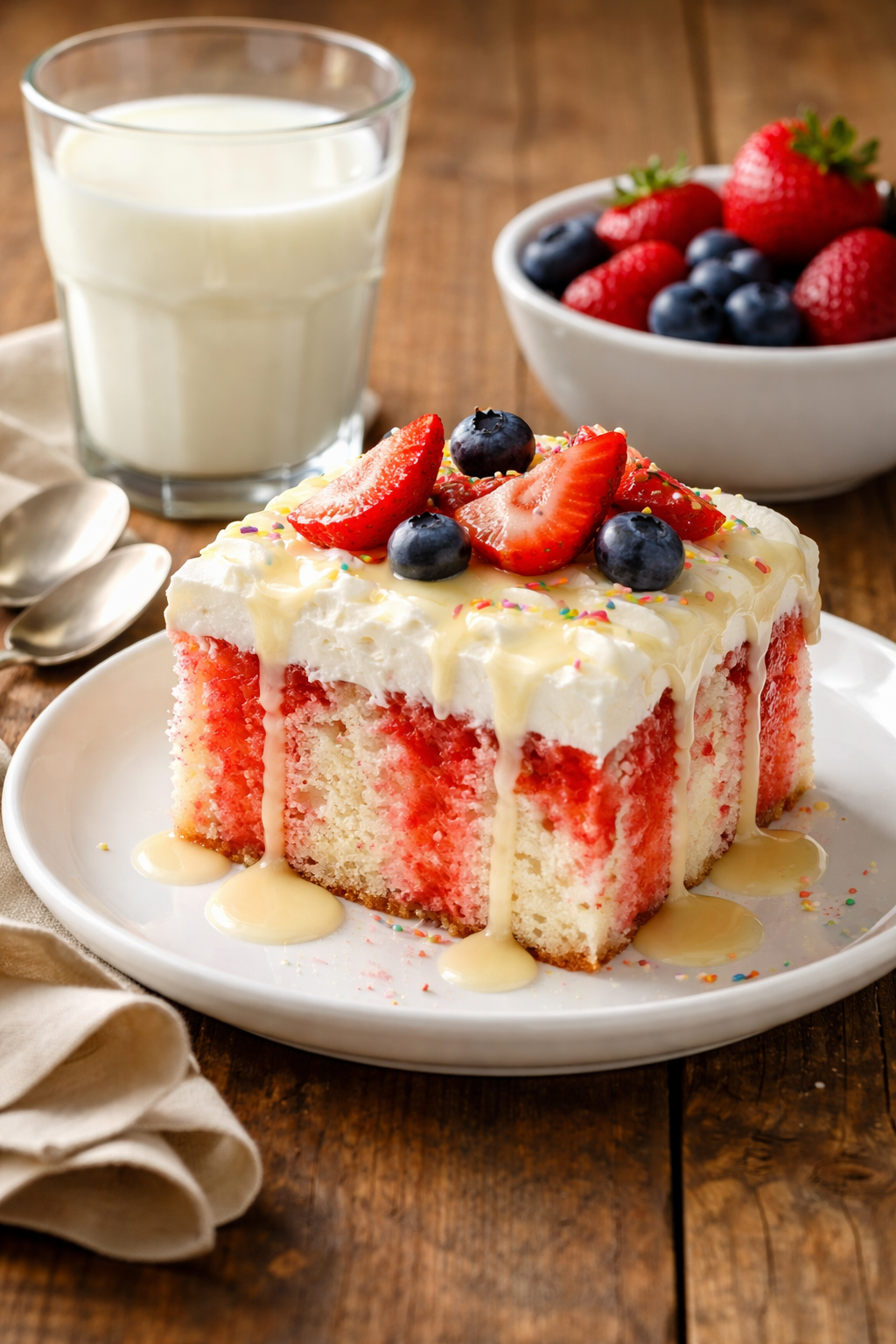
Why I’m Obsessed with Poke Cake with Condensed Milk
Last summer, I brought a strawberry poke cake to my sister’s backyard barbecue. I watched as guests went back for seconds and thirds. One friend actually asked if I’d used some kind of secret ingredient to make it so moist. The truth? I simply poured sweetened condensed milk over cake right after baking it. That’s the magic of poke cakes.
I’ve been making these cakes for years now, and they never fail to impress. The best part is how easy they are to pull off. You don’t need fancy baking skills or expensive ingredients. Just a basic cake, a can of sweetened condensed milk, and a few simple toppings. The result looks like you spent hours in the kitchen when you really didn’t.
What I love most about this dessert is how flexible it is. Want chocolate? Make a chocolate poke cake with condensed milk. Craving something fruity? Try a pineapple poke cake with condensed milk or a strawberry version. Feeling tropical? A coconut poke cake hits the spot every time. The base technique stays the same, but you can change up the flavors to match any occasion or craving.
What Exactly is a Poke Cake?
Let me break down what makes a poke cake different from regular cakes. The name tells you everything you need to know. After baking your cake, you poke holes all over it while it’s still warm. Then you pour a liquid filling into those holes. The filling soaks down into the cake and creates pockets of flavor throughout.
Traditional poke cakes often use Jello as the filling. My grandmother used to make a strawberry poke cake with sweetened condensed milk and jello that was amazing. But I prefer using sweetened condensed milk on its own or mixed with other ingredients. It creates a richer, creamier texture that I find more satisfying.
The concept started in the 1970s when Jello promoted this baking method. It caught on fast because it solved a common problem. We’ve all had dry cake before. Poke cakes are nearly impossible to mess up in that department. The liquid filling keeps every bite moist and flavorful.
Why Sweetened Condensed Milk Makes Everything Better
So what does condensed milk do to cakes? It transforms them completely. When you pour that thick, sweet liquid into the holes, it seeps deep into the cake layers. As it cools, it creates these incredible pockets of creamy sweetness.
Sweetened condensed milk is different from regular milk or cream. It’s been cooked down until most of the water evaporates. What’s left is thick and concentrated with about 60% sugar. This high sugar content means it won’t make your cake soggy like regular milk would. Instead, it adds moisture while staying thick enough to create distinct flavor pockets.
I’ve tested adding sweetened condensed milk to cake in different ways. Pouring it directly over the warm cake works best. The warmth helps the milk flow into every hole you’ve poked. Some recipes with sweetened condensed milk and cake mix call for mixing it into the batter, but I find the poke method gives you more control over the final texture.
The sweetness level is another factor. Condensed milk is very sweet on its own. When combined with cake, frosting, and toppings, you get layers of flavor that complement each other. I usually reduce the sugar in my frosting slightly to balance everything out.
The Basic Steps for Making Any Poke Cake
Making a poke cake follows the same simple process no matter which flavor you choose. I’ve made dozens of variations, and these steps always work.
First, bake your cake according to the recipe or box directions. I often use a yellow cake mix sweetened condensed milk recipe as my base because it’s reliable and quick. Box mixes work perfectly fine for poke cakes. The condensed milk adds so much moisture and flavor that no one will know you took a shortcut.
Here’s where timing matters. Do you poke holes in cake when hot or cold? I always poke holes while the cake is still warm, about 10 to 15 minutes after removing it from the oven. The cake needs to be set enough that it won’t fall apart when you poke it. But it should still be warm enough to absorb the condensed milk easily.
Use the handle of a wooden spoon to poke holes. I space them about an inch apart and push down until I’m about three-quarters of the way through the cake. Don’t go all the way to the bottom or the filling might leak out. Make plenty of holes. More holes mean more flavor pockets.
Next comes the fun part. Pour the sweetened condensed milk slowly over the entire cake surface. Watch as it fills each hole. Some will overflow a bit, and that’s fine. Use a spatula to gently spread any excess milk around. Let it find its way into the holes naturally.
The cake needs to cool completely before you add toppings or frosting. I usually refrigerate mine for at least two hours, though overnight is even better. This cooling time lets the condensed milk set up and create those distinct pockets of sweetness.
Tips for Perfect Results Every Time
I’ve learned a few tricks over the years that make poke cakes turn out better. The type of pan matters more than you might think. I prefer using a 9×13 inch glass baking dish. The straight sides make it easier to poke even holes, and glass lets you see if the milk has been absorbed evenly.
How do you keep a poke cake from being soggy? The key is not using too much liquid and letting it absorb properly. One 14-ounce can of sweetened condensed milk is perfect for a standard 9×13 cake. Pour it slowly and give it time to soak in before adding more.
Temperature control helps too. A warm cake absorbs liquid better than a cold one. But if the cake is too hot, it might become mushy. That 10 to 15 minute window after baking is ideal.
Some people wonder what happens if I whip sweetened condensed milk. You can actually whip it to create a lighter, fluffier texture. I sometimes do this for coconut poke cake with milk and sugar variations. Whipped condensed milk makes a great frosting alternative that’s less heavy than buttercream.
Storage is important too. Always keep poke cakes covered in the refrigerator. The condensed milk and any dairy toppings need to stay cold. These cakes actually taste better the next day after all the flavors have had time to blend together.
My final tip is to have fun with it. Start with a simple recipe and then experiment. Add different extracts to your condensed milk before pouring it. Mix in cocoa powder for chocolate versions. Stir in coconut cream for tropical flavors. The possibilities really are endless once you master the basic technique.

Popular Variations of Poke Cakes with Condensed Milk
Once you’ve nailed down the basic technique, the real adventure begins with all the different flavor combinations you can try. I’ve spent countless weekends experimenting in my kitchen, and honestly, I haven’t found a variation yet that didn’t work. My neighbor now jokes that I should open a poke cake shop because I’m always bringing over a new version for her to taste test.
Strawberry Poke Cake with Sweetened Condensed Milk and Jello
This strawberry poke cake with sweetened condensed milk and jello is probably my most requested recipe. My mom used to make something similar for church potlucks, and people would literally fight over the last piece. I’ve tweaked her recipe over time to make it even better.
Here’s what makes this version special. You get two layers of flavor working together. The condensed milk adds that creamy sweetness, while the strawberry jello brings a bright, fruity punch. Together, they create this beautiful marbled effect inside the cake that looks impressive when you slice it.
Start with a white or vanilla cake. I bake mine in a 9×13 pan at 350°F until a toothpick comes out clean. While it’s still warm, poke your holes like I described earlier. Now here’s where this version gets different. Pour about half a can of sweetened condensed milk over the cake first. Let that soak in for about five minutes.
Meanwhile, prepare your strawberry jello according to the package directions, but use only half the amount of cold water. This makes it more concentrated. Let it cool down to room temperature, but don’t let it set. Pour this carefully over the cake, aiming for the holes that still look empty. The jello will settle into different pockets than the condensed milk did, creating that cool marbled look.
I refrigerate this overnight before topping it with whipped cream and fresh strawberries. The patience pays off. The flavors meld together in a way that reminds me of strawberries and cream, but better. My friend Sarah, who’s usually skeptical of anything too sweet, actually admitted this was perfectly balanced.
By the way, if you’re into fruity desserts with interesting textures, you might also enjoy trying a lemon cream cheese dump cake recipe for something with a similar easy-but-impressive vibe.
Yellow Cake Mix Sweetened Condensed Milk Recipe
Sometimes simple is exactly what you need. This yellow cake mix sweetened condensed milk recipe has saved me more times than I can count when I needed a dessert fast but didn’t want to serve something boring.
Grab your favorite yellow cake mix and prepare it according to the box instructions. I usually add an extra egg and substitute milk for the water the box calls for. This makes the base cake a bit richer right from the start. Bake it in a 9×13 pan.
The moment you pull that golden cake from the oven, start poking. I can’t stress enough how important timing is here. Remember when I answered whether you poke holes in cake when hot or cold earlier? For yellow cake especially, that warm window is crucial. The cake’s structure is sturdy enough to handle the poking but soft enough to really absorb all that condensed milk goodness.
Pour the entire can of sweetened condensed milk slowly over the surface. Watch it disappear into those holes like magic. I sometimes tilt the pan slightly to help the milk reach the edges. Don’t rush this part. Give it time to really sink in.
Here’s where you can get creative with toppings. I’ve done everything from simple whipped cream to caramel drizzle to chocolate ganache. Last month, I topped one with a cream cheese frosting mixed with a bit of butter pecan flavoring, and my husband declared it the best cake I’d ever made. He was probably exaggerating, but it was pretty fantastic.
The texture you get from adding sweetened condensed milk to cake this way is incredible. It’s dense but not heavy, moist but not soggy, sweet but not cloying. Every forkful has these little pockets of concentrated sweetness that make each bite slightly different from the last.
Funny enough, this simple version converts a lot of people who think they don’t like poke cakes. My brother-in-law was convinced they were too gimmicky until he tried this one at Thanksgiving. Now he asks me to bring it to every family gathering.
Coconut and Pineapple Poke Cakes
When I’m craving something that reminds me of vacation, I turn to tropical variations. Both coconut poke cake and pineapple poke cake with condensed milk transport me straight to a beach somewhere, even when I’m just standing in my kitchen in the middle of February.
For coconut lovers, this coconut poke cake with milk and sugar combination is pure heaven. Start with a white cake mix and add a teaspoon of coconut extract to the batter before baking. Once it’s baked and still warm, poke those holes generously.
Mix one can of sweetened condensed milk with half a cup of coconut cream. This combination is richer than using condensed milk alone and gives you that intense coconut flavor throughout. Pour it slowly over the warm cake. I like to sprinkle sweetened shredded coconut over the top while the cake’s still absorbing the liquid. Some of it sticks to the wet surface and creates this interesting texture contrast.
After refrigerating, top it with whipped cream mixed with more coconut extract and toasted coconut flakes. The toasted coconut adds a nutty depth that balances the sweetness perfectly. If you’re into trying different cake textures and techniques, you might find the delicate structure of a savoy cake interesting as well.
Now, pineapple poke cake takes things in a slightly different direction. I use a yellow cake base for this one because the vanilla notes complement pineapple beautifully. After baking and poking, I drain a can of crushed pineapple really well. Save that juice though.
Mix about three-quarters of a can of sweetened condensed milk with half a cup of the reserved pineapple juice. Pour this mixture over your poked cake. Then gently press small amounts of the drained crushed pineapple into some of the holes. Not every hole needs pineapple, just enough to distribute the fruit throughout.
Here’s the thing about pineapple poke cakes: they need that overnight refrigeration even more than other versions. The fruit needs time to settle and the flavors need to marry together. When you cut into it the next day, you get these surprise bursts of pineapple that pair perfectly with the creamy condensed milk.
I top mine with a simple whipped cream frosting, but I’ve also done cream cheese frosting with crushed pineapple folded in. Both work great. My cousin made red velvet cake pops for the same party where I brought my pineapple poke cake, and while her pops looked fancier, my cake disappeared first. Not that I’m competitive or anything.
One trick I’ve learned with both tropical versions is to not go overboard with sweetness in your frosting. The condensed milk is already super sweet, and if you’re using coconut cream or pineapple, those add sugar too. I actually prefer using stabilized whipped cream for these cakes instead of buttercream. It’s lighter and lets the tropical flavors shine through.
If you want to get really fancy, try making a combo tropical poke cake. Use the coconut-condensed milk mixture but add some drained crushed pineapple. Top with whipped cream, toasted coconut, and fresh pineapple chunks. It’s like a piña colada in cake form. I served this at a summer barbecue last year alongside some hot cakes molten chocolate for variety, and people couldn’t decide which they liked better.
The beauty of these tropical variations is how forgiving they are. You can adjust the ratios of condensed milk to coconut cream or pineapple juice based on how intense you want the flavors. You can add rum extract for a more adult version or keep it simple for family gatherings. I’ve never had one turn out badly, which is saying something given how much I experiment.
How to Keep Your Poke Cake from Being Soggy
Here’s the thing about poke cakes: there’s a fine line between perfectly moist and disappointingly soggy. I learned this the hard way when I made my first chocolate poke cake with condensed milk for my daughter’s birthday party. I got so excited about all that creamy sweetness that I used almost two cans of condensed milk. The result? A cake that was more like pudding. My daughter, bless her heart, said it was “interesting,” which is kid-code for “Mom, what happened?”
The biggest mistake people make is thinking more liquid equals more flavor. It doesn’t work that way. One standard 14-ounce can of sweetened condensed milk is the sweet spot for a 9×13 inch cake. If you’re working with a smaller 8×8 pan, use about two-thirds of a can. Going beyond these amounts means you’re asking the cake to absorb more than its structure can handle.
Another factor is how you pour the condensed milk. I’ve watched people just dump it all in the center and hope for the best. Instead, pour slowly in a zigzag pattern across the entire surface. Give it a minute between passes to let the milk settle into the holes. I actually set a timer for 30 seconds between each pour. Sounds obsessive, but it prevents pooling.
The depth of your holes matters too. When you poke too deep, all the way through to the pan bottom, the condensed milk can leak underneath the cake. Then you end up with a soggy bottom and a dry top. Aim for about three-quarters of the cake’s depth. I mark my wooden spoon handle with a piece of tape so I know exactly where to stop.
Refrigeration technique plays a role as well. After pouring your condensed milk, don’t cover the cake immediately. Let it sit uncovered in the fridge for the first hour. This allows excess moisture to evaporate while the absorbed milk sets properly. After that first hour, then you can cover it with plastic wrap or foil.
The type of cake you start with makes a difference too. Denser cakes like pound cake or butter cake hold up better to liquid than super-light, fluffy cakes. If you’re using a boxed mix, the ones labeled “moist” or “pudding in the mix” already have extra moisture, so they need less condensed milk. I usually use only three-quarters of a can with those varieties.
Temperature control is something I didn’t fully appreciate until I accidentally left a poke cake out on the counter for a couple hours before a potluck. The condensed milk started weeping out of the cake and pooling at the bottom. These cakes need to stay cold right up until serving time. The refrigeration keeps everything set and stable.
One trick I discovered by accident: if your cake does turn out too moist, you can actually salvage it. Scoop it into individual serving cups or glasses, layer it with whipped cream and fruit, and call it a trifle. I’ve done this twice now, and people thought it was intentional both times. Sometimes the best recipes come from happy accidents.
Adding Sweetened Condensed Milk to Cake
Beyond the basic pour-it-over method, there are several creative ways to incorporate condensed milk into your cakes. I’ve experimented with most of them, and each technique gives you slightly different results.
The classic poke method we’ve been discussing is still my favorite for reliability. But mixing sweetened condensed milk directly into cake batter creates an incredibly tender crumb. I do this sometimes when I’m not making a traditional poke cake. Use about half a cup of condensed milk and reduce the other liquids in your recipe accordingly. The cake comes out with this almost velvety texture that’s hard to describe but amazing to eat.
You can also use condensed milk as a glaze. Heat it gently with a bit of butter and vanilla, then brush it over warm cake layers before frosting. This technique works beautifully for layer cakes where you want extra moisture between the layers. My aunt does this with her famous Italian cream cake, though she’d probably deny it if you asked her for the recipe.
Here’s something interesting: condensed milk can replace other ingredients in cake recipes. I’ve used it instead of sugar and part of the liquid in several recipes. The nutrient density is different from regular milk since it’s concentrated, so you get more calories and sweetness in a smaller volume. You have to adjust your ratios carefully, but when it works, the results are spectacular.
Funny enough, I once tried freezing condensed milk in ice cube trays and pressing the frozen cubes into cake batter before baking. I thought I’d get these pockets of sweetness throughout the finished cake. Instead, I got weird dense spots where the frozen milk didn’t incorporate properly. Not all experiments are winners, but that’s how you learn.
For layered desserts, you can whip condensed milk into a frosting-like consistency. This brings us to an interesting question that I get asked a lot: what happens if you whip sweetened condensed milk? The answer surprised me the first time I tried it.
When you whip condensed milk, it doesn’t behave like heavy cream. It doesn’t exactly double in volume or form stiff peaks. Instead, it becomes lighter and fluffier, almost mousse-like. I chill a can of condensed milk thoroughly first, then whip it with an electric mixer for about three to four minutes. Adding a splash of vanilla or a tablespoon of lemon juice helps stabilize it.
The texture you get is somewhere between frosting and whipped cream. It’s spreadable but not as firm as buttercream. I’ve used whipped condensed milk as a filling between cake layers and as a lighter alternative to heavy frosting. It pairs especially well with fruit because the tanginess of fresh berries balances the intense sweetness.
One thing to note: whipped condensed milk won’t hold its shape for days like buttercream will. Use it the same day you make it for best results. I learned this when I made a cake two days before a party and the whipped condensed milk frosting had deflated by the time we served it. Still tasted good, just looked a bit sad.
You can also combine whipped condensed milk with whipped cream for a more stable frosting. Mix equal parts of each, and you get something that holds up better but still has that distinctive condensed milk flavor. I do this for summer cakes because it’s lighter than traditional buttercream and doesn’t get too soft in warm weather.
By the way, if you’re looking to expand your cake-making skills beyond poke cakes, there are tons of cake and cupcake recipes that can benefit from some of these condensed milk techniques. I’m constantly finding new ways to sneak it into different desserts.
Another method I’ve played with is making a condensed milk caramel, which some people call dulce de leche. You can pour this over your poked cake instead of plain condensed milk. The caramelized flavor adds a whole new dimension. I made a chocolate poke cake with condensed milk caramel last month, and my husband claimed it was better than anything from our favorite bakery. He might have been buttering me up for something, but I’ll take the compliment.
The key with any of these methods is understanding that condensed milk brings both sweetness and moisture. You need to balance both factors in your final dessert. Too much sweetness and people can only eat tiny portions. Too much moisture and you’re back to that soggy situation we talked about earlier.
I keep multiple cans of sweetened condensed milk in my pantry at all times now. It’s become one of those ingredients I reach for constantly, not just for poke cakes. I’ve stirred it into coffee, drizzled it over fresh fruit, mixed it into homemade ice cream, and used it as a dip for cookies. Once you start cooking with it regularly, you’ll find dozens of uses.
FAQ Section
What does condensed milk do to cakes?
Sweetened condensed milk transforms cakes by adding intense moisture and sweetness throughout. When poured into poked holes, it creates pockets of creamy flavor that make every bite different. The high sugar content means it doesn’t make cakes soggy like regular milk would. Instead, it adds a rich, almost custard-like quality to the texture. The concentrated nature of condensed milk also means a little goes a long way in terms of flavor impact.
Do you poke holes in cake when hot or cold?
You should poke holes when the cake is warm, not hot or cold. Wait about 10 to 15 minutes after removing the cake from the oven. The cake needs to be set enough that it won’t fall apart when you poke it, but still warm enough to absorb the condensed milk easily. If you wait until it’s completely cold, the condensed milk won’t soak in as well. If you poke too soon while it’s piping hot, the cake might be too fragile and could crumble.
What happens if I whip sweetened condensed milk?
Whipping sweetened condensed milk creates a lighter, fluffier texture that’s somewhere between frosting and whipped cream. It doesn’t form stiff peaks like whipped cream, but it becomes spreadable and mousse-like. Chill the condensed milk thoroughly before whipping for best results, and add a splash of vanilla or lemon juice to help stabilize it. The whipped version works great as a lighter frosting alternative or as a filling between cake layers. Just remember it won’t hold its shape for more than a day, so use it fresh.
How do you keep a poke cake from being soggy?
Use only one 14-ounce can of condensed milk for a 9×13 inch cake, and pour it slowly in a zigzag pattern. Poke holes that go only three-quarters of the way through the cake, not all the way to the bottom. Let the cake sit uncovered in the fridge for the first hour to allow excess moisture to evaporate. Always store poke cakes in the refrigerator and keep them cold until serving. Starting with a denser cake base also helps, as super-light fluffy cakes can’t absorb as much liquid without becoming mushy.
Can I make poke cake ahead of time?
Absolutely, and in fact, poke cakes often taste better when made ahead. The flavors have more time to blend together and the texture improves as everything sets. I usually make mine the night before I need them. You can make them up to two days ahead, but add any whipped cream topping just before serving. Keep the cake covered and refrigerated the entire time. The condensed milk and any dairy toppings need to stay cold for food safety and texture reasons.
What’s the best pan to use for poke cakes?
A 9×13 inch glass baking dish works best for most poke cake recipes. The straight sides make it easier to poke even holes throughout the cake. Glass also lets you see from the sides and bottom whether the condensed milk has been absorbed evenly. Metal pans work fine too, but I find glass gives you better visual feedback. Avoid using pans with decorative shapes or bundt pans, as the uneven surfaces make it hard to poke holes consistently and the condensed milk doesn’t distribute well.
Can I use evaporated milk instead of sweetened condensed milk?
I wouldn’t recommend it. Evaporated milk and sweetened condensed milk are completely different products. Evaporated milk is just milk with some water removed, while condensed milk has tons of sugar added and is much thicker. If you use evaporated milk in a poke cake, you’ll end up with a soggy mess that lacks the sweetness and creamy texture that makes poke cakes special. There’s really no good substitute for sweetened condensed milk in these recipes.
How long does a poke cake last in the refrigerator?
A properly stored poke cake will last three to four days in the refrigerator. Keep it covered tightly with plastic wrap or in an airtight container. The condensed milk acts as a preservative to some extent because of its high sugar content. However, if you’ve added fresh fruit or whipped cream toppings, eat it within two to three days for best quality. I’ve never had one last longer than that anyway because they disappear so quickly in my house.
Can you freeze poke cakes?
You can freeze poke cakes, but I don’t usually recommend it. The texture changes once thawed, especially if you’ve added whipped cream or fresh fruit toppings. If you do freeze one, wrap it very tightly in plastic wrap and then foil, and freeze for no more than a month. Thaw it overnight in the refrigerator, not at room temperature. I’ve done this in a pinch, and while it’s edible, it’s definitely not as good as fresh. The condensed milk can make the texture slightly grainy after freezing.
What tools do I need to poke the holes?
The handle of a wooden spoon is my go-to tool for poking holes. It’s the perfect diameter and gives you good control over the depth. Some people use the thick end of a chopstick or a plastic drinking straw. Whatever you use, make sure it’s thick enough to create substantial holes but not so wide that it tears up the cake. Avoid using anything too thin like a skewer, as those holes are too small for the condensed milk to flow through properly. I mark my wooden spoon handle with tape to show the three-quarter depth mark.
Making poke cakes with condensed milk has become one of my favorite ways to create impressive desserts without spending hours in the kitchen. The technique is forgiving, the results are consistently delicious, and you can adapt the basic method to suit any flavor preference or occasion. Give it a try this weekend and watch how quickly it becomes one of your go-to recipes too.
Equipment
- 9x13 inch glass baking dish
- Wooden spoon or similar tool for poking holes
- Spatula
Ingredients
- 1 box yellow cake mix
- 3 large eggs if using box mix
- 1 cup milk substitute for water as per box instructions
- 14 ounce sweetened condensed milk 1 can
- to taste toppings whipped cream, fruits, shredded coconut, caramel, etc.
Instructions
- Preheat oven to 350°F (175°C).
- Prepare cake mix according to package directions, adding an extra egg and substituting milk for water if desired.
- Bake cake in a 9x13 inch pan until toothpick comes out clean.
- Allow cake to cool for 10-15 minutes after baking.
- Poke holes in the warm cake using the handle of a wooden spoon, spaced about an inch apart.
- Slowly pour the entire can of sweetened condensed milk over the surface of the cake, allowing it to soak into the holes.
- Refrigerate the cake for at least 2 hours or overnight to let flavors meld and set.
- Add desired toppings before serving.