
Welcome to My Kitchen!
Have you ever had a brownie that changed your mind? I remember one distinctly. It was at a little bakery years ago. The top was shiny like a mirror. It cracked when I picked it up. Inside, it was pure, dark, gooey chocolate heaven. That bite made me a believer. It convinced me that a truly great brownie is a magical thing. Today, I’m so excited to share that magic with you. We’re making my favorite fudge brownies recipe.
This is the recipe I’ve made for years. It works for birthdays, bad days, and “just because” days. Whether you bake every weekend or your oven is just for show, you can do this. My guide will help you create the perfect batch. They will be rich, indulgent, and irresistibly fudgy. Get ready to make some people very happy.
What Makes the Best Fudgy Brownies?
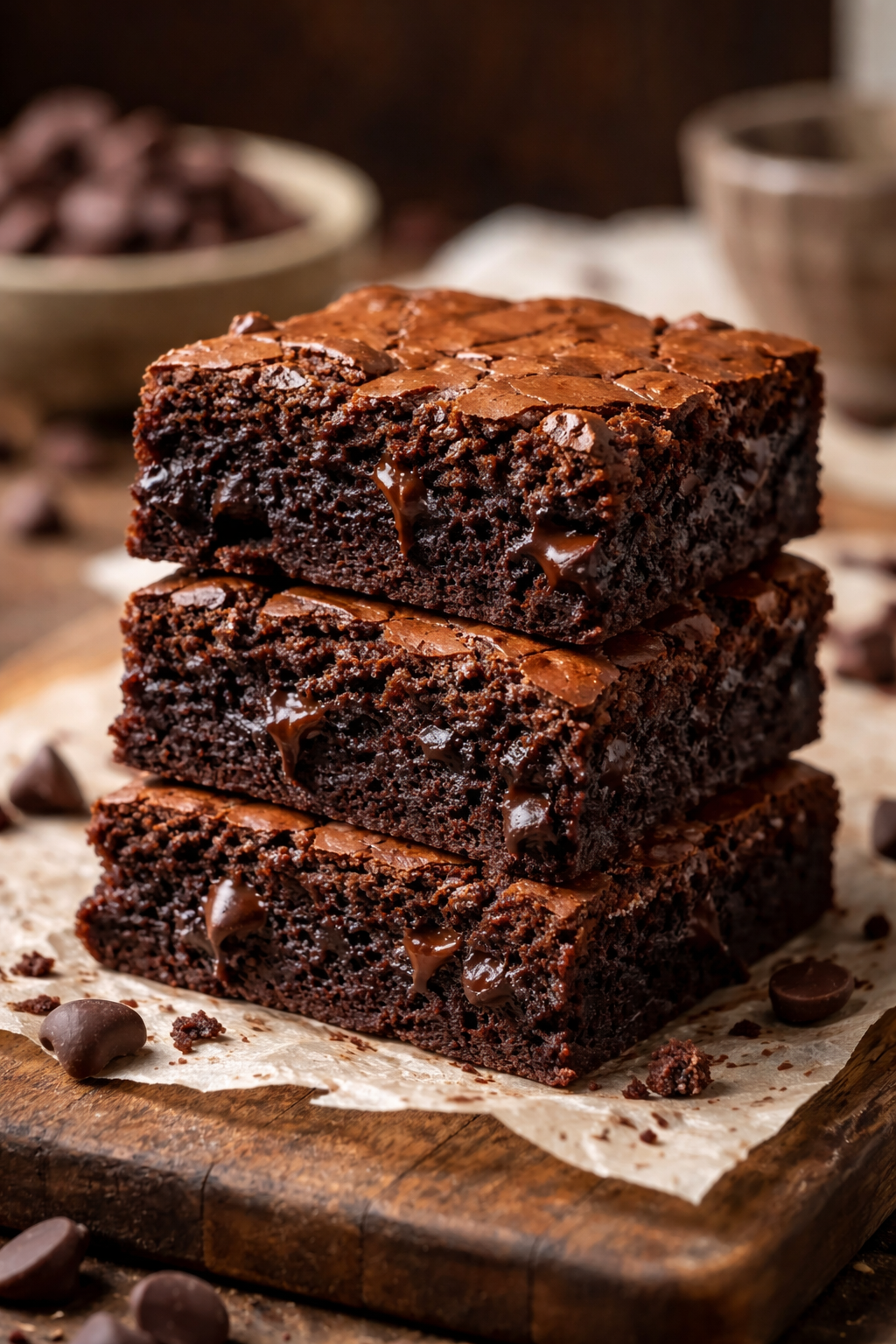
Let’s talk about what separates a good brownie from a jaw-dropping one. The answer is all in the texture. A great fudgy brownie feels serious. It’s dense, moist, and has a deep chocolate flavor. It should hold together but feel soft and melt-in-your-mouth. It’s more like a baked chocolate bar than a cake. Achieving that perfect gooey chocolate fudge brownie texture isn’t magic. It’s science. It comes down to a few very simple rules.
First, we need to think about ratios. A cake has lots of flour and a good amount of leavening agent. It needs that structure to rise up light and airy. A fudgy brownie recipe with cocoa powder works the opposite way. It uses less flour and almost no baking powder. The flour is just there to hold the chocolate and fat together. The star of the show is the chocolate. That brings us to the second point: ingredients.
For a chocolate fudge brownie recipe, quality matters. You taste every component. Using a good cocoa powder is non-negotiable. I use a natural, unsweetened cocoa powder for a classic taste. Dutch-process works too, but it gives a milder flavor. The choice is yours. The cocoa powder is what gives the brownie its deep soul.
The fat source is also key. This recipe uses oil, not butter. Some people swear by butter, and that’s fine. But for me, a brownie recipe with oil is the secret to ultimate moistness. Oil stays liquid at room temperature. Butter solidifies. This means oil-based brownies stay softer and more tender for days. They create that moist brownie recipe result we all want. They also have a more uniform crumb without butter’s occasional cakey lift.
The Gooey Factor: Eggs and Sugar
Two more ingredients control the fudge: eggs and sugar. Using more egg yolks than whole eggs adds fat and richness. It also gives that dark, yellow color. Sugar does more than just sweeten. When it melts and bakes, it creates that beautiful, shiny, crackly top we all love. It’s the signature of a classic chewy brownie recipe. Without enough sugar, your top will be matte and dull. More sugar means a chewier, shinier brownie. It’s a must for texture.
Now, what about a healthy brownie recipe with cocoa powder? You can make adjustments. Swap white sugar for coconut sugar. Use a light olive oil. Add black beans or avocado. But understand this: changing these main ingredients will change the texture. You might get a delicious treat. But it won’t be the traditional, decadent fudge brownie we’re building today. Sometimes, it’s okay to enjoy the real thing.
Brownie vs. Fudge Brownie: The Key Difference
This is a very common question: What’s the difference between a brownie and a fudge brownie? It’s a great one. I picture it on a spectrum.
- The Cakey Brownie: This is on one end. It’s light, fluffy, and has a more open crumb. It uses more flour and baking powder. It’s closer to chocolate cake baked in a square pan. A fork is fine for eating it.
- The Chewy Brownie: This is the middle ground. It has a dense, rich bite with slightly crispy edges. It balances flour, fat, and sugar well. It’s satisfying and classic.
- The Fudgy Brownie: This is the other extreme. It’s ultra-dense and incredibly moist. It almost feels like eating solid chocolate fudge. The center is so soft it glistens. It uses the least flour and the most fat (chocolate, oil, yolks). You might need a spoon for the middle piece. This is what we’re aiming for.
A true fudge brownie isn’t just underbaked. An underbaked brownie is messy and raw in the center. A proper fudgy brownie is fully cooked. It is simply engineered to be soft, rich, and decadent because of its ingredient ratios. It’s intentionally heavy and indulgent. That’s why people call it the best brownie recipe in the world. It satisfies a specific, powerful chocolate craving.
Can You Add Fudge to Brownies?
Another fun question! Can you add fudge to brownies? Absolutely, you can. It’s a popular way to make them even richer. You can swirl a homemade fudge sauce into the batter before baking. Or, you can place small pieces of chocolate fudge candy in the batter. When it bakes, they melt into gooey pockets.
But here’s my take. When you perfect a basic fudgy brownie recipe cocoa powder base, it’s so good on its own. It doesn’t need extra fudge. The brownie itself *is* the fudge. Adding more might make it overly sweet or messy. I prefer to let the simple, deep chocolate flavor shine. Save the add-ins for a more cake-like brownie that needs the help.
The real secrets are in the method. Overmixing is the enemy. Once you add the flour, you mix only until it just disappears. Too much mixing develops gluten. That makes the brownies tough and cakey. We want tenderness. Another tip: use a metal pan, not glass. Metal heats up faster and gives you those perfect crispy edges. Lining it with parchment paper is a lifesaver for clean removal.
My version of this recipe is loved by friends everywhere. I’ve even shared it with family in the UK, and they adore it. So, whether you’re looking for a classic fudgy brownie recipe UK style or an American treat, the principles are universal. It all comes down to those ratios: less flour, more fat, good chocolate, and not a second of overmixing. Master that, and you’ve got a lifetime ticket to perfect brownies. Let’s get to the actual recipe next.

Now, with all that delicious theory out of the way, let’s roll up our sleeves and actually gather our tools. Because the best fudgy brownies aren’t just made with magic—they’re made with a handful of simple, quality ingredients you probably already have.
The Ingredients You Need for Your Fudge Brownies Recipe
I’ve made this recipe so many times, I could probably do it in my sleep. But I still line everything up on the counter first. It’s my little ritual. It makes the whole process feel like a calm, deliberate science experiment (with the best possible outcome: chocolate). Here’s your shopping list for what I genuinely think is a top contender for the best brownie recipe in the world.
- Unsweetened Cocoa Powder: This is the foundation. 3/4 cup of a good, natural cocoa powder lends that deep, almost bitter, classic chocolate punch. Dutch-process will give you a slightly milder, smoother flavor, and it works beautifully too.
- Granulated Sugar: 1 1/2 cups. This amount is what creates that iconic, shiny, crackly top as the sugar melts and re-crystallizes. It’s non-negotiable for that perfect chewy brownie recipe crust.
- Light Brown Sugar: 1/2 cup, packed. The molasses in brown sugar is a secret weapon for moistness and a more complex flavor. It adds a lovely caramel note that pairs beautifully with the cocoa.
- Neutral Oil: 3/4 cup. This is my big secret. I use vegetable or canola oil. Remember, a true brownie recipe with oil yields a moister, denser result that stays soft for days. It’s the hug that keeps the brownie tender.
- Large Eggs: 3 whole ones. They’re the glue that binds everything together and helps create structure as they bake.
- Vanilla Extract: A generous teaspoon. Don’t skip it. It rounds out all the chocolatey edges.
- All-Purpose Flour: Just 1 cup. See? Less flour than you’d think. This minimal amount is what keeps our brownies firmly in fudgy territory, not cakey.
- Salt: 1/2 teaspoon. This might seem small, but it makes the chocolate flavor pop. It’s the difference between “sweet” and “wow.”
- Baking Powder: A tiny 1/4 teaspoon. Just a whisper of lift to keep the texture from being hockey-puck dense.
- Chocolate Chips (Optional but Highly Recommended): A heaping cup. I fold in semi-sweet chips because I love those molten pockets of extra chocolate. It sends the fudge factor into overdrive.
By the way, I know some of you are thinking about a healthy brownie recipe with cocoa powder. You can absolutely tinker. Swap the white sugar for coconut sugar, use a light olive oil, or even toss in some black beans for extra fiber. I’ve tried it all. But for this specific, indulgent, classic fudge brownies recipe, I encourage you to try it as written first. It’s a masterclass in balance.
The Step-by-Step Process: Your Path to Chocolate Bliss
Alright, ingredient team is assembled. Now, let’s get to the fun part: making a mess and then eating the results. My biggest piece of advice? Don’t overthink this. Brownies are forgiving. The key is to not over-mix once the flour comes in. I’ll walk you through it.
Step 1: Prep Your Pan & Preheat. First, crank your oven to 350°F (175°C). Line an 8×8-inch metal baking pan with parchment paper, leaving a little overhang on two sides. This is your “brownie lifter” and the key to perfect, crumb-free squares. Trust me on the metal pan—it gives you those crisper edges we all fight over.
Step 2: The Dry Team Meeting. In a medium bowl, whisk together that 1 cup of flour, 3/4 cup cocoa powder, 1/2 teaspoon salt, and the tiny 1/4 teaspoon of baking powder. Whisk it really well to banish any lumps and get everything friendly. Set this aside.
Step 3: The Wet Team Party. In a large bowl, combine the sugars and oil. Give it a good whisk for about a minute. You’ll see it start to look a bit like wet sand. Add the three eggs and the teaspoon of vanilla. Now, whisk like you mean it for a full 1-2 minutes. You want it to become thicker, smoother, and slightly paler in color. This step incorporates air and is partly responsible for that lovely top crust.
Step 4: The Grand Union (And The Secret). Here’s where you need to switch gears. Dump your dry ingredients into the wet. Put the whisk away. Grab a rubber spatula or a wooden spoon. Gently fold the mixture together. I count the strokes sometimes—just until you see the last trace of flour disappear. A few streaks are okay. Do not keep mixing. This is the single most important tip for tender brownies. Overmixing = gluten development = tougher, cakey brownies. We are anti-cakey.
Step 5: The Pockets of Joy. Fold in your chocolate chips, if using. Then, pour the thick, glorious batter into your prepared pan. Use the spatula to spread it evenly into the corners.
Step 6: Bake & The Art of the Test. Pop it in the center of your preheated oven. Now, set your timer for 25 minutes, but do not walk away after that. Baking time is usually 25-35 minutes. The perfect fudgy brownie recipe cocoa powder bake is a precise thing.
The trick? You want a toothpick inserted into the center to come out with a few moist crumbs clinging to it, maybe a tiny smear of batter. If it comes out completely clean, you’ve veered into cakey territory. If it’s covered in wet batter, it needs a few more minutes. This “few moist crumbs” stage is what guarantees that gooey chocolate fudge brownies center we dream about.
Step 7: The Most Important Wait. When they’re perfect, pull the pan out. Place it on a wire rack. This is the hardest part: let them cool completely in the pan. I know, the smell is torture. But cutting into warm brownies is a messy, crumbly disaster. They need time to set up. For super clean cuts, I sometimes even chill them in the fridge for an hour after they’ve cooled. It’s worth the wait.
A Little Digression on Variations: One of the best things about mastering a base recipe like this is that it becomes a canvas. My personal favorite riff is to make it into cookies and cream brownies by adding crushed Oreos to the batter. It’s ridiculously good. For a fruity twist, a swirl of cherry pie filling before baking echoes the classic combo in these gorgeous crowd-pleasing cherry bars. And if you’re a sweet-and-salty fan, topping the warm brownies with a layer of peanut caramel, like the one in these peanut caramel crunch bars, is just next-level.
The Final Test: Once they’re cool, use the parchment paper overhangs to lift the entire brownie slab out. Place it on a cutting board and slice with a sharp knife. Wipe the knife clean between cuts for perfect squares. And there you have it. A slab of pure, unadulterated chocolate happiness. A chocolate fudge brownie recipe that delivers exactly what it promises: density, moisture, and a deep cocoa soul. They store beautifully in an airtight container at room temperature for days… if they last that long. Honestly, for a fun twist on the liquid component, I once tried a Dr. Pepper brownies recipe, and the soda adds a fascinating depth—but this oil-based version remains my absolute, no-fail, weeknight go-to. Enjoy every single bite.
Variations and Additions: Turn Your Foundation into a Masterpiece
Alright, you’ve mastered the base. This fudgy brownie recipe cocoa powder is your solid, reliable friend. But sometimes—and I know you feel this—you want to play. You look at that thick batter and think, “What if I…?” So let’s talk about that. Experimenting with variations is where your personality comes into baking. It’s how you make something that’s uniquely yours.
By the way, before we dive in, a quick reminder about that moist brownie recipe secret we already discussed: the oil. I stick with it even when I’m adding crazy things. Oil’s ability to stay liquid keeps everything soft, no matter what you throw into the mix. It’s like the dependable foundation of a house you’re decorating wildly. Never swap it for butter in these variations unless you’re ready for a texture shift.
Adding Actual Fudge (And Other Gooey Inclusions)
Remember the question from earlier: Can you add fudge to brownies? Well, let’s do it. It’s a fantastic way to create little molten pockets. My favorite method is simple: chop up about 1/2 cup of soft, store-bought chocolate fudge candy (like the squares you get in holiday boxes) into small chunks. Fold them into the batter just before pouring it into the pan. When they bake, they melt into intense, creamy pools. It’s overkill in the best way.
But it doesn’t have to be fudge. Other ideas:
- Salted Caramel: Dollop 1/2 cup of thick caramel sauce (the kind you buy in a jar) over the batter in the pan. Use a knife to swirl it lightly into the top layer. Don’t mix it all through—you want streaks.
- Peanut Butter & Jam: This was a hit at a summer picnic. Spoon tablespoons of peanut butter and raspberry jam alternately over the batter and give it one gentle swirl.
- Espresso Soak: For adults, this is magic. Once the baked brownies are cooled, brush the top lightly with a mix of 1 tablespoon strong espresso and 1 tablespoon maple syrup. It adds a sophisticated kick without making them wet.
A personal anecdote here: I once tried adding chopped maraschino cherries and a dash of almond extract, aiming for a Black Forest vibe. They were delicious, but they baked a bit wetter. So if you add wet ingredients, just be prepared to extend the baking time by 5-7 minutes. Always go back to the toothpick test.
Keeping Them Super Moist: The Oil Philosophy
We’ve talked about oil versus butter, but let’s get practical about it. If you’re aiming for ultimate, lasting moistness—maybe you’re baking for a party two days away—here are my oil-specific tips:
- Type Matters, But Not Too Much: My go-to is canola or vegetable oil. But light olive oil (not extra virgin!) works and adds a faint, interesting fruitiness. Melted coconut oil is fantastic, but it will solidify if the brownies get cold, changing the mouthfeel slightly. For a standard, reliable brownie recipe with oil, stick with neutral.
- Don’t Fear a Little Extra: If your batter looks unusually thick or your cocoa powder seems extra absorbent, you can add an extra tablespoon of oil. Trust your eyes. The batter should be pourable but sluggish, like thick lava.
- The Storage Trick: Because oil-based brownies stay soft, you can store them wrapped at room temperature for days. But if you want to keep that just-baked moistness, store them in an airtight container with a single slice of apple. The apple gives off just enough humidity to prevent any drying out. Remove it after a day so it doesn’t get moldy. Funny enough, this trick works for cakes too.
A UK-Inspired Twist: The Fudgy Brownie Recipe UK Style
I have family in Cornwall, and baking with them over the years has shown me a few local quirks. A fudgy brownie recipe UK style often has two distinctive twists.
First, they frequently use golden syrup as a partial sugar substitute. It’s a thick, pale liquid sugar with a unique buttery flavor. If you want to try it, replace 1/4 cup of the granulated sugar in our recipe with 1/4 cup of golden syrup. It makes the top even shinier and adds a lovely, subtle richness. You can find it in international sections or online.
Second, dark chocolate is paramount. Many UK recipes call for melting actual dark chocolate (70% cocoa) into the batter instead of relying solely on cocoa powder. If you’re feeling adventurous, you can modify our recipe: reduce the cocoa powder to 1/2 cup and melt 4 ounces of chopped dark chocolate with the oil before mixing. It creates an intensely deep, almost adult flavor. It’s less sweet, more complex.
Here’s the thing: no matter which variation you try, the core principles remain. Less flour, don’t overmix, and bake to the “moist crumbs” stage. That’s your universal passport to gooey chocolate fudge brownies anywhere in the world.
The “Healthy” Route Without Sacrifice
I know the healthy brownie recipe with cocoa powder quest is real. And you can absolutely make adjustments that don’t ruin the experience. But you gotta be smart. Swapping all the sugar for a date paste will give you a sticky, dense brick—not a brownie. Instead, consider these targeted tweaks:
- Replace half the granulated sugar with coconut sugar. It has a lower glycemic index and a caramel note.
- Add a handful of black beans—cooked, rinsed, and pureed—to the wet ingredients. It sounds crazy, but it adds fiber and moisture without a bean flavor. I’ve done it, and skeptics couldn’t tell.
- For a nutrient boost, stir in 1/4 cup of finely ground almond flour with your all-purpose flour. It adds protein and a nice nuttiness.
Honestly, baking is also about joy and satisfaction, which are healthy in their own way. If you’re looking for general tips on balancing indulgence with wellness, reading up on cooking efficiency and mindful ingredient choices can offer a great framework for all your kitchen projects, not just brownies.
Your Brownie Canvas: Final Inspirations
At this point, your fudge brownies recipe is a blank slate waiting for your signature. Think about flavors you love. A teaspoon of instant coffee powder with the dry ingredients amplifies chocolate. A pinch of chili powder gives a warm, mysterious kick. Or for a festive twist, fold in crushed peppermint candies around Christmas.
My biggest piece of variation advice is this: write it down. Keep a little notebook. When you try something and it works, note the exact change. “Added 1/2 cup chopped toasted walnuts – perfect.” That way, you build your own personal best brownie recipe in the world. It becomes a legacy recipe you can pass down.
And if you fall in love with the whole category of dense, chewy bars, there’s a whole world out there. I spend a lot of time browsing and experimenting with new ideas over in the dessert bars and brownies category on my favorite baking site. It’s a treasure trove of inspiration when you’re ready to move from chocolate to lemon, cheesecake, or fruit bars.
So, get creative. Start with the classic, then make it yours. That’s the real joy of baking—it starts as a science, then becomes an art.
I really hope this guide has given you not just a recipe, but a foundation for confidence. Baking should feel like a friendly experiment, not a rigid test. Now, go make something delicious—and maybe share a square with someone who needs a smile today.
Your Fudge Brownies Recipe FAQ
Over the years, I’ve gotten so many questions about brownies. Here are the most common ones, with my tried-and-true answers.
- What’s the difference between a brownie and a fudge brownie?
It’s all about texture and ingredient ratios. A regular brownie can be cakey or chewy, using more flour and often butter. A fudge brownie is an intentional extreme: it uses less flour, more fat (like oil and chocolate), minimal leavening, and extra sugar or egg yolk to create a dense, moist, almost solid-fudge experience. It’s heavier, richer, and melts in your mouth. - What makes the best fudgy brownies?
Three pillars: the right ratios (less flour, more fat), quality cocoa powder, and perfect baking time. You must bake just until a toothpick comes out with a few moist crumbs, not clean. Overmixing the batter after adding flour is also a common downfall—it makes them tough. - Can you add fudge to brownies?
Absolutely! Fold in chopped fudge candy pieces before baking for molten pockets. Or, swirl a thick fudge sauce on top of the batter. But remember, a well-made fudgy brownie recipe cocoa powder is so rich it often doesn’t need it. The brownie itself is the fudge. - What are the secrets to a super fudgy brownie?
Use oil instead of butter for lasting moistness. Include an extra egg yolk for richness and a darker color. Don’t overbake—the “moist crumbs” test is crucial. And finally, let them cool completely before cutting; this allows the interior to set properly. - Why do my brownies sometimes turn out cakey?
Usually three reasons: too much flour (measure carefully), too much baking powder, or overmixing the batter. Also, if you bake them until the toothpick is completely clean, you’ve over-cooked them. They continue to set as they cool, so pulling them out earlier is key. - Can I make brownies without eggs?
You can, but the texture changes. For a fudgy result, substitutions are tricky. Mashed banana or applesauce adds moisture but makes them denser and cake-like. Commercial egg replacers often work better for structure. For a true fudgy texture, eggs are pretty important. - How do I get that shiny, crackly top?
That’s the sugar’s doing. Whisking the eggs and sugar vigorously before adding other ingredients dissolves the sugar and creates a smooth layer that crystallizes into a shiny crust during baking. Don’t skip that whisking step! - What’s the best cocoa powder for brownies?
Natural unsweetened cocoa powder gives a classic, slightly tart chocolate flavor. Dutch-processed cocoa is milder and smoother, often less acidic. Both work wonderfully in a chocolate fudge brownie recipe. Just use one you like—the quality matters more than the type. - Can I freeze brownies?
Yes, beautifully! Cool them completely, wrap the whole slab or individual squares tightly in plastic wrap, then freeze in an airtight container for up to 3 months. Thaw at room temperature. They taste almost fresh. - Is there a way to make these gluten-free?
Definitely. Replace the all-purpose flour with a 1:1 gluten-free baking blend (like those from King Arthur or Bob’s Red Mill). The texture might be a tiny bit more delicate, but they’ll still be wonderfully fudgy. Just ensure your cocoa powder is also gluten-free.
Equipment
- Large bowl
- Whisk
- Spatula
- 8x8 inch baking pan
- Parchment paper
Ingredients
- 3/4 cup Unsweetened Cocoa Powder
- 1 1/2 cups Granulated Sugar
- 1/2 cup Light Brown Sugar, packed
- 3/4 cup Neutral Oil
- 3 Large Eggs
- 1 teaspoon Vanilla Extract
- 1 cup All-Purpose Flour
- 1/2 teaspoon Salt
- 1/4 teaspoon Baking Powder
- 1 cup Chocolate Chips Optional but Highly Recommended
Instructions
- Preheat your oven to 350°F (175°C) and line an 8x8-inch metal baking pan with parchment paper.
- In a medium bowl, whisk together flour, cocoa powder, salt, and baking powder. Set aside.
- In a large bowl, combine sugars and oil, whisking until it resembles wet sand.
- Add eggs and vanilla to the sugar mixture, whisking until thicker and slightly paler in color.
- Gently fold dry ingredients into the wet mixture until just combined; do not overmix.
- Fold in chocolate chips if using, then pour the batter into the prepared pan, spreading evenly.
- Bake for 25-35 minutes, checking with a toothpick for moist crumbs.
- Once baked, let the brownies cool completely in the pan before lifting them out using the parchment paper and cutting into squares.
Notes
Nutrition

Hello! I’m Sarah Mitchell, and I’m passionate about bringing creativity and innovation to baking. My love for baking started in high school when I first tried my hand at decorating cupcakes for a class project. What began as a fun hobby quickly became a full-time passion. I’ve spent the past decade working in bakeries and dessert shops, honing my skills in everything from simple cookies to intricate wedding cakes.
After working in some of the top bakeries across the country, I realized that baking was about more than just following recipes — it was about infusing your personality into each creation. At BakingSecret.com, I love creating recipes that push boundaries while staying true to the heart of classic baking. I specialize in creating delicious and visually stunning pastries that will wow your guests.
When I’m not baking, I enjoy teaching baking classes, trying out new cake decoration techniques, and traveling to find inspiration in global dessert traditions. I’m so excited to share my tips and tricks with you to help elevate your baking game!