Introduction to the Marie Antoinette Cake
I still remember the first time I saw a photo of a Marie Antoinette cake. It was towering, covered in gold leaf, and so ridiculously fancy that I couldn’t help but laugh. My friend had ordered it for her wedding, and when I asked why she chose such an over-the-top design, she simply said, “Let them eat cake!” We both giggled, but that moment got me thinking about the story behind those famous words and the desserts they inspired.
Marie Antoinette, the last Queen of France before the French Revolution, never actually said “Let them eat cake.” Yet this quote has stuck to her name like frosting on a layer cake. The phrase supposedly shows how disconnected she was from the suffering of ordinary French people who couldn’t afford bread. Whether she said it or not, the words capture the extreme luxury and excess of her time at Versailles.
The let them eat cake meaning has changed over the years. Today, people use it to point out when someone rich or powerful doesn’t understand regular people’s problems. You’ve probably seen the let them eat cake meme pop up on social media whenever politicians or celebrities say something tone-deaf about money or hardship.
Here’s something interesting: the original French phrase was “Qu’ils mangent de la brioche,” which means “Let them eat brioche.” Brioche is a rich, buttery bread that’s fancier and more expensive than regular bread. This detail makes the quote even more insulting to people who were starving.
So what exactly is a marie antoinette cake recipe? It’s not one specific cake that Marie herself invented. Instead, it refers to elaborate, fancy cakes that capture the spirit of French royal baking. These cakes are usually multi-layered, decorated with intricate details, and made with premium ingredients. Think gold accents, delicate sugar flowers, and flavors like champagne, rose, or lavender.
This article will walk you through everything you need to know about creating your own Marie Antoinette-inspired masterpiece. I’ll share recipes, decorating tips, and the fascinating history behind these show-stopping desserts. You’ll learn why these cakes matter beyond just being pretty to look at.
The Origin of the Marie Antoinette Cake
The marie antoinette cake recipe we know today doesn’t come from a cookbook Marie herself used. Instead, it’s inspired by the types of desserts served at the French court during her reign from 1774 to 1792. The royal kitchens at Versailles were like fancy dessert factories, churning out incredible creations daily.
French pastry chefs during this period were artists. They competed to create the most impressive desserts for royal banquets and celebrations. These weren’t simple birthday cakes. They were architectural wonders made from sugar, cream, and imagination.
Marie Antoinette had a serious sweet tooth. Historical records show she loved pastries, especially ones made with almonds and fruit. She particularly enjoyed petit fours, delicate little cakes that came in dozens of flavors. Her preference for Austrian desserts from her homeland also influenced what was served at court.
The cakes created for Marie and her court used ingredients most French people never saw. We’re talking about:
- Real vanilla beans imported from distant colonies
- Fine white sugar that cost a fortune
- Fresh cream and butter in massive quantities
- Exotic fruits like pineapples and oranges
- Precious spices like cinnamon and cardamom
- Edible gold and silver leaf for decoration
This extreme luxury seems shocking when you learn about how did marie antoinette die. She was executed by guillotine on October 16, 1793, during the French Revolution. The same people who once bowed to her cheered as she lost her head. Her death marked the end of the French monarchy’s golden age.
What happened to Marie Antoinette in her final days is heartbreaking, regardless of how you feel about royalty. She was separated from her children, imprisoned in terrible conditions, and put through a mock trial. The contrast between her earlier life of luxury and her tragic end couldn’t be sharper.
Speaking of her final moments, people often wonder about what was Marie Antoinette’s final meal. According to historical accounts, she refused most of her last breakfast. She had only a cup of hot chocolate and a small piece of bread. No fancy cakes or pastries. Just simple food she could barely touch.
Understanding why was let them eat cake offensive requires knowing the context. During the 1780s, bread shortages plagued France. Poor harvests and rising prices meant families went hungry. For someone in a palace to suggest eating expensive cake instead of bread showed complete ignorance of real suffering. It was like telling someone who can’t pay rent to just buy a house.
Modern Marie Antoinette dessert creations honor the artistry of French baking without the troubling context. Today’s bakers use her story as inspiration for beautiful cakes that celebrate craftsmanship and creativity. You can make these desserts while appreciating the skill involved, separate from the historical baggage.
Some famous marie antoinette quotes give us insight into her character. She wrote, “I was a queen, and you took away my crown; a wife, and you killed my husband; a mother, and you deprived me of my children.” These words show a different side than the frivolous party girl of popular imagination.
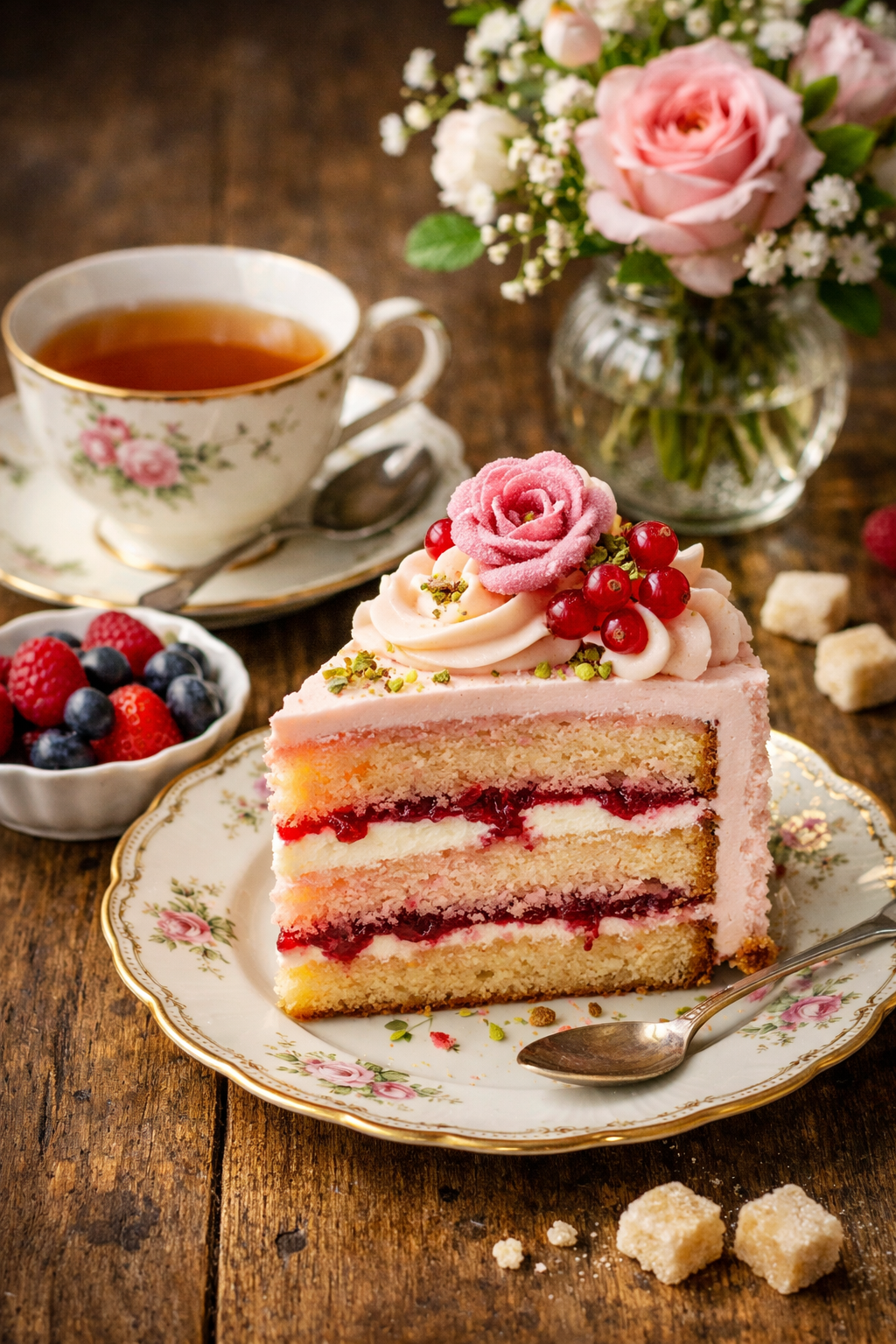
The cakes inspired by this era focus on several key features. They’re tall, often with five or more layers. They use French buttercream or ganache between layers. The decorating style is baroque and ornate, with lots of swirls, flowers, and dramatic elements. Colors tend toward pastels like blush pink, lavender, mint green, and ivory.
Other marie antoinette dessert options beyond cake include:
- Macarons in delicate flavors and colors
- Profiteroles stacked into tall towers
- Delicate fruit tarts with glossy glazes
- Champagne-flavored jellies and mousses
- Sugar cookies decorated like miniature paintings
When I first tried making a Marie Antoinette-style cake, I went completely overboard. I added gold leaf, sugar pearls, fresh flowers, and about ten different colors of frosting. It looked amazing but took me two full days to complete. I learned that you don’t need to include every fancy element to capture the spirit of these desserts.
The beauty of these cakes lies in their attention to detail. Even small touches like piping delicate lace patterns or adding a subtle shimmer can make your creation feel special. You’re not just baking a cake. You’re creating an experience that transports people to another time and place.

The Famous Quote and Its Misconceptions
Now that we’ve explored the desserts themselves, let’s dig into the phrase that’s become almost more famous than the queen who supposedly said it.
The whole “let them eat cake” thing is honestly one of history’s biggest cases of fake news. I find it fascinating how a quote someone probably never said can define their entire legacy. It’s like if people remembered you 200 years from now for something your annoying cousin posted on your Facebook wall without your permission.
Here’s the real story behind the let them eat cake meaning. The phrase appears in Jean-Jacques Rousseau’s autobiography “Confessions,” which he wrote around 1765. That’s when Marie Antoinette was just nine years old and still living in Austria. Rousseau attributes the quote to “a great princess,” but historians are pretty sure he wasn’t talking about Marie. He might have been referring to Marie-Thérèse, the wife of Louis XIV, or he could have made the whole thing up to make a point about royal cluelessness.
The actual phrase, as mentioned earlier, was “quils mangent de la brioche.” Brioche isn’t quite cake in the way we think of it today. It’s more like the richest, butteriest bread you’ve ever tasted. The kind of bread that costs three times as much as regular bread because it’s loaded with eggs and butter. So when translated to English, “cake” became the stand-in for “expensive fancy bread product that poor people definitely can’t afford.”
Understanding why was let them eat cake offensive requires putting yourself in the worn-out shoes of an 18th-century French peasant. Imagine you’re working sixteen-hour days, your kids are hungry, and you can’t even buy basic bread because the price keeps going up. Then someone in a palace suggests you should just eat a luxury item instead. It’s the equivalent of a billionaire today telling struggling families to “just order DoorDash” during a food shortage.
Funny enough, the let them eat cake meme has taken on a whole new life in our internet age. I see it pop up constantly on Twitter and Instagram whenever someone rich says something completely out of touch. When a celebrity complains about their private jet being delayed, someone will quote the phrase. When a politician suggests an expensive solution to a problem affecting poor people, out comes Marie Antoinette’s ghost. The meme has become shorthand for privilege blindness, which is ironic since Marie probably never said it in the first place.
The meme works because we all recognize that disconnect between the haves and have-nots. I used to work retail, and I remember a customer once complaining that she had to choose between two expensive wedding cakes for her daughter’s reception. Meanwhile, I was calculating if I could afford both lunch and bus fare that day. That’s the “let them eat cake” moment in miniature.
What makes the phrase stick around isn’t just its catchiness. It perfectly captures a universal human frustration with inequality and insensitivity. Whether Marie said it or not doesn’t really matter anymore. The quote has become bigger than any one person.
The Life and Times of Marie Antoinette
To really understand the desserts and the drama, you need to know a bit about the woman herself.
Marie Antoinette was born in Vienna in 1755 as an Austrian archduchess. She was the fifteenth child of Empress Maria Theresa, which meant she was basically royal spare parts. Her mom used her as a political pawn, marrying her off to the French dauphin (the future Louis XVI) when she was just fourteen years old. Can you imagine being shipped off to a foreign country as a teenager to marry someone you’d never met? The culture shock must have been intense.
She arrived at Versailles and immediately became the target of gossip and criticism. The French court didn’t trust her because she was Austrian. Her marriage to Louis XVI wasn’t consummated for seven years, which became public knowledge and the subject of cruel jokes. She dealt with this hostile environment by throwing herself into fashion, parties, and yes, amazing desserts. She created her own fantasy world at the Petit Trianon, a small château on the Versailles grounds where she could escape court life.
By the way, Marie wasn’t entirely frivolous. She genuinely loved her children and showed real courage during the Revolution. But her early years of partying and spending set a reputation she could never shake. The French people needed someone to blame for their suffering, and the foreign-born queen made an easy target.
The question of how did marie antoinette die brings us to one of history’s darkest moments. After the royal family tried to escape France in 1791 and got caught (in what’s known as the Flight to Varennes), things went downhill fast. Louis XVI was executed in January 1793. Marie was separated from her children and imprisoned in increasingly terrible conditions. She went from the Temple prison to the Conciergerie, a grim fortress they called “the antechamber to the guillotine.”
Her trial in October 1793 was a farce. They accused her of everything from treason to crimes I won’t even repeat here because they were so ridiculous and offensive. She defended herself with dignity, but the outcome was predetermined. On October 16, 1793, she was taken in a cart through jeering crowds to the Place de la Révolution. Unlike her husband, who rode in a closed carriage, she had to endure public humiliation all the way to her death. She was thirty-seven years old.
What happened to Marie Antoinette after her death is equally tragic. She was buried in an unmarked grave, and her children scattered. Her son, Louis-Charles, died in prison under mysterious circumstances. Her daughter, Marie-Thérèse, was the only member of the immediate family to survive, eventually being released in exchange for French prisoners.
The contrast between creating elaborate celebratory desserts and facing such a brutal end feels almost surreal. Yet that’s exactly why marie antoinette death remains such a compelling story. She went from the highest heights of luxury to the lowest depths of human cruelty.
Here’s something that always gets me: in her final letter to her sister-in-law, Marie wrote with remarkable grace and forgiveness. She asked that her children be raised with kindness and stated she forgave her enemies. These marie antoinette quotes reveal someone far more complex than the cake-eating caricature.
The legacy she left behind is complicated. On one hand, she represents excess and disconnection from reality. On the other, she was a young woman thrust into an impossible situation, vilified beyond what she deserved, and killed in a way that seems barbaric to modern eyes. When we make spectacular celebration cakes inspired by her era, we’re connecting with the artistry of that time while hopefully learning from its failures.
I think that’s why the marie antoinette cake tradition persists. These desserts let us touch a piece of history, appreciate incredible craftsmanship, and maybe reflect on how societies change. You can bake something beautiful and decadent, like a rich luxurious pound cake topped with gold leaf, while still understanding the historical context that makes it meaningful.
The truth is more interesting than the myth. Marie Antoinette wasn’t a villain or a saint. She was a flawed human being who lived through extraordinary times. Her story reminds us that behind every historical figure is a real person who laughed, cried, loved their kids, and yes, probably enjoyed some really amazing desserts.
Baking Your Own Marie Antoinette Cake
Alright, here’s where we get our hands floury and actually make one of these gorgeous creations. I’m going to walk you through a marie antoinette cake recipe that looks impressive but won’t require a culinary degree to pull off. Trust me, if I can do this in my tiny apartment kitchen, you can too.
The foundation of any great Marie Antoinette-inspired cake is a tender, delicate crumb. I prefer using a champagne cake base because it captures that fancy French vibe perfectly. The champagne adds a subtle sweetness and creates the lightest texture you can imagine. Plus, you get to drink the leftover champagne while you bake, which honestly makes the whole process more fun.
The Basic Champagne Cake Recipe
Here’s what you’ll need for the cake layers:
- 2 and 3/4 cups all-purpose flour
- 2 and 1/2 teaspoons baking powder
- 1/2 teaspoon salt
- 1 cup unsalted butter, room temperature
- 2 cups granulated sugar
- 5 large egg whites, room temperature
- 1 cup champagne (use something you’d actually drink, not cooking wine)
- 1/2 cup whole milk
- 2 teaspoons vanilla extract
- 1/2 teaspoon almond extract
Start by preheating your oven to 350°F. Grease and flour three 8-inch round cake pans. I learned the hard way that parchment paper circles on the bottom are your best friend here. They prevent sticking better than anything else.
In a medium bowl, whisk together your flour, baking powder, and salt. Set that aside. In your stand mixer (or with a hand mixer if that’s what you’ve got), cream the butter and sugar together until it’s light and fluffy. This takes about 4-5 minutes, and don’t skimp on this step. The air you’re incorporating now is what makes the cake tender.
Add your egg whites one at a time, beating well after each addition. The mixture might look a little curdled at this point, and that’s totally normal. Don’t panic like I did the first time.
In a measuring cup, combine your champagne, milk, vanilla, and almond extract. Now you’re going to alternate adding the dry ingredients and the wet ingredients to your butter mixture. Start and end with the dry ingredients. I do it in three additions of dry and two of wet. Mix just until combined after each addition. Overmixing is the enemy of tender cake, so once you don’t see streaks of flour anymore, stop.
Divide the batter evenly among your three pans. A kitchen scale makes this super easy, but eyeballing it works too. Bake for 25-30 minutes, until a toothpick inserted in the center comes out clean. Let them cool in the pans for 10 minutes, then turn them out onto cooling racks.
The Buttercream That Makes It Special
Here’s the thing about marie antoinette dessert creations: the frosting is just as important as the cake itself. I make a French buttercream because it’s silky smooth and not overly sweet. American buttercream is easier, sure, but French buttercream has that luxurious mouthfeel that screams “royal dessert.”
For the French buttercream, you’ll need:
- 5 large egg yolks
- 3/4 cup granulated sugar
- 1/3 cup water
- 1 and 1/2 cups unsalted butter, room temperature and cut into pieces
- 2 teaspoons vanilla extract
- 2 tablespoons champagne
- A pinch of salt
- Optional: rose water or lavender extract for that authentic French touch
This part feels a bit fancy, but follow along. Beat your egg yolks in a stand mixer until they’re thick and pale yellow. Meanwhile, combine sugar and water in a small saucepan. Heat it without stirring until it reaches 240°F on a candy thermometer. This is called the soft-ball stage, and yes, you really do need a thermometer for this.
With your mixer running on medium speed, carefully pour the hot sugar syrup into the egg yolks in a thin stream. Try not to hit the beaters directly or you’ll get sugar splattered everywhere. Once all the syrup is in, increase the speed to high and beat until the mixture has cooled to room temperature. This takes about 8-10 minutes.
Now reduce the speed to medium and add your butter pieces, one at a time. The mixture might look broken or curdled at some point. Don’t freak out. Keep beating and it’ll come together into the most gorgeous, silky buttercream you’ve ever seen. Once it’s smooth, beat in your vanilla, champagne, and salt. If you’re using rose water or lavender, add just a tiny bit because these flavors are strong.
Assembling Your Masterpiece
Once your cakes are completely cool (and I mean completely, warm cakes will melt your buttercream), it’s assembly time. Level your cake layers with a serrated knife if they’ve domed. Place your first layer on a cake board or serving plate. Spread about 3/4 cup of buttercream on top. Add the second layer, more buttercream, then the final layer.
Do a crumb coat first. This is a thin layer of frosting that seals in all the crumbs. Spread it on, then pop the whole thing in the fridge for 20-30 minutes. This step is crucial for getting that smooth, professional look. When I skip this step to save time, I always regret it.
After the crumb coat is chilled, apply your final layer of frosting. You can go smooth and sleek or create textured swirls, whatever matches your vision. This is where you really get to channel your inner French pastry chef.
The Decoration That Brings It All Together
Now for the fun part. Decorating a marie antoinette cake is where you can really let your creativity shine. Here are my favorite ways to make it look regal without going broke:
Edible flowers are stunning and easier to work with than you’d think. Just make sure they’re actually edible and pesticide-free. I’ve used roses, pansies, and violets with great success. Press them gently into the frosting while it’s still soft.
Gold leaf adds instant drama. You can buy sheets of edible gold leaf online for pretty cheap. Use a dry brush to lift pieces and place them on your cake. They’ll stick to the buttercream naturally. A little goes a long way here. I once went overboard and my cake looked like a disco ball, which wasn’t quite the look I was going for.
Fresh berries arranged artfully give color and a touch of freshness. Raspberries, blackberries, and strawberries all work beautifully. By the way, this is where healthy meal planning principles can actually apply to desserts too. Adding fresh fruit increases nutritional value and natural sweetness.
Sugar pearls in various sizes create that baroque, over-the-top look. You can find these at any craft store in the baking section. I like mixing different sizes and colors like ivory, gold, and pale pink.
If you’re feeling ambitious, make some royal icing and pipe delicate lace patterns around the sides. It takes practice, but YouTube tutorials are your friend here. I practiced on parchment paper for like an hour before attempting it on an actual cake.
Macarons make fantastic cake toppers. You can buy them or make your own if you’re feeling brave. Arrange them around the top edge for an instant French patisserie vibe.
Tips for Achieving Perfection
Temperature is everything in baking. Room temperature ingredients mix more evenly and create better texture. I set out my butter and eggs at least an hour before I start baking. Some people even write reminders on their phones because it’s that important.
Invest in an oven thermometer. I discovered my oven runs 25 degrees hot, which explained why my early baking attempts were disasters. Those few dollars for a thermometer will save you from so much frustration.
Don’t open the oven door during baking unless absolutely necessary. Every time you peek, you let out heat and can cause your cakes to sink. I know it’s tempting, but resist.
When leveling layers, freeze them for about 30 minutes first. They’re much easier to cut cleanly when slightly frozen. This trick changed my cake-making game completely.
A cake turntable makes frosting infinitely easier. I resisted buying one for years, thinking it was an unnecessary expense. I was so wrong. It’s like the difference between writing with your dominant hand versus your other hand.
Serving Your Creation
The best part of making a marie antoinette dessert is sharing it with people. These cakes are meant to be centerpieces, conversation starters, and celebrations all rolled into one.
Serve it at room temperature for the best flavor and texture. Take it out of the fridge about an hour before serving. Cold cake is fine, but room temperature cake is divine.
Pair it with champagne, obviously. Or serve it with a delicate tea like Earl Grey or a floral blend. I once served mine with lavender tea and it was perfection.
If you’re making this for an event, prepare the cake layers a day ahead. Wrap them well in plastic wrap and keep them at room temperature. Make the buttercream the day of, or you can make it ahead and re-whip it before using. Assembly and decoration should happen the day of the event for the freshest taste.
Cut clean slices by wiping your knife with a hot, damp towel between cuts. This keeps the frosting from getting messy and gives you those Instagram-worthy slices.
Funny enough, every time I make one of these cakes, someone asks about the calories. Look, this isn’t diet food. This is celebration food. It’s meant to be enjoyed in reasonable portions as a special treat. The French actually have this figured out better than most cultures. They eat rich foods in smaller amounts and savor every bite.
If you want to explore more cake variations that might offer different approaches, checking out other creative cake and cupcake recipes can give you tons of inspiration for your next baking project.
Frequently Asked Questions (FAQ)
What did Marie Antoinette mean by “eat cake”?
She almost certainly never said it at all. The phrase attributed to her was actually about suggesting people eat brioche instead of bread during shortages. The quote appeared in writings before Marie was even old enough to say such things. It’s become a symbol of being out of touch with common people’s struggles, but it’s historically inaccurate to attribute it to her. The meaning today is about privilege blindness and insensitivity to those facing hardship.
Is “Let them eat cake” a true story?
No, it’s almost certainly not true. The phrase appears in Jean-Jacques Rousseau’s writings from around 1765, when Marie Antoinette was only nine years old and still living in Austria. He attributed it to “a great princess” but never named Marie specifically. Historians believe it was either about a different royal or completely made up to illustrate a point about aristocratic ignorance. Despite being false, the story stuck to Marie’s reputation and has lasted for centuries.
What was Marie Antoinette’s final meal?
According to historical records, Marie Antoinette barely ate anything for her last meal. She was offered breakfast on the morning of her execution but could only manage a cup of hot chocolate and a small piece of bread. She refused most of the food brought to her. This stark simplicity contrasts sharply with the elaborate desserts and feasts she enjoyed during her years at Versailles. Her appetite was understandably gone, given what she was facing that day.
Why is it called “let them eat cake”?
The English translation simplified the original French phrase for easier understanding. The actual phrase was “Qu’ils mangent de la brioche,” which means “Let them eat brioche.” Since brioche isn’t as common in English-speaking countries and “cake” better conveyed the idea of a luxury baked good, that’s what stuck. The name emphasizes the disconnect between suggesting an expensive treat when people can’t afford basic necessities. It’s become shorthand for tone-deaf privilege across many languages and cultures.
Can I make a Marie Antoinette cake without champagne?
Absolutely. You can substitute sparkling white grape juice or sparkling cider for a non-alcoholic version. Some bakers use club soda with a bit of almond extract for flavor. The champagne adds a subtle taste and helps create a light texture, but it’s not essential. I’ve made this cake with apple cider before and it turned out beautifully. The key is using something with bubbles to maintain that delicate crumb structure.
How far in advance can I make this cake?
The cake layers can be made up to two days ahead if wrapped tightly in plastic wrap and stored at room temperature. You can also freeze them for up to three months. The French buttercream can be made a day ahead and stored in the fridge, then brought to room temperature and re-whipped before using. For best results, assemble and decorate the cake the day you plan to serve it. Fully assembled cakes stay fresh for about three days in the refrigerator.
What makes French buttercream different from regular buttercream?
French buttercream uses egg yolks and a cooked sugar syrup, while American buttercream is just butter and powdered sugar. This makes French buttercream silkier, less sweet, and more stable at room temperature. It has a luxurious mouthfeel that feels lighter despite having similar butter content. The downside is it’s more time-consuming and requires a candy thermometer. However, the superior taste and texture make it worth the extra effort for special occasions.
Are there simpler Marie Antoinette desserts for beginners?
Definitely. You could start with lavender or rose-flavored cupcakes decorated with gold sugar and edible flowers. French macarons in pastel colors are another option, though they have their own learning curve. Simple sugar cookies decorated with royal icing in baroque patterns work wonderfully. Even a basic vanilla cake with champagne-infused frosting and pretty decorations captures the spirit without the complexity. The key is the presentation and those signature French flavors rather than elaborate construction.
How do I prevent my cake layers from doming?
Lower your oven temperature by 25 degrees and bake longer. Use cake strips (wet fabric strips) wrapped around your pans to insulate the edges. Make sure your oven temperature is accurate with an oven thermometer. Don’t overfill your pans; fill them only about two-thirds full. These methods help the cake bake more evenly from edge to center. I’ve had the best results combining lower temperature with cake strips.
What’s the best way to transport a decorated Marie Antoinette cake?
Chill the cake thoroughly so the buttercream firms up. Place it on a sturdy cake board, then put that in a cake box if possible. Drive carefully, avoiding sudden stops. Keep the car cool with air conditioning. For tall cakes, consider transporting the layers separately and assembling on-site. I once transported a four-layer decorated cake across town by chilling it solid, placing it in a box, and driving like I had a sleeping baby in the car. It arrived perfectly intact.
Creating your own marie antoinette cake recipe connects you to centuries of French baking tradition while letting you express your own creativity. Don’t be intimidated by the fancy reputation. Start simple, practice your techniques, and remember that even imperfect cakes taste delicious. The joy is in the making as much as the eating, and there’s something magical about creating beauty with your own hands.
Equipment
- Stand mixer
- Medium bowl
- Baking pans
- Measuring cups
- Serrated knife
Ingredients
- 2 and 3/4 cups all-purpose flour
- 2 and 1/2 teaspoons baking powder
- 1/2 teaspoon salt
- 1 cup unsalted butter room temperature
- 2 cups granulated sugar
- 5 large egg whites room temperature
- 1 cup champagne
- 1/2 cup whole milk
- 2 teaspoons vanilla extract
- 1/2 teaspoon almond extract
Instructions
- Preheat oven to 350°F and grease and flour three 8-inch round cake pans.
- In a medium bowl, whisk together flour, baking powder, and salt; set aside.
- In a stand mixer, cream the butter and sugar together until light and fluffy (about 4-5 minutes).
- Add egg whites one at a time, beating well after each addition.
- In a measuring cup, combine champagne, milk, vanilla, and almond extract.
- Alternate adding the dry ingredients and the wet ingredients to the butter mixture, starting and ending with dry ingredients.
- Divide the batter evenly among the three pans.
- Bake for 25-30 minutes until a toothpick inserted in the center comes out clean.
- Let the cakes cool in the pans for 10 minutes, then turn them out onto cooling racks.
Notes
Nutrition

Hi there! I’m Emma Lawson, and I’m thrilled to be part of the BakingSecret.com team! Baking has been a part of my life since I was a little girl, growing up in a family that loved to bake together. From birthday cakes to cookies, I learned early on that the kitchen was a place of creativity and connection.
After studying culinary arts at The Culinary Institute of America, I fell in love with the science behind baking. Understanding how different ingredients interact and how slight adjustments can change the final product is something that continues to fascinate me. My background in pastry arts and food science has helped me develop recipes that are not only delicious but also reliable.
At BakingSecret.com, I’m excited to share recipes that cater to all levels, from beginners to seasoned bakers. My goal is to make sure that you feel confident in the kitchen and have fun with every bake. When I’m not in the kitchen, you can find me experimenting with new flavor combinations, hiking, or trying out new coffee shops in town!