
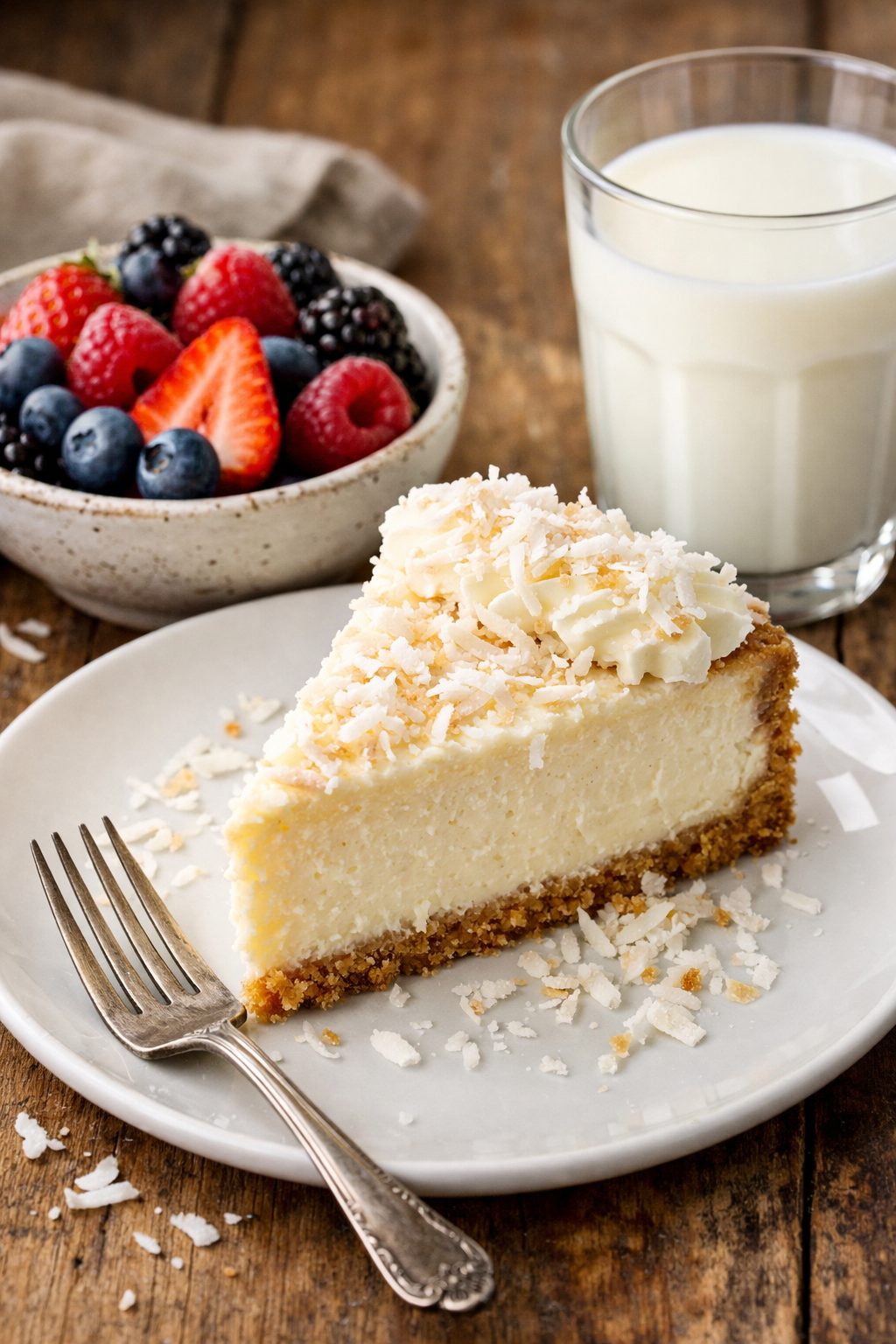
Introduction to Coconut Cheesecake
Last summer, I brought a coconut cheesecake to my sister’s beach party. Within an hour, the entire pan was gone. Friends kept asking me for the recipe, and one person even tried to lick the serving plate when she thought no one was looking. That’s the power of a really good coconut dessert.
Welcome to my kitchen! Today, I’m excited to share everything I know about making the perfect coconut cheesecake. Whether you’re a seasoned baker who can whip up fancy pastries in your sleep or someone who still uses a box mix, this creamy tropical treat will make you look like a pro. The best part? It’s easier than you think.
I’ve spent years testing different recipes and techniques. Some were amazing. Others ended up in the trash. But through all that trial and error, I learned what works and what doesn’t. Now I’m going to save you from making the same mistakes I did.
What is Coconut Cheesecake?
Let’s start with the basics. A coconut cheesecake takes the rich, tangy flavor of traditional cheesecake and adds a tropical twist. Think of it as your favorite New York style dessert that took a vacation to the Caribbean and came back better than ever.
The coconut element can show up in several ways. Some recipes add shredded coconut directly into the filling. Others use coconut milk or coconut cream to replace regular dairy. You might find toasted coconut on top as a crunchy garnish. Many bakers use all three methods for maximum coconut flavor.
What makes this dessert special is the balance. The tartness of cream cheese plays perfectly with the sweet, nutty taste of coconut. You get that signature cheesecake density but with a lighter, more refreshing finish. It’s like eating a cloud that tastes like paradise.
The crust usually features coconut too. I love using graham crackers mixed with shredded coconut. Some people prefer vanilla wafer cookies. For a coconut cheesecake keto version, you can use almond flour and extra coconut. The options are endless.
Popular Coconut Cheesecake Recipes You Need to Try
One of the best places to find tested recipes is Allrecipes. I’ve tried several coconut cheesecake allrecipes over the years, and they rarely disappoint. The community reviews help you know what you’re getting into before you start.
My favorite coconut cheesecake allrecipes option includes toasted coconut in both the crust and the topping. The recipe got over 500 five-star reviews, and for good reason. People love how foolproof it is. Even my friend Sarah, who once burned water, made it successfully on her first try.
The beauty of Allrecipes is the comment section. Home cooks share their modifications and tips. Someone might mention that they reduced the sugar by a quarter cup. Another person added lime zest for extra zing. These real-world tweaks are pure gold.
Making the Creamiest Coconut Cheesecake
If you want a creamy coconut cheesecake that melts on your tongue, you need to follow a few key rules. First, bring all your ingredients to room temperature before mixing. Cold cream cheese creates lumps no matter how long you beat it.
Second, don’t overmix the batter. Once you add the eggs, mix on low speed just until combined. Too much air creates cracks during baking. I learned this the hard way after my first few attempts looked like the Grand Canyon.
For the ultimate creamy coconut cheesecake, I use full-fat coconut milk. The light version just doesn’t have the same richness. Some recipes call for coconut extract, but I find it tastes artificial. Real coconut cream gives you authentic flavor without any chemical aftertaste.
A water bath is your best friend here. Wrap your springform pan in aluminum foil and place it in a larger pan filled with hot water. This gentle, moist heat prevents cracks and keeps the texture silky smooth.
Dietary Variations That Actually Taste Good
I’m a big believer that everyone deserves great dessert. That’s why I’ve tested multiple versions for different diets. A coconut cheesecake vegan option works beautifully with cashew cream and coconut cream. Soak the cashews overnight, blend them until smooth, and you won’t believe it’s dairy-free.
For my coconut cheesecake vegan version, I also use maple syrup instead of regular sugar. The slight caramel notes complement the coconut perfectly. Agar powder helps it set since you’re not using eggs. The result is surprisingly close to the original.
Making a coconut cheesecake keto requires swapping out the sugar for erythritol or monk fruit sweetener. Use almond flour in the crust instead of graham crackers. The filling stays mostly the same since cream cheese is already low-carb. My keto friends can’t tell the difference.
Regional and Brand Favorites
If you’ve ever wondered about coconut cheesecake Alaska, it’s a local specialty in some Alaskan bakeries. They add wild blueberries and extra coconut flakes. The combination sounds weird but works amazingly well. The tartness of the berries cuts through the richness.
The King Arthur coconut cheesecake recipe uses their coconut flour, which gives a subtle texture difference. I tried it last month and really enjoyed the slightly denser result. King Arthur products are reliable, and their recipe developers know what they’re doing.
Everyone wants to recreate the coconut cheesecake factory recipe, and I get it. Their version is tall, creamy, and topped with whipped cream and toasted coconut. While the exact recipe is secret, I’ve gotten pretty close using a combination of coconut milk, coconut extract, and sweetened shredded coconut throughout.
Easy Variations for Any Occasion
Sometimes you need dessert but don’t want to deal with a full cheesecake. That’s where coconut cheesecake bars come in handy. They use the same ingredients but bake in a 9×13 pan. Cut them into squares, and you have portable treats perfect for potlucks or bake sales.
Want to take it up a notch? Try chocolate coconut cheesecake. Add melted dark chocolate to half the batter and swirl it through. The combination tastes like a Mounds candy bar in cheesecake form. My husband requests this version for his birthday every year.
For a no-fuss option, make a pineapple coconut cheesecake no bake version. Mix cream cheese with whipped cream and coconut, pour it into a graham cracker crust, and top with crushed pineapple. Chill for four hours and you’re done. No oven required, and it tastes like a tropical vacation.
The pineapple and coconut combination is classic for good reason. The fruit adds brightness and cuts through the richness. I like using fresh pineapple when possible, but canned works fine in a pinch. Just drain it really well so you don’t end up with a soggy crust.

Perfecting Your Coconut Cheesecake for Every Diet
Now that you know the basics, let’s talk about how to make this dessert work for literally anyone who walks through your door.
Here’s the thing. I used to think dietary restrictions meant boring desserts. You know, those sad little treats that taste like cardboard pretending to be cake. But honestly? Some of my best coconut cheesecake experiments came from trying to accommodate my friend Rachel’s keto diet and my cousin Tom who went vegan last year. Turns out, limitations can push you to be more creative.
When I first attempted a coconut cheesecake keto version, I was nervous. Sugar does more than just sweeten—it affects texture and moisture. But after testing different combinations, I found that erythritol mixed with a touch of stevia gives you that perfect sweetness without the weird cooling effect some sugar substitutes have. The trick is to blend them together first so they dissolve evenly.
For the crust of my coconut cheesecake keto, I mix two cups of almond flour with half a cup of unsweetened shredded coconut, a third cup of melted butter, and two tablespoons of your chosen sweetener. Press it firmly into the pan. Really firmly. Like you’re mad at it. Otherwise it’ll crumble when you try to slice it, and nobody wants that mess.
The filling stays pretty similar to regular cheesecake since cream cheese is naturally low in carbs. I use full-fat cream cheese, half a cup of coconut cream, four eggs, and about three-quarters cup of sweetener. The coconut cream adds moisture without adding carbs. My brother-in-law is hardcore keto, and he couldn’t believe this was “diet food.” That’s when you know you’ve nailed it.
Moving to the vegan side of things, making a coconut cheesecake vegan was actually easier than I expected. The secret weapon is cashews. I know, I know—cashews don’t sound like they’d make cheesecake. But trust me on this. Soak two cups of raw cashews in water overnight. The next day, drain them and blend with three-quarters cup of coconut cream, half a cup of maple syrup, a quarter cup of melted coconut oil, and two teaspoons of vanilla extract.
The texture comes out incredibly smooth if you have a high-powered blender. My old blender didn’t cut it, so I borrowed my neighbor’s Vitamix and the difference was night and day. If yours isn’t super powerful, just blend longer and scrape down the sides a few times. You want zero graininess.
For setting a coconut cheesecake vegan, you need agar powder instead of gelatin. Use about two teaspoons dissolved in a quarter cup of water. Heat it until it bubbles, then immediately blend it into your cashew mixture. Work fast because agar sets up quickly. Pour everything into your crust and refrigerate for at least six hours. By the way, if you’re into no-bake options, you might enjoy my easy cherry cheesecake that also skips the oven entirely.
Funny enough, my vegan friends often request this version even when I offer to make the traditional one. They say something about it feeling lighter but still satisfying. Plus, it’s naturally dairy-free, which helps anyone with lactose issues.
Regional Takes and Brand-Specific Recipes
Last year I visited Juneau and discovered something interesting about coconut cheesecake Alaska. Several bakeries there make a version that incorporates local wild berries into the coconut base. The contrast between tart berries and sweet coconut creates this incredible balance.
To recreate coconut cheesecake Alaska at home, I make a standard coconut filling but reserve about a cup of fresh or frozen blueberries. After pouring the batter into the crust, I gently fold in the berries. Some sink, some float, creating this beautiful marbled effect. The moisture from the berries means you should bake it about ten minutes longer than usual to account for the extra liquid.
The Alaskan version also tends to be less sweet than mainland recipes. I reduce my sugar by about a quarter cup and let the natural fruit sugars do some of the work. It’s refreshing and not overwhelmingly rich. If you like fruit-forward desserts, you should definitely check out this strawberry version that highlights fresh berries beautifully.
Now, the King Arthur coconut cheesecake recipe deserves special attention because King Arthur Baking Company really knows their stuff. Their version uses coconut flour in the crust, which I hadn’t considered before. Coconut flour absorbs liquid like crazy, so you need way less of it than regular flour.
For a King Arthur coconut cheesecake crust, mix a quarter cup of coconut flour with one and a half cups of graham cracker crumbs. The coconut flour adds structure and a subtle coconut taste without making it too coconutty, if that makes sense. It’s like a whisper of coconut rather than a shout.
Their filling recipe suggests using cream of coconut instead of coconut milk. This stuff is thicker and sweeter, almost like condensed milk but coconut-flavored. You’ll find it in the cocktail section of most grocery stores because people use it for piña coladas. A half cup in your batter makes everything taste more tropical without adding chunks of shredded coconut.
Fun Formats and Flavor Twists
Sometimes you need something more portable than a whole cheesecake. That’s where coconut cheesecake bars become your best friend. Same great taste, but you can grab one with your hands and go.
I make coconut cheesecake bars in a 9×13 inch pan lined with parchment paper. The parchment is key—it lets you lift the entire thing out once it’s cooled, making cutting so much easier. Press your crust evenly across the bottom, bake for ten minutes, then add your filling. The timing stays mostly the same, maybe five minutes less since the bars are thinner than a traditional cheesecake.
Once they’re completely cool, I lift them out using the parchment overhang and cut them into squares with a sharp knife dipped in hot water. Wipe the knife between each cut for clean edges. These bars are perfect for bake sales, potlucks, or just having in your fridge when you need a quick sweet fix.
My kids’ school banned homemade treats with nuts, so coconut cheesecake bars became my go-to since coconut is technically a fruit. The teachers always asked me to bring them for class parties. One time I brought 48 bars and they were gone in 20 minutes. Fourth graders don’t mess around when it comes to dessert.
For those of you who worship at the altar of chocolate and coconut together, chocolate coconut cheesecake is basically heaven in dessert form. It reminds me of those Mounds candy bars I used to sneak from my dad’s stash as a kid. Dark chocolate and coconut are meant to be together.
To make a proper chocolate coconut cheesecake, I melt six ounces of dark chocolate and let it cool slightly before adding it to half of my cheesecake batter. Then I alternate spoonfuls of plain coconut batter and chocolate batter in the pan. Run a knife through it in swirls to create that marbled pattern. Don’t overmix or you’ll lose the visual effect.
Another approach is making a full chocolate version by adding cocoa powder to the entire filling. Use a half cup of good quality Dutch-process cocoa. The coconut crust stays the same, but that dark chocolate filling studded with shredded coconut tastes incredibly decadent. If you enjoy playing with flavors, my pumpkin swirl version uses a similar marbling technique with totally different spices.
I’ve noticed that chocolate coconut cheesecake tends to be less sweet than all-vanilla versions, so I sometimes add an extra quarter cup of sugar to balance the bitterness from the chocolate. Taste your batter before baking if you’re unsure. Yes, there are raw eggs, but a tiny taste won’t hurt you, and it’s better than ending up with a dessert that’s too bitter.
Want something even easier? Make a chocolate ganache topping instead of mixing chocolate into the batter. Heat half a cup of heavy cream until it just starts to bubble, then pour it over eight ounces of chopped chocolate. Let it sit for a minute, then stir until smooth. Pour this glossy goodness over your cooled coconut cheesecake and sprinkle with toasted coconut flakes. It looks professional and tastes amazing. Speaking of impressive toppings, have you seen what they do with caramelized sugar on cheesecake? That technique works beautifully on coconut versions too.
The beauty of all these variations is that once you master the basic coconut cheesecake, you can adapt it endlessly. Different crusts, different fillings, different toppings—it never gets boring. Every version teaches you something new about how ingredients work together.
No-Bake Coconut Cheesecake When You Don’t Want to Turn On the Oven
Look, I get it. Sometimes it’s 95 degrees outside, your air conditioning is barely keeping up, and the absolute last thing you want to do is heat up your kitchen with the oven. Been there, suffered through that. That’s exactly when a pineapple coconut cheesecake no bake version saves the day.
The first time I made a pineapple coconut cheesecake no bake, I was hosting a summer barbecue and my oven broke the night before. I panicked for about five minutes, then remembered that cheesecake doesn’t actually need heat if you use the right technique. Best accident ever, honestly.
Here’s how I do it. Start with your crust—mix two cups of graham cracker crumbs with half a cup of shredded coconut and a third cup of melted butter. Press it into your springform pan and pop it in the fridge while you make the filling. No baking required for the crust either. It firms up just fine from the butter solidifying.
For the filling of my pineapple coconut cheesecake no bake, beat together 16 ounces of softened cream cheese with three-quarters cup of powdered sugar until it’s completely smooth. The powdered sugar dissolves faster than granulated, which matters when you’re not baking. Then fold in one cup of heavy whipping cream that you’ve already whipped to stiff peaks. This gives you that airy, mousse-like texture.
Add a cup of sweetened shredded coconut and a teaspoon of vanilla extract. Some people use coconut extract here, but I think it tastes fake. Real coconut and a touch of vanilla work better together. The mixture should be thick but spreadable, kind of like a fluffy cloud.
Now for the pineapple part. Drain a 20-ounce can of crushed pineapple really, really well. I’m talking press it in a strainer for a good five minutes. Excess liquid is the enemy of a good no-bake cheesecake. It’ll make everything soggy and sad. Once it’s properly drained, fold about three-quarters of it into your filling mixture. Save the rest for topping.
Spread this glorious mixture over your chilled crust and smooth the top with a spatula. Sprinkle the remaining pineapple on top along with some extra toasted coconut flakes. Cover it loosely with plastic wrap and refrigerate for at least six hours. Overnight is even better because it gives everything time to set properly and the flavors to meld together.
My neighbor Dave tried this recipe for his wife’s birthday last month. He called me three times during the process because he was convinced something was wrong since it seemed too easy. Nope, that’s just how simple a pineapple coconut cheesecake no bake really is. His wife loved it, by the way. She said it tasted like a tropical vacation, which is exactly what you want.
The beauty of no-bake cheesecakes is that they’re almost impossible to mess up. No cracks to worry about. No water baths. No precise oven temperatures. Just mix, chill, and enjoy. Embracing food variety in your cooking, including different preparation methods like no-bake options, keeps meal planning interesting and adaptable to any situation.
Recreating the Famous Cheesecake Factory Experience at Home
Can we talk about The Cheesecake Factory for a minute? Their portions are absolutely insane, and their coconut cheesecake is legendary. I’ve ordered it probably a dozen times, and it’s always perfectly consistent. But at almost eight bucks a slice, making a coconut cheesecake factory recipe at home just makes financial sense.
I spent an embarrassing amount of time reverse-engineering their coconut cheesecake factory recipe. My husband joked that I was obsessed. He wasn’t wrong. But after testing different ratios and techniques, I got really close to the original. Close enough that my taste-testers couldn’t tell which was which in a blind test.
The secret to their version is the height and the layers. They make a really tall cheesecake with a distinct coconut layer and a plain layer. To recreate this at home, you need a nine-inch springform pan—the standard size won’t give you that impressive height.
Start with a basic coconut crust. Two cups of vanilla wafer crumbs mixed with one cup of sweetened shredded coconut and half a cup of melted butter. Vanilla wafers instead of graham crackers taste more refined, closer to what they use. Press it firmly into the bottom of your pan.
For the filling, you’ll need 32 ounces of cream cheese—that’s four blocks. Beat it with one and a quarter cups of sugar until fluffy. This takes longer than you think, maybe five full minutes. Then add four eggs one at a time, mixing just until combined after each addition. Remember what I said before about overmixing creating cracks? Still true.
Add a cup of sour cream, two teaspoons of vanilla extract, and a cup of coconut cream. The coconut cream is crucial here. Not coconut milk—cream. It’s thicker and richer. Mix until everything is uniform, scraping down the sides of the bowl as needed.
Here’s where the coconut cheesecake factory recipe gets interesting. Take out two cups of this batter and mix it with an additional cup of sweetened shredded coconut. Pour the plain batter into your prepared crust first, then carefully spoon the coconut-heavy mixture on top. Use the back of your spoon to spread it gently. You want distinct layers, not a swirl.
Bake at 325 degrees in a water bath for about 90 minutes. Yes, 90 minutes. That’s how you get the height and the perfectly creamy texture. The center should still jiggle slightly when you shake the pan. Turn off the oven, crack the door, and let it cool inside for an hour. This prevents thermal shock and cracking.
Once it’s at room temperature, refrigerate overnight. This step isn’t optional if you want clean slices. The next day, whip up some fresh cream with a bit of powdered sugar and vanilla. Pipe it around the edges just like The Cheesecake Factory does. Toast some coconut flakes in a dry pan until golden brown and sprinkle them generously on top.
The first time I served this at a dinner party, three different people asked if I’d just bought it from the restaurant and was pretending I made it. Nope, all me. That’s the highest compliment a home baker can get, honestly.
One more thing about the coconut cheesecake factory recipe—their version isn’t overly sweet. If you’re used to really sugary desserts, you might want to add an extra quarter cup of sugar. But I’d recommend trying it their way first. The balance between tangy cream cheese and sweet coconut is part of what makes it special.
Wrapping Up Your Coconut Cheesecake Journey
By the way, if you’ve made it this far in the article, you’re clearly serious about mastering coconut cheesecake. That’s awesome. Dessert-making should be fun, not stressful. If your first attempt doesn’t turn out perfect, who cares? It’ll still taste good, and you’ll learn something for next time.
I’ve shared every trick and technique I know. From the basic creamy coconut cheesecake to the dietary variations like coconut cheesecake keto and coconut cheesecake vegan, you’ve got options for literally any situation. Different crusts, different fillings, chocolate versions, no-bake versions—there’s no wrong way to enjoy this tropical dessert.
The best advice I can give you is to read through the entire recipe before you start. Make sure you have all your ingredients and equipment ready. Bring everything to room temperature if the recipe calls for it. These little details make a bigger difference than you’d think.
Also, invest in a good springform pan if you don’t already have one. Cheap ones leak, and there’s nothing more frustrating than opening your oven to find water from your water bath has seeped into your cheesecake. Ask me how I know. Actually, don’t. It’s too painful to relive.
If you’re looking for even more inspiration beyond coconut, the full collection of cheesecake variations on this site offers dozens of flavor combinations and techniques to keep your dessert game strong all year long.
Remember that baking is as much about the journey as the destination. Yeah, that sounds cheesy—pun intended—but it’s true. Some of my best memories involve messy kitchens, failed experiments that still got eaten anyway, and the look on someone’s face when they taste something you made with your own hands. That’s what it’s all about. So grab your ingredients, put on some music, and make something delicious. You’ve got this.
Frequently Asked Questions About Coconut Cheesecake
What are the main ingredients in a coconut cheesecake?
The foundation includes cream cheese, sugar, eggs, and some form of coconut—either shredded coconut, coconut cream, or coconut milk. Most recipes use all three for maximum flavor. The crust typically combines graham cracker crumbs with shredded coconut and butter. Some versions add sour cream or heavy cream for extra richness. The proportions vary depending on how coconutty you want the final result to be.
How do I make a creamy coconut cheesecake?
The secret is room temperature ingredients and gentle mixing. Take your cream cheese and eggs out of the fridge at least an hour before baking. Beat the cream cheese thoroughly before adding anything else to eliminate lumps. Once you add eggs, mix on low speed just until combined—overmixing creates air bubbles that cause cracks. A water bath during baking provides gentle, even heat that keeps the texture silky. Cool it slowly in the turned-off oven with the door cracked to prevent sudden temperature changes.
Can I make a coconut cheesecake without baking?
Absolutely, and it’s actually easier than the baked version. Mix softened cream cheese with powdered sugar, then fold in whipped heavy cream for structure. Add your coconut elements—shredded coconut, coconut cream, whatever you prefer. The mixture needs to be thick enough to hold its shape. Pour it into a prepared crust and refrigerate for at least six hours until firm. Gelatin or agar powder can help it set more firmly if you’re worried about the texture.
Is there a vegan version of coconut cheesecake?
Yes, and it works surprisingly well. The base is soaked cashews blended with coconut cream, creating a creamy texture similar to traditional cream cheese. Maple syrup or agave replaces regular sugar, and coconut oil adds richness. You’ll need agar powder instead of gelatin to help it set since there are no eggs. After blending everything until completely smooth, pour it into your crust and refrigerate overnight. The result is remarkably close to the dairy version in both taste and texture.
How can I make a coconut cheesecake keto-friendly?
Replace regular sugar with erythritol or monk fruit sweetener in equal amounts. Use almond flour mixed with shredded coconut for the crust instead of graham crackers. The filling stays mostly the same since cream cheese is already low-carb. Use full-fat coconut cream rather than sweetened products. Skip any sugary toppings and use whipped cream with a touch of vanilla instead. The entire dessert can stay under 8 grams of net carbs per slice if you’re careful with portions.
What are some creative flavor combinations for coconut cheesecake?
Dark chocolate and coconut is a classic that never gets old. Pineapple adds tropical brightness that cuts through the richness beautifully. Lime zest brings a citrus zing that makes the coconut pop even more. Mango puree swirled through creates an exotic twist. Toasted macadamia nuts in the crust add crunch and complement the coconut flavor. Passion fruit topping provides sweet-tart balance. Coffee or espresso powder mixed into the filling creates a sophisticated adult version. Really, coconut plays well with most tropical fruits and chocolate in any form.
Where can I find the best coconut cheesecake allrecipes?
Head directly to the Allrecipes website and search for coconut cheesecake in their search bar. Sort the results by rating to see the highest-rated options first. Pay attention to recipes with lots of reviews—more feedback means more reliable results. Read through the comments section because home cooks often share helpful modifications and troubleshooting tips. Look for recipes marked with the “AR tested” badge, which means their kitchen staff actually made and verified it. Save multiple versions to try since everyone’s taste preferences differ.
How do I store a coconut cheesecake?
Always keep it refrigerated in an airtight container or covered tightly with plastic wrap. Cheesecake absorbs odors from other foods easily, so good coverage is essential. It stays fresh for five to seven days in the fridge, though the crust might soften slightly over time. Let it sit at room temperature for about 20 minutes before serving for the best flavor and texture. If you’ve added fresh fruit toppings, eat it within three days since the fruit breaks down faster than the cheesecake itself.
Can I freeze coconut cheesecake bars?
Yes, they freeze beautifully for up to three months. Cut them into individual portions first, then wrap each bar tightly in plastic wrap followed by aluminum foil. This double layer prevents freezer burn and keeps them fresh. Place wrapped bars in a freezer-safe container or zip-top bag for extra protection. When you’re ready to eat one, let it thaw in the refrigerator overnight rather than at room temperature. Frozen-then-thawed bars taste nearly identical to fresh ones, making them perfect for meal prep or having dessert on hand.
What is the difference between a regular cheesecake and a coconut cheesecake?
The base formula is essentially the same—cream cheese, sugar, and eggs create that signature tangy, dense texture in both versions. Coconut cheesecake adds shredded coconut, coconut milk, or coconut cream to introduce tropical flavor. The crust often incorporates coconut too, either mixed into graham cracker crumbs or using coconut cookies as the base. Regular cheesecake typically has a more straightforward vanilla or plain flavor profile. Coconut versions tend to feel slightly lighter on the palate despite similar richness, probably because the coconut flavor tricks your brain into thinking it’s more refreshing. The preparation methods remain identical.
Equipment
- Mixing Bowls
- Mixer
- Spatula
- Springform Pan
- Large Baking Pan
Ingredients
- 32 oz cream cheese
- 1.25 cups sugar
- 4 eggs
- 1 cup sour cream
- 2 teaspoons vanilla extract
- 1 cup coconut cream
- 2 cups vanilla wafer crumbs
- 1 cup sweetened shredded coconut
- 0.5 cup melted butter
Instructions
- Preheat the oven to 325°F (163°C).
- Mix the vanilla wafer crumbs with sweetened shredded coconut and melted butter.
- Firmly press the crust mixture into the bottom of a 9-inch springform pan.
- Beat the cream cheese and sugar together until fluffy.
- Add the eggs one at a time, mixing just until combined.
- Incorporate the sour cream, vanilla extract, and coconut cream into the mixture.
- Set aside 2 cups of the batter and stir additional sweetened shredded coconut into the remaining batter.
- Pour the plain batter into the prepared crust, then gently spoon the coconut batter on top to maintain layers.
- Bake the cheesecake in a water bath for about 90 minutes until the center jiggles slightly.
- Turn off the oven, crack the door, and allow the cheesecake to cool in the oven for an hour.
- Refrigerate overnight for the best texture and slice cleanly.
- Before serving, whip cream with powdered sugar and vanilla for topping, and sprinkle toasted coconut flakes on top.
Notes
Nutrition

Hello! I’m Sarah Mitchell, and I’m passionate about bringing creativity and innovation to baking. My love for baking started in high school when I first tried my hand at decorating cupcakes for a class project. What began as a fun hobby quickly became a full-time passion. I’ve spent the past decade working in bakeries and dessert shops, honing my skills in everything from simple cookies to intricate wedding cakes.
After working in some of the top bakeries across the country, I realized that baking was about more than just following recipes — it was about infusing your personality into each creation. At BakingSecret.com, I love creating recipes that push boundaries while staying true to the heart of classic baking. I specialize in creating delicious and visually stunning pastries that will wow your guests.
When I’m not baking, I enjoy teaching baking classes, trying out new cake decoration techniques, and traveling to find inspiration in global dessert traditions. I’m so excited to share my tips and tricks with you to help elevate your baking game!