
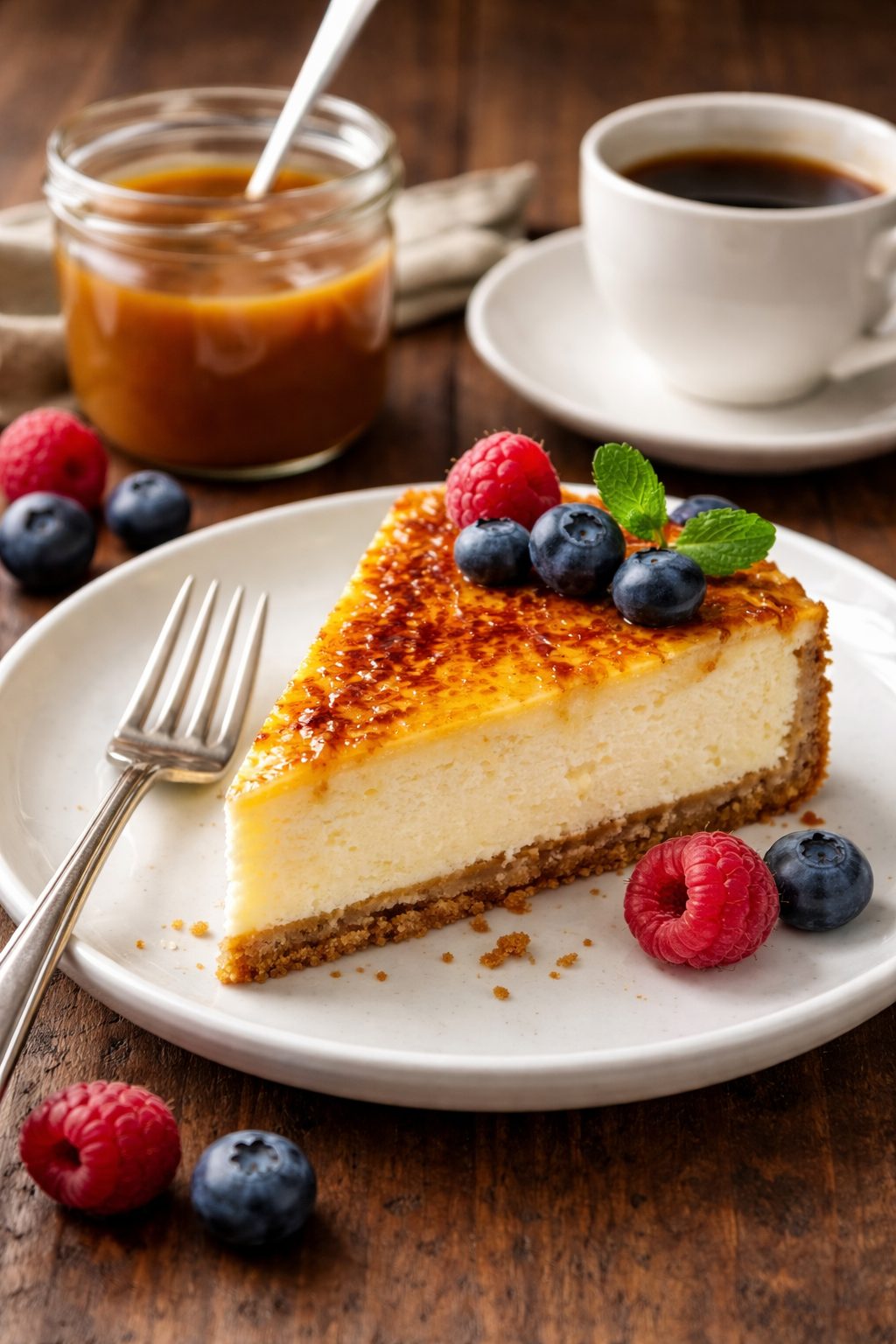
Welcome to My Kitchen: A Love Story with Crème Brûlée Cheesecake
Last summer, I stood in my kitchen staring at leftover cream cheese and a bag of sugar. My dinner guests were arriving in six hours. I needed something special, something that would make them gasp when I brought it to the table. That’s when lightning struck. What if I combined my favorite French dessert with New York’s finest contribution to the dessert world?
The result was pure magic. The creamy richness of cheesecake met the crackling sugar shell of crème brûlée. My guests couldn’t stop talking about it for weeks. One friend called me at midnight asking for the recipe. Another showed up at my door with her kitchen torch, ready to learn.
Welcome to my kitchen! Today, I’m thrilled to share this crème brûlée cheesecake recipe with you. This dessert isn’t just another sweet treat. It’s a conversation starter, a show-stopper, and honestly, easier to make than you’d think.
I’ve spent months perfecting this recipe. I’ve burned sugar tops, cracked cheesecake centers, and created more disasters than I care to admit. But each failure taught me something new. Now I can guide you past all those pitfalls and straight to dessert perfection.
You don’t need to be a professional baker. You don’t need fancy equipment or years of experience. If you can follow simple steps and resist eating all the batter before it hits the oven, you’re qualified.
This article walks you through everything you need to know. We’ll cover the basics, explore variations, and share tips that make the difference between good and incredible. Whether you’re in South Africa looking for a local twist or searching for the best crème brûlée cheesecake recipe online, you’re in the right place.
What is a Crème Brûlée Cheesecake?
Picture your favorite creamy cheesecake. Now imagine cracking through a thin layer of caramelized sugar to reach that velvety filling. That crackling sound, that contrast of textures, that perfect balance of sweet and tangy. That’s what makes this dessert special.
A crème brûlée cheesecake takes the dense, rich texture of traditional cheesecake and tops it with a caramelized sugar crust. The crust shatters under your spoon like thin ice. Underneath, you get all that creamy goodness you love about cheesecake.
This fusion dessert emerged from creative bakers who refused to choose between two classics. Why pick one when you can have both? The French gave us crème brûlée centuries ago. Americans perfected cheesecake in New York delis. Someone brilliant decided to marry them.
The beauty lies in the contrast. The crispy, slightly bitter caramel plays against the smooth, sweet cream cheese filling. Each bite delivers multiple textures and flavors. Your taste buds never get bored.
What makes this dessert a crowd-pleaser? First, it looks impressive. When you torch that sugar at the table, people lean in and watch with wide eyes. Second, it tastes familiar yet surprising. Everyone knows cheesecake. Everyone knows crème brûlée. But together, they create something new.
I’ve served this at birthday parties, holiday dinners, and random Tuesday nights when I needed to feel fancy. It works every time. Kids love cracking the sugar shell. Adults appreciate the sophisticated flavors. Even people who claim they don’t like dessert ask for a slice.
The crème brûlée cheesecake factory version is delicious, but homemade hits different. You control the sweetness, the thickness of the sugar layer, and every ingredient that goes inside. Plus, making it yourself costs a fraction of the restaurant price.
Some bakers use Philadelphia cream cheese for that classic tangy taste. Others experiment with mascarpone for an Italian twist. A crème brûlée cheesecake recipe with mascarpone cheese creates an even silkier texture. The cheese choice matters, but any quality cream cheese works.
Temperature plays a huge role in both components. Cheesecake needs gentle, even heat to avoid cracks. The sugar topping needs intense, direct heat to caramelize properly. Balancing these requirements takes practice, but I’ll show you exactly how.
Many home bakers worry about common mistakes. Will the sugar burn? Will the cheesecake crack? Will it set properly? These are valid concerns. I’ve made every mistake possible so you don’t have to.
The Best Crème Brûlée Cheesecake Recipe Starts Here
Let me share what makes a simple crème brûlée cheesecake recipe actually simple. It’s not about shortcuts or skipping steps. It’s about understanding what matters and what doesn’t.
First, you need room temperature ingredients. This isn’t optional. Cold cream cheese creates lumps. Lumps create texture problems. Pull your ingredients out an hour before you start. I usually do this right after breakfast when planning an evening dessert.
Second, you need patience. Rushing a cheesecake leads to cracks, uneven texture, and disappointing results. The actual hands-on time isn’t long. But the waiting, the cooling, the chilling – these steps make or break your dessert.
Third, invest in a kitchen torch. You can use your oven’s broiler, but a torch gives you control. They’re cheap, available everywhere, and useful for so many other cooking tasks. I use mine for roasting peppers, toasting meringue, and even lighting birthday candles when I can’t find matches.
The basic structure stays consistent across variations. You’ll make a crust, prepare the filling, bake it gently, chill it completely, then add the signature sugar topping. Each step builds on the last.
Some people search for a crème brûlée cheesecake recipe no bake option. I understand the appeal. No-bake versions work in a pinch. They use gelatin to set the filling instead of eggs and heat. The texture differs from traditional baked cheesecake, but they’re still delicious.
A lemon crème brûlée cheesecake recipe adds bright citrus notes that cut through the richness. I make this version in spring when I want something lighter and fresher. The lemon zest in the filling and a touch of juice transform the entire dessert.
If you’re wondering about the difference between this and other fancy desserts, let me clear that up. A Dolly Parton cheesecake, for example, is a completely different creation involving pineapple and pecans. It’s delicious but totally separate from what we’re making today.
Now, let’s talk about getting started. The beauty of this recipe is its flexibility. You can make it two days ahead. You can prepare components separately. You can even freeze it before adding the sugar topping.
I’ve taught this recipe to beginners who’d never made cheesecake before. I’ve shared it with experienced bakers looking for something new. Everyone succeeds when they follow the steps and trust the process.
The ingredients are straightforward. You probably have most of them already. Cream cheese, sugar, eggs, vanilla, heavy cream, and graham crackers for the crust. The special part isn’t exotic ingredients. It’s how you put them together.
Ready to create something amazing? Let’s gather our ingredients and get baking. I promise you’ll be torching sugar like a pro by the end of this.

Simple Crème Brûlée Cheesecake Recipe with Philadelphia Cream Cheese
Now that you understand what makes this dessert special, let’s get our hands dirty with the actual recipe. I always reach for Philadelphia cream cheese when I make this. Not because I’m brand-loyal, but because consistency matters when you’re creating something this important.
Philadelphia cream cheese has the right moisture content and tang. I learned this the hard way after trying a cheap store brand that separated during baking. The whole thing looked like cottage cheese on top. My husband pretended it tasted fine, but I saw him hiding his portion under a napkin.
Here’s what you’ll need for the crust: two cups of graham cracker crumbs, half a cup of melted butter, and three tablespoons of sugar. I crush my crackers by hand in a zip-top bag with a rolling pin. It takes about five minutes and feels oddly therapeutic after a stressful day.
Mix everything together until it looks like wet sand. Press it firmly into the bottom of a nine-inch springform pan. Really push it down. Use the bottom of a measuring cup if your hands get tired. The crust needs to be compact or it’ll crumble when you slice the finished cheesecake.
For the filling, you’ll need four packages of Philadelphia cream cheese at room temperature. I cannot stress this enough. Room temperature. Not kind-of-soft. Not mostly-warm. Completely room temperature. Set them out on your counter for at least an hour before starting.
Add one and a quarter cups of granulated sugar to your cream cheese. Beat them together on medium speed until they’re completely smooth. This takes about three minutes. Stop halfway through and scrape down the sides of your bowl. Those little pockets of unmixed cream cheese will haunt you later.
Crack in four large eggs, one at a time. This matters more than you’d think. Adding them all at once incorporates too much air. Too much air creates bubbles. Bubbles rise during baking and leave you with a crater on top. Add each egg, beat until just combined, then add the next.
Pour in one cup of heavy cream and two teaspoons of vanilla extract. The vanilla needs to be real, not imitation. I tried cutting corners once with artificial vanilla. The whole cheesecake tasted like chemicals disguised as dessert. Mix everything until smooth but don’t overbeat.
By the way, this is also when I preheat my oven to 325 degrees Fahrenheit. Pour the filling over your crust. Tap the pan gently on the counter a few times to release any air bubbles hiding in there.
Bake for about fifty-five to sixty-five minutes. The edges should be set but the center will still jiggle slightly. That jiggle is your friend. A firm center means you’ve overbaked it. I check mine at the fifty-minute mark and keep a close eye from there.
Turn off the oven but don’t open the door. Let the cheesecake sit in there for another hour. This gradual cooling prevents cracks. I know it’s tempting to peek. Resist. I’ve cracked more cheesecakes by opening the oven door than any other mistake.
After that hour, take it out and let it cool completely on the counter. Then refrigerate for at least four hours, though overnight works better. Similar to a cheesecake mousse, patience during the chilling stage makes all the difference in achieving that perfect creamy texture.
When you’re ready to serve, sprinkle an even layer of white sugar across the top. About two tablespoons total. Use a kitchen torch to caramelize it, moving in circular motions. The sugar will bubble, turn amber, then harden into that signature glass-like shell.
No-Bake Crème Brûlée Cheesecake Recipe
Funny enough, I discovered this version during a power outage last July. My sister was visiting from out of town and I’d promised her my famous dessert. No electricity meant no oven. Desperation breeds innovation, right?
The crème brûlée cheesecake recipe no bake uses gelatin instead of eggs to set the filling. The texture comes out lighter, almost mousse-like. Some people actually prefer it, especially during summer when turning on the oven feels like torture.
Start with the same graham cracker crust recipe. Press it into your pan and refrigerate it while you make the filling. No baking required here either, which speeds up the whole process.
For the filling, beat together three packages of softened Philadelphia cream cheese with three-quarters cup of sugar. Add one tablespoon of lemon juice and one teaspoon of vanilla. The lemon brightens everything up and adds a subtle tang that works beautifully.
In a separate small bowl, sprinkle one packet of unflavored gelatin over a quarter cup of cold water. Let it sit for five minutes until it blooms and looks spongy. Then microwave it for about fifteen seconds until it liquefies completely.
Pour the melted gelatin into your cream cheese mixture while beating on low speed. Make sure it distributes evenly. Gelatin sets fast, so you need to work relatively quickly here. I learned this when I got distracted by a phone call and ended up with gelatin clumps throughout my filling.
Whip one and a half cups of heavy cream until stiff peaks form. Fold this gently into your cream cheese mixture. Use a spatula and cut through the center, then fold over. Rotate the bowl and repeat. This technique keeps all those air bubbles intact, giving you that light texture.
Pour everything over your chilled crust and smooth the top. Refrigerate for at least six hours, though I usually make it the night before I need it. The setting time is crucial. I once served one after only four hours and the center was still wobbly. Not in a good way.
When ready to serve, add your sugar topping and torch it just like the baked version. The contrast between the cool, creamy filling and the warm caramelized sugar is incredible. If you enjoy experimenting with different cheesecake textures, you might also want to try a cheesecake pie recipe for another delicious variation.
Variations and Creative Twists
Here’s the thing about cooking: once you master the basics, the fun really begins. I’ve made probably thirty different versions of this dessert. Some worked brilliantly. Others belonged in the trash. Let me share the winners.
The lemon crème brûlée cheesecake recipe is my go-to for spring and summer. Add the zest of two large lemons to your cream cheese filling along with three tablespoons of fresh lemon juice. The citrus cuts through the richness and makes each bite feel lighter.
I served this version at my daughter’s graduation party last May. People went crazy for it. One guest asked if I’d used limoncello. I hadn’t, but now I’m thinking about it for next time. A tablespoon or two could add another layer of flavor.
The crème brûlée cheesecake recipe with mascarpone cheese creates an ultra-silky texture that practically melts on your tongue. Replace half the cream cheese with mascarpone. So instead of four packages of cream cheese, use two packages of each.
Mascarpone is less tangy than cream cheese and higher in fat. This gives you a richer, smoother filling that tastes almost decadent. I reduce the sugar slightly when using mascarpone, dropping it to one cup instead of one and a quarter cups. The mascarpone itself is sweeter than cream cheese.
For chocolate lovers, I’ve developed a version with melted dark chocolate folded into the filling. Melt six ounces of good quality dark chocolate and let it cool slightly before mixing it in. The result tastes like chocolate silk with that signature caramelized top. Pairing this with a homemade cherry sauce for cheesecake creates an absolutely divine combination.
I also experimented with adding espresso powder for a coffee-flavored version. Two tablespoons of instant espresso dissolved in a tablespoon of hot water, then cooled and mixed into the filling. My coffee-obsessed friends ranked this one higher than the classic.
In South Africa, where I have family, they love adding Amarula liqueur to desserts. A crème brûlée cheesecake South Africa version might include two tablespoons of this cream liqueur in the filling. It adds a subtle caramel flavor that complements the torched sugar beautifully.
Speaking of international twists, my neighbor introduced me to a matcha green tea version. Add two tablespoons of high-quality matcha powder to your filling. The earthy, slightly bitter tea flavor plays wonderfully against the sweet caramelized top. It’s not for everyone, but adventurous eaters love it.
If you’re feeling really creative, consider a layered approach similar to a chimi cheesecake. Make half your filling plain and half flavored with chocolate or fruit. Pour them in layers for a beautiful cross-section when you slice it.
Berry versions work wonderfully too. Fold in fresh raspberries or blueberries just before pouring the filling into the crust. They add pops of tartness and color throughout. Just don’t use frozen berries unless you’ve thawed and drained them completely. Extra moisture will make your cheesecake soggy.
The beauty of this dessert is how forgiving it is once you understand the basic technique. Change the crust to crushed Oreos. Swap vanilla for almond extract. Add a ribbon of dulce de leche through the center. The possibilities really are endless.
Where to Find Crème Brûlée Cheesecake Near Me
Look, I get it. Sometimes you want this dessert but the idea of pulling out mixing bowls and waiting overnight sounds exhausting. Maybe you’re traveling and craving a slice. Maybe your oven just broke. Maybe you simply want to try one before committing to making it yourself.
Finding a crème brûlée cheesecake near me used to be impossible unless you lived near a fancy bakery. These days, more places carry them. I’ve developed a few strategies for tracking them down that work pretty well.
Start with The Cheesecake Factory. They’re everywhere and they usually have a version on their menu. The crème brûlée cheesecake factory version comes topped with caramelized sugar and fresh berries. It’s enormous, easily feeds two people, and honestly tastes pretty close to homemade. I’ve ordered it more times than I should probably admit.
Last month my car broke down two hours from home. While waiting at the repair shop, I walked to a nearby Cheesecake Factory and treated myself to a slice. Sometimes these little detours turn into the best part of a bad day. The richness of their version makes me happy every time.
Beyond chain restaurants, check out local upscale bakeries in your area. Call ahead and ask specifically about crème brûlée cheesecake or similar fusion desserts. Many bakeries take custom orders even if they don’t display them regularly. I’ve found some incredible versions this way.
French patisseries sometimes offer their take on this dessert. They tend to use more vanilla and less sugar than American versions, creating a more delicate flavor profile. There’s a tiny French bakery near my office that makes individual portions in ramekins. Perfect size, perfect texture, perfect everything.
Italian restaurants occasionally feature versions made with mascarpone. If you see anything described as “burnt sugar cheesecake” or “caramelized cheesecake,” that’s usually what you’re looking for. Don’t be shy about asking your server. Most places love when customers show genuine interest in their desserts.
High-end grocery stores like Whole Foods sometimes carry them in their bakery sections, especially around holidays. I’ve spotted them near Thanksgiving and Christmas when people want impressive desserts without the work. They’re usually priced around twenty-five to thirty-five dollars for a whole cheesecake.
Search apps like Yelp and Google Maps using terms like “crème brûlée cheesecake” along with your city name. Read the reviews and look at photos people have posted. You can tell a lot about quality from customer photos. Soggy crust, weird coloring, sloppy presentation – these things show up clearly.
If you live in South Africa, gourmet dessert shops in major cities often carry fusion desserts. The interest in crème brûlée cheesecake South Africa has grown significantly. Johannesburg and Cape Town have several bakeries specializing in American-style cheesecakes with local twists.
Don’t overlook hotel restaurants. They frequently serve upscale desserts and might have something similar even if it’s not on the regular menu. I once stayed at a hotel in Portland where the chef made me a custom slice after I mentioned my obsession during breakfast. Never hurts to ask.
Wedding and event caterers often make these for special occasions. If you’re planning a party, ask your caterer about including individual crème brûlée cheesecakes. They’re easier to serve than slicing a whole cake and each guest gets their own torched sugar topping. My cousin did this at her wedding and people still talk about it.
Social media can help too. Search Instagram and Facebook for local bakers in your area. Many home-based baking businesses operate through social media only. They take orders, bake fresh, and deliver or arrange pickup. I’ve discovered some talented bakers this way who make versions better than restaurants.
Common Crème Brûlée Mistakes and How to Avoid Them
Here’s the thing: I’ve made every possible mistake with this dessert. Burned sugar, cracked filling, soggy crust, runny centers. Each disaster taught me something valuable. Let me save you from my painful learning experiences.
The biggest mistake people make involves overbaking the cheesecake base. You want that slight jiggle in the center when you pull it from the oven. If the whole thing looks firm and set, you’ve gone too far. Overbaked cheesecake turns grainy and develops cracks across the surface.
I use the wobble test. Gently shake the pan at the fifty-five minute mark. The edges should be firm but the center should move like jello. That’s your signal. Some people tap it lightly with a spoon. Either way works, but don’t skip this check.
Temperature shock causes cracks too. Moving your cheesecake from a hot oven into a cold kitchen creates rapid temperature changes. The surface contracts faster than the interior and boom – giant crack right down the middle. That’s why you turn off the oven and let it sit for an hour with the door closed.
Water baths help prevent cracks, though I don’t always use them for this recipe. If you struggle with cracking, wrap your springform pan in aluminum foil and set it in a larger pan with about an inch of hot water. The steam keeps the baking environment humid and gentle.
Not bringing ingredients to room temperature ranks high on the mistake list. Cold cream cheese creates lumps no matter how long you beat it. Cold eggs don’t incorporate smoothly. Pull everything out early. Set a timer if you’re forgetful like me. This single step makes a massive difference in texture.
When it comes to the caramelized topping, burning the sugar is the most common error. The line between perfect caramelization and burnt bitterness is thin. Keep your torch moving constantly. Don’t focus on one spot too long. I hold mine about four inches from the surface and move in small circles.
If the sugar isn’t caramelizing evenly, you probably didn’t spread it evenly. Use a small fine-mesh strainer to sprinkle sugar across the top. This gives you a thin, uniform layer. Clumps of sugar won’t caramelize properly and create an inconsistent texture.
Too much sugar creates problems too. More isn’t better here. A thick layer of caramelized sugar becomes difficult to crack through and overwhelms the cheesecake flavor. Two tablespoons spread evenly across the surface is plenty. I measure it now after making a version that was basically a sugar disc with cheesecake underneath.
Moisture on the cheesecake surface prevents proper caramelization. Always pat the top dry with a paper towel before adding sugar. Condensation from refrigeration creates a thin layer of moisture you can’t see but definitely affects the results. This tip alone improved my success rate dramatically.
Using your oven’s broiler instead of a torch can work, but it’s trickier. The heat comes from above and you can’t control it as precisely. If you go this route, watch it like a hawk. We’re talking thirty seconds to two minutes max. One distraction and you’ll have a burnt mess. Keeping food stored properly is essential for both safety and quality—for guidance on safe meal storage practices, reliable resources exist that can help ensure your ingredients stay fresh throughout the preparation process.
Trying to caramelize the sugar too far in advance is another common issue. That crispy shell stays crispy for maybe thirty minutes, then it starts absorbing moisture from the cheesecake. By the two-hour mark, it’s soft and chewy instead of crackly. Always torch your sugar right before serving.
Some people skip chilling the cheesecake completely because they’re impatient. I understand. Waiting overnight feels like torture when you’re excited to eat something. But a warm or even room-temperature cheesecake won’t slice cleanly. The filling needs to be completely cold and set. Cut corners here and you’ll serve soupy slices.
Using low-quality vanilla extract might seem like a minor detail, but it affects the overall flavor more than you’d expect. Artificial vanilla has a harsh, almost chemical taste that lingers. Real vanilla extract costs more but the difference shows up clearly in desserts where vanilla plays a starring role.
Running a knife under hot water between slices isn’t really a mistake, but skipping it makes serving harder. Cheesecake is dense and sticky. A cold knife drags and smooshes each slice. Heat your knife, wipe it clean, repeat for each cut. Your slices will look professional instead of mangled.
By the way, don’t stress if your first attempt isn’t perfect. Mine looked like a geology experiment gone wrong. My second wasn’t much better. But the taste was still good, and I learned what to fix for next time. Progress over perfection, always.
If you want to explore even more delicious options and refine your baking skills, check out other cheesecake recipes that might inspire your next kitchen adventure.
Frequently Asked Questions
What is a Crème Brûlée Cheesecake?
A crème brûlée cheesecake combines the creamy, dense texture of traditional cheesecake with the caramelized sugar topping found on classic French crème brûlée. The result is a hybrid dessert featuring a graham cracker crust, rich cream cheese filling, and a thin layer of torched sugar that creates that signature crackling shell. It offers the best of both desserts in one spectacular slice. The contrast between the cool, smooth filling and the crispy, slightly bitter caramel creates an unforgettable flavor experience. It’s become increasingly popular at restaurants and home kitchens alike.
What is a Dolly Parton cheesecake?
A Dolly Parton cheesecake is a completely different dessert from crème brûlée cheesecake. It’s a Southern-style creation that typically includes crushed pineapple, pecans, and sometimes coconut in the filling. The dessert got its name from the legendary country singer, though the exact origin story varies. Some versions include a pecan crust and cream cheese frosting on top. It’s more of a casual, homestyle dessert compared to the elegant presentation of crème brûlée cheesecake. Both are delicious, just totally different flavor profiles and textures.
Is cheesecake good for heart patients?
Traditional cheesecake isn’t considered heart-healthy due to its high saturated fat, cholesterol, and sugar content. The cream cheese, eggs, and heavy cream all contribute significant amounts of fat and calories. However, lighter versions can be made using reduced-fat cream cheese, Greek yogurt, or other substitutions. Heart patients should enjoy regular cheesecake only occasionally and in small portions. Some recipes use almond flour crusts and natural sweeteners to make them somewhat healthier. Always consult with your doctor about dietary restrictions specific to your condition.
What are common crème brûlée mistakes?
The most common mistakes include overbaking the custard base, which creates a grainy texture instead of silky smoothness. Burning the sugar topping happens when the torch stays in one spot too long or sits too close to the surface. Not chilling the dessert completely before adding the sugar prevents proper caramelization. Using too much sugar creates an overly thick, hard shell that’s difficult to crack. Temperature shock from moving between extreme temperatures causes cracks in cheesecake versions. Each of these issues is preventable with proper technique and patience.
Can I make crème brûlée cheesecake ahead of time?
Absolutely, and I actually recommend it. The cheesecake portion benefits from being made one to two days in advance. This gives it plenty of time to chill completely and set properly. You can even freeze the unbaked crust or the finished cheesecake without the sugar topping for up to three months. Just wrap it tightly in plastic wrap and aluminum foil. The only step you shouldn’t do ahead is caramelizing the sugar topping. That needs to happen within thirty minutes of serving for the best texture. Planning ahead actually makes this dessert less stressful to prepare.
Do I really need a kitchen torch?
While a kitchen torch isn’t absolutely required, it makes achieving that perfect caramelized topping much easier. You can use your oven’s broiler setting as an alternative. However, broilers provide less control and can heat unevenly, potentially burning some areas while leaving others undercooked. Kitchen torches are inexpensive, typically costing between fifteen and thirty dollars. They’re also useful for many other cooking tasks like roasting peppers, toasting meringues, and melting cheese. If you plan to make this dessert more than once, a torch is definitely worth the investment for consistent results.
Why did my cheesecake crack?
Cheesecake cracks usually result from temperature shock or overbaking. Rapid temperature changes cause the surface to contract faster than the interior. This happens when you remove a hot cheesecake and place it directly in cold air. Overbaking makes the proteins contract too much, creating cracks as the cheesecake cools. Opening the oven door repeatedly during baking also causes temperature fluctuations. Prevent cracks by using the gradual cooling method, keeping ingredients at room temperature, and avoiding overbeating the batter. Even if cracks appear, the caramelized sugar topping hides them beautifully.
Can I use a different crust besides graham crackers?
Definitely, and experimenting with crusts is one of my favorite ways to customize this dessert. Crushed Oreos create a chocolate version that pairs wonderfully with the vanilla filling. Shortbread cookies make a buttery, delicate base that feels more European. Gingersnap crusts add warm spice notes that complement the caramel topping. Vanilla wafers, digestive biscuits, or even crushed pretzels for a sweet-salty combination all work well. Just maintain the same ratio of crushed cookies to melted butter. The crust should hold together when pressed but not feel overly greasy or dry.
How long does crème brûlée cheesecake last?
Without the caramelized topping, the cheesecake lasts about five to seven days in the refrigerator when properly covered. Store it in an airtight container or wrapped tightly with plastic wrap. Once you’ve added the torched sugar topping, try to serve it within a few hours for the best texture. The sugar shell absorbs moisture from the cheesecake over time and becomes soft. If you have leftovers with the sugar topping, they’re still delicious, just not as crispy. You can also freeze unfrosted cheesecake for up to three months, though the texture may change slightly upon thawing.
What’s the difference between mascarpone and cream cheese in this recipe?
Mascarpone is an Italian cream cheese with higher fat content and a sweeter, less tangy flavor than American cream cheese. Using mascarpone creates an even silkier, richer texture. The filling becomes more delicate and almost melts on your tongue. However, it’s also more expensive and can be harder to find in regular grocery stores. Many recipes use a combination of both to balance cost with luxury texture. The slightly tangy flavor of regular cream cheese also provides nice contrast to the sweet caramelized topping. Either option creates a delicious dessert, just with subtle differences in taste and mouthfeel.
There you have it – everything I’ve learned through countless batches, experiments, and yes, a few spectacular failures. This dessert has become more than just a recipe to me. It’s my go-to when I want to feel creative, impress dinner guests, or simply treat myself to something special. I hope you’ll give it a try and discover your own favorite variations along the way. Happy baking, and don’t forget to share a slice with someone you love!
Equipment
- Mixing Bowl
- Electric Mixer
- Spatula
- Springform Pan
- Kitchen Torch
Ingredients
- 2 cups graham cracker crumbs
- ½ cup butter, melted
- 3 tablespoons sugar for crust
- 32 oz cream cheese, at room temperature 4 packages (8 oz each)
- 1¼ cups granulated sugar for filling
- 4 large eggs
- 1 cup heavy cream
- 2 teaspoons vanilla extract
- 2 tablespoons sugar for caramelizing
Instructions
- Preheat the oven to 325 degrees Fahrenheit.
- Mix graham cracker crumbs, melted butter, and 3 tablespoons of sugar until it resembles wet sand.
- Press the mixture firmly into the bottom of a 9-inch springform pan.
- In a large bowl, beat the room temperature cream cheese and 1¼ cups granulated sugar until smooth.
- Add eggs one at a time, mixing until just combined after each addition.
- Pour in heavy cream and vanilla extract, mixing until smooth but not overbeaten.
- Pour the filling over the crust and tap the pan gently to remove air bubbles.
- Bake for 55 to 65 minutes until edges are set and center jiggles slightly.
- Turn off the oven and let the cheesecake cool inside for 1 hour.
- Remove from the oven and cool completely on the counter, then refrigerate for at least 4 hours or overnight.
- Before serving, sprinkle 2 tablespoons of sugar evenly over the top.
- Use a kitchen torch to caramelize the sugar until it bubbles and turns amber.
Notes
Nutrition

Hello! I’m Sarah Mitchell, and I’m passionate about bringing creativity and innovation to baking. My love for baking started in high school when I first tried my hand at decorating cupcakes for a class project. What began as a fun hobby quickly became a full-time passion. I’ve spent the past decade working in bakeries and dessert shops, honing my skills in everything from simple cookies to intricate wedding cakes.
After working in some of the top bakeries across the country, I realized that baking was about more than just following recipes — it was about infusing your personality into each creation. At BakingSecret.com, I love creating recipes that push boundaries while staying true to the heart of classic baking. I specialize in creating delicious and visually stunning pastries that will wow your guests.
When I’m not baking, I enjoy teaching baking classes, trying out new cake decoration techniques, and traveling to find inspiration in global dessert traditions. I’m so excited to share my tips and tricks with you to help elevate your baking game!