
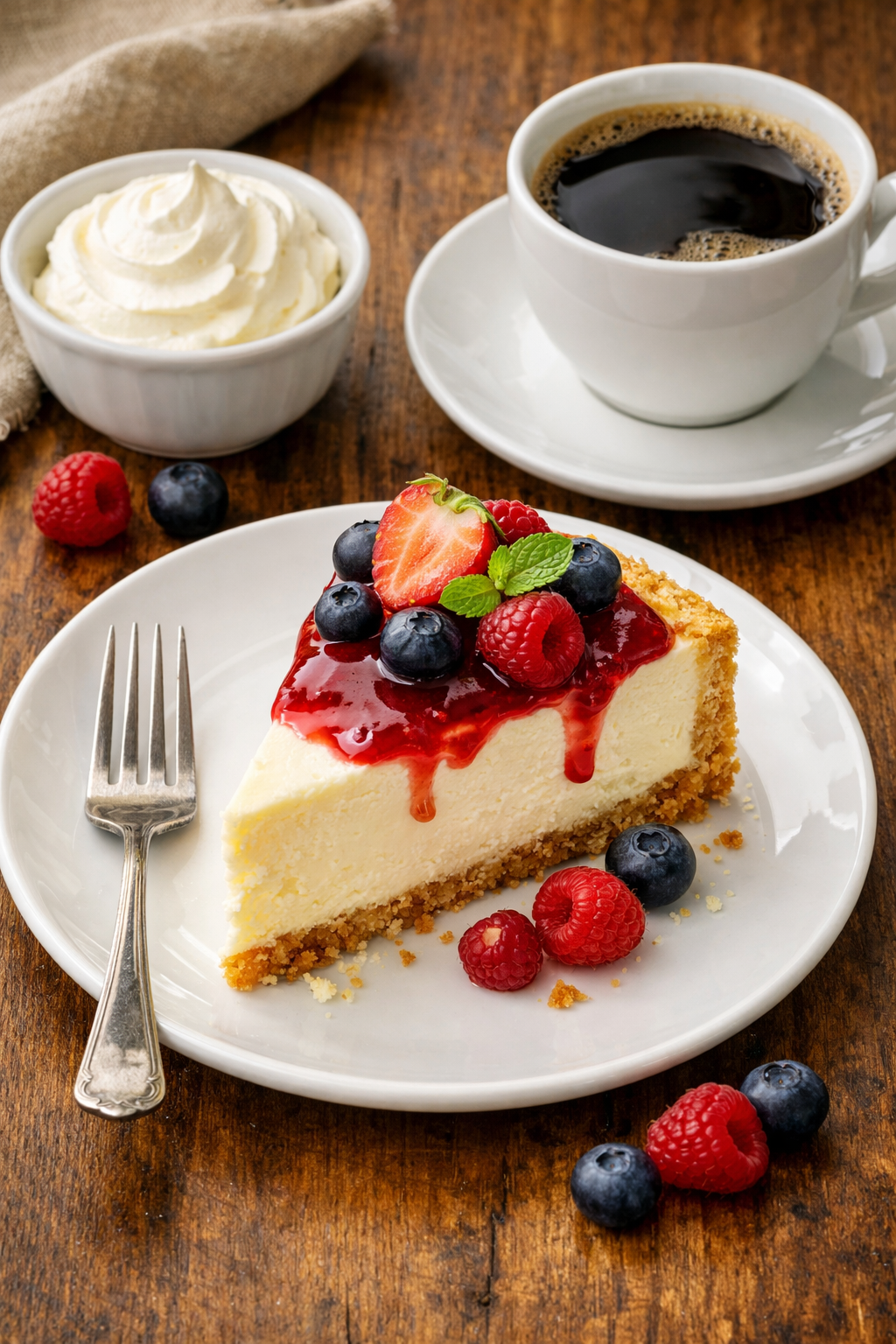
Welcome to My Kitchen: The Joy of Cheesecake Pie
Last Sunday, I watched my neighbor bring a dessert to our block party that had everyone coming back for seconds. It wasn’t a regular cake or pie. It was something in between. A cheesecake pie that looked simple but tasted incredible. That’s when I knew I had to master this dessert myself.
I’ve been baking for over fifteen years, and I can tell you that few desserts get people as excited as a good cheesecake. But here’s the thing. Traditional cheesecakes can be fussy. They need water baths. They crack if you look at them wrong. They take hours to cool down properly.
Enter the cheesecake pie. This dessert gives you all the creamy goodness you crave without the drama. It’s easier to make, quicker to serve, and just as satisfying. Whether you’re planning a dinner party or just want something sweet for the weekend, this is your answer.
Today I’m sharing everything I know about making the perfect cheesecake pie. You’ll learn the differences between traditional cheesecakes and pies. I’ll walk you through my favorite recipes, including some amazing no-bake options. And yes, I’ll share the mistakes I made so you don’t have to repeat them.
What is the Difference Between Cheesecake and Cheesecake Pie?
People ask me this question all the time. At first glance, they seem like the same dessert. Both have a graham cracker crust. Both feature that rich, creamy filling. So what’s the real difference?
A traditional cheesecake is thick and dense. It usually stands about three to four inches tall. The filling is heavy on cream cheese and eggs. You bake it low and slow, often in a springform pan with a water bath. The crust is typically thin compared to the filling. Think of a classic New York cheesecake recipe with its towering presence and ultra-rich texture.
A cheesecake pie, on the other hand, sits in a regular pie pan. The filling is thinner, usually one to two inches deep. The crust-to-filling ratio is more balanced. You get more crust in every bite, which I personally love. The texture is often lighter and airier than traditional cheesecake.
Here’s a simple breakdown:
- Pan type: Cheesecakes use springform pans, while cheesecake pies use standard pie pans
- Depth: Cheesecakes are tall and dramatic, pies are shorter and more casual
- Baking method: Cheesecakes need careful temperature control and often water baths, pies are more forgiving
- Serving style: Cheesecakes are special occasion desserts, pies work for everyday treats
- Texture: Cheesecakes are dense and rich, pies tend to be lighter and creamier
Can you bake a cheesecake in a pie pan? Absolutely. That’s exactly what makes a cheesecake pie. The pie pan gives you better portion control too. Each slice is the perfect size without being too heavy.
What Makes a Cheesecake a Pie?
This might sound like a philosophical question, but it matters when you’re baking. A pie has certain characteristics that set it apart.
First, the pan matters. When you use a pie pan instead of a springform pan, you’re already making a pie. The sloped sides create those classic wedge-shaped slices everyone recognizes.
Second, the crust plays a bigger role. In a traditional cheesecake, the crust is just a base. In a pie, the crust is part of the experience. Some cheesecake pie recipes even have crust going up the sides, just like an apple pie would.
Third, the filling-to-crust ratio is more balanced. You’re not getting a massive chunk of filling with a tiny bit of crust. Everything works together in harmony.
I made my first chocolate cheesecake pie last month using a store-bought chocolate cookie crust. The chocolate crust paired with vanilla cream cheese filling was amazing. My kids couldn’t believe how good it tasted for something so simple to make.
The Best Cheesecake Recipe and No Bake Options
Let me share something that changed my baking life. You don’t need to turn on your oven to make an incredible cheesecake recipe no bake style.
I used to think baked cheesecakes were superior. Then one hot summer day, I refused to heat up my kitchen. I tried my first no-bake version. The result shocked me. It was creamy, smooth, and just as delicious as any baked version I’d made.
No-bake options are perfect for beginners. There’s no risk of cracking. No worrying about oven temperature. No water bath drama. You just mix, pour, and chill.
The secret to a great no bake cheesecake pie is using room temperature cream cheese. Cold cream cheese creates lumps that won’t smooth out no matter how long you beat it. Leave your cream cheese on the counter for about an hour before starting.
Heavy cream is your friend in no-bake recipes. Whipping it separately and folding it into the cream cheese mixture creates an airy texture that mimics baked cheesecake. Some recipes use Cool Whip, and that works fine too. I prefer real whipped cream for the taste.
For setting agents, you have options. Gelatin works well but can be tricky if you’re not used to it. Some recipes rely purely on the cream cheese firming up in the fridge. My best cheesecake recipe for no-bake uses a combination of cream cheese, sour cream, and whipped cream. It sets perfectly in about four hours.
Want to make a strawberry cheesecake pie recipe? Start with a basic no-bake filling. Top it with fresh strawberries and a simple strawberry glaze. I make my glaze by cooking down strawberries with a little sugar and cornstarch. It takes ten minutes and tastes a hundred times better than store-bought.
Frozen options work great too. A frozen cheesecake recipe is basically a no-bake that you freeze instead of refrigerate. The texture becomes more like ice cream cake. Perfect for summer parties. Just remember to take it out about ten minutes before serving so it’s not rock hard.
Common Cheesecake Pie Mistakes to Avoid
I’ve messed up plenty of cheesecakes over the years. Here are the mistakes I see most often, including ones I’ve made myself.
Using cold ingredients is mistake number one. Everything should be room temperature. Cold cream cheese won’t blend smoothly. You’ll end up with lumps that ruin the texture.
Overmixing is another problem. Once you add eggs to a baked recipe, mix just until combined. Overmixing adds air bubbles that can cause cracks and uneven texture.
For no-bake versions, undermixing is actually the issue. You need to beat that cream cheese until it’s completely smooth before adding anything else. I use my hand mixer for at least two minutes.
Not chilling long enough kills many no-bake pies. I know it’s hard to wait, but these need at least four hours. Overnight is better. A pie that hasn’t set properly will be runny and won’t slice cleanly.
Using the wrong crust can throw off your whole pie. Graham crackers are classic for a reason. They pair well with almost any filling. But don’t be afraid to experiment. Oreo crusts work great for chocolate cheesecake pie. Vanilla wafer crusts are lovely with fruit toppings.
Finally, don’t skip the pre-baking step if your recipe calls for it. A pre-baked crust stays crispy instead of getting soggy from the filling. Just ten minutes in the oven makes a huge difference.

Types of Cheesecake Pies
Once you understand the basics, the fun really starts. There are so many variations of cheesecake pie that you could make a different one every week for a year and still have new flavors to try.
I’ve experimented with dozens of combinations over the years. Some were incredible hits. Others, well, let’s just say my family was too polite to tell me the truth. Through all that trial and error, I’ve found the styles that work best and taste amazing.
What’s great about cheesecake pies is how adaptable they are. You can take any traditional cheesecake recept and modify it for a pie pan. Sometimes the results are even better than the original. The key is understanding what makes each style unique.
New York Cheesecake Pie
If you’ve ever been to the cheesecake factory, you know that New York style is the gold standard. It’s what most people picture when they think of perfect cheesecake.
The classic New York cheesecake recipe is all about richness. We’re talking serious cream cheese here. Most recipes use at least two pounds for a springform pan. For a pie version, I use about one and a half pounds. That’s typically three packages of cream cheese.
What makes New York style different is the addition of sour cream or heavy cream. Sometimes both. This creates an incredibly smooth texture that’s dense but still melts in your mouth. I learned this technique from my aunt who lived in Brooklyn for thirty years. She insisted that real New York cheesecake needs that tangy element.
Here’s something interesting. Traditional New York cheesecake doesn’t have any fancy flavors. No chocolate chips. No fruit swirls. Just pure, unadulterated cheesecake perfection. When I make mine, I use vanilla extract and a tiny bit of lemon zest. The lemon brightens everything without making it taste citrusy.
The baking temperature matters hugely for this style. You want to start hot, around 450°F, for just ten minutes. This sets the edges. Then you drop the temperature to 250°F for the remaining time. For a pie, that’s usually about 35 to 40 minutes total.
My best cheesecake recipe for New York style includes one unusual step. After baking, I turn off the oven and crack the door open. The pie stays inside for another hour. This gradual cooling prevents cracks better than anything else I’ve tried. Similar to how you’d carefully handle a delicate dobash cake, patience during the cooling process makes all the difference.
By the way, serving this pie is an experience. I always serve it cold with fresh berries on the side. The tartness of raspberries or strawberries cuts through that rich filling perfectly. Some people like chocolate sauce, but I think that’s overkill for New York style.
Frozen Cheesecake Pie
Last July, my air conditioner broke during a heat wave. Making a regular baked cheesecake was out of the question. That’s when I discovered the beauty of frozen cheesecake recipe options.
A frozen cheesecake pie is basically summer in dessert form. The texture sits somewhere between regular cheesecake and ice cream. Imagine the creaminess of cheesecake with the refreshing cold of frozen dessert. It’s absolutely perfect for outdoor barbecues.
The base recipe is simple. You make a no-bake filling just like I described earlier. But instead of refrigerating it for four hours, you freeze it for at least six hours. Overnight is even better. The freezing process changes the texture completely.
Here’s what I do differently for frozen versions. I add a bit more sugar than normal because freezing dulls sweetness slightly. About an extra quarter cup does the trick. I also use more whipped cream in the ratio. This keeps the filling from getting rock solid.
Funny enough, frozen cheesecake pies are actually more forgiving than refrigerated ones. If your filling was a bit too soft after mixing, freezing fixes that problem. It sets everything up beautifully.
One of my favorite variations is adding crushed cookies throughout the filling. I fold in crushed Oreos or graham crackers right before freezing. This creates these amazing little crunchy bits that contrast with the smooth frozen filling. My kids go absolutely crazy for this version.
Toppings work differently on frozen pies. You can’t add fresh fruit before freezing because it gets weird and icy. Instead, I freeze the pie plain and add toppings right before serving. A strawberry cheesecake pie recipe works great this way. Freeze the vanilla base, then top with fresh strawberries and that homemade glaze I mentioned before.
Storage is easy too. Just cover tightly with plastic wrap and then foil. These pies keep in the freezer for up to three months. I often make two at once and save one for later.
Chocolate Cheesecake Pie
If you’re a chocolate lover, this section is for you. A chocolate cheesecake pie combines two of the best desserts in the world into one spectacular treat.
I’ve tried chocolate cheesecake many different ways. Some recipes add cocoa powder to the filling. Others melt chocolate and swirl it through. My favorite method uses both. This creates layers of chocolate flavor that keep every bite interesting.
The crust for chocolate cheesecake deserves special attention. You could use graham crackers, sure. But an Oreo cookie crust takes it to another level. I crush about 30 Oreos, mix them with melted butter, and press them into my pie pan. The chocolate cookie with chocolate filling creates this beautiful harmony. It reminds me of the intense chocolate flavor you get in devil’s food cake cookies, but in cheesecake form.
For the filling, I start with my basic cream cheese mixture. Room temperature cream cheese beaten until smooth. Then I add melted semi-sweet chocolate. The chocolate needs to be cooled slightly so it doesn’t scramble the eggs when you add them. I learned that the hard way with a ruined batch.
Some people ask if they should use cocoa powder or melted chocolate. Honestly, both together is the answer. Cocoa powder gives you that deep chocolate flavor. Melted chocolate adds richness and helps with the texture. I use about half a cup of cocoa powder and six ounces of melted chocolate for one pie.
Here’s a trick I picked up from a pastry chef friend. Add a tiny pinch of espresso powder to your chocolate filling. You won’t taste coffee at all, but it makes the chocolate flavor more intense. Just like when you’re making a rich chocolate cake recipe from scratch, that coffee element works magic.
Toppings for chocolate cheesecake can go several directions. Whipped cream is classic and balances the richness. Chocolate ganache makes it ultra-decadent. I sometimes add a peanut butter drizzle for those who love that combination.
The baking process for chocolate cheesecake pie is the same as regular versions. You can also make it no-bake if you prefer. The no-bake version actually works beautifully with chocolate because the melted chocolate helps everything set up nicely.
One warning though. Chocolate cheesecake is rich. I mean seriously rich. The slices should be smaller than regular cheesecake pie. I usually cut eight generous slices from a regular pie, but chocolate gets cut into ten or even twelve pieces.
Can you bake a cheesecake in a pie pan? Absolutely, and chocolate versions work particularly well this way. The pie pan gives you better control over portion sizes, which matters when the dessert is this indulgent. The sloped sides also make it easier to get clean slices without the filling sticking.
Sometimes I think about all the different desserts from various cultures, like the delicate layers in moon cake, and how each tradition brings something unique to baking. Cheesecake pie might be American comfort food at its finest, but it shares that same spirit of bringing people together over something sweet and memorable.
The versatility of chocolate cheesecake means you can dress it up or down depending on your occasion. Fancy dinner party? Add chocolate curls and a raspberry coulis. Casual family dessert? Keep it simple with just a dollop of whipped cream on top.
Creative Variations and Tips
Now that we’ve covered the basics and walked through the classic styles, it’s time to have some real fun. This is where you can let your creativity run wild and make cheesecake pie recipes that reflect your personality and taste preferences.
I remember the first time I decided to experiment beyond the standard recipes. My daughter mentioned she wanted something with fresh fruit for her birthday. I thought about making a regular cake, but then it hit me. Why not combine her love of strawberries with my obsession with cheesecake? That decision led me down a rabbit hole of experimentation that honestly made me a better baker.
The beautiful thing about cheesecake pies is how forgiving they are when you want to try something new. Unlike some finicky desserts that fall apart if you change one ingredient, these pies adapt wonderfully to creative touches. Just keep the basic ratios right, and you can play with flavors all day long.
Strawberry Cheesecake Pie Recipe
A strawberry cheesecake pie recipe might sound fancy, but it’s actually one of the easiest variations you can make. The combination of tangy cream cheese and sweet strawberries is basically magic on a plate.
There are two main approaches here. You can mix strawberries into the filling itself, or you can keep the filling plain and top it with strawberry goodness. I’ve done both many times, and they each have their place.
For a mixed strawberry filling, start with your basic cheesecake recipe no bake base. While you’re beating the cream cheese, puree about a cup of fresh strawberries. Drain off most of the juice through a fine mesh strainer. This step is crucial because too much liquid will make your filling runny. Then fold that strawberry puree into your cream cheese mixture along with some strawberry jam for extra flavor.
The result is this gorgeous pink filling that tastes like strawberry heaven. I usually add a few drops of red food coloring just to brighten the color, though that’s totally optional. Some people think food coloring is cheating, but I think presentation matters.
Here’s the thing though. My preferred method is actually keeping the filling vanilla and creating an amazing strawberry topping. This way you get the pure cheesecake experience plus that fresh fruit element without compromising either one.
For the topping, I use fresh strawberries that I slice and arrange in a pretty pattern. Concentric circles look gorgeous. Then I make a glaze by simmering strawberries with sugar and a little cornstarch until it thickens. Once it cools slightly, I brush it over the fresh berries. This creates a beautiful glossy finish that looks bakery-quality.
Funny enough, my most popular version combines both methods. I swirl strawberry preserves through the vanilla filling using a knife to create a marbled effect. Then I still add fresh berries on top. It’s probably overkill, but nobody’s complaining when they’re eating it.
Timing matters with strawberry pies. I always make the pie base at least a day ahead so it’s completely set. Then I add the fresh strawberry topping just a few hours before serving. Fresh berries can get watery if they sit too long. According to refrigerator safety guidelines, these topped pies should be consumed within two days for the best quality and food safety.
One tip I learned the hard way: pat your strawberries dry before putting them on the cheesecake. Even a little moisture can create a puddle on your beautiful pie. I use paper towels to blot them gently after slicing.
You can also make this as a frozen cheesecake recipe with strawberries. Freeze the base, then let it thaw for about twenty minutes before adding the fresh berries and serving. The slightly frozen filling with fresh berries on top is absolutely incredible on a hot day.
Frasch Cheesecake
Now here’s something you might not have heard of. Frasch cheesecake is a variation that doesn’t get nearly enough attention. It’s named after a traditional German-style recipe that emphasizes a lighter, fluffier texture than typical American cheesecakes.
I first encountered this at a friend’s house whose grandmother made it every Easter. The texture was so different from what I expected. Instead of that dense, heavy feeling you get from a New York cheesecake recipe, this was almost mousse-like. Light and airy but still rich and satisfying.
The secret is in how you incorporate the eggs. Instead of mixing whole eggs into the batter, you separate them. The yolks get mixed with the cream cheese as usual. But the whites get whipped into stiff peaks separately, then folded in at the very end. This technique is what creates that incredibly light texture.
Making a frasch-style cheesecake pie takes a bit more effort than the basic versions, but it’s totally worth it. The filling rises up beautifully in the oven, almost like a soufflé. Then it settles back down as it cools, creating this perfectly smooth surface.
Here’s what makes it different in practice. You need to be gentle when folding in those egg whites. Use a rubber spatula and lift the mixture from the bottom, turning it over on itself. If you stir too vigorously, you’ll deflate all those air bubbles you just worked to create. It’s similar to folding egg whites into any delicate batter. Patience is everything.
The flavor profile tends to be a bit less sweet than American versions too. Traditional frasch cheesecake uses quark or a combination of cream cheese and cottage cheese. If you can’t find quark at your grocery store, I’ve had great success mixing regular cream cheese with some ricotta. The ricotta adds that slightly grainy texture and mild flavor that’s characteristic of this style.
By the way, this variation works beautifully in a pie pan. The lighter texture means it sets up nicely without being too heavy. I usually serve mine with a simple dusting of powdered sugar and maybe some fresh berries on the side. It doesn’t need much else.
Common Cheesecake Pie Mistakes and How to Avoid Them
Let me tell you about some disasters I’ve created over the years, so you can learn from my mistakes instead of making your own.
First up: the dreaded crack. I know I mentioned this earlier, but it deserves more attention because it’s the most common complaint I hear. Cracks happen when the temperature changes too rapidly. Your pie goes from hot oven to cool kitchen, and the surface contracts faster than the interior. Crack city.
The solution is gradual cooling. When your pie is done baking, turn off the oven. Crack the door open just a bit. Let the pie sit there for an hour. Yes, a whole hour. I know it feels like forever, but this simple step prevents probably 90% of cracks. The remaining 10% usually happen because the pie was overbaked to begin with.
Speaking of overbaking, how do you know when a cheesecake pie is actually done? The edges should be set and slightly puffed. The center should still jiggle when you gently shake the pan. It looks underdone, but it’s not. That jiggly center will firm up perfectly as it cools. If you bake until the whole thing is firm, you’ve gone too far. The texture will be grainy instead of smooth.
Another mistake I see all the time is not properly preparing the crust. If you’re using a graham cracker crust, it needs to be pressed firmly into the pan. Really pack it down with the bottom of a measuring cup. Loose crumbs won’t hold together when you slice the pie. You’ll end up with filling sliding off a pile of sandy crust.
For no bake cheesecake pie recipes, the biggest error is skipping the stabilization step. No-bake fillings need something to help them set. Whether that’s gelatin, whipped cream, or just enough chilling time, you can’t skip it. I once tried to rush a no-bake pie for a party. I put it in the fridge for only two hours instead of four. When I cut into it, the filling literally poured out onto the plate. Embarrassing doesn’t begin to cover it.
Here’s something subtle that makes a big difference: the quality of your cream cheese matters. Store brands are fine for most things, but for cheesecake, I spring for the name brand. The texture is smoother and the flavor is more consistent. I’ve had store brand cream cheese that was weirdly grainy no matter how much I beat it.
Temperature control isn’t just about the oven either. Your ingredients need to be the right temperature too. I already mentioned room temperature cream cheese, but your eggs should be room temp as well. Cold eggs can cause the batter to seize up, especially if you’ve added melted chocolate for a chocolate cheesecake pie.
Let’s talk about pan prep. Even with a pie pan, I still brush the sides with a little butter before adding the crust. This helps everything release cleanly when you’re serving. Nothing’s worse than beautiful slices that stick to the pan and fall apart as you try to remove them.
One mistake I made repeatedly before figuring it out: adding too much vanilla extract. I love vanilla flavor, so I thought more would be better. Wrong. Too much vanilla actually tastes bitter and medicinal. Stick to what the recipe calls for, usually one or two teaspoons max. If you want more vanilla flavor, try using vanilla bean paste instead of extract. It’s more concentrated and tastes better.
For frozen versions, wrapping is crucial. If you don’t wrap your frozen cheesecake recipe properly, it’ll get freezer burn. I wrap mine first in plastic wrap, pressing it directly against the surface. Then I add a layer of aluminum foil over the whole pan. This double protection keeps everything fresh for months.
Finally, slicing technique matters more than people realize. Use a sharp knife. Run it under hot water and wipe it dry between each cut. This creates those perfect, clean slices you see in magazines. A dull, cold knife will drag and smear the filling all over.
If you’ve been experimenting with different styles and want even more inspiration, you might enjoy browsing through other cheesecake recipes that can spark new ideas for your next baking adventure. Sometimes seeing what other home bakers are creating helps you think outside the box with your own variations.
Remember that every mistake is really just a learning opportunity. My worst cheesecake disasters taught me more than my successes ever did. Don’t be afraid to experiment, try new flavors, and put your own spin on these recipes. That’s how you develop your signature style and create desserts that people will remember long after the last bite.
The journey from basic baker to confident cheesecake pie creator doesn’t happen overnight, but each pie you make teaches you something new. Whether you’re perfecting a classic best cheesecake recipe or inventing your own wild flavor combination, you’re building skills that’ll serve you well in all your baking adventures. So grab that cream cheese, preheat your oven (or don’t, if you’re going no-bake), and create something delicious.
Frequently Asked Questions
What is the difference between cheesecake and cheesecake pie?
The main differences come down to pan type, depth, and proportions. Traditional cheesecake is made in a springform pan and stands three to four inches tall with a very thick, dense filling. A cheesecake pie uses a regular pie pan and is only one to two inches deep. The crust-to-filling ratio is more balanced in a pie, giving you more crust in every bite. Cheesecake pies are also generally more casual and easier to make since they don’t require water baths or special pans.
What makes a cheesecake a pie?
Using a pie pan instead of a springform pan is what technically makes it a pie. The sloped sides of a pie pan create those classic wedge-shaped slices. Additionally, the crust plays a bigger role in pies, often going up the sides rather than just sitting on the bottom. The filling is thinner and the overall dessert has a more balanced ratio of crust to filling. Essentially, if it looks like a pie, slices like a pie, and uses a pie pan, it’s a pie.
Can you bake a cheesecake in a pie pan?
Absolutely yes, and it often turns out better than you’d expect. Pie pans work wonderfully for cheesecake because they provide excellent heat distribution and make serving easier. You’ll need to adjust your baking time since the filling is thinner than in a springform pan. Most cheesecake pies bake for 35-45 minutes instead of the hour or more that traditional cheesecakes need. Just remember to reduce your filling quantity to match the shallower depth of the pie pan.
What are common cheesecake pie mistakes?
The most common mistakes include using cold ingredients, which creates lumps in your filling, and overbaking, which leads to a grainy texture instead of smooth creaminess. Not allowing enough chilling time for no-bake versions results in runny filling that won’t slice properly. Overmixing after adding eggs incorporates too much air and can cause cracks. Not pressing the crust firmly enough makes it crumbly and messy when serving. Finally, cutting the pie with a cold knife instead of a warm one creates messy, uneven slices.
How long does cheesecake pie need to chill?
No-bake cheesecake pies need at least four hours in the refrigerator, though overnight is better for the best texture and clean slicing. Baked versions should cool gradually in the turned-off oven for about an hour, then chill in the fridge for at least three hours before serving. Frozen cheesecake pies need a minimum of six hours in the freezer to set properly. Always give your pie more time rather than less if you’re unsure. A properly chilled pie will slice cleanly and hold its shape beautifully on the plate.
Can I make cheesecake pie ahead of time?
Yes, and actually cheesecake pies are perfect make-ahead desserts. Both baked and no-bake versions taste better after sitting overnight as the flavors meld together. You can make most varieties up to three days in advance and keep them covered in the refrigerator. Frozen versions can be made up to three months ahead if wrapped properly. Just avoid adding fresh fruit toppings until a few hours before serving to prevent them from getting watery. This makes cheesecake pie ideal for party planning and stress-free entertaining.
What’s the best crust for cheesecake pie?
Graham cracker crust is the classic choice and works with virtually any filling flavor. It’s sweet, slightly crunchy, and complements the creamy filling perfectly. For chocolate cheesecake pie, Oreo cookie crusts are phenomenal. Vanilla wafer crusts pair beautifully with fruit-topped pies. The key is using enough butter to bind the crumbs together, usually about five tablespoons of melted butter for every cup and a half of crumbs. Pre-baking your crust for ten minutes helps it stay crispy instead of getting soggy from the filling.
Why did my cheesecake pie crack?
Cracks usually happen because of rapid temperature changes or overbaking. When a hot pie hits cool air too quickly, the surface contracts faster than the interior, causing cracks. The solution is gradual cooling by turning off the oven and leaving the door cracked open for an hour. Overbaking also causes cracks because the proteins in the eggs tighten too much. Your pie is done when the edges are set but the center still jiggles slightly. That jiggle will firm up perfectly during cooling without cracking.
Can I freeze leftover cheesecake pie?
Yes, cheesecake freezes exceptionally well. Wrap individual slices or the whole pie tightly in plastic wrap, then add a layer of aluminum foil. Properly wrapped cheesecake pie keeps for up to three months in the freezer. Thaw slices in the refrigerator for several hours or overnight before eating. The texture remains creamy and delicious after freezing. This makes it easy to always have dessert ready when unexpected guests drop by or when you just need something sweet.
How do I get clean slices when serving cheesecake pie?
The secret is using a sharp knife that’s been warmed under hot running water. Dry the knife completely, then make one clean cut all the way through to the bottom of the pan. Wipe the knife clean with a damp towel, run it under hot water again, dry it, and make your next cut. This process creates those perfect, bakery-quality slices with smooth edges. Using a cold or dirty knife drags the filling and creates messy, uneven pieces. It takes a few extra minutes but makes a huge difference in presentation.
Equipment
- Pie Pan
- Mixing Bowls
- Rubber Spatula
- Hand Mixer
- Measuring Cups and Spoons
Ingredients
- 1.5 pounds cream cheese room temperature
- 1 cup granulated sugar
- 0.5 cup sour cream
- 1 cup heavy cream whipped
- 1 teaspoon vanilla extract
- 2 large eggs room temperature
- 1 cup graham cracker crumbs for crust
- 5 tablespoons unsalted butter melted, for crust
- 1 cup fresh strawberries optional for topping
- 0.5 cup strawberry jam optional for glaze
- q.s. chocolate for chocolate cheesecake variant or additional flavorings
Instructions
- Preheat the oven to 450°F for baked cheesecake pie or prepare the fridge for no-bake version.
- Mix graham cracker crumbs with melted butter and press into a pie pan to form the crust; pre-bake if necessary for about 10 minutes.
- In a mixing bowl, beat room temperature cream cheese until smooth.
- Gradually add sugar and vanilla extract, continuing to beat until combined.
- Add sour cream and eggs, mixing gently to avoid overmixing.
- If making chocolate cheesecake, fold in melted chocolate and cocoa powder carefully.
- Pour the mixture into the prepared crust and smooth the top.
- Bake for 35-40 minutes for baked version, or refrigerate for at least 4 hours for no-bake version.
- For topping, prepare fresh strawberries and glaze if desired.
- Serve chilled, optionally with fresh strawberries on top or a drizzle of chocolate.
Notes
Nutrition

Hello! I’m Sarah Mitchell, and I’m passionate about bringing creativity and innovation to baking. My love for baking started in high school when I first tried my hand at decorating cupcakes for a class project. What began as a fun hobby quickly became a full-time passion. I’ve spent the past decade working in bakeries and dessert shops, honing my skills in everything from simple cookies to intricate wedding cakes.
After working in some of the top bakeries across the country, I realized that baking was about more than just following recipes — it was about infusing your personality into each creation. At BakingSecret.com, I love creating recipes that push boundaries while staying true to the heart of classic baking. I specialize in creating delicious and visually stunning pastries that will wow your guests.
When I’m not baking, I enjoy teaching baking classes, trying out new cake decoration techniques, and traveling to find inspiration in global dessert traditions. I’m so excited to share my tips and tricks with you to help elevate your baking game!