
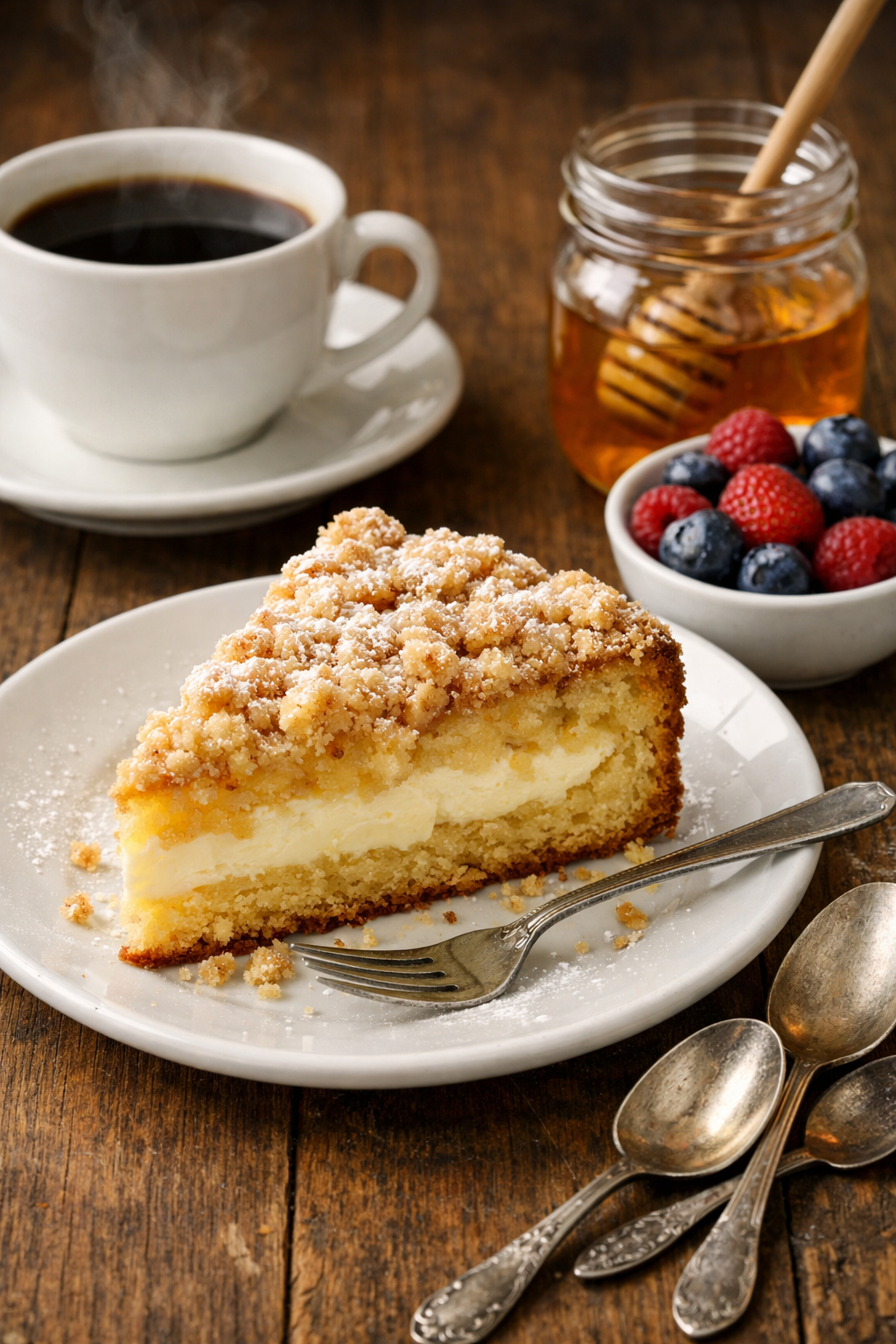
Introduction: My Love for Cream Cheese Coffee Cake
I still remember the first time I tasted cream cheese coffee cake at a friend’s Sunday brunch. One bite of that tender, moist cake with its creamy filling and sweet crumb topping changed everything I thought I knew about breakfast treats. I went home that day determined to master this recipe, and now it’s become my go-to dessert for every gathering.
Cream cheese coffee cake is one of those special treats that works for absolutely any occasion. Need something impressive for a holiday breakfast? This cake delivers. Want to bring a crowd-pleaser to the office? Everyone will ask for the recipe. Looking for a comforting weekend treat with your morning coffee? You’ve found it.
What I love most about this cake is how versatile it is. You can bake it as traditional cream cheese coffee cake muffins for easy grab-and-go portions. Try a stunning cream cheese coffee cake bundt when you want to impress dinner guests. You can even work with a simple cake mix to save time on busy mornings.
The filling options are endless too. I’ve made blueberry cream cheese coffee cake in summer when berries are at their peak. During fall, nothing beats an apple cream cheese coffee cake with warm cinnamon spices. For holidays, a cherry cream cheese coffee cake adds a festive touch that everyone loves.
This dessert has become wildly popular across America. You’ve probably spotted the famous cinnamon cream cheese coffee cake at Costco in those huge portions perfect for feeding a crowd. Americas Test Kitchen has featured their own perfected version, proving that even cooking experts can’t resist this classic treat. The recipe has earned its place in American homes, bakeries, and cafes from coast to coast.
What is Cream Cheese Coffee Cake?
Let me break down what makes this cake so special. A cream cheese coffee cake is a sweet, tender cake that features a rich cream cheese layer or swirl running through it. Unlike regular cakes, it’s designed to be enjoyed with coffee or tea, making it perfect for breakfast, brunch, or an afternoon snack.
The name “coffee cake” confuses some people. The cake doesn’t actually contain coffee as an ingredient. It’s called coffee cake simply because it pairs beautifully with a cup of coffee. The tradition goes back generations when people would serve these slightly sweet cakes during coffee breaks and social gatherings.
Why is it so popular? Three reasons stand out. First, it’s not too sweet, which makes it acceptable for morning eating. Second, the texture is absolutely incredible. Third, it looks impressive but isn’t difficult to make once you know the tricks.
The Basic Ingredients That Make Magic
The foundation of any great cream cheese coffee cake starts with simple pantry staples:
- All-purpose flour for structure
- Butter for richness and flavor
- Sugar for sweetness
- Eggs to bind everything together
- Baking powder for lift
- Sour cream or buttermilk for moisture
- Vanilla extract for depth
The star ingredient is cream cheese, of course. This is what sets the cake apart from ordinary coffee cakes. The cream cheese creates a tangy, rich layer that contrasts beautifully with the sweet cake and crunchy topping. I always use full-fat cream cheese at room temperature. Low-fat versions just don’t deliver the same creamy texture.
The cream cheese layer typically combines softened cream cheese with sugar, an egg, and vanilla. Some recipes add a touch of flour to help it set properly. When you swirl or layer this mixture into the batter, it creates pockets of creamy goodness in every bite.
Traditional Coffee Cake vs. Cream Cheese Coffee Cake
You might wonder what separates a regular coffee cake from a cream cheese version. The differences are clear once you know what to look for.
Traditional coffee cake is usually a simple butter cake with a streusel topping. It’s good, but fairly straightforward. The texture is uniform throughout, and the flavor comes mainly from butter, sugar, and cinnamon.
A cream cheese coffee cake takes things to the next level. The cream cheese filling creates distinct layers of flavor and texture. You get the tender cake, the smooth creamy middle, and the crunchy sweet topping all in one bite. The cream cheese adds tanginess that balances the sweetness perfectly.
The moisture level is another big difference. Cream cheese keeps the cake incredibly moist for days. Regular coffee cake can dry out quickly, but the cream cheese version stays soft and fresh much longer. This makes it ideal for baking ahead or giving as gifts.
Endless Variations to Try
One reason I never get tired of making this cake is the variety of forms it can take. Each variation offers something unique while keeping that signature creamy goodness we all love.
Cream cheese coffee cake muffins are my favorite weekday option. They bake faster than a full cake and create built-in portion control. Kids love having their own individual serving, and they’re perfect for packing in lunchboxes.
A cream cheese coffee cake bundt makes a stunning centerpiece for any brunch table. The ring shape ensures every slice gets plenty of that golden crust. I drizzle mine with a simple glaze for extra sweetness and visual appeal.
Short on time? A cake mix cream cheese coffee cake saves the day. Start with a box of yellow or white cake mix, add your cream cheese layer, and top with streusel. Nobody will guess you took a shortcut because the results taste homemade.
Want to try something different? Cream cheese coffee cake with crescent rolls creates a quick pastry-style version. You layer crescent dough with the cream cheese mixture for a flaky, delicious treat that bakes in under 30 minutes.
The fruit variations deserve special mention. Blueberry cream cheese coffee cake bursts with juicy berries in every bite. Apple cream cheese coffee cake brings cozy fall flavors with diced apples and extra cinnamon. Cherry cream cheese coffee cake uses either fresh cherries or cherry pie filling for a beautiful presentation.
Each version follows the same basic principle: tender cake, creamy filling, sweet topping. Once you master the basic technique, you can customize endlessly based on what you have on hand or what’s in season.

How to Make the Perfect Cream Cheese Coffee Cake
Now that you understand what makes this cake special, let’s get into the actual baking process. I’ve made this cake at least fifty times, and I’ve learned exactly where things can go right or wonderfully wrong.
The process starts with preparing your cream cheese filling. This step can’t be rushed. Take your cream cheese out of the fridge at least an hour before you plan to bake. Cold cream cheese will create lumps that never quite smooth out, no matter how much you beat it. I learned this the hard way when I tried microwaving cold cream cheese to soften it quickly. The result was a grainy, separated mess that ruined my filling.
Once your cream cheese reaches room temperature, beat it with sugar until it’s completely smooth and fluffy. Add one egg and vanilla extract, then mix just until combined. Set this aside while you make your cake batter and streusel topping.
For the cake itself, cream together butter and sugar until the mixture looks pale and fluffy. This usually takes about three minutes with an electric mixer. Add eggs one at a time, beating well after each addition. Here’s where people often mess up: they dump in all the dry ingredients at once. Don’t do this. Instead, add your flour mixture in three parts, alternating with sour cream. Start and end with flour. This method creates a tender crumb that melts in your mouth.
The assembly is where the magic happens. Spread half your cake batter in a greased pan. Drop spoonfuls of the cream cheese mixture over the batter, then top with the remaining cake batter. Use a knife to swirl everything together with a figure-eight motion. Don’t overmix this part. You want distinct swirls of cream cheese, not a uniform blend.
The streusel topping goes on last. I mix flour, brown sugar, cinnamon, and cold butter until it forms clumps. Some people like fine crumbs, but I prefer bigger chunks that get crispy and golden. Sprinkle this generously over the top because nobody ever complained about too much streusel.
Taking the Shortcut with Cake Mix
Listen, I’m all for homemade everything, but sometimes you need cream cheese coffee cake with cake mix to save your sanity. I use this method when I’m hosting brunch and have a million other things to prepare.
Start with a box of yellow cake mix. Follow the package directions but replace the water with sour cream for extra richness. This one swap makes boxed cake taste homemade. Prepare your cream cheese filling exactly as you would for the from-scratch version because this is not the place to cut corners.
The cake mix cream cheese coffee cake assembles the same way as the traditional version. Half the batter goes in the pan, then the cream cheese mixture, then the rest of the batter. Top with homemade streusel because store-bought streusel packets taste like sweetened cardboard. Trust me on this.
Funny enough, I’ve served both versions at the same brunch before, and guests honestly couldn’t tell which was which. The cream cheese filling is so flavorful that it carries the entire cake, even when you start with a mix.
Getting Creative with Fruit Variations
By the way, adding fruit to this cake transforms it into something even more spectacular. My blueberry cream cheese coffee cake disappears faster than any other version I make.
For blueberries, toss a cup and a half of fresh berries with a tablespoon of flour before folding them gently into the cake batter. The flour coating prevents the berries from sinking to the bottom during baking. Frozen berries work too, but don’t thaw them first or they’ll turn your batter purple and add too much moisture.
The apple cream cheese coffee cake requires a slightly different approach. Dice two medium apples into small pieces and toss them with cinnamon and a bit of sugar. Fold these into your batter along with an extra half teaspoon of cinnamon in the streusel. The apples soften as they bake, creating little pockets of spiced sweetness throughout the cake. This version reminds me of the comforting flavors you’d find in a pumpkin better than sex cake, just with different fall flavors taking center stage.
Cherry lovers should try cherry cream cheese coffee cake during summer when fresh cherries are available. Pit and halve about two cups of cherries, then scatter them between the batter layers. If you’re using canned cherry pie filling, drain off most of the thick sauce and use just the cherries themselves. Too much filling makes the cake soggy.
The Famous Costco-Style Cinnamon Version
Everyone who’s tried the cinnamon cream cheese coffee cake Costco sells asks me how to recreate it at home. I’ve tested this about a dozen times to get it right.
The secret is loading up on cinnamon. Not just in the streusel, but everywhere. Add a full tablespoon of cinnamon to your cream cheese filling. Mix another tablespoon into the cake batter itself. The streusel gets two tablespoons plus a teaspoon of nutmeg for warmth.
Costco’s version also has that distinctive swirl pattern. To achieve this, divide your cream cheese mixture into two portions. Spread the first portion over the bottom cake layer, then sprinkle it with a cinnamon-sugar mixture. Add the second cake layer, then spread the remaining cream cheese on top. Swirl with a knife and add the streusel.
The result tastes remarkably close to the warehouse version, but fresher and without the massive portion size. Though honestly, smaller portions aren’t always better when it comes to cake this good. If you’re looking for other impressive cake ideas for special occasions, check out these grooms cake ideas that also wow crowds.
Quick and Easy Crescent Roll Version
Here’s the thing about cream cheese coffee cake crescent rolls: they’re almost too easy. I make these when I want something impressive in under thirty minutes.
Unroll two cans of crescent roll dough. Press one can into the bottom of a baking dish, sealing all the perforations. Spread your cream cheese mixture over this base. Top with the second can of crescent dough, again sealing the seams. Brush with melted butter and sprinkle with cinnamon sugar.
Bake until golden and puffy. The crescent rolls create a flaky, pastry-like texture that’s completely different from traditional cake but equally delicious. This version actually shares some similarities with the layered approach in mont blanc cake, though obviously with very different flavors.
Common Mistakes to Avoid When Baking
Let me save you from the disasters I’ve experienced over the years. These common coffee cake mistakes can ruin an otherwise perfect cake.
The biggest mistake? Overmixing your batter. Once you add flour to wet ingredients, mix only until you can’t see dry streaks anymore. Every extra stir develops more gluten, which makes your cake tough and dense instead of tender and crumbly. I used to think more mixing meant better blending, but with cake batter, less is definitely more.
Another problem I see constantly is cream cheese that’s not properly softened. Room temperature means you should be able to press your finger into it easily. If it’s still firm or cold in the center, it’s not ready. Lumpy cream cheese filling never smooths out during baking. It just creates weird pockets of dense cheese throughout your cake.
Temperature matters more than most people realize. Your oven should be fully preheated before the cake goes in. I always use an oven thermometer because my oven runs about twenty degrees cooler than the dial suggests. Baking at the wrong temperature causes uneven cooking. Too hot and the top burns before the center sets. Too cool and you get a dense, gummy texture.
Measuring ingredients incorrectly causes problems too. Flour especially needs to be measured right. Scoop it gently into your measuring cup with a spoon, then level it off with a knife. Don’t pack it down or tap the cup. Too much flour makes dry, crumbly cake. The texture should remind you of the tender crumb in peaches and cream cake, soft and moist throughout.
The cream cheese layer sometimes sinks to the bottom instead of staying suspended in the middle. This happens when your cake batter is too thin or when you add too much cream cheese mixture. The batter should be thick enough to support the filling. If your batter seems runny, you may have added too much liquid or not enough flour.
Finally, cutting into the cake too soon is tempting but ruins the texture. Let it cool for at least twenty minutes before slicing. The cream cheese needs time to set up properly. I know waiting is torture when your kitchen smells amazing, but patience pays off with clean slices instead of a crumbly mess.
Everything Else You Need to Know About Cream Cheese Coffee Cake
After baking dozens of these cakes, I’ve picked up some tricks that don’t fit neatly into a recipe but make all the difference between good and absolutely incredible results. These are the little details that separate home bakers from people who get asked to bring dessert to every single event.
First up, let’s talk about pan selection because it matters more than you’d think. I’ve baked this cake in everything from glass dishes to springform pans to vintage aluminum pans my grandmother gave me. A nine-by-thirteen inch metal pan gives you the most reliable results with even browning and easy serving. The metal conducts heat better than glass, which means your edges don’t overcook while waiting for the center to finish. For a cream cheese coffee cake bundt, invest in a good quality nonstick bundt pan and grease it obsessively. I mean every single crevice. Nothing hurts worse than a beautiful cake that refuses to release from the pan.
Speaking of greasing, here’s my method that’s never failed me. I use softened butter and a pastry brush to coat every surface, then dust with flour and tap out the excess. Some people swear by baking spray with flour already in it, and that works fine too. Just don’t skip this step or use only oil. Butter creates a barrier that helps with release, and the flour prevents sticking in those tricky corners.
The toothpick test isn’t always reliable with cream cheese coffee cake. Sometimes the toothpick comes out clean, but the cream cheese layer is still too soft. I look for visual cues instead. The top should be golden brown and spring back when you gently press the center. The edges will start pulling away slightly from the pan sides. These signs tell you more than any toothpick can.
Here’s something nobody tells you: this cake actually tastes better the next day. I know that sounds crazy, but the flavors meld together overnight in a way that’s honestly magical. The cream cheese softens throughout the cake, the streusel absorbs just enough moisture to stay crunchy but not dry, and everything harmonizes. If I’m serving this for a Sunday brunch, I bake it Saturday afternoon without guilt.
Storing and Serving Your Masterpiece
Storage confuses people more than it should. The cream cheese content means you can’t just leave this sitting on the counter for days like a regular cake. I wrap mine tightly in plastic wrap or store it in an airtight container in the refrigerator. It stays fresh for up to five days this way, though it rarely lasts that long in my house.
Cold cake straight from the fridge is actually delicious, but if you prefer it warm, just microwave individual slices for about fifteen seconds. The cream cheese gets melty again and the whole thing tastes like it just came out of the oven. Some mornings I eat it cold with hot coffee, and the temperature contrast is weirdly satisfying.
Freezing works beautifully too. Wrap the completely cooled cake in plastic wrap, then aluminum foil, then slide it into a freezer bag. It keeps for up to three months. Thaw overnight in the refrigerator before serving. I’ve brought frozen cake to potlucks, let it thaw during the drive, and nobody knew it hadn’t been baked that morning.
When it comes to serving, presentation matters. I dust the top with powdered sugar right before serving for that bakery-style look. A simple glaze made from powdered sugar and milk drizzled over the top takes it from homestyle to elegant. Fresh berries on the side add color and cut through the richness. Understanding the food composition of ingredients like cream cheese can help you make smarter choices about portion sizes and nutritional balance when serving this indulgent treat.
Adapting for Dietary Needs
People always ask if this cake can work with dietary restrictions. I’ve experimented quite a bit in this area with mixed results, so let me share what actually works.
For a gluten-free version, you can substitute a good quality one-to-one gluten-free flour blend. King Arthur and Bob’s Red Mill both make versions that work without adjusting other ingredients. The texture won’t be identical to the original, but it’s still tender and delicious. Make sure your baking powder is gluten-free too because some brands contain traces of wheat.
Reducing sugar is trickier. The sugar doesn’t just add sweetness; it contributes to texture and moisture. I’ve cut the sugar by about a quarter without major problems, but going lower than that creates a dry, bland cake. If you’re watching sugar intake, making cream cheese coffee cake muffins helps with portion control better than reducing sugar in the recipe.
Dairy-free versions require more creativity. You can find dairy-free cream cheese alternatives, but they don’t all melt and blend the same way. Kite Hill brand works best in my testing. Replace regular butter with plant-based butter and use coconut cream instead of sour cream. The flavor profile changes noticeably, but you still get that creamy swirl effect.
Turning It Into a Business
Funny enough, this cake launched my friend Maria’s cottage bakery business. She started bringing it to church events and got so many requests that she began selling them from her home kitchen. Her secret was offering different sizes and customization options.
She makes individual cream cheese coffee cake muffins for office orders because they’re easy to distribute and no cutting required. For weddings and showers, she does elegant bundt versions with seasonal fruit. Her blueberry cream cheese coffee cake during summer farmer’s market season sells out every single week.
If you’re thinking about selling this cake, price it according to your ingredients and time. Cream cheese isn’t cheap, and good butter costs more than margarine. Don’t undersell yourself just because it seems like a simple breakfast cake. People pay premium prices for quality baked goods, especially when they taste homemade.
Making It Special for Holidays
This cake adapts brilliantly to holiday themes with just a few tweaks. For Christmas morning, I add dried cranberries and orange zest to the batter. The cranberries provide tart bursts that balance the sweet cream cheese, and the orange adds a festive brightness.
Easter calls for my cherry cream cheese coffee cake with pastel sprinkles mixed into the streusel. It looks cheerful on the brunch table next to the egg casseroles and fresh fruit. Kids love spotting the colorful bits throughout the topping.
Thanksgiving gets an apple cream cheese coffee cake with extra cinnamon and a handful of chopped pecans in the streusel. I serve it alongside pumpkin pie because some people prefer a less sweet dessert option. The apples tie into the fall harvest theme perfectly.
For Fourth of July, I make a flag design using blueberries and strawberry slices arranged on top of the cream cheese layer before adding the final batter. It’s a little fiddly, but the patriotic presentation always gets compliments. If you enjoy making creative cakes for all occasions, you’ll find tons of inspiration in other cakes and cupcakes that work beautifully for gatherings and celebrations throughout the year.
When Things Go Wrong
Even experienced bakers have disasters sometimes. Last month I was rushing to make a cake for my daughter’s school bake sale and forgot to add baking powder. The cake came out dense and flat, more like a weird coffee bar cookie than actual cake. I couldn’t serve it, so I crumbled it up and mixed it with cream cheese frosting to make cake balls. They were actually pretty good, but definitely not what I’d planned.
If your cream cheese layer sinks completely to the bottom, the cake is still edible, just different. You end up with a cream cheese base layer instead of a swirl. Serve it upside down and call it intentional. Most people won’t know the difference.
A burned top with raw middle means your oven runs too hot. Tent the cake with aluminum foil halfway through baking to protect the top while the center finishes cooking. Get an oven thermometer to check your actual temperature versus what the dial says.
Dry, crumbly texture usually comes from overbaking or too much flour. There’s not much you can do after the fact except serve it with extra butter or a glaze to add moisture back. Learn from it for next time and check your cake a few minutes earlier than the recipe suggests.
Frequently Asked Questions About Cream Cheese Coffee Cake
Does cream cheese coffee cake need to be refrigerated?
Yes, absolutely. Any baked goods containing cream cheese must be refrigerated to prevent bacterial growth and spoilage. The cream cheese filling creates a moist environment that can harbor bacteria at room temperature. I store mine in an airtight container in the fridge where it stays fresh for up to five days. You can bring it to room temperature before serving, but don’t leave it out for more than two hours. For longer storage, freeze it properly wrapped for up to three months.
What are common coffee cake mistakes?
Beyond what I’ve already covered, people often make the mistake of opening the oven door too frequently while baking. Each time you open that door, the temperature drops significantly and the cake takes longer to bake evenly. Another common error is not reading the entire recipe before starting, which leads to discovering halfway through that your cream cheese should have been softened an hour ago. Using expired leavening agents like old baking powder creates flat, dense cakes that never rise properly. Finally, cutting portions too soon after baking causes the cake to fall apart instead of slicing cleanly.
Is there a difference between coffee cake and crumb cake?
Yes, though the line gets blurry sometimes. Traditional coffee cake has a streusel topping that’s relatively thin and crumbly. Crumb cake, especially the New York style, features a much thicker crumb layer that’s almost as thick as the cake itself. Crumb cake topping is also denser and more buttery, almost like eating a cookie on top of your cake. Coffee cake tends to be lighter overall with more focus on the cake portion. That said, regional variations exist, and some bakeries use the terms interchangeably, which doesn’t help clarify things.
What is a Drake coffee cake?
Drake’s Coffee Cakes are a commercial brand of individually wrapped snack cakes that have been around since 1896. They’re small, rectangular cakes with a crumb topping, sold in boxes at grocery stores and convenience stores across America. Many people grew up eating these in their lunch boxes and have nostalgic feelings about them. While convenient, they’re quite different from homemade cream cheese coffee cake in both taste and texture. The packaged version is drier and sweeter, without any cream cheese filling. They’re fine for a quick snack, but they can’t compete with a freshly baked homemade version.
Can I make cream cheese coffee cake ahead of time?
Absolutely, and it’s actually one of the best make-ahead breakfast options. Bake it the day before your event, let it cool completely, then cover and refrigerate overnight. The flavors develop beautifully and everything sets up perfectly for clean slicing. You can even bake and freeze it weeks in advance if you’re planning for a holiday. Just wrap it extremely well to prevent freezer burn. I regularly make mine on Saturday for Sunday brunch, and guests always comment on how moist and flavorful it tastes.
Why did my cream cheese layer disappear into the cake?
This happens when the cream cheese mixture is too thin or the cake batter is too thick. The cream cheese should be firm enough to hold its shape when dolloped onto the batter. If your mixture is runny, add a tablespoon or two of flour to thicken it slightly. Also, make sure you’re not over-swirling when you marble the layers together. You want distinct ribbons of cream cheese, not a completely blended batter. Sometimes the cream cheese also sinks if you use too much liquid in your cake batter or if your oven temperature is too low.
What’s the best way to reheat leftover cream cheese coffee cake?
Individual slices reheat best in the microwave for 12-15 seconds. This warms the cream cheese filling without drying out the cake. For a whole cake, I prefer letting it come to room temperature naturally rather than reheating, which can make it soggy. If you really want it warm, heat your oven to 300 degrees, cover the cake loosely with foil, and warm for about 10 minutes. The streusel might lose some crispness when reheated, but the overall flavor stays delicious. Avoid reheating more than once as it degrades the texture significantly.
Can I use reduced-fat cream cheese?
You can, but I honestly don’t recommend it. Reduced-fat cream cheese has a different texture and moisture content than full-fat, which affects how the filling sets up during baking. It tends to be more watery and doesn’t create that luxurious creamy layer we’re going for. The flavor is also noticeably less rich. If you’re trying to cut calories, I’d rather suggest making smaller portions or muffins for better portion control than compromising the quality of ingredients. When you’re already eating cake, you might as well make it the best possible version.
How do I know when the cake is actually done baking?
Look for a golden brown top that springs back when gently pressed in the center. The edges should be pulling away slightly from the pan sides. A toothpick inserted into the cake part should come out with just a few moist crumbs, not wet batter. The cream cheese layer might make the toothpick look wet, so test in a few spots to make sure you’re hitting actual cake. The whole kitchen will smell amazing, and you’ll see the streusel has turned a deep golden color. Internal temperature should read around 200 degrees if you use a thermometer.
What can I substitute for sour cream in the recipe?
Greek yogurt works beautifully as a one-to-one substitute for sour cream and adds extra protein. Use full-fat Greek yogurt for best results; low-fat versions can make the cake dry. Buttermilk is another excellent option that creates a tender crumb, though it’s thinner so you might need to slightly reduce other liquids. Regular plain yogurt works too, though it’s a bit more tangy. In a pinch, you can mix milk with a tablespoon of lemon juice or vinegar and let it sit for five minutes to create a sour milk substitute. Each option creates slight variations in flavor and texture, but all produce delicious results.
The beautiful thing about mastering cream cheese coffee cake is how it opens up endless possibilities for creativity in your kitchen. Once you’ve nailed the basic technique, you can adapt it to any season, any occasion, or any craving that strikes. Don’t be afraid to experiment with your own flavor combinations or try the different forms like bundts and muffins until you find your perfect version.
Equipment
- Mixing bowls
- Whisk
- Rubber spatula
- 9x13 inch baking pan
- Electric mixer
Ingredients
- 2.5 cups all-purpose flour
- 1.5 cups sugar
- 0.5 cup unsalted butter, softened
- 4 large eggs
- 1 tablespoon baking powder
- 1 cup sour cream or buttermilk
- 2 teaspoons vanilla extract
- 8 oz cream cheese, at room temperature
- 1 egg for cream cheese filling
- 0.5 cup brown sugar, for streusel
- 1 teaspoon cinnamon for streusel
- 0.5 cup cold butter for streusel
Instructions
- Prepare the cream cheese filling by beating softened cream cheese with sugar until smooth.
- Add one egg and vanilla extract to the cream cheese mixture and set aside.
- Cream together butter and sugar until pale and fluffy.
- Add eggs one at a time, beating well after each addition.
- In separate bowls, mix dry ingredients (flour and baking powder).
- Gradually add dry ingredients to the butter mixture, alternating with sour cream.
- Spread half the cake batter in a greased pan.
- Drop spoonfuls of the cream cheese mixture over the batter.
- Top with the remaining cake batter and swirl gently with a knife.
- Prepare the streusel by mixing flour, brown sugar, cinnamon, and cold butter until clumpy.
- Sprinkle streusel over the top of the cake batter.
- Bake in a preheated oven until golden and set.
- Allow to cool for at least 20 minutes before slicing.