
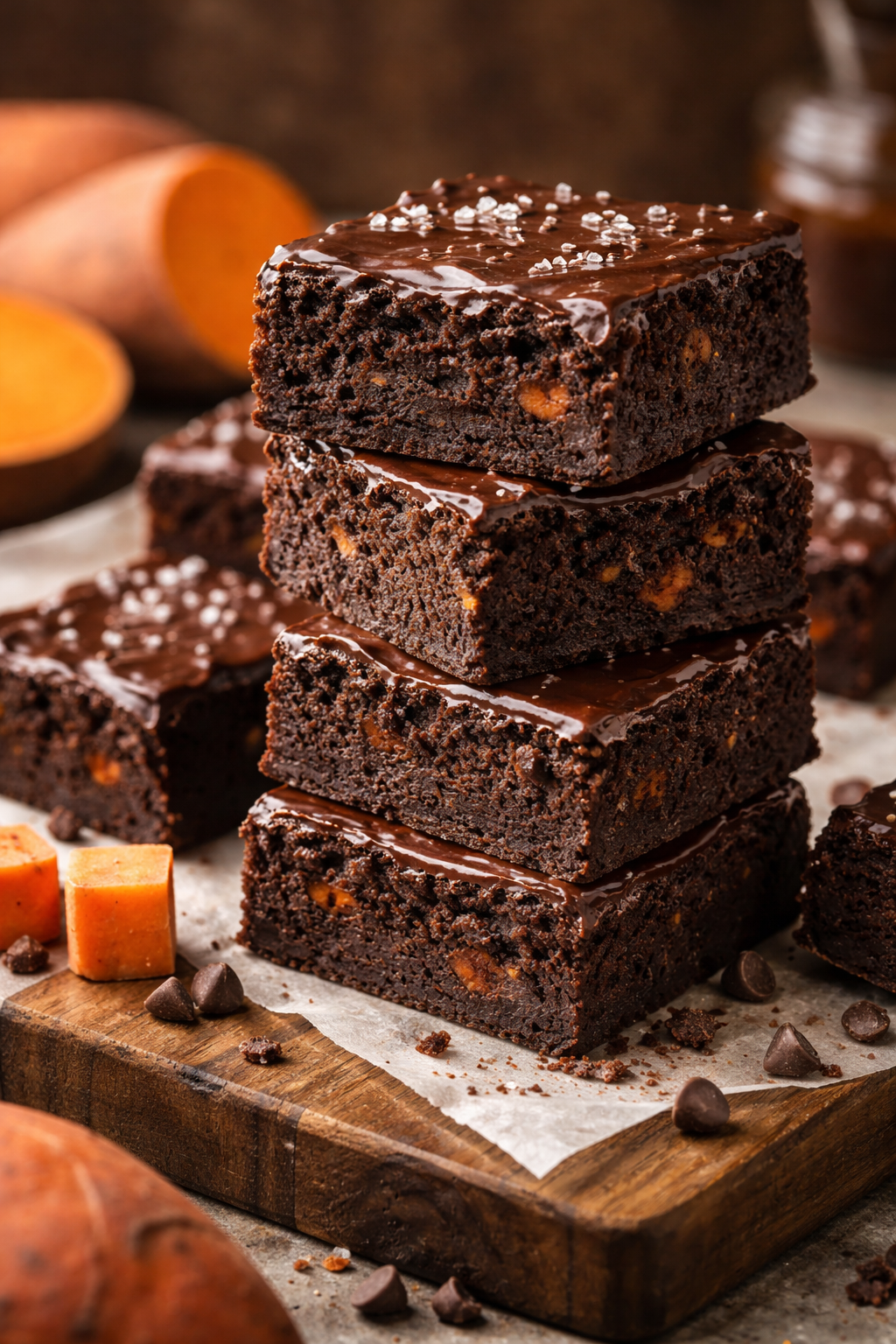
Welcome! Let’s Talk Sweet Potato Brownies
Have you ever felt guilty after eating a delicious brownie? I sure have. Then I tried making my first batch of sweet potato brownies. My whole view of dessert changed. It started with a sad, forgotten sweet potato on my counter. I almost made fries. Instead, I mashed it up and stirred it into brownie batter. The result amazed me. These brownies were dense, fudgy, and secretly packed with a vegetable. My family had no idea. That moment hooked me. Now, I want to share that magic with you.
This isn’t just another trendy recipe. It’s a simple way to make dessert feel a little better. Whether you’re a seasoned baker or a nervous beginner, this guide is for you. We’ll explore why sweet potatoes work so well. I’ll also share my own kitchen experiments, including tries of popular recipes like the sweet potato brownies minimalist baker and sweet potato brownies Ella versions. Let’s get started.
Why Sweet Potatoes in Brownies? The Surprising Benefits
You might be skeptical. “A vegetable in my chocolate dessert?” Trust me, it works. When cooked and mashed, sweet potato becomes incredibly creamy. It blends perfectly into the batter.
So, what does sweet potato do for brownies? It does three main things:
- Texture: Sweet potato adds incredible moisture. This gives brownies a rich, fudgy center. They stay soft for days, never turning dry or crumbly.
- Flavor: The sweet potato taste is very mild. It mixes with the cocoa and chocolate. You get a deep, earthy sweetness. It’s not like a carrot cake. Can you taste the sweet potato in sweet potato brownies? Not really. You just taste a wonderful, complex chocolate flavor.
- Nutrition: This is the bonus. Sweet potatoes are full of fiber, vitamins, and minerals. They let you reduce the amount of butter or oil in a recipe.
This makes them a great base for simple recipes. You’ll find many 3 ingredient sweet potato brownies and 4 ingredient sweet potato brownies online. These often use just sweet potato, nut butter, and cocoa. They are quick, simple, and satisfy a chocolate craving fast.
Are They Actually Healthier?
This is a big question. Are sweet potato brownies actually healthier? The answer is: it depends.
A traditional brownie uses lots of butter, sugar, and white flour. A basic sweet potato brownies recipe often cuts down on these. It uses the natural sweetness and moisture of the potato. This can mean less added sugar and fat.
But “healthy” can be tricky. If you load your recipe with cups of sugar and chocolate chips, it’s still a treat. The sweet potato adds nutrients, but it doesn’t make the brownies calorie-free. Think of it as a nutrient boost. You’re adding good stuff without losing the fun.
I like to track my food sometimes. I’ve even logged a version on sweet potato brownies myfitnesspal. Seeing the fiber and vitamin A numbers felt good. It’s about making better choices, not perfect ones.
Exploring Different Recipe Styles
My kitchen has seen many trials. I love trying different versions to see what works best. The minimalist baker recipe was one of my first attempts. It’s famous for good reason. It’s reliable and uses whole foods. Ella’s version, or sweet potato brownies Ella, often leans toward natural sweeteners. Both are great starting points.
But what if you have special dietary needs? That’s where more specific recipes shine.
For a grain-free option, try a sweet potato brownies paleo recipe. These use almond flour or coconut flour. They avoid refined sugars. The texture is often more dense and brownie-like.
Maybe you want to avoid all flour. A sweet potato brownies no flour version is perfect. These rely on the starch from the potato and maybe some oats or nut meal to hold together. They have a wonderfully gooey texture.
Then there’s the egg debate. Some recipes use them, some don’t. I’ve made sweet potato brownies with eggs and without. Eggs give a more cake-like structure. Without them, brownies are denser and fudgier. It’s a matter of personal taste.
A Key Preparation Tip
How you cook the sweet potato matters a lot. Is it better to bake or boil sweet potatoes for brownies? I’ve tested both methods many times.
Baking is my winner. Here’s why:
- Flavor: Baking caramelizes the natural sugars. It gives a richer, deeper taste to your brownies.
- Texture: Baking removes more water. This means your mash is thicker. Your brownie batter won’t be too wet.
Boiling is faster. But the potato absorbs water. This can make your mash runny. You might end up with gummy brownies. If you must boil, steam the potato instead. Keep it out of the water.
Here’s a simple comparison:
| Method | Best For | Watch Out For |
| Baking | Best flavor, thicker mash, ideal for brownies | Takes longer (45-60 mins) |
| Boiling/Steaming | Speed (20 mins) | Can make mash too watery |
My advice? Poke your sweet potato with a fork. Wrap it in foil or place it on a tray. Bake it at 400°F until it’s super soft. Let it cool completely before you peel and mash. This step makes all the difference.
Starting with a great sweet potato sets you up for success. From there, you can choose any path. Want a 5-minute fix? Go for a 5 ingredient sweet potato brownies recipe. Feeling adventurous? Try a paleo or no-flour version. The sweet potato is your friendly, flexible base. It welcomes all kinds of creativity.
Let’s Make Your Sweet Potato Brownies Recipe a Reality
Alright, so you’re ready to turn that sweet potato into something magical. Honestly, the process is way simpler than it sounds. We’re going to focus on a fantastic 5 ingredient sweet potato brownies recipe that’s my go-to when I need a quick win. It’s the perfect foundation – once you master this, you can tweak it to the moon and back.
What You’ll Need: Keeping it Simple
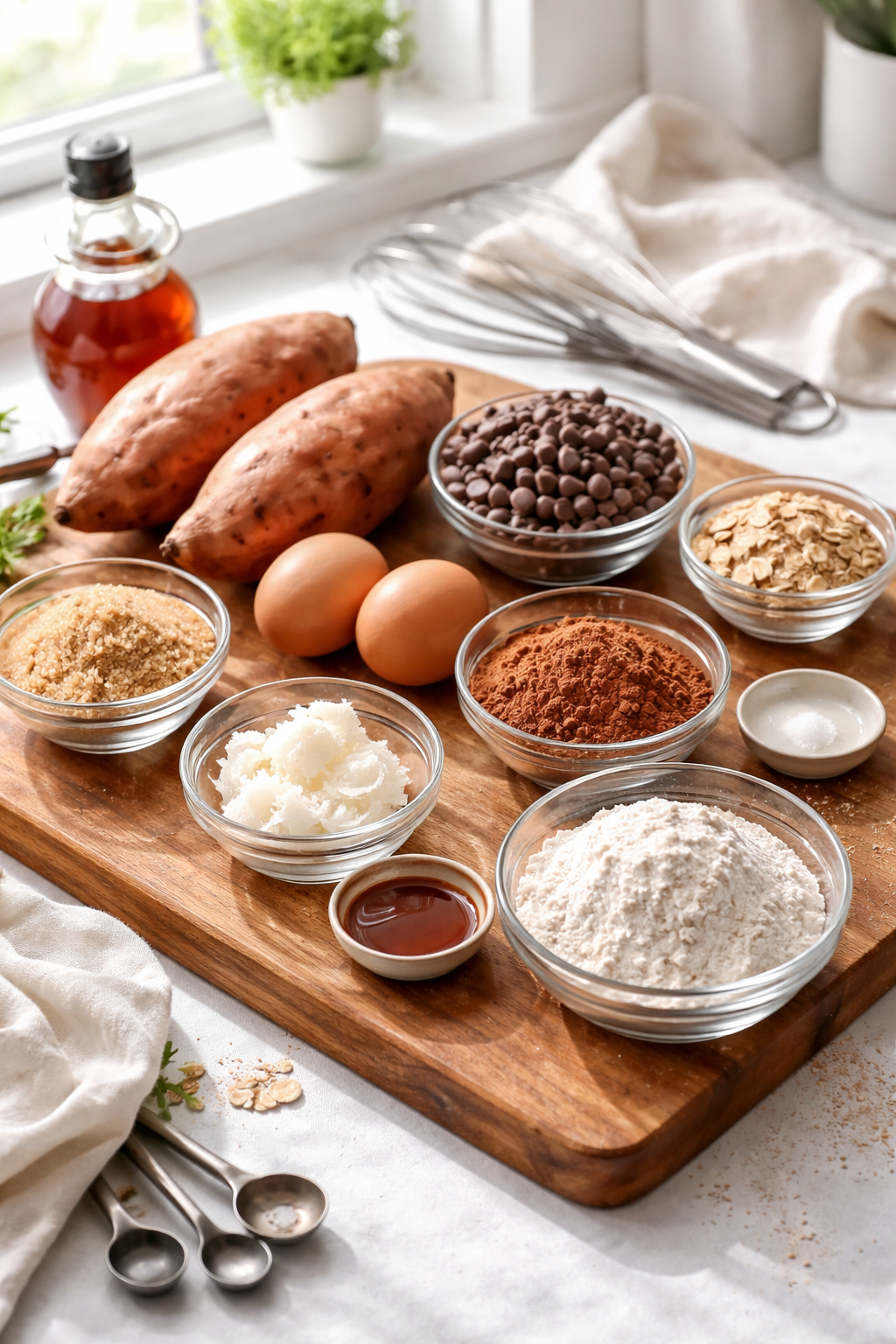
Here’s the beautiful part of a sweet potato brownies 4 ingredients or 5 ingredient base. There’s no long grocery list. You probably have most of this already. For our core recipe, gather:
- 1 cup of mashed, cooked sweet potato (about one large one). This is your superstar. Make sure it’s cool.
- ½ cup of nut or seed butter. I’ve used smooth almond butter, peanut butter (creates a slightly different, but delicious flavor), and even tahini for a nut-free option. The oil helps bind everything.
- ⅓ cup of cocoa powder. The quality matters here—use a good unsweetened one for that deep chocolate hit.
- ¼ cup of maple syrup or honey. This is your liquid sweetener. Agave works too if you’re vegan.
- A big pinch of sea salt. Trust me on this—it makes the chocolate flavor pop.
That’s literally it for the base. See? Five things. Now, before we mix, let’s get that potato perfect.
Prepping Your Sweet Potato: The Make-or-Break Step
I already mentioned that I prefer baking, but let me show you what it looks like in practice. Last week, I was in a huge rush and tried microwaving a sweet potato for a sweet potato brownies 3 ingredients experiment. It was… a lesson. The texture was too wet and the flavor was just off. So let’s do it right.
For Baking (The Gold Standard):
Preheat your oven to 400°F. Give your sweet potato a good scrub and poke it all over with a fork – like it annoyed you. Place it on a baking sheet (no need for foil, really, but you can). Roast it for about 45-60 minutes. You’ll know it’s done when it’s collapsed a bit and a knife slides in without any fight. Let it cool completely. Seriously, don’t rush this. A hot potato will make your nut butter separate. Once cool, peel off the skin and mash the flesh until utterly smooth. No lumps allowed!
If You Absolutely Must Boil/Steam:
Peel and cube the potato. Steam the cubes in a basket over simmering water for 15-20 minutes until tender. This is better than boiling because it doesn’t waterlog them as much. Drain EXTREMELY well, then spread the cubes on a kitchen towel for a few minutes to soak up any extra moisture. Mash like your life depends on it.
Here’s a random tip from my grandma’s kitchen wisdom: a potato ricer is a secret weapon for the fluffiest, lump-free mash. Funny enough, it’s the same tool I use for when I’m making those crowd-pleasing cherry bars and need to make sure my butter is perfectly creamed. Great texture starts with the right tools.
Mixing & The Art of Minimal Ingredients
This part is cathartic. In a medium bowl, add your cool sweet potato mash and the nut butter. Stir, stir, stir until it’s one uniform, creamy mixture. It’ll look a bit like orange playdough, but hang in there.
Now, dump in the cocoa powder, maple syrup, and salt. Fold it all together. The batter will be thick, fudgy, and somewhat sticky. That’s exactly what you want. If it feels a bit too stiff to spread, you can add a teaspoon of water or plant milk. Go slow.
Now, about that 3 ingredient sweet potato brownies version. It’s essentially this but you skip the maple syrup and salt. Just sweet potato, nut butter, and cocoa. The result is intensely chocolatey and less sweet, relying on the potato’s natural sugars. It’s a great option if you’re doing a sugar detox, but my family finds it a bit too “healthy” tasting. The maple syrup in our 5-ingredient version rounds it out perfectly.
Variations: The Egg Debate and Beyond
Want a cake-ier, richer brownie? Add an egg. Making sweet potato brownies with eggs transforms the texture. It gives it more lift and a slightly airier crumb, closer to a traditional brownie. If you go this route, add one large egg to the mix after you’ve combined the sweet potato and nut butter. Whisk it in well before adding the dry stuff. This is a popular move in recipes like the sweet potato brownies minimalist baker version I tried ages ago, which used an egg for structure.
By the way, if you’re exploring a sweet potato brownies paleo or sweet potato brownies no flour diet, this base recipe is already your best friend. It’s naturally gluten-free and grain-free. Just check that your nut butter and maple syrup are compliant with your specific plan.
Baking & Perfecting Your Batch
Preheat your oven to 350°F. Line a small baking dish (an 8×8 inch is ideal) with parchment paper. I don’t always grease it because the parchment does the job, and honestly, I hate scrubbing pans.
Spread your thick batter into the pan. It’ll be a workout—use a spatula or even wet fingers to press it evenly into the corners. The key to texture here is not overbaking. We’re going for fudgy, not dry cake.
Bake for 18-22 minutes. Start checking at 18. The top will look set and maybe have a few cracks. A toothpick inserted will come out with some moist crumbs, but not wet batter. Remember, it keeps cooking as it cools. Pulling it out a tiny bit early is better than leaving it in too long.
Let it cool in the pan for at least 20 minutes. This is the hardest part. Then, use the parchment paper to lift the whole slab onto a cutting board. Let it cool almost completely before you slice. I know, the torture. But if you cut warm, it’ll be a gooey mess (a delicious one, but not neat squares).
My Favorite Upgrades and Toppings
The basic brownie is stellar, but sometimes you wanna dress it up. Here’s where you can channel your inner artist:
- Chocolate Chips: Fold in a handful of dark chocolate chips before baking. Classic.
- Sea Salt Flakes: Sprinkle a few on top right when it comes out of the oven. Sweet and salty forever.
- Swirls: Drop spoonfuls of almond butter or even a quick berry jam on the batter and swirl with a knife.
- Extra Crunch: Sprinkle chopped nuts or seeds on top. It reminds me of that amazing crunch on top of peanut caramel bars, which is a different beast but shares that wonderful texture contrast.
One of my personal quirks is adding a tiny pinch of instant espresso powder to the cocoa. You won’t taste coffee, it just makes the chocolate flavor deeper and more complex. Try it once, you’ll never go back.
Anecdotes from My Kitchen Trials
I’ve made more versions of this than I can count. The sweet potato brownies Ella-inspired ones I tried often used dates for sweetness, which gave a wonderful caramel note but made the batter a bit more finicky to blend without a food processor. My minimalist baker phase taught me the importance of that cooling step I harped on about—her recipe was one of the first where I learned patience pays off in texture.
And yeah, I’ve logged them. For those curious about macros, a basic square from our 5-ingredient recipe is pretty decent. When I plugged a version into sweet potato brownies myfitnesspal, I was pleasantly surprised by the fiber count. It’s a treat that doesn’t feel like a total setback, which is a win in my book.
Anyway, the beauty of this whole thing is its flexibility. Once you get this base down, you realize how many desserts are just a twist away. Feeling adventurous? The concept of adding a pureed vegetable for moisture isn’t so wild—it’s the same principle that makes my fudgy Dr. Pepper brownies so incredibly moist (though, you know, with a different secret ingredient). And if you love a gooey, melty topping, the technique for adding marshmallows to these is similar to what you’d do for classic marshmallow brownies—just broil for a minute at the very end.
So go on, mash that potato, mix that batter, and bake something that feels indulgent but secretly clever. You’ve totally got this.
The Real Deal: Taste, Health, and Your Sweet Potato Brownies Recipe
So you’ve made them. Your kitchen smells like a chocolate dream, and there’s a pan of suspiciously wholesome brownies cooling on the counter. This is where the rubber meets the road, or rather, where the fork meets the fudge. Let’s tackle the big questions head-on: how do they actually taste, and what are you really getting nutritionally? This isn’t just theory anymore; it’s about the delicious reality sitting in your oven.
Can You Taste the Sweet Potato? The Flavor Truth
This is, hands down, the question I get asked the most. People look at the vibrant orange mash going into the bowl and worry they’ll end up with a chocolate-covered side dish. I’ll give it to you straight: No, you cannot taste the sweet potato in sweet potato brownies in a “vegetable-forward” way. You don’t bite into one and think, “Ah, yams!”
What you get instead is a deeper, earthier, and more complex chocolate flavor. The sweet potato’s natural sugars caramelize during baking, adding a subtle malty sweetness that balances the cocoa’s bitterness perfectly. It rounds out the edges. My friend Sam, a notorious veggie-hater, devoured three before I told him the secret. His reaction? “Shut up. No way.” The only time the potato might whisper its presence is if you under-sweeten the batch or use a truly massive amount of potato without adjusting other wet ingredients. Stick to the recipe ratios, and it’s pure chocolate bliss.
The Taste & Texture Reviews Are In
Over the years, I’ve served these to everyone from my health-nut yoga buddies to my sugar-loving nieces. The feedback is remarkably consistent. The texture is the first thing people rave about—incredibly fudgy, dense, and moist, without being greasy. They have this melt-in-your-mouth quality that regular brownies sometimes lack because we’re not relying on a ton of butter or oil for that moisture; the potato does the heavy lifting.
When I shared a batch at the office last month, the comment that made my day was, “These taste expensive.” I think they were picking up on that rich complexity I mentioned. Compared to the sweet potato brownies minimalist baker style (which is fantastic, by the way), my simpler 5-ingredient version gets a slightly more intense, straight-up fudge punch. The sweet potato brownies Ella-inspired versions with dates tend to be a tad sweeter and have a caramel undertone. It’s all about what you’re in the mood for.
As for the 3 ingredient sweet potato brownies (just potato, nut butter, cocoa), the reviews are more divided. My sister loves them for a post-workout bite, calling them “dark chocolate fuel.” My dad? He asked if I forgot the sugar. So, consider your audience. The 4 or 5 ingredient versions with a touch of maple syrup seem to be the universal crowd-pleaser.
Nutritional Face-Off: Sweet Potato vs. Regular Brownies
Let’s be real, we’re not fooling ourselves. A brownie is a treat. But it’s a treat with a spectrum, and sweet potato brownies sit on the nicer end of that spectrum. Think of it as an upgrade, not a health food miracle.
A classic homemade brownie is a symphony of refined flour, cups of granulated sugar, and a stick or two of butter. Delicious? Absolutely. Nutrient-dense? Not so much. Our version swaps out a significant portion of that refined stuff for a whole food. The sweet potato brings a powerhouse of benefits to the table:
- Fiber: This is the big one. That cup of mash packs a serious fiber punch, which helps slow down sugar absorption and keeps you feeling satisfied way longer than a standard brownie would. I’m no scientist, but I find a square of these with my afternoon coffee actually tides me over, whereas a regular one just makes me want another.
- Vitamins: We’re talking a mega-dose of Vitamin A (in the form of beta-carotene, hence the orange color), along with good amounts of Vitamin C, B6, and potassium.
- Lower “Bad” Fats: By using nut butter as our fat source instead of loads of butter, we’re getting healthier monounsaturated and polyunsaturated fats.
To put it in perspective, when I was tracking macros, I created an entry for sweet potato brownies myfitnesspal. Comparing a similar-sized square, my sweet potato version had nearly triple the fiber, more protein, and less saturated fat than my go-to traditional recipe. The calorie difference wasn’t dramatic, but the quality of those calories was. For reliable dietary information on the benefits of foods like sweet potatoes, I often peek at resources like the National Institutes of Health—it helps cut through the online food hype.
Boosting Nutrition Without Losing the Magic
Want to nudge these even further into “super snack” territory? Here are my favorite stealth health boosts that don’t mess with the beloved taste:
- Flour Power: If your sweet potato brownies no flour experiment feels too fragile, try replacing a potential flour with a couple tablespoons of almond flour or oat flour. It adds a touch more protein and fiber. For a true sweet potato brownies paleo twist, almond flour is your best friend.
- Sweetener Swap: Instead of all maple syrup, use half syrup and half mashed ripe banana or unsweetened applesauce. It cuts refined sugars and adds more fruit-based nutrients.
- Secret Veg (Again!): I know, it sounds wild. But adding a half cup of cooked, pureed black beans or even a handful of spinach (blended right into the wet mix) is next-level. You cannot taste it, I swear. The beans make them even fudgier.
- Seed & Nut Boost: Before baking, press a tablespoon each of chia seeds, hemp hearts, and chopped walnuts into the top. You get crunch, omega-3s, and extra protein.
The point is, this recipe is a canvas. It welcomes creativity. Once you’re comfortable with the base, you can play. In fact, if you love this idea of healthier, fudgy bar desserts, you’ll find a whole treasure trove of ideas to explore in our main collection of dessert bars and brownie recipes. From cheesecake swirl brownies to oat-based breakfast bars, the principles of wholesome swapping are endless.
Look, at the end of the day, baking should be joyful. These sweet potato brownies are my little kitchen hack for having that joy without the next-day slump. They prove that a treat can be both indulgent and thoughtfully made. So, go on—slice that pan, pour a glass of milk, and savor the fact that you just made something secretly clever and unabashedly delicious.
Your Sweet Potato Brownies FAQ
I’ve gotten a lot of questions over the years—here are the ones that pop up most often, with my tried-and-true answers.
What does sweet potato do for brownies?
It’s a triple-threat ingredient. First, it adds an incredible amount of natural moisture, creating that dense, fudgy texture we all crave. Second, it provides a gentle, earthy sweetness that lets you reduce the amount of added sugar. And third, it’s a nutritional powerhouse, packing in fiber, vitamins, and minerals you just won’t get from flour and butter alone. It’s the ultimate wholesome swap-out.
Are sweet potato brownies actually healthier?
They can be, yes, but it depends on your recipe. A basic 4 or 5 ingredient sweet potato brownies recipe that uses whole foods like nut butter, cocoa, and a natural sweetener is absolutely a healthier choice compared to a traditional brownie loaded with refined flour and sugar. You’re getting more nutrients and better-quality ingredients. But remember, “healthier” is relative—they’re still a dessert, just one you can feel a bit better about.
Can you taste the sweet potato in sweet potato brownies?
Nope, not in a vegetal way. When baked with chocolate and other ingredients, the sweet potato’s flavor mellows and transforms. It contributes a rich, deep sweetness and complexity to the chocolate, but you won’t take a bite and think “this tastes like sweet potato.” It’s the secret agent of the baking world.
Is it better to bake or boil sweet potatoes for brownies?
Baking is the champion method, and I’ll die on this hill. Baking caramelizes the natural sugars for better flavor and evaporates more water, giving you a thicker, more potent mash. Boiling or steaming is quicker, but the potato absorbs water, which can lead to a gummier brownie texture. If you’re short on time, steaming cubed sweet potato is your next best bet—just drain and dry them *very* well.
Can I make these without nut butter?
Absolutely! For a nut-free version, sunflower seed butter works wonderfully (just note it can make the batter turn a bit greenish due to a reaction with the baking soda—still tastes great!). Tahini is another bold, delicious option that adds a slight savory note which pairs amazingly with dark chocolate.
Why are my sweet potato brownies too wet/gummy?
This almost always comes down to the sweet potato mash being too watery. You likely boiled/steamed it and didn’t drain or dry it enough, or you used a giant potato that threw off the wet-to-dry ratio. Next time, bake your potato, let it cool fully, and even consider squeezing the mash in a clean kitchen towel to remove excess moisture if it seems very wet.
How do I store them, and how long do they last?
They keep beautifully! Store them in an airtight container at room temperature for 2 days, or in the fridge for up to a week. The fridge actually makes them even fudgier. You can also freeze them for up to 3 months—just separate layers with parchment paper. I often freeze half the batch so I’m not tempted to eat the whole pan in two days. Not that I’ve ever done that…
Can I use canned sweet potato puree?
You can in a pinch, but be very careful. Canned puree often has added water and sometimes sugars or syrups. Look for one that’s 100% sweet potato with no additives. And even then, you might need to reduce another liquid in the recipe slightly, as it’s usually a bit runnier than homemade baked-and-mashed potato.
What’s the deal with adding eggs?
Making sweet potato brownies with eggs changes the texture profile. An egg gives the brownies more lift and a slightly cake-ier, more traditional crumb. Without egg, they are ultra-dense and fudge-like. It’s a matter of personal preference. I love both, but for that classic brownie feel, one large egg is a great addition.
My batter is super thick—is that normal?
Yes, completely normal! This isn’t a pourable, liquidy cake batter. It’s a thick, sticky, fudgy dough that you’ll need to press and spread into the pan. That thickness is what gives you that amazing dense texture. If it’s *impossibly* stiff, a teaspoon of milk or water can loosen it up just enough to spread.
Equipment
- Medium mixing bowl
- Spatula
- Baking sheet
- Baking dish (8x8 inch)
- Parchment paper
Ingredients
- 1 cup mashed cooked sweet potato about one large sweet potato
- 0.5 cup nut or seed butter smooth almond butter, peanut butter, or tahini for a nut-free option
- 1/3 cup unsweetened cocoa powder
- 1/4 cup maple syrup or honey or agave for a vegan option
- a big pinch sea salt
Instructions
- Preheat your oven to 400°F for baking the sweet potato.
- Poke the sweet potato all over with a fork and place it on a baking sheet.
- Roast the sweet potato for 45-60 minutes until it's collapsed and soft.
- Let the sweet potato cool completely before peeling and mashing it until smooth.
- In a medium bowl, combine the mashed sweet potato with the nut butter and mix until creamy.
- Add the cocoa powder, maple syrup, and sea salt to the mixture and fold together until well combined.
- Preheat your oven to 350°F.
- Line an 8x8 inch baking dish with parchment paper and spread the brownie batter evenly into the pan.
- Bake for 18-22 minutes or until the top looks set with a few cracks.
- Let the brownies cool in the pan for at least 20 minutes before lifting them out using the parchment paper.
- Cool almost completely before slicing them into squares.
Notes
Nutrition

Hello! I’m Sarah Mitchell, and I’m passionate about bringing creativity and innovation to baking. My love for baking started in high school when I first tried my hand at decorating cupcakes for a class project. What began as a fun hobby quickly became a full-time passion. I’ve spent the past decade working in bakeries and dessert shops, honing my skills in everything from simple cookies to intricate wedding cakes.
After working in some of the top bakeries across the country, I realized that baking was about more than just following recipes — it was about infusing your personality into each creation. At BakingSecret.com, I love creating recipes that push boundaries while staying true to the heart of classic baking. I specialize in creating delicious and visually stunning pastries that will wow your guests.
When I’m not baking, I enjoy teaching baking classes, trying out new cake decoration techniques, and traveling to find inspiration in global dessert traditions. I’m so excited to share my tips and tricks with you to help elevate your baking game!