
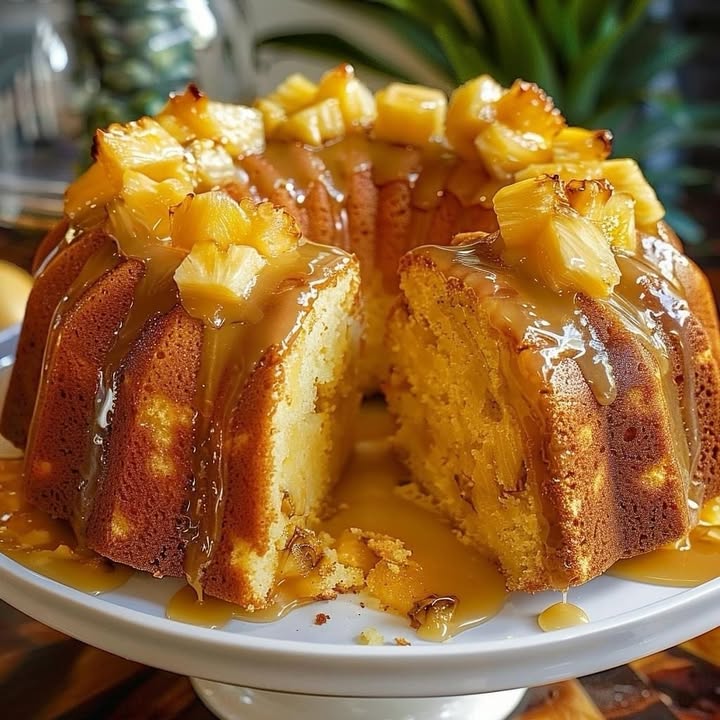
Get Ready for a Taste of Paradise with Tropical Pineapple Cake
Imagine taking a bite of a soft, sweet, and tangy cake that instantly transports you to a tropical island. That’s exactly what my Tropical Pineapple Cake does! This recipe is not just a dessert; it’s a delightful escape that I’ve perfected over countless afternoons in the kitchen, savoring the flavors and sharing them with my family and friends.
A Brief History of the Tropical Pineapple Cake
Pineapple cakes have a rich history, especially in the Caribbean and Hawaii, where pineapples are abundant. Traditionally, these cakes were a way to celebrate special occasions and enjoy the natural sweetness of fresh pineapples. Today, they come in various forms, from simple pineapple upside-down cakes to more elaborate creations like this one, which combines a moist, buttery cake with a luscious glaze.
Why You’ll Love This Tropical Pineapple Cake Recipe
This cake is a delightful blend of flavors—sweet, tangy, and slightly citrusy, all wrapped up in a tender, fluffy texture. The best part? It’s surprisingly easy to make, even for beginners. The pineapple adds a burst of freshness, while the glaze brings a touch of elegance. Perfect for any occasion, this cake is sure to be a hit!
Perfect Occasions to Prepare This Tropical Pineapple Cake
This cake is versatile and perfect for many occasions. Serve it at a family gathering, a casual beach party, or even as a birthday cake. It’s a crowd-pleaser that can bring a little bit of the tropics to any event.
Ingredients for the Tropical Pineapple Cake
- 3 cups all-purpose flour
- 1 teaspoon baking powder
- 1 cup unsalted butter, softened
- 1/2 cup shortening
- 2 3/4 cups granulated sugar
- 4 eggs, room temperature
- 1/2 cup buttermilk
- 1 cup crushed pineapple, drained juice reserved
- 1 teaspoon vanilla extract
Substitution Options
If you don’t have all the ingredients on hand, here are some substitution options:
- Butter: You can use margarine, but the flavor will be slightly different.
- Shortening: Coconut oil or another neutral-flavored oil can work well.
- Buttermilk: Mix 2 teaspoons of lemon juice or vinegar with milk and let it sit for 5 minutes to create a buttermilk substitute.
Preparation of the Tropical Pineapple Cake
Step 1: Preheat Your Oven and Prepare the Pan
Start by preheating your oven to 350°F (175°C). Grease and flour a 9-inch round cake pan to ensure the cake doesn’t stick. Pro tip: Use a non-stick spray for even better results.
Step 2: Mix the Dry Ingredients
In a medium bowl, whisk together the flour and baking powder. The dry ingredients should be well combined to avoid lumps in your cake. The flour will give the cake its structure, and the baking powder will help it rise beautifully.
Step 3: Cream the Butter and Shortening
In a large mixing bowl, cream the butter and shortening together until smooth and creamy. This step is crucial for a light and fluffy cake. Add the sugar gradually, beating well after each addition. The mixture should be light and airy, almost like whipped cream.
Step 4: Add Eggs and Flavorings
Add the eggs, one at a time, beating well after each addition. Stir in the vanilla extract, and then add the buttermilk. The mixture will start to look smooth and creamy. The eggs add richness and help bind the ingredients together, while the buttermilk provides a tangy note that complements the pineapple perfectly.
Step 5: Combine Wet and Dry Ingredients
Gently fold the dry ingredients into the wet mixture, being careful not to overmix. Overmixing can lead to a tough cake. The batter should be smooth and free of lumps. Finally, stir in the crushed pineapple, making sure it’s evenly distributed throughout the batter.
Step 6: Bake the Cake
Pour the batter into the prepared pan and smooth the top with a spatula. Bake for 35-40 minutes, or until a toothpick inserted into the center comes out clean. The cake will be golden brown and have a sweet, fruity aroma wafting from the oven. Pro tip: Rotate the pan halfway through baking for even browning.
Step 7: Prepare the Glaze
While the cake is baking, prepare the glaze. In a small saucepan, combine the reserved pineapple juice and a little bit of sugar. Heat gently until the sugar dissolves, creating a syrupy glaze. Chef’s tip: For an extra kick, add a splash of rum to the glaze for a more tropical flavor.
Step 8: Glaze and Cool the Cake
Once the cake is done, remove it from the oven and let it cool for 10 minutes in the pan. Then, carefully invert it onto a wire rack. Brush the glaze over the warm cake, allowing it to soak in. Let the cake cool completely before slicing. The glaze will add a glossy finish and an extra layer of flavor.
Timing
Here’s a quick breakdown of the timing for this delectable treat:
- Prep Time: 15 minutes
- Cooking Time: 35-40 minutes
- Total Time: 50-55 minutes
Chef’s Secret
To make this cake even more special, try adding a few drops of coconut extract to the batter. The subtle coconut flavor will complement the pineapple beautifully, giving the cake an even more tropical vibe.
Extra Info
Did you know that pineapples are not a single fruit but a cluster of berries? Each scale on the outside is actually a flower, and the whole fruit is made up of these fused flowers. Fascinating, right?
Necessary Equipment
- 9-inch round cake pan
- Mixing bowls
- Electric mixer
- Spatula
- Wire rack
- Small saucepan
Storage Tips for Tropical Pineapple Cake
To keep your cake fresh, store it in an airtight container at room temperature for up to 3 days. If you want it to last longer, you can refrigerate it for up to a week. For the best texture, bring it to room temperature before serving. The cake can also be frozen for up to 3 months, but make sure to wrap it tightly in plastic wrap and aluminum foil to prevent freezer burn.
Tips and Advice
To enhance the flavor, toast the flour in a dry skillet for a few minutes before using it. This gives the cake a slightly nutty, richer taste. Also, make sure all your ingredients are at room temperature before starting. This helps them mix together more smoothly and evenly.
Presentation Tips
For a show-stopping presentation, garnish the cake with fresh pineapple slices, a sprinkle of shredded coconut, and a drizzle of caramel sauce. You can also add a few maraschino cherries or a dollop of whipped cream for a festive touch. The vibrant colors and textures will make the cake look irresistible.
Healthier Alternative Recipes
Here are six variations of the cake that you can try if you’re looking for a healthier option:
- Tropical Pineapple Cake with Whole Wheat Flour: Substitute half of the all-purpose flour with whole wheat flour for added fiber and a nuttier flavor.
- Gluten-Free Tropical Pineapple Cake: Use a gluten-free flour blend and follow the same steps. This version is perfect for those with gluten sensitivities.
- Low-Sugar Tropical Pineapple Cake: Reduce the sugar by half and use a natural sweetener like honey or maple syrup. This keeps the cake sweet without the excess sugar.
- Dairy-Free Tropical Pineapple Cake: Substitute the butter and buttermilk with dairy-free alternatives like coconut oil and almond milk. The result is a delicious, dairy-free delight.
- Vegan Tropical Pineapple Cake: Replace the eggs with applesauce or a vegan egg substitute, and use plant-based butter and milk. This version is perfect for vegans and those with dietary restrictions.
- Reduced-Fat Tropical Pineapple Cake: Use applesauce instead of some of the butter and shortening. This reduces the fat content without compromising the flavor.
Common Mistakes to Avoid
Mistake 1: Not Draining the Pineapple
One common mistake is not draining the pineapple well enough. Excess liquid can make the cake soggy. Make sure to drain the pineapple thoroughly before adding it to the batter. Pro tip: Save the juice for the glaze—it adds a wonderful, tangy sweetness.
Mistake 2: Overmixing the Batter
Overmixing the batter can result in a tough, dense cake. Mix the wet and dry ingredients just until they are combined. A few small lumps are okay and will disappear during baking. Pro tip: Use a spatula to fold in the ingredients gently.
Mistake 3: Using Cold Ingredients
Using cold ingredients, especially the butter and eggs, can make the cake heavy and dense. Make sure everything is at room temperature before you start. This ensures a smooth, well-combined batter. Pro tip: Take the butter and eggs out of the fridge at least 30 minutes before you begin.
Mistake 4: Baking Too Long
Baking the cake for too long can dry it out. Stick to the recommended baking time and check it a few minutes early. The cake should be golden brown and spring back when lightly pressed. Pro tip: Use a toothpick to test the center—it should come out with a few moist crumbs.
Mistake 5: Not Letting the Cake Cool Properly
Impatience can lead to a crumbly, broken cake. Let the cake cool in the pan for 10 minutes before inverting it onto a wire rack. This allows it to set properly and makes it easier to handle. Pro tip: Use a thin knife to loosen the edges before inverting.
FAQ
Can I use fresh pineapple instead of canned pineapple?
Yes, you can use fresh pineapple, but it might not be as sweet and juicy as the canned version. Make sure to chop the fresh pineapple finely and drain off the excess juice before adding it to the batter. The fresh pineapple will add a delightful, natural flavor to the cake.
How can I make the cake more moist?
To make the cake more moist, you can add a few tablespoons of Greek yogurt or sour cream to the batter. These ingredients add moisture and a slight tanginess that complements the pineapple. Additionally, make sure to use room temperature ingredients for the best results.
Can I use a different type of glaze?
Absolutely! You can experiment with different glazes, such as a cream cheese glaze or a simple powdered sugar glaze. Just mix powdered sugar with a little milk or pineapple juice to reach your desired consistency. These variations will add a unique twist to the cake.
Is this cake suitable for a beginner baker?
Yes, this cake is very suitable for beginner bakers. The steps are straightforward, and the ingredients are easy to find. Just follow the instructions carefully, and you’ll have a delicious, impressive cake in no time.
Can I make this cake in advance?
Yes, you can make this cake a day or two in advance. Store it in an airtight container at room temperature. If you need to store it for longer, you can refrigerate it for up to a week or freeze it for up to 3 months. Just make sure to bring it to room temperature before serving.
What if I don’t have buttermilk?
No problem! You can make a buttermilk substitute by mixing 2 teaspoons of lemon juice or white vinegar with 1/2 cup of milk. Let it sit for 5 minutes, and it will thicken and become buttermilk. This works perfectly in the recipe.
Can I use a different type of fruit?
While the recipe is designed for pineapple, you can experiment with other fruits like mango or peaches. Just make sure to chop the fruit finely and drain off any excess juice. The flavors will be different, but still delicious.
How do I know if the cake is done?
The cake is done when it is golden brown and a toothpick inserted into the center comes out clean or with a few moist crumbs. If the toothpick has wet batter on it, the cake needs more time. If it comes out clean, the cake is ready to be glazed and cooled.
Can I add nuts to the cake?
Yes, you can add chopped nuts like pecans or walnuts to the batter for added texture and flavor. Just fold them in gently after adding the crushed pineapple. The nuts will add a nice crunch and a nutty flavor to the cake.
What is the best way to serve this cake?
This cake is best served at room temperature. You can cut it into slices and serve it as is, or dress it up with a dollop of whipped cream, a sprinkle of shredded coconut, or a drizzle of caramel sauce. It’s a perfect dessert for any occasion, and it’s sure to be a hit!
Final Thoughts on the Tropical Pineapple Cake
There you have it, a delicious and easy-to-make Tropical Pineapple Cake that will transport you to a sunny, tropical paradise. Whether you’re celebrating a special occasion or just indulging in a sweet treat, this cake is sure to delight. Give it a try, and don’t forget to share it with your loved ones. Happy baking!
If you love this recipe, you might also enjoy our Banana Cream Cake, Oreo Birthday Cake, Prune Topped Bolu, and Coconut Chocolate Delight. Each one is a unique and delightful treat that’s sure to please.
For more baking inspiration and recipes, check out our cakes category. Happy baking, and may your kitchen always be filled with the sweet aromas of delicious treats!
Equipment
- 9-inch round cake pan
- Mixing bowls
- Electric mixer
- Spatula
- Wire rack
- Small saucepan
Ingredients
- 3 cups all-purpose flour
- 1 tsp baking powder
- 1 cup unsalted butter, softened
- 1/2 cup shortening
- 2 3/4 cups granulated sugar
- 4 large eggs, room temperature
- 1/2 cup buttermilk
- 1 cup crushed pineapple, drained (juice reserved)
- 1 tsp vanilla extract
Instructions
- Preheat your oven to 350°F (175°C) and grease and flour a 9-inch round cake pan.
- In a medium bowl, whisk together the flour and baking powder.
- In a large mixing bowl, cream the butter and shortening until smooth and creamy. Gradually add the sugar, beating well after each addition.
- Add the eggs one at a time, beating well after each addition. Then stir in the vanilla extract and buttermilk.
- Gently fold the dry ingredients into the wet mixture, then stir in the crushed pineapple.
- Pour the batter into the prepared pan and smooth the top. Bake for 35-40 minutes, or until a toothpick inserted comes out clean.
- While the cake is baking, prepare the glaze by heating the reserved pineapple juice and a little sugar in a small saucepan until dissolved.
- Once the cake is done, let it cool for 10 minutes in the pan. Invert onto a wire rack and brush the glaze over the warm cake. Let the cake cool completely before slicing.
Notes
Nutrition

Hi, I’m Olivia Parker, the founder of BakingSecret.com and a lifelong lover of all things sweet and homemade. I grew up in a small town in Oregon, where the smell of fresh cookies in my family’s kitchen sparked my passion for baking. Over the years, I turned that passion into a mission: to help home bakers feel confident, inspired, and creative.
After studying food science and working in several artisan bakeries across the U.S., I decided to create a space where everyone from beginners to seasoned bakers can find reliable recipes, expert tips, and a warm, welcoming community. BakingSecret.com is my way of sharing the magic of baking with the world. When I’m not testing new recipes, you’ll find me exploring farmers’ markets, collecting vintage cookbooks, or perfecting my sourdough technique.