
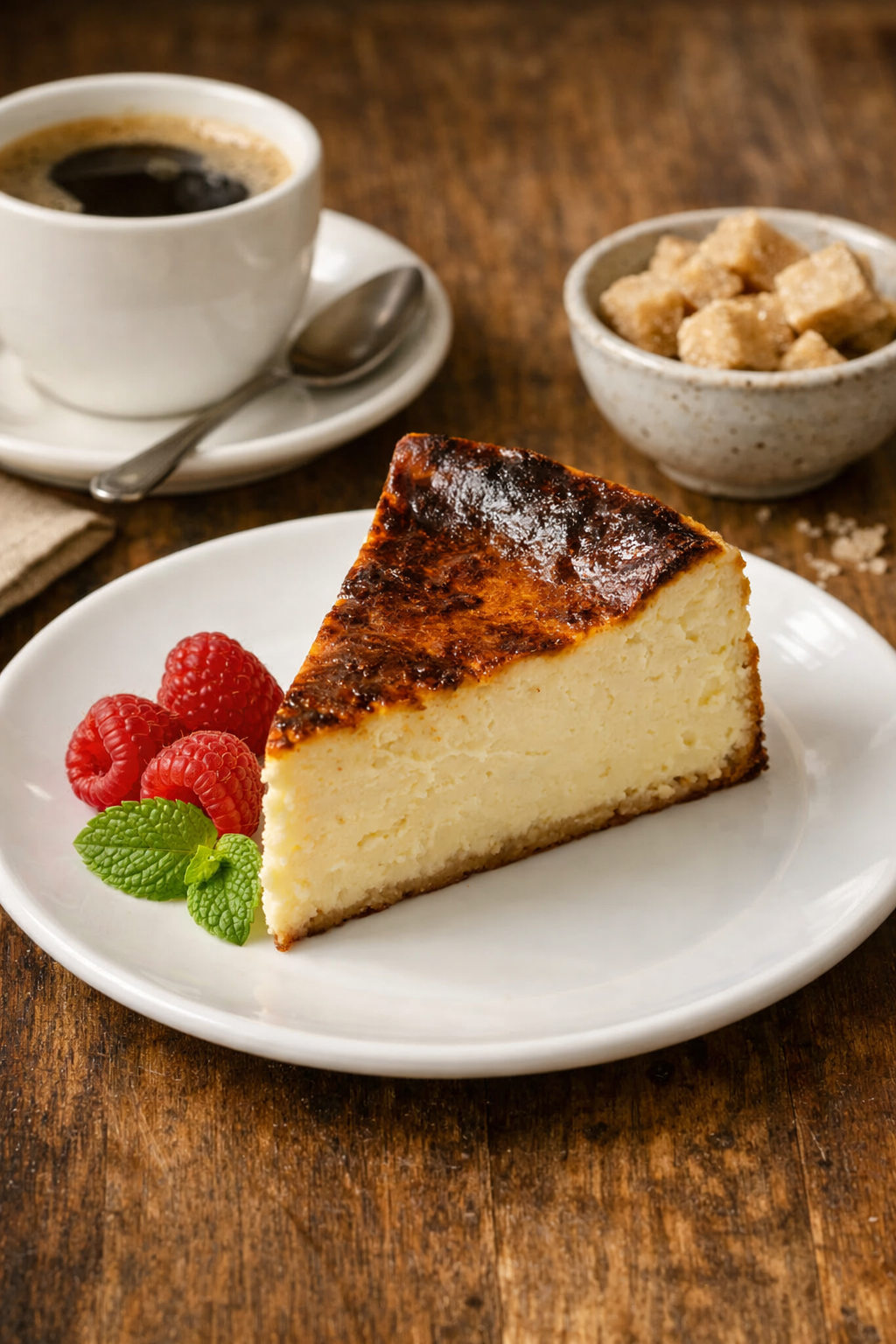
Welcome to the World of San Sebastián Cheesecake
I’ll never forget the first time I tasted a slice of San Sebastián cheesecake. The burnt top crackled under my fork, and the creamy center practically melted on my tongue. I thought I knew cheesecake, but this was something else entirely. It was love at first bite, and I’ve been obsessed ever since.
Welcome to my little corner of the internet where we talk all things cheesecake! Today, I’m thrilled to share everything I’ve learned about this amazing dessert. Whether you stumbled here searching for san sebastian cheesecake tarifi arda or you’re just curious about what makes this dessert so popular in cities like Istanbul and London, you’re in the right place.
This isn’t your typical New York-style cheesecake with a graham cracker crust. The San Sebastián version breaks all the traditional rules, and that’s exactly what makes it special. I’m going to walk you through the story behind this dessert, its unique characteristics, and why food lovers around the globe can’t get enough of it.
My journey with this cheesecake started when I saw photos of it all over social media. That dark, almost burnt top looked so different from anything I’d seen before. I had to know more. I researched recipes, watched videos, and eventually made it myself. The results were worth every minute of preparation.
What is a San Sebastián Cheesecake?
The San Sebastián cheesecake, also known as Basque burnt cheesecake, comes from the beautiful Basque Country in Spain. This dessert has a fascinating history that starts in a small restaurant in the city of San Sebastián. The name comes directly from this coastal Spanish city, where it first gained popularity in the 1990s.
A chef named Santiago Rivera created this masterpiece at La Viña, a pintxos bar in the old town. He wanted something simple that could be made ahead and served to busy customers. What he created became a sensation that spread far beyond the Basque region.
So what is so special about San Sebastián cheesecake? Everything about it challenges what you think a cheesecake should be. First, there’s no crust. Not even a thin one. The filling sits directly in the pan, which means every bite is pure, creamy goodness.
The appearance sets it apart immediately. While most cheesecakes aim for a perfect, smooth, pale surface, this one celebrates imperfection. The top is intentionally burnt, creating a dark caramelized layer that adds incredible depth of flavor. Those dark spots and cracks aren’t mistakes – they’re the hallmark of a properly made San Sebastián cheesecake.
The texture is completely different from what you might expect. The outside develops a slightly firm edge during baking, while the center remains wonderfully jiggly and creamy. Some people describe it as having a texture somewhere between a traditional cheesecake and a custard. When you cut into it, the knife glides through easily.
Here’s what makes this cheesecake unique:
- No crust or base layer
- Dark, caramelized top surface
- Creamy, almost custardy center
- Served at room temperature or slightly warm
- Natural cracks and imperfections welcomed
- Simple ingredient list with no complex flavors
Unlike American cheesecakes that are dense and firm, or Japanese cheesecakes that are light and fluffy, the Basque version sits in its own category. The high baking temperature creates that signature burnt top while keeping the inside soft and luscious.
You might be wondering about san sebastian cheesecake nedir if you’re searching in Turkish. Simply put, it’s a crustless cheesecake baked at high heat until the top caramelizes and the center stays creamy. The method is straightforward, but the results are extraordinary.
I’ve tried versions from different places, from fancy cafes in san sebastian cheesecake istanbul locations to homemade attempts in my own kitchen. Each one has its own character, but they all share that distinctive burnt top and silky interior.
The dessert gained international fame when chefs and food bloggers started sharing it online. Soon, bakeries in London, New York, Tokyo, and cities around the world were making their own versions. If you search for san sebastian cheesecake london or san sebastian cheesecake izmir, you’ll find numerous spots serving this Spanish import.
In Turkey, this dessert has become particularly popular. Many people search for san sebastian cheesecake arda looking for recipes from famous Turkish chefs. The dessert fits perfectly with Turkish coffee culture and has found a devoted following in cities like Istanbul and Izmir.
I’ve read countless discussions on forums, including san sebastian cheesecake eksi threads, where people debate the best techniques and variations. Everyone has an opinion on the perfect level of burnt-ness or the ideal wobble in the center.
Some neighborhoods have become known for their excellent versions. For example, san sebastian cheesecake besiktas locations in Istanbul attract lines of customers eager to taste this Spanish creation with a Turkish twist.
The beauty of this cheesecake lies in its simplicity. You need just a handful of ingredients: cream cheese, heavy cream, eggs, sugar, and a bit of flour. No vanilla extract, no lemon zest, no complicated add-ins. The magic comes from the technique and the high-heat baking process.
When served slightly warm, the texture becomes even more special. The center is almost pourable, creating a luxurious mouthfeel that’s hard to describe. As it cools, it firms up slightly but never becomes as solid as traditional cheesecake.
The best san sebastian cheesecake recipe respects the original method while allowing for small personal touches. I’ve experimented with different baking times and temperatures, and I’ve learned that precision matters less than understanding what you’re looking for in texture and appearance.
This dessert represents a shift in how we think about perfection in baking. Those burnt edges and cracked surfaces aren’t flaws – they’re proof that you did it right. It’s liberating to make a dessert where imperfection is not just accepted but celebrated.

The Simple Magic Behind This Spanish Masterpiece
Now that you understand what makes this dessert different, let me tell you why it works so beautifully.
The real genius of the San Sebastián cheesecake isn’t in fancy techniques or exotic ingredients. It’s in the way heat transforms simple dairy into something incredible. I remember the first time I mixed the ingredients together and thought, “That’s it? Just five things?” But here’s the thing – when you strip away all the extras, you get to taste the pure, unadulterated cream cheese flavor that so many other desserts mask.
The high-temperature baking method is where the real transformation happens. Most traditional cheesecakes bake low and slow, around 325°F or even lower. The san sebastian cheesecake ispanya method flips this completely on its head. We’re talking 400°F to 450°F here. When I first read that temperature, I double-checked the recipe three times because it seemed like a typo.
That intense heat does something magical. The outside of the cheesecake caramelizes quickly, developing those gorgeous dark patches that give it the “burnt” reputation. Meanwhile, the center barely has time to fully set before you pull it from the oven. The result? A contrast in textures that shouldn’t work but absolutely does.
I’ve made plenty of other cheesecake variations over the years. My chocolate chip cheesecake cookies require careful attention to cookie dough consistency, and I’ve spent hours perfecting water bath techniques for traditional recipes. But with this Basque version, you skip all that fussiness. No water bath means no wrapping your pan in aluminum foil, no worrying about water seeping in, and no juggling hot pans filled with boiling water.
The ingredient list stays refreshingly short. Good quality cream cheese forms the foundation. Heavy cream adds richness and helps create that custard-like texture. Eggs provide structure without making it too firm. Sugar sweetens without overwhelming. A tiny bit of flour gives just enough stability to hold everything together. That’s it. No graham crackers, no butter for crust, no vanilla beans or lemon zest competing for attention.
By the way, this simplicity means the quality of your ingredients really matters. I learned this lesson the hard way when I tried using low-fat cream cheese to save a few calories. The texture was completely off – grainy and separated instead of silky smooth. Sometimes you just can’t cut corners, you know?
The beauty of this dessert is how it’s traveled around the world and picked up local character. When you search for san sebastian cheesecake london, you’ll find high-end bakeries in Soho and neighborhood cafes in Hackney all putting their spin on it. Some add a drizzle of honey, others might serve it with fresh berries. The foundation remains the same, but each place adds personality.
In Turkey, the dessert has really taken off in a big way. The san sebastian cheesecake arda version became famous after appearing on cooking shows, introducing thousands of home bakers to this Spanish treat. I’ve seen discussions on san sebastian cheesecake eksi where people debate whether it pairs better with Turkish coffee or tea. The consensus? Both work wonderfully.
Different neighborhoods in Istanbul have developed their own reputations. The san sebastian cheesecake besiktas scene particularly impresses me. I haven’t visited personally, but friends who live there send me photos of cafe versions that look absolutely perfect – that ideal wobble in the center, the deeply caramelized top with just the right amount of char.
Funny enough, people often ask me about the health aspects. “Can I eat cheesecake while losing weight?” Well, let’s be honest here. This isn’t diet food. It’s rich, it’s indulgent, and it’s made with full-fat cream cheese and heavy cream. But you know what? A small slice goes a long way because the flavors are so concentrated and satisfying. I’d rather have a thin slice of really good cheesecake than a huge portion of something mediocre.
The portion control aspect actually works in your favor with this dessert. Unlike my raspberry cheesecake cookies where it’s easy to grab three or four without thinking, a slice of this rich Basque cheesecake demands your full attention. You sit down, you savor it, and usually one piece satisfies completely.
For those wondering about lactose intolerance, this is a tricky one. The San Sebastián cheesecake is essentially concentrated dairy – cream cheese, heavy cream, and eggs. Can a lactose intolerant person eat cheesecake? It depends on their sensitivity level. Some people do fine with aged cheeses and cultured dairy products. Others might need to take lactase enzymes beforehand. I’ve experimented with lactose-free cream cheese alternatives, and while the texture isn’t quite identical, you can get pretty close.
The ease of preparation surprises everyone who tries making it. I’ve taught this recipe to friends who claimed they couldn’t bake. Without the pressure of creating a perfect crust or worrying about cracks forming during cooling, they found success on their first attempt. Those cracks and imperfections that would ruin a New York cheesecake? They’re expected here. Welcome, even.
If you’re in Izmir and searching for san sebastian cheesecake izmir locations, you’ll discover that coastal cities have embraced this dessert with particular enthusiasm. Maybe there’s something about seaside communities appreciating food from San Sebastián, itself a beautiful coastal city. The salty sea air and rich, creamy dessert create an interesting contrast.
Here’s something I find fascinating: this dessert actually tastes better slightly warm or at room temperature compared to cold from the refrigerator. Most cheesecakes I make, like my jello cheesecake, need to be thoroughly chilled before serving. But the best san sebastian cheesecake recipe approaches suggest letting it cool just until it’s barely warm, then diving in while the center is at its most luxurious.
The minimal ingredient list also means fewer things can go wrong. When I make something complex like pineapple upside down cheesecake, there are multiple components that need to come together perfectly. With this Spanish version, you’re really just mixing everything together and letting the oven do the work.
Temperature control is probably the most important skill to develop. Your oven needs to be properly preheated, and knowing when to pull the cheesecake out requires a bit of intuition. The center should still jiggle significantly when you shake the pan. It feels wrong to remove something that looks underbaked, but trust the process. The residual heat continues cooking it as it cools.
Whether you’re searching for san sebastian cheesecake tarifi arda or looking up recipes in English, the core method stays consistent. That’s the beauty of it. The technique transcends language barriers because it’s so straightforward. Mix, pour, bake hot, done.
Each city that adopts this dessert adds something special while respecting the original. That’s what great food does – it travels, adapts, and brings people together across cultures. From the Basque Country to Istanbul’s Besiktas neighborhood to London cafes, this cheesecake has become a global phenomenon while staying true to its wonderfully simple roots.
How to Make the Best San Sebastián Cheesecake at Home
Alright, let’s get down to the fun part – actually making this thing in your own kitchen. I promise it’s way easier than you think, and honestly, the first time I pulled mine out of the oven with that gorgeous burnt top, I felt like a professional pastry chef. Spoiler alert: I’m definitely not, but this recipe makes you look like one.
Here’s the thing about making the best san sebastian cheesecake recipe at home – you don’t need fancy equipment or years of baking experience. What you do need is confidence to bake something at a temperature that seems too high and the willingness to pull it out when it still looks wobbly. Trust me on this.
Let me walk you through my method, which I’ve refined after making this probably twenty times. Some batches turned out better than others, but even the “failures” were delicious. That’s another great thing about this dessert – it’s pretty forgiving.
Gathering Your Ingredients
First things first, you need to shop smart. Here’s what goes on your list:
- 32 ounces (900g) of full-fat cream cheese, brought to room temperature
- 1 and 1/2 cups (300g) granulated sugar
- 6 large eggs, also at room temperature
- 2 cups (480ml) heavy cream
- 2 tablespoons all-purpose flour
- A pinch of salt
Room temperature ingredients matter more than you’d think. Cold cream cheese creates lumps that are nearly impossible to smooth out, and cold eggs don’t incorporate as evenly. I usually take everything out of the fridge about two hours before I start baking. If you forget and need to speed things up, you can place the wrapped cream cheese in a bowl of warm water for ten minutes.
One mistake I made early on was using whipped cream cheese instead of the block kind. The whipped version has air incorporated into it, which throws off the ratios completely. Stick with regular brick cream cheese for consistent results.
Preparing Your Pan
You’ll need a 9-inch or 10-inch springform pan. I prefer 10-inch because it gives you a slightly thinner cheesecake with more surface area for that caramelized top. Line the entire pan – bottom and sides – with parchment paper. Don’t skip this step. I learned this lesson when half my first cheesecake stuck to the pan and I had to serve it in what I called “rustic portions” but were really just messy chunks.
The parchment doesn’t need to look pretty. In fact, wrinkles and folds add to that signature rustic appearance. Let the paper extend above the rim of the pan by a couple inches. This protects the edges from burning too much and gives you handles to lift the finished cake.
The Mixing Process
Preheat your oven to 400°F (200°C). Yes, really. That high. Position the rack in the middle of your oven.
In a large bowl, beat the cream cheese and sugar together until completely smooth. I use an electric mixer for this because doing it by hand takes forever and my arm gets tired. Mix on medium speed for about three minutes until there are zero lumps. Scrape down the sides of the bowl at least twice during this process.
Add the eggs one at a time, mixing well after each addition. This is where patience pays off. If you dump all six eggs in at once, you risk creating an uneven texture. Each egg should be fully incorporated before you add the next one.
Pour in the heavy cream and mix until combined. The mixture will look quite liquid at this point, and that’s exactly right. Add the flour and salt, then mix just until you can’t see any streaks of flour. Overmixing at this stage can make the texture tough.
The batter should be smooth, pourable, and relatively thin compared to traditional cheesecake batter. When following san sebastian cheesecake tarifi arda instructions or any authentic Spanish recipe, you’ll notice this consistency is standard. It’s supposed to be liquid-y.
Baking to Perfection
Pour the batter into your prepared pan. It should come up pretty high on the sides – this is normal and expected. Give the pan a gentle tap on the counter to release any large air bubbles, but don’t worry about getting every single one out.
Slide it into that preheated oven and set your timer for 50 minutes. Here’s where it gets interesting. Every oven behaves a little differently. Mine runs hot, so I actually bake at 390°F and check at 45 minutes. Your oven might need the full 400°F for 55 minutes. You’ll figure out your oven’s personality after one or two attempts.
What you’re looking for is a deeply caramelized, dark brown top with some spots that look almost black. The center should jiggle dramatically when you gently shake the pan – like barely set Jell-O. This freaked me out the first time because everything in my brain screamed “undercooked!” But resist the urge to bake it longer. That jiggly center will firm up as it cools.
By the way, your kitchen will smell absolutely incredible during this process. That caramelizing sugar scent is intoxicating. My neighbors have actually knocked on my door asking what I was making because the smell drifted into the hallway.
Cooling and Serving
Once you pull it from the oven, let it cool in the pan on a wire rack. The top will sink and crack as it cools – this is not only normal but desirable. Those cracks and the sunken center are your badges of honor showing you followed the authentic method.
I usually wait about an hour before removing it from the pan. Use those parchment paper handles to lift it out. You can serve it barely warm, at room temperature, or chilled – though I personally love it just slightly warm when the texture is at its most luxurious.
Here’s something I discovered by accident: this cheesecake actually tastes better the next day. The flavors meld together and develop more complexity. So if you’re making it for a dinner party, baking it the day before is actually ideal.
Troubleshooting Common Issues
Let me share some problems I’ve encountered and how I fixed them. When my cheesecake came out too pale on top, I realized my oven wasn’t hot enough. I increased the temperature by 15 degrees and got much better results. If yours browns too quickly on the outside but stays too liquid in the center, try covering the top loosely with foil for the last 10 minutes of baking.
Graininess usually comes from overmixing or using low-quality cream cheese. Stick with name brands and mix just until smooth. If you see curdling during mixing, your ingredients were probably too cold or you mixed too vigorously after adding the cream.
Funny enough, the biggest mistake people make is actually trying too hard to make it perfect. This isn’t a dessert that rewards precision and perfection. It celebrates the beautiful chaos of high-heat baking. Those burnt spots? Delicious. Those cracks? Authentic. The slightly lopsided top? Character.
Variations and Personal Touches
Once you’ve mastered the basic version, experimentation becomes fun. I’ve added a swirl of raspberry jam before baking, which created beautiful marbled patterns and added a tart contrast to the rich cheese. A drizzle of honey just before serving is popular at many san sebastian cheesecake istanbul cafes and adds a lovely floral note.
Some people like adding a splash of rum or brandy to the batter for depth. Others fold in chocolate chips or serve it with fresh fruit. The foundation is solid enough to support these additions while still maintaining that signature burnt top and creamy center.
Whatever variation you try, remember that food safety matters, especially when working with dairy and eggs. The CDC provides helpful guidelines about safe meal preparation practices, including proper storage temperatures for dairy-based desserts. This cheesecake should be refrigerated within two hours of baking and consumed within five days for best quality and safety.
Making It Your Own
The beauty of baking at home is putting your personal stamp on recipes. Maybe you’ll become known for your version among friends and family. I have a friend who serves hers with Turkish coffee, inspired by the san sebastian cheesecake arda presentation she saw on a cooking show. Another friend in London makes mini versions in muffin tins for portion control.
One technique I love is scoring the top with a kitchen torch after it cools, adding extra caramelization in decorative patterns. It’s completely unnecessary but looks impressive and adds textural interest. You can also dust the top with powdered sugar just before serving, though I think the burnt top is beautiful enough on its own.
The springform pan size affects baking time and final thickness. A 9-inch pan creates a taller, slightly denser cake that needs about 5 extra minutes in the oven. A 10-inch pan spreads the batter thinner, creating more of that prized burnt surface area and a slightly shorter baking time. I keep both sizes in my kitchen and choose based on my mood.
If you find yourself falling in love with this style of baking and want to explore more variations, you might enjoy browsing through different cheesecake recipes to see how versatile this category of desserts can be. Each style has its own charm, but there’s something especially satisfying about the rustic simplicity of the Basque version.
Weather affects baking more than most people realize. On humid days, your cheesecake might take slightly longer to set. On dry days, the top might brown faster. Keep notes about your baking conditions so you can adjust accordingly next time. I actually keep a little notebook with each batch’s results, oven temperature, timing, and how it turned out.
Remember, even professional bakeries serving this in places like san sebastian cheesecake besiktas locations had to practice to get it right. Your first attempt might not be perfect, but it will definitely be delicious. And honestly? The slightly imperfect ones often taste just as good as the picture-perfect versions.
Making this at home means you control everything – the quality of ingredients, the level of caramelization, the serving temperature. You can adjust sweetness, experiment with flavors, and create something uniquely yours while honoring the Spanish original. That’s the real joy of home baking.
Frequently Asked Questions
What is so special about San Sebastián cheesecake?
The San Sebastián cheesecake breaks every traditional cheesecake rule in the best possible way. It has no crust, features an intentionally burnt caramelized top, and maintains a creamy, almost custardy center that’s completely different from dense New York-style versions. The high-heat baking method creates incredible depth of flavor through caramelization while keeping the interior luxuriously soft. It celebrates imperfection with its cracks and uneven surface, making it both easier to achieve at home and more interesting to eat. The simplicity of ingredients – just cream cheese, eggs, cream, sugar, and a bit of flour – allows the pure dairy flavors to shine without competition from vanilla, lemon, or other additions.
What is a San Sebastián cheesecake?
A San Sebastián cheesecake, also called Basque burnt cheesecake, originated at La Viña restaurant in San Sebastián, Spain during the 1990s. Chef Santiago Rivera created this crustless dessert that’s baked at exceptionally high temperatures until the top develops a dark, caramelized crust while the center remains soft and jiggly. Unlike other cheesecakes that aim for smooth, pale surfaces, this version embraces the burnt aesthetic and natural cracks that form during cooling. It’s served at room temperature or slightly warm rather than chilled, giving it a unique texture somewhere between traditional cheesecake and custard. The dessert has since gained worldwide popularity in cities from Istanbul to London.
Can I eat cheesecake while losing weight?
Cheesecake can fit into a weight loss plan when enjoyed mindfully and in moderation. The key is portion control – a thin slice of rich San Sebastián cheesecake can be surprisingly satisfying due to its concentrated flavors and creamy texture. Rather than eliminating foods you love completely, which often leads to feelings of deprivation and eventual bingeing, allowing yourself occasional treats helps maintain a sustainable eating pattern. Consider having a small slice as a special weekend dessert rather than an everyday indulgence. You might also share a portion with someone else or save half for another day. The psychological benefit of not feeling restricted often outweighs the calories in that occasional slice.
Can a lactose intolerant person eat cheesecake?
Whether someone with lactose intolerance can enjoy cheesecake depends on their individual sensitivity level and the specific product used. Some people tolerate cultured dairy products like cream cheese better than fresh milk because the culturing process reduces some lactose content. Taking lactase enzyme supplements before eating can help many people digest dairy more comfortably. Alternatively, lactose-free cream cheese is now available in many stores and can be used in recipes, though the texture might differ slightly from traditional versions. Some lactose-intolerant individuals find that eating small portions alongside other foods causes fewer symptoms than consuming large amounts on an empty stomach. Always listen to your body and consult with a healthcare provider about your specific situation.
Why does my San Sebastián cheesecake sink in the middle?
The sinking center is actually a hallmark of authentic San Sebastián cheesecake, not a mistake or failure. During high-heat baking, the batter puffs up dramatically as air and steam expand. When you remove it from the oven and it begins cooling, that air contracts and the structure settles, creating the characteristic sunken center. This is exactly what should happen and contributes to the dessert’s unique appearance and texture. The sunken middle indicates you’ve achieved the proper balance of a set exterior with a creamy, barely-cooked center. If your cheesecake doesn’t sink at all, it likely means it was overbaked and the center became too firm, losing that signature custardy texture that makes this dessert special.
How long does San Sebastián cheesecake last in the refrigerator?
Properly stored San Sebastián cheesecake stays fresh in the refrigerator for about 5 to 7 days. Cover it tightly with plastic wrap or store it in an airtight container to prevent it from absorbing odors from other foods and to keep it from drying out. Interestingly, many people find the flavor actually improves after a day or two as the flavors meld and develop. The texture will firm up when chilled, so if you prefer the softer, creamier consistency, let refrigerated slices sit at room temperature for 20-30 minutes before serving. You can also gently warm slices in the microwave for 10-15 seconds to recreate that barely-warm texture. For longer storage, this cheesecake freezes beautifully for up to three months when wrapped well.
What does “san sebastian cheesecake eksi” mean?
The term “ekşi” in Turkish literally means “sour” but in the context of san sebastian cheesecake eksi, it typically refers to discussions on Ekşi Sözlük, a popular Turkish collaborative platform similar to Reddit or an online dictionary where users share opinions and experiences. People discussing “san sebastian cheesecake eksi” are usually referencing conversations, reviews, or recommendations found on that platform about where to find the best versions in Turkish cities or tips for making it at home. The platform has become a go-to resource for food enthusiasts in Turkey sharing their experiences with this Spanish dessert. It’s not referring to the taste being sour, though the caramelized top does have a slight pleasant bitterness that contrasts beautifully with the sweet, creamy interior.
Can I make San Sebastián cheesecake without a springform pan?
While a springform pan makes removal easier, you can absolutely make this cheesecake in a regular cake pan or even a deep pie dish lined generously with parchment paper. The key is ensuring the parchment extends well above the rim so you can use it as handles to lift the finished cheesecake out. Some bakers successfully use disposable aluminum pans, which you can simply tear away once the cheesecake cools. A deep casserole dish also works if you don’t mind serving it directly from the baking vessel – just scoop portions rather than slicing neat pieces. The results taste identical regardless of the pan type. Just avoid glass pans if possible, as they don’t conduct heat as efficiently and can result in uneven baking with a pale top and overcooked bottom.
What’s the difference between San Sebastián cheesecake and New York cheesecake?
These two cheesecakes couldn’t be more different despite sharing basic ingredients. New York cheesecake features a graham cracker crust, dense and firm texture, smooth pale surface, and requires careful low-temperature baking often with a water bath to prevent cracks. San Sebastián cheesecake has no crust, a soft custardy center, intentionally burnt caramelized top, and bakes at high heat specifically to create cracks and imperfections. New York style is served cold and slices cleanly, while the Basque version is best slightly warm and has a more rustic appearance. New York cheesecake often includes vanilla and lemon flavoring, whereas San Sebastián keeps it simple with pure cream cheese flavor. Both are delicious but offer completely different experiences in texture, appearance, and taste.
Why is my cheesecake not browning on top?
If your cheesecake isn’t developing that signature dark caramelized top, your oven temperature is likely too low. Oven thermostats can be inaccurate, so consider using an oven thermometer to verify the actual temperature matches what you’ve set. Try increasing the temperature by 15-25 degrees if your first attempt came out too pale. Make sure you’re baking on the middle rack where heat circulates properly, not too low where the bottom might burn before the top browns. Some ovens simply run cooler and may need to be set to 425°F or even 450°F to achieve proper caramelization. If the center is cooking too quickly while the top stays pale, you might need to position the rack higher in the oven to get closer to the top heating element for better browning.
Now you’ve got everything you need to create this stunning dessert in your own kitchen. The beauty of the San Sebastián cheesecake isn’t just in its incredible taste or impressive appearance – it’s in how it welcomes you into the baking process without demanding perfection. So preheat that oven high, embrace those beautiful imperfections, and get ready to impress yourself with what you can create. Happy baking!
Equipment
- Large mixing bowl
- Electric mixer
- Spatula
- Springform pan
- Parchment paper
Ingredients
- 32 ounces full-fat cream cheese
- 1.5 cups granulated sugar
- 6 large eggs
- 2 cups heavy cream
- 2 tablespoons all-purpose flour
- 1 pinch salt
Instructions
- Preheat your oven to 400°F (200°C).
- Prepare a 9-inch or 10-inch springform pan by lining it with parchment paper.
- In a large bowl, beat the cream cheese and sugar together until completely smooth.
- Add the eggs one at a time, mixing well after each addition.
- Pour in the heavy cream and mix until combined.
- Add the flour and salt, then mix just until combined.
- Pour the batter into the prepared pan and tap gently to release air bubbles.
- Bake in the preheated oven for 50-55 minutes until the top is deeply caramelized.
- Let the cheesecake cool in the pan on a wire rack for about an hour.
- Remove the cheesecake from the pan using parchment paper handles. Serve slightly warm or at room temperature.
Notes
Nutrition

Hello! I’m Sarah Mitchell, and I’m passionate about bringing creativity and innovation to baking. My love for baking started in high school when I first tried my hand at decorating cupcakes for a class project. What began as a fun hobby quickly became a full-time passion. I’ve spent the past decade working in bakeries and dessert shops, honing my skills in everything from simple cookies to intricate wedding cakes.
After working in some of the top bakeries across the country, I realized that baking was about more than just following recipes — it was about infusing your personality into each creation. At BakingSecret.com, I love creating recipes that push boundaries while staying true to the heart of classic baking. I specialize in creating delicious and visually stunning pastries that will wow your guests.
When I’m not baking, I enjoy teaching baking classes, trying out new cake decoration techniques, and traveling to find inspiration in global dessert traditions. I’m so excited to share my tips and tricks with you to help elevate your baking game!