
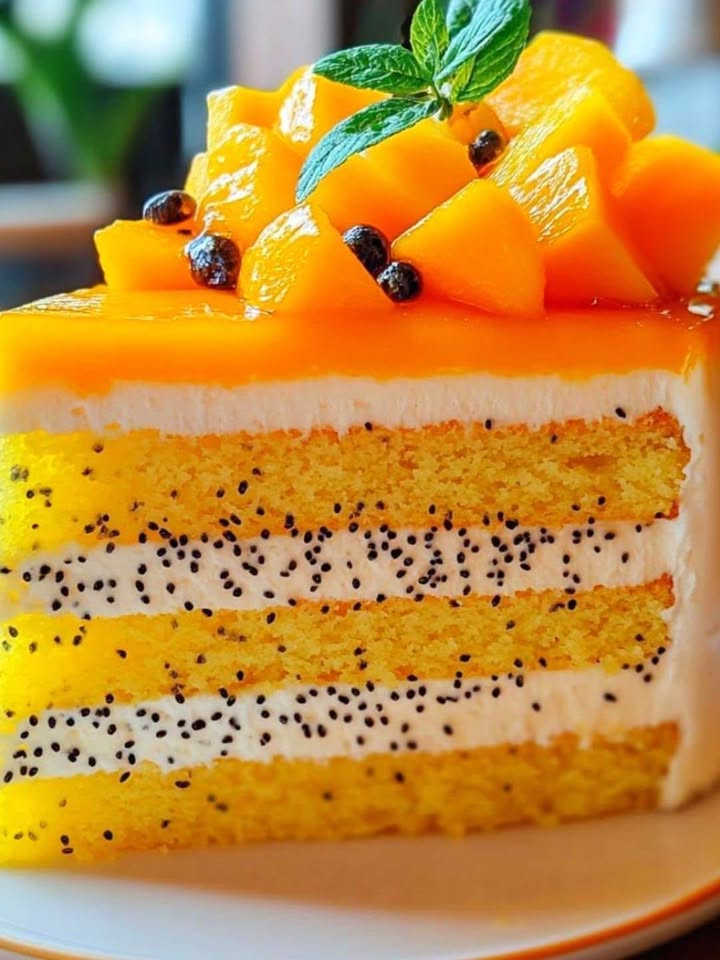
Your Tastebuds Are About to Take a Vacation!
Have you ever wanted to capture the feeling of a sunny beach getaway in a single bite? That was my exact thought last summer when my friend brought over a box of overripe mangoes and a handful of wrinkly, exotic passion fruit. The mission was clear: create a cake that tastes like pure, unadulterated joy. After several deliciously messy trials, the Mango and Passion Fruit Paradise Cake was born. It’s a vibrant, two-toned tropical dream that’s easier to make than you think, and it never fails to bring a smile to everyone’s face at my table.
A Slice of Sunshine: The Story of Our Tropical Fruit Cake
While this specific recipe is my own kitchen creation, the inspiration is deeply rooted in the bounty of tropical regions. Mangoes, hailed as the ‘king of fruits,’ and passion fruit, with its intense floral tartness, are stars in many traditional desserts across Asia, Latin America, and the Caribbean. My version is a modern, layered take on that classic pairing. It’s like a cross between a traditional pound cake and a fruity meringue, but way more fun. I wanted something bold, something that looked as spectacular as it tasted. This cake is my homage to the vibrant, sun-soaked flavors of the tropics, made for sharing with loved ones right here at home.
Why You’ll Fall in Love With This Tropical Delight
This isn’t just another cake. It’s an experience. First, the two distinct batters—sunshine mango and zingy passion fruit—create a stunning visual surprise when you slice into it. The flavors are perfectly balanced: sweet, creamy mango against the lively, tart passion fruit. The frosting is a creamy, fruity cloud that ties everything together. Best of all, it’s surprisingly straightforward. You make one master batter and simply divide it. No fancy techniques are needed, just a love for fantastic flavor. It’s guaranteed to be the star of any gathering.
When to Whip Up This Paradise Cake
This cake is your secret weapon for turning any event into a celebration. It’s the perfect centerpiece for a summer birthday party, a refreshing end to a barbecue, or a bright treat during the gloomy winter months to remind you of sunnier days. I love bringing it to potlucks because it always sparks conversation. It’s also a wonderful “just because” bake to show your family you’re thinking of them. Any occasion that calls for a touch of tropical magic is the right occasion for this cake.
Gathering Your Tropical Fruit Cake Ingredients
Here’s your shopping list for this flavor getaway. Using ripe, fragrant fruit is key!
- For the cake: 2 cups all-purpose flour, 1 1/2 cups granulated sugar, 1 teaspoon baking powder, 1/2 teaspoon baking soda, 1/2 teaspoon salt, 1/2 cup unsalted butter (softened), 1/2 cup vegetable oil, 1 cup buttermilk, 3 large eggs, 1 teaspoon vanilla extract, 1/2 cup mango puree, Zest of 1 lime, 1/4 cup passion fruit pulp.
- For the frosting: 1 cup unsalted butter (softened), 4 cups powdered sugar, 1/4 cup mango puree, 1/4 cup passion fruit pulp, Yellow food coloring (optional).
- For decoration: Fresh mango slices, Fresh passion fruit seeds, Edible flowers.
Clever Swaps: No Panic If You’re Missing Something
Baking is about flexibility! Here are some easy substitutions:
- Buttermilk: No buttermilk? Make your own! Mix 1 cup of milk with 1 tablespoon of lemon juice or vinegar. Let it sit for 5 minutes until it curdles slightly.
- Fresh Fruit Pulp: Frozen mango chunks (thawed and pureed) work perfectly. For passion fruit, high-quality store-bought pulp or puree is a great time-saver.
- Oil: You can use all butter (1 cup total) for a richer flavor, but the oil helps keep the cake super moist.
- Decoration: No edible flowers? Fresh mint leaves or a sprinkle of toasted coconut add a lovely touch.
Let’s Bake! Your Step-by-Step Guide to Paradise
Follow these simple steps for a foolproof, beautiful cake.
Step 1: Heat Things Up
Start by preheating your oven to 350°F (175°C). This ensures it’s perfectly hot and ready when your batter is. Take two 9-inch round cake pans and give them a good greasing with butter or non-stick spray. Dust them lightly with flour, tapping out the excess. This little ritual is your insurance policy for easy cake release later. There’s nothing worse than a beautiful cake stuck in the pan!
Step 2: Mix the Dry Goods
Grab a large mixing bowl. Whisk together your flour, sugar, baking powder, baking soda, and salt. Use a whisk to really aerate the mixture and break up any lumps. This simple act of combining the dry ingredients evenly distributes the leavening agents. It’s the first step to a light and fluffy cake texture. Set this bowl aside for now.
Step 3: Create the Wet Mixture
In a separate, larger bowl, let’s cream the softened butter and vegetable oil together. You can use a hand mixer or a sturdy whisk. The mixture will become pale and slightly fluffy. Now, add your eggs one at a time, beating well after each addition. This patience helps them emulsify properly into the fats. Finally, stir in the vanilla extract. Your kitchen should already be smelling wonderful.
Step 4: Bring It All Together
Now, we marry the wet and dry ingredients. Add about one-third of the flour mixture to the butter mixture and mix on low until just combined. Follow this with half of the buttermilk. Repeat, ending with the final third of the flour. Mix until you no longer see streaks of flour, but don’t overmix! Overmixing leads to a tough, dense cake. A few small lumps are just fine.
Pro tip: Scrape down the sides of the bowl with a spatula halfway through to ensure everything is incorporated evenly.
Step 5: Divide and Flavor
Here’s the fun part! Divide the batter roughly in half between two medium bowls. In one bowl, gently fold in the 1/2 cup of mango puree and the fragrant lime zest. Watch the batter turn a beautiful golden yellow. In the other bowl, fold in the 1/4 cup of passion fruit pulp. You’ll see it become speckled with black seeds and smell that incredible tangy aroma. You now have two distinct batters ready for the oven.
Step 6: Bake to Golden Perfection
Pour each flavored batter into its own prepared cake pan. Use a spatula to spread it into an even layer. Carefully place them in the center of your preheated oven. Bake for 25 to 30 minutes. You’ll know they’re done when the tops are springy to the touch and a toothpick inserted into the center comes out clean with just a few moist crumbs.
Step 7: The Crucial Cool-Down
Resist the urge to frost a warm cake! Let the cakes cool in their pans on a wire rack for about 10 minutes. This lets them firm up a bit. Then, run a butter knife around the edges to loosen them. Invert the pans onto the rack and gently lift them off. Let the cakes cool completely before you even think about frosting. A warm cake will melt your frosting into a sad puddle.
Step 8: Whip Up the Frosting Cloud
While the cakes cool, make your lush frosting. In a clean bowl, beat the softened butter until it’s very creamy and pale. Gradually add the powdered sugar, about a cup at a time, mixing on low speed to avoid a sugar dust storm. Once incorporated, add the mango and passion fruit purees. Beat on medium-high until the frosting is light, fluffy, and holds its shape. If you want a more vibrant yellow color, add a drop or two of food coloring now.
Step 9: Assemble Your Masterpiece
Place your first cake layer on a serving plate or cake stand. Dollop a generous amount of frosting in the center and spread it evenly to the edges with an offset spatula. Gently place the second layer on top. Now, apply a thin layer of frosting all over the top and sides—this is called a “crumb coat.” It traps any loose crumbs. Chill the cake for 15 minutes, then apply your final, beautiful, thick layer of frosting.
Chef’s tip: For super smooth frosting, dip your spatula in hot water, dry it quickly, and then glide it over the frosting. The heat helps create a silky finish.
Step 10: The Grand Finale: Decorate!
This is where you shine. Arrange fresh mango slices artfully on top. Spoon over some fresh passion fruit seeds and pulp for that gorgeous, jewel-like look. Tuck a few edible flowers around the base or on top for an elegant finish. Step back and admire your work—it’s a stunner!
Your Tropical Fruit Cake Timeline
Let’s plan our kitchen time.
- Prep Time: 30 minutes (measuring, mixing, pureeing fruit)
- Baking Time: 25-30 minutes
- Cooling Time: 1 hour (very important!)
- Frosting & Decorating Time: 20 minutes
- Total Time: Approximately 2 hours, 15 minutes
- Servings: 12 happy people
My Secret Weapon for the Ultimate Flavor
Here’s my little secret: toast your passion fruit seeds. If you’re using fresh passion fruit, scoop out the pulp and seeds into a small skillet. Over very low heat, warm them gently for just 2-3 minutes, stirring constantly. This intensifies the floral aroma and deepens the flavor just a touch. Let it cool completely before using it in the batter or as a garnish. It’s a tiny step that makes a big difference!
A Fun Fact About Your Ingredients
Did you know that passion fruit is also called maracujá or granadilla? Its name comes from Spanish Christian missionaries, who saw symbols of the Passion of Christ in the flower’s intricate parts. So, you’re not just baking a cake; you’re baking a piece of fascinating history and global culture!
Your Kitchen Toolbox
You don’t need fancy gear. Here’s what you’ll use:
- Two 9-inch round cake pans
- Mixing bowls (a few different sizes)
- Whisk and spatula
- Hand mixer or stand mixer (helpful for creaming and frosting)
- Measuring cups and spoons
- Wire cooling rack
- Offset spatula for easy frosting (a butter knife works too!)
- Blender or food processor to make the fruit purees
Keeping Your Cake Fresh and Fabulous
If you have leftovers (a rare event in my house!), store them properly. Because of the fresh fruit, this cake is best kept in the refrigerator. Cover it loosely with a cake dome or place it under a large, inverted bowl. It will stay fresh and delicious for up to 3 days.
For longer storage, you can freeze individual slices. Wrap each slice tightly in plastic wrap, then place them in a freezer-safe bag or container. They will keep for up to 2 months. Thaw overnight in the fridge for the best texture.
Remember to bring the cake to room temperature for about 30 minutes before serving again. This allows the frosting to soften and the flavors to really pop, just like when it was first made.
Tips For a Stress-Free Baking Experience
- Room Temperature is Key: Ensure your eggs, butter, and buttermilk are at room temperature. They blend together much more smoothly, creating a better batter.
- Don’t Overmix: Once you add the flour, mix just until the ingredients are combined. Overworking the flour develops gluten, which leads to a tough cake.
- Test for Doneness: Ovens vary. Start checking your cakes at the 25-minute mark with a toothpick. It should come out with a few moist crumbs, not wet batter.
- Level Your Layers: If your cakes have domed tops, use a serrated knife to carefully slice off the dome to create a flat surface. This makes stacking much easier.
Presentation is Everything: Show Off Your Cake!
- Serve on a plain, elegant cake stand to let the colors shine.
- Dust the plate with a little powdered sugar or cocoa powder before placing the cake.
- Add a sprinkle of lime zest over the fresh fruit for an extra pop of color and scent.
- For a party, top each slice with a small scoop of coconut or vanilla ice cream.
Feeling Creative? Try These Healthier Twists
This Tropical Fruit Cake recipe is wonderfully adaptable. Here are six fun variations to try:
- Gluten-Free Paradise: Swap the all-purpose flour for a 1:1 gluten-free baking blend. The result is just as tender and delicious.
- Dairy-Free Delight: Use plant-based butter and milk (like almond or oat milk mixed with lemon juice for the buttermilk). The fruit flavors are so strong, you won’t miss the dairy.
- Reduced-Sugar Sunshine: Cut the sugar in the cake by 1/4 cup and use a sugar substitute in the frosting. The tart passion fruit will still shine through beautifully.
- Vegan Tropical Cake: A bigger project but doable! Use flax eggs, vegan butter, and plant-based buttermilk. It’s a wonderful challenge with a rewarding, compassionate result.
- Mini Cake Parade: Turn this into cupcakes! Divide the batters into lined muffin tins and bake for 18-22 minutes. Perfect for portion control and parties.
- Tropical Bundt Beauty: Combine both batters by gently swirling them together, then pour into a greased Bundt pan. Bake for 45-55 minutes for a stunning marbled effect.
Common Mistakes to Avoid
Avoid these simple pitfalls for a perfect cake every time.
Mistake 1: Using Cold Ingredients
This is the number one reason cakes turn out dense or curdled. Cold butter doesn’t cream properly with sugar, and cold eggs or buttermilk can cause the batter to separate. Always take your eggs, butter, and buttermilk out of the fridge at least an hour before you start baking. They should feel cool to the touch, not cold.
Mistake 2: Overmixing the Batter
Once you add the flour to the wet ingredients, a timer goes off in your head. Mix just until the flour disappears. Overmixing activates the gluten in the flour, which is great for bread but terrible for cake. It makes the texture tough and rubbery. A few small lumps are perfectly fine and will bake out.
Mistake 3: Skipping the Crumb Coat
You’ve baked beautiful, moist layers and made a gorgeous frosting. Then you slather it on and end up with crumbs all through your final finish. The solution is simple: do a thin “crumb coat” first. Spread a very thin layer of frosting over the entire cake to seal in the crumbs. Chill it for 15 minutes until firm, then apply your final, thick, smooth layer of frosting.
Mistake 4: Frosting a Warm Cake
Impatience is the enemy of a pretty cake. If the cake layers are even slightly warm, the frosting will melt, slide off, and become a greasy mess. Let the cakes cool completely in the pans, then on a wire rack. You can even speed things up by popping the cooled layers in the freezer for 20 minutes. A cool cake is a stable canvas for your frosting artistry.
Mistake 5: Not Tasting Your Fruit Puree
Fruits vary in sweetness and tartness. Before you add your mango and passion fruit purees to the batter and frosting, give them a little taste. If your mango isn’t very sweet, you might add a tiny pinch of sugar to its batter. If your passion fruit is extremely tart, you know your frosting will have a nice zing. Adjusting to your specific fruit makes all the difference.
Frequently Asked Questions
Can I use frozen mango and passion fruit?
Absolutely! Frozen mango chunks are fantastic. Just thaw them completely and drain any excess liquid before pureeing. For passion fruit, high-quality frozen pulp is often just as good as fresh, if not better, because it’s packaged at peak ripeness. Thaw it according to package directions. Using frozen fruit can actually make this recipe more convenient and consistent year-round.
My cake layers didn’t rise much. What went wrong?
This usually points to old leavening agents or overmixing. Baking powder and baking soda lose their potency over time. Check the expiration dates on your containers. The other common culprit is overmixing the batter after adding the flour, which deflates the air bubbles you created during creaming. Remember to mix on low speed and stop as soon as the flour is incorporated for the lightest texture.
How can I make the frosting stiffer for piping?
If you want to create decorative borders or flowers, you’ll need a firmer frosting. Start by using the full amount of powdered sugar. If it’s still too soft, add more powdered sugar, a quarter cup at a time, until it holds a stiff peak. Chilling the frosting for 20 minutes before piping can also help. Just give it a quick re-whip with your mixer before you put it in the piping bag.
Can I make this cake a day ahead?
Yes, and it often tastes even better! Bake and cool the layers completely. Wrap them tightly in plastic wrap and store at room temperature overnight. Make the frosting and keep it covered in the fridge. The next day, let the frosting come to room temperature and re-whip it briefly before assembling and decorating the cake. The flavors have more time to meld and develop.
What can I use instead of buttermilk?
No buttermilk, no problem. The easiest substitute is the milk-and-lemon-juice trick. For this recipe, put 1 tablespoon of fresh lemon juice or white vinegar in a measuring cup. Fill it up to the 1-cup line with regular milk (whole or 2% works best). Stir and let it sit for 5-10 minutes until it looks slightly curdled and thickened. Now you have perfect homemade “buttermilk” ready for your cake.
Why did my frosting turn out runny?
A runny frosting is often caused by butter that’s too soft or fruit puree that’s too warm or watery. Make sure your butter is softened but still cool to the touch. Also, if your fruit puree has a lot of liquid, try straining a bit of it out or cooking it down gently in a pan to reduce and concentrate the flavor. If your frosting is already runny, chill it for 15 minutes, then beat in more powdered sugar until it firms up.
Can I bake this in a different pan size?
You can, but adjustments are needed. For a 9×13-inch sheet cake, you might need to increase the baking time by 5-10 minutes. For three 8-inch round pans, reduce the baking time slightly, starting to check at 20 minutes. For cupcakes, fill liners 2/3 full and bake for 18-22 minutes. Always use the toothpick test to be sure they’re done.
How do I get perfectly flat cake layers?
If your cake always domes in the center, try using cake strips. You can buy them or make your own from wet fabric strips. Wrap them around the outside of the cake pans before baking. They insulate the sides, so the cake rises evenly. Also, make sure your oven temperature is accurate with an oven thermometer. An oven that runs too hot can cause excessive doming.
Is there a way to make this less sweet?
The tropical fruit does a good job balancing the sweetness, but you can reduce it. Try cutting the sugar in the cake by 1/4 cup. For the frosting, you can reduce the powdered sugar by 1/2 to 1 cup, but note that it will be softer and less stable. Another trick is to increase the tang by adding a bit more passion fruit pulp to the frosting, which counters the sweetness.
Can I add other fruits to this tropical cake?
Feel free to experiment! Pureed pineapple or banana could be lovely in the batter. For decoration, try adding slices of kiwi, star fruit, or fresh berries alongside the mango and passion fruit. Just be mindful of very watery fruits, as they can alter the batter’s consistency. Pat them dry if using as a topping so they don’t make the frosting soggy.
Ready for More Baking Adventures?
If you loved the vibrant, fruity flavors of this paradise cake, you’ll adore exploring other decadent dessert worlds. For instance, the rich, creamy contrast of a White Chocolate Strawberry Cheesecake is pure bliss. Or, for a no-bake option on a hot day, a Refreshing No-Bake Pineapple Mousse Cheesecake might be just the ticket. Berry lovers shouldn’t miss the stunning Blackberry Raspberry Cheesecake. And for the ultimate indulgence, you can’t go wrong with a deep, fudgy Gâteau croquant au chocolat caramel. These are just a few of the amazing creations waiting for you in our full collection of delicious cake recipes.
Go Create Some Sweet Magic
Baking this Mango and Passion Fruit Paradise Cake is more than just following a recipe. It’s about creating a moment of pure, sunny happiness. The vibrant colors, the incredible aroma that fills your kitchen, and the look on your friends’ faces when they take that first bite—it’s all worth it. Don’t be intimidated by the two layers or the fresh fruit; the steps are simple and the payoff is huge. Remember, a good cooking workflow is all about preparation and patience. So, gather your ingredients, put on some happy music, and bake yourself a slice of paradise. I promise you, your tastebuds will thank you.
Equipment
- Deux moules à gâteau ronds de 9 pouces
- Grand bol
- Fouet
- Spatule
- Papier sulfurisé
Ingredients
- 2 tasses farine tout usage
- 1.5 tasses sucre semoule
- 1 cuil. à café poudre à lever
- 0.5 cuil. à café bicarbonate de soude
- 0.5 cuil. à café sel
- 0.5 tasses beurre non salé (ramolli)
- 0.5 tasses huile végétale
- 1 tasses buttermilk
- 3 grands œufs
- 1 cuil. à café extray de vanille
- 0.5 tasses purée de mangue
- Zeste de 1 citron vert zeste de citron vert
- 0.25 tasses pulpe de fruit de la passion
Instructions
- Préchauffez le four à 350°F (175°C), graissez et farinez deux moules à gâteau ronds de 9 pouces.
- Dans un grand bol, fouettez ensemble la farine, le sucre, la poudre à lever, le bicarbonate et le sel.
- Dans un autre bol, crémez le beurre ramolli et l'huile végétale, puis ajoutez les œufs un à un, en battant bien après chaque ajout.
- Ajoutez l'extrait de vanille.
- Combinez les ingrédients humides et secs en alternant avec le buttermilk, en mélangeant jusqu'à ce que ce soit juste combiné.
- Divisez la pâte en deux ; incorporez la purée de mangue et le zeste de citron vert dans une moitié, et la pulpe de fruit de la passion dans l'autre moitié.
- Versez chaque pâte parfumée dans les moules préparés et faites cuire pendant 25-30 minutes jusqu'à ce qu'elles soient bien cuites.
- Laissez refroidir les gâteaux dans les moules pendant 10 minutes avant de les retourner sur une grille pour qu'ils refroidissent complètement.
- Battez le beurre ramolli pour le glaçage jusqu'à ce qu'il soit crémeux, puis ajoutez progressivement le sucre glace et incorporez la purée de mangue et la pulpe de fruit de la passion.
- Assemblez le gâteau en mettant de la crème entre les gâteaux, puis appliquez un glaçage de miettes et réfrigérez, puis appliquez une couche finale de glaçage.
- Décorez le dessus avec des tranches de mangue fraîches, des graines de fruit de la passion et des fleurs comestibles.
Notes
Nutrition

Hi, I’m Olivia Parker, the founder of BakingSecret.com and a lifelong lover of all things sweet and homemade. I grew up in a small town in Oregon, where the smell of fresh cookies in my family’s kitchen sparked my passion for baking. Over the years, I turned that passion into a mission: to help home bakers feel confident, inspired, and creative.
After studying food science and working in several artisan bakeries across the U.S., I decided to create a space where everyone from beginners to seasoned bakers can find reliable recipes, expert tips, and a warm, welcoming community. BakingSecret.com is my way of sharing the magic of baking with the world. When I’m not testing new recipes, you’ll find me exploring farmers’ markets, collecting vintage cookbooks, or perfecting my sourdough technique.