
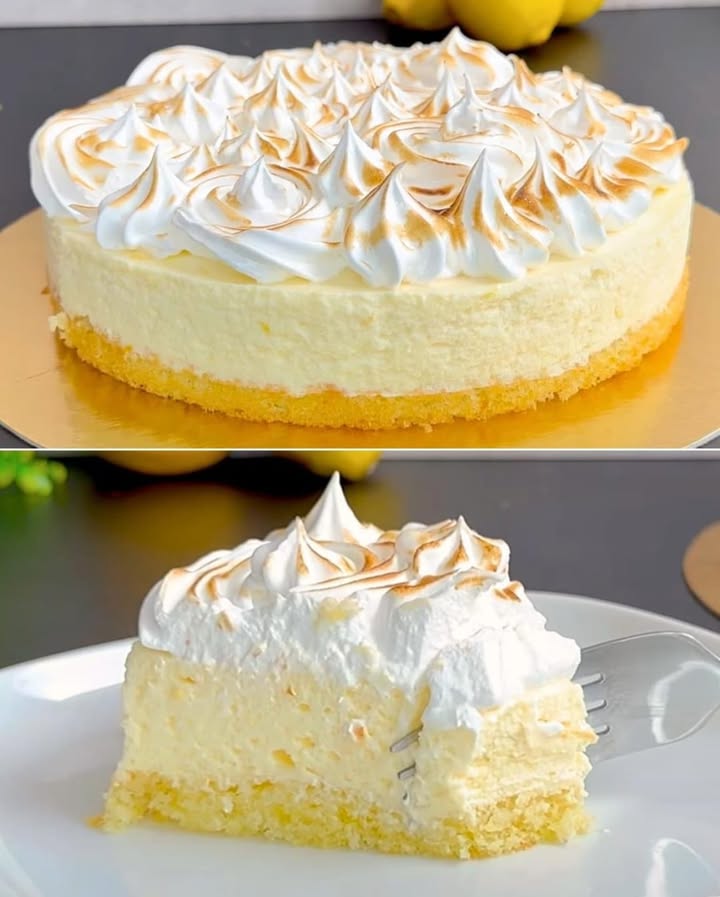
The Sunshine Slice: Your New Favorite Lemon Meringue Cake
Have you ever had a dessert that just tastes like a burst of sunshine? That’s my Lemon Meringue Cake. It’s the kind of treat that makes my kids’ eyes light up and my friends ask for the recipe before they’ve even finished their slice. I remember the first time I made it for a summer picnic; the combination of zesty lemon, soft sponge, and that sweet, toasty meringue was an absolute hit. It’s now my go-to for bringing a little brightness to any table.
A Cake with a Zesty History
This lemon meringue cake is like the fancier cousin of the classic lemon meringue pie. That pie has been a staple in American diners and home kitchens for generations, famous for its tangy filling and fluffy cloud topping. My version takes all that wonderful flavor and turns it into a stunning, layered cake. It’s a modern twist on a beloved classic, perfect for when you want something that feels special but is still packed with that familiar, comforting taste.
Why You’ll Absolutely Love This Recipe
This recipe gives you the best of all worlds! You get a tender, lemony sponge cake base, a silky-smooth and tangy lemon mousse, and a gorgeous, glossy Swiss meringue that you get to toast. The textures are amazing—soft, creamy, and lightly crisp. Plus, while it looks like something from a professional bakery, the steps are totally doable. It’s a project that’s as fun to make as it is to eat.
Perfect Occasions for Your Lemon Meringue Cake
This cake is a showstopper for so many events! It’s perfect for:
- Spring and Summer Gatherings: Bring it to a garden party, BBQ, or Mother’s Day brunch.
- Celebrations: A bright alternative to chocolate for birthdays.
- Potlucks: It always disappears first, trust me!
- Just Because: Sometimes you need a mid-week dose of sunshine on a plate.
Gathering Your Ingredients
Let’s get everything together. Having it all measured and ready makes the process so much smoother.
For the Lemon Sponge Base:
- 1 large egg
- 50g granulated sugar
- 50g all-purpose flour
- 40 ml neutral oil (like vegetable or canola)
- 3g (about 3/4 tsp) baking powder
- Zest of 1 lemon
For the Luscious Lemon Mousse:
- 2 large eggs
- Juice of 2 lemons (about 80-100ml)
- 50g granulated sugar
- 15g unsalted butter
- 1 sheet (3g) gelatin, or 1 tsp powdered gelatin
- 200 ml heavy whipping cream (cold)
For the Fluffy Swiss Meringue:
- 150g granulated sugar
- 50g water
- 2 large egg whites
- 1 small pinch of salt
Handy Substitution Options
No worries if you’re missing something! Here are some easy swaps:
- No Gelatin Sheets? Use 1 teaspoon of powdered gelatin. Bloom it in 2 tablespoons of cold water.
- Dairy-Free? Use a plant-based butter and a whippable coconut cream for the mousse layer.
- Gluten-Free Base: Swap the all-purpose flour for a 1:1 gluten-free baking blend.
- Different Citrus: Try lime or orange zest and juice for a fun variation!
Creating Your Lemon Meringue Masterpiece
Follow these steps for a perfect cake every time. Enjoy the process and the wonderful smells filling your kitchen!
Step 1: Bake the Lemon Sponge
Start by preheating your oven to 180°C (350°F). Grab a bowl and beat that single egg with the 50g of sugar and the fresh lemon zest. You want it to be pale and slightly fluffy. Slowly pour in the oil while mixing—you’ll see it come together into a smooth, glossy mixture. Now, gently fold in the flour and baking powder until just combined. The batter will be lovely and thick. Pour it into a lined 7-inch round cake pan. Pop it in the oven for just 9 minutes! It bakes quickly into a thin, golden layer. Let it cool completely in the pan. Pro tip: Don’t overmix the flour, or your sponge can get tough.
Step 2: Cook the Lemon Curd
This is the heart of the lemon mousse flavor. In a small saucepan, whisk together the 2 whole eggs, 50g sugar, lemon juice, and a bit more zest if you like. Cook this over medium-low heat, stirring constantly with a spatula. Watch as it transforms from a thin liquid into a beautiful, thick, yellow custard that coats the back of your spoon. This takes about 5-7 minutes. Remove it from the heat and stir in the butter until it melts completely. The aroma is incredible!
Step 3: Add Gelatin and Cool
While your lemon curd is hot, it’s time to add the gelatin. If using a sheet, soak it in cold water for 5 minutes until soft, then squeeze out the excess water and stir it into the hot curd until dissolved. For powdered gelatin, sprinkle it over a tablespoon of cold water to bloom, then melt it into the curd. Once combined, press a piece of plastic wrap directly onto the surface of the curd. This stops a skin from forming. Let it cool to room temperature.
Step 4: Whip the Cream and Assemble
Take your cold whipping cream and whip it in a chilled bowl until it forms soft peaks. Now, take your cooled lemon curd and give it a good whisk to loosen it up. Gently fold the whipped cream into the lemon curd. Be patient and fold until you have a uniform, dreamy, pale yellow mousse. Get your cooled sponge cake base. You can lightly brush it with a tablespoon of milk or even some lemon syrup to make it extra moist. Then, pour all that gorgeous lemon mousse on top, smoothing it out. Refrigerate the cake for at least 4 hours, or ideally overnight, to let it set firmly.
Step 5: Craft the Swiss Meringue
This meringue is stable, smooth, and not too sweet. Combine the 150g sugar and 50g water in a small pot. Heat it over medium until it reaches 120°C (250°F) on a candy thermometer. While the syrup heats, start beating the 2 egg whites with a pinch of salt in a stand mixer on medium speed until foamy. Once the syrup is hot, with the mixer running on medium-low, very carefully and slowly pour the hot syrup in a thin stream down the side of the bowl into the egg whites. Then, turn the mixer to high and beat for 5-7 minutes until the meringue is cool, thick, and glossy.
Step 6: Decorate and Torch!
The fun part! Take your chilled cake from the fridge. Using a spatula or piping bag, cover the top completely with the fluffy Swiss meringue. Create pretty peaks and swirls. Now, carefully use a kitchen blowtorch to gently brown the tips of the meringue. Move the torch constantly to get an even, toasted look. If you don’t have a torch, you can briefly place it under a very hot broiler, but watch it every second! Chef’s tip: For extra flavor, sprinkle a tiny bit of extra lemon zest over the torched meringue right before serving.
Your Lemon Meringue Cake Timeline
| Stage | Time |
|---|---|
| Preparation (mixing) | 30 minutes |
| Cooking (sponge & curd) | 15 minutes |
| Chilling Time | 4 hours minimum |
| Decorating | 15 minutes |
| Total Time (approx.) | 5 hours (mostly hands-off chilling) |
The Chef’s Secret for a Perfect Slice
For the cleanest, most beautiful slices, run your knife under very hot water and wipe it dry between each cut. The heat helps the knife glide smoothly through the meringue and the firm mousse without squishing the layers.
A Little Zesty Fact
Did you know the acid in lemon juice is what “cooks” the egg proteins in the curd? It’s a process called denaturation, and it’s why the mixture thickens so beautifully on the stove even without a ton of heat. It’s kitchen science making something delicious!
Essential Equipment for Success
- 7-inch round cake pan
- Parchment paper
- Small saucepan
- Whisk and spatula
- Stand mixer or hand mixer
- Candy thermometer (highly recommended for the meringue)
- Kitchen blowtorch
Storing Your Lemon Meringue Cake
Once decorated, this cake is best enjoyed the same day. The meringue is at its peak fluffy and crisp texture right after torching. If you have leftovers, store them carefully in the refrigerator.
Place any leftover slices in an airtight container. The meringue will soften in the fridge’s humidity, becoming more like a fluffy marshmallow topping, but it will still taste wonderful. It should keep well like this for up to 2 days.
For longer storage, you can freeze the undecorated cake (sponge with set mousse) for up to a month. Wrap it tightly in plastic wrap and foil. Thaw overnight in the fridge, then make fresh meringue and torch it just before serving.
My Best Tips and Advice
- Use room temperature eggs for both the sponge and the curd. They incorporate more easily.
- When folding cream into curd, make sure both are a similar, cool temperature to prevent the cream from deflating.
- Patience is key with the meringue syrup. Don’t pour it in too fast or you’ll cook the egg whites into little bits.
- If your meringue starts to weep or gets grainy, the sugar syrup wasn’t hot enough. A good candy thermometer is your best friend here.
Presentation Ideas That Wow
- Serve on a simple white plate with a few fresh raspberries and a mint leaf.
- Drizzle a little extra lemon curd on the plate before placing the slice.
- Use a piping bag with a star tip to create elegant meringue peaks.
- Finish with a light dusting of powdered sugar over the torched meringue for contrast.
6 Scrumptious Healthier Twists
Love the flavor but want to mix it up? Try these variations:
- Yogurt Mousse Cake: Swap half the whipped cream in the mousse for thick Greek yogurt. It adds protein and a lovely tang.
- Coconut-Lime Dream: Use lime instead of lemon and coconut oil in the sponge. Top with toasted coconut flakes.
- Mini Mason Jar Cakes: Layer crumbled sponge, lemon mousse, and a dollop of meringue in small jars for perfect individual portions.
- Gluten-Free & Dairy-Free: Use a GF flour blend and coconut cream/vegan butter. It’s just as dreamy.
- Berry Swirl Lemon Cake: Before chilling, swirl a few tablespoons of mashed raspberries into the top of the mousse layer.
- No-Bake Lemon Cheesecake Version: Use a nut and date crust, blend the lemon curd with softened cream cheese, and top with meringue.
Speaking of delicious cakes, if you love this zesty creation, you might also enjoy my classic Vanilla Bean Bundt Cake for a simple treat, a rich Chocolate Sour Cream Cake for chocolate lovers, some adorable Lemon Drop Cupcakes for parties, or a seasonal Spiced Apple Slab Pie.
Common Mistakes to Avoid
Avoid these pitfalls for a flawless lemon meringue cake every time.
Mistake 1: Rushing the Lemon Curd
Cooking the curd over too high heat is a common error. It can cause the eggs to scramble, leaving you with little lemon-flavored bits instead of a smooth cream. Always use medium-low heat and stir constantly with a spatula. Cook until it thickly coats the back of the spoon. If you see any bits, you can strain the hot curd through a fine mesh sieve before adding the butter and gelatin.
Mistake 2: Adding Warm Curd to Cold Cream
If your lemon curd is still even slightly warm when you fold it into the whipped cream, it will melt the cream. You’ll lose all that lovely air and end up with a runny mousse that won’t set. This is why letting the curd cool completely, with plastic wrap on the surface, is non-negotiable. Test it by touching the bottom of the bowl—it should feel room temperature, not warm.
Mistake 3: Under-whipping the Swiss Meringue
Not beating the meringue long enough after adding the syrup leads to a sad, runny topping that won’t hold peaks. The meringue must be beaten until the outside of the mixing bowl feels completely cool to the touch. This can take a full 5-7 minutes on high speed. Properly whipped meringue will be stiff, glossy, and won’t slide off the cake.
Mistake 4: Skipping the Cake Soaking Step
The sponge layer is thin and can be a bit dry on its own. Forgetting to lightly brush it with milk, a simple syrup, or even a touch of lemon juice mixed with water means your cake layers might lack moisture. This simple 30-second step ensures every bite is perfectly tender and melds beautifully with the creamy mousse.
Mistake 5: Torching the Meringue Too Aggressively
Holding the blowtorch flame in one spot for too long will burn the sugar in the meringue, creating a bitter, blackened taste. The key is to keep the torch moving in slow, steady circles, just kissing the peaks with flame until they turn a beautiful golden brown. It’s about toasting, not charring. For more foundational tips, understanding the science of baking can really improve all your dessert projects.
Answers to Your Lemon Meringue Cake Questions
If you’re looking for more fantastic cake inspiration, be sure to browse our full collection of delicious cake and cupcake recipes for your next baking adventure.
Can I make this lemon meringue cake ahead of time?
Yes, you absolutely can, and it actually helps! The cake base with the set lemon mousse layer can be made 1-2 days in advance. Just wrap the chilled, undecorated cake tightly in plastic wrap and keep it in the fridge. Make the Swiss meringue and torch it on the day you plan to serve it. This keeps the meringue beautifully fresh and crisp. The textures are best when the meringue is freshly made.
What if I don’t have a kitchen blowtorch?
No problem! You have a couple of options. You can use the broiler in your oven. Place the meringue-topped cake on a rack close to the broiler element. Watch it constantly—it only takes 30 seconds to a minute to brown. Turn the cake if needed for even color. Be very vigilant, as it can burn in a flash. Alternatively, you can skip the toasting and serve it with a fluffy, white meringue topping. It will still taste amazing.
Why did my lemon mousse not set properly?
A runny mousse usually points to one of three issues. First, the lemon curd might not have been cooked long enough to thicken properly. Second, the gelatin may not have dissolved completely or was omitted. Third, and most common, the curd was still warm when folded into the cream, melting it. Always ensure your curd is thick, your gelatin is fully incorporated, and everything is cooled before combining.
Can I use store-bought lemon curd for the mousse?
You can, but with a big adjustment. Store-bought curd is already thick and set, so you would need to soften it first. Gently warm about 1 cup of good-quality store-bought curd just until it’s stirrable. Then, dissolve your gelatin sheet in it. Let this mixture cool completely before folding it into your whipped cream. The flavor might be slightly less bright than homemade, but it’s a good shortcut.
How do I know when the sugar syrup for the meringue is ready?
A candy thermometer is the most reliable tool. You are looking for it to reach 120°C (250°F). This is the “soft-ball stage” in candy making. If you don’t have a thermometer, you can do the “thread test.” Dip a spoon in the syrup, then carefully pinch the syrup between your thumb and forefinger. When you pull them apart, a thin thread should form. Be very careful, as the syrup is extremely hot.
My meringue is weeping or beads of water appear. What happened?
Weeping, or “beading,” happens when the sugar in the meringue isn’t fully dissolved or the meringue is under-beaten. This is why the Swiss method (cooking the sugar into a syrup) is so great—it dissolves the sugar completely. To avoid it, ensure your syrup reaches the right temperature and that you beat the meringue long enough for it to cool down completely and become very stable.
Can I freeze the fully assembled cake?
I do not recommend freezing the cake with the meringue already on it. The meringue does not freeze and thaw well; it becomes very soggy and can collapse. You can freeze the cake with the set lemon mousse layer (without meringue) very successfully. Thaw it in the fridge overnight, then make a fresh batch of meringue, top, and torch it just before serving.
What’s the difference between this and lemon meringue pie?
The main difference is the base! A traditional pie uses a buttery, flaky pastry crust. This cake version uses a soft, spongy lemon cake layer. The lemon filling here is also a lighter, creamier mousse rather than a firm curd. The toasted meringue topping is similar, but presenting it as a cake often feels more elegant and is easier to slice and serve at parties.
My sponge cake turned out dense. How can I make it lighter?
A dense sponge usually comes from overmixing once the flour is added. When you add the flour and baking powder, use a spatula and fold gently. Mix only until you no longer see streaks of flour. Overmixing develops the gluten in the flour, which makes the cake tough. Also, make sure your baking powder is fresh for the best rise.
Is there a way to make this recipe less sweet?
You can slightly reduce the sugar in the lemon curd by about 10 grams if you prefer a very tart flavor. However, I wouldn’t reduce the sugar in the Swiss meringue, as the sugar syrup is crucial for its structure and stability. The tangy lemon mousse does a great job of balancing the sweetness of the meringue, creating a perfect harmony in each bite.
The Final Slice
There you have it—my beloved Lemon Meringue Cake. It’s a recipe that brings joy, from the sunny zest of the lemon to the fun of toasting that fluffy meringue cloud. It might look fancy, but each step is simple. Trust yourself, take your time, and most importantly, have fun in the kitchen. I promise the happy faces around your table will make it all worthwhile. Now, go bake some sunshine!
Equipment
- Grand bol
- Fouet
- Spatule
- Plaque à pâtisserie
- Papier sulfurisé
Ingredients
- 1 grand œuf
- 50 g sucre granulé
- 50 g farine tout usage
- 40 ml huile neutre
- 3 g poudre à lever
- zeste de 1 citron zeste de citron
- 2 grands œufs
- 80 ml jus de citron
- 15 g beurre non salé
- 3 g gélatine
- 200 ml crème épaisse
- 150 g sucre
- 50 g eau
- 2 petit blancs d'œufs
- une petite pincée sel
Instructions
- Préchauffez votre four à 180°C (350°F) et battez l'œuf avec le sucre et le zeste de citron jusqu'à ce que le mélange devienne pâle et léger.
- Incorporez lentement l'huile, puis incorporez délicatement la farine et la poudre à lever.
- Versez le mélange dans un moule à gâteau rond de 7 pouces tapissé et faites cuire pendant 9 minutes. Laissez refroidir complètement dans le moule.
- Dans une casserole, fouettez ensemble les œufs entiers, le sucre, le jus de citron et le zeste, et faites cuire à feu moyen-doux jusqu'à épaississement (environ 5 à 7 minutes).
- Incorporez le beurre jusqu'à ce qu'il soit fondu, puis ajoutez la gélatine, en pressant le film plastique sur la surface pour éviter la formation d'une peau. Laissez refroidir à température ambiante.
- Montez la crème froide jusqu'à obtenir des pics souples, puis incorporez-la délicatement au lemon curd refroidi jusqu'à ce que le mélange soit homogène.
- Badigeonnez légèrement le gâteau éponge refroidi de lait ou de sirop de citron, versez la mousse sur le dessus et réfrigérez pendant au moins 4 heures ou toute la nuit.
- Pour la meringue, chauffez le sucre et l'eau jusqu'à ce qu'il atteigne 120°C (250°F). Battez les blancs d'œufs jusqu'à ce qu'ils soient mousseux, puis versez lentement le sirop chaud en continuant à battre. Battez jusqu'à ce que le mélange soit frais et brillant.
- Couvrez le gâteau de meringue à l'aide d'une spatule ou d'une poche à douille et faites légèrement griller les sommets pour obtenir une belle couleur dorée.
Notes
Nutrition

Hi, I’m Olivia Parker, the founder of BakingSecret.com and a lifelong lover of all things sweet and homemade. I grew up in a small town in Oregon, where the smell of fresh cookies in my family’s kitchen sparked my passion for baking. Over the years, I turned that passion into a mission: to help home bakers feel confident, inspired, and creative.
After studying food science and working in several artisan bakeries across the U.S., I decided to create a space where everyone from beginners to seasoned bakers can find reliable recipes, expert tips, and a warm, welcoming community. BakingSecret.com is my way of sharing the magic of baking with the world. When I’m not testing new recipes, you’ll find me exploring farmers’ markets, collecting vintage cookbooks, or perfecting my sourdough technique.