
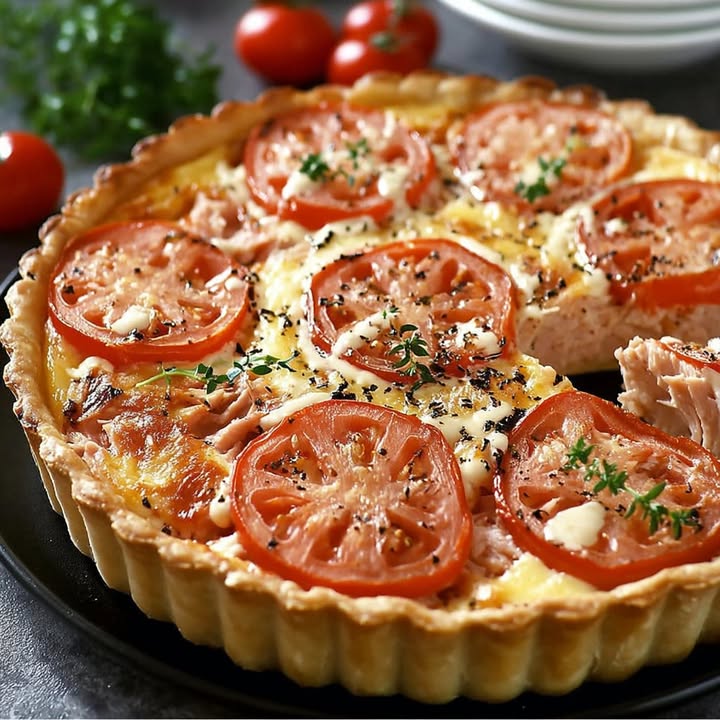
Easy Tuna Tomato Tart: Your New Go-To Meal
You know those days when you need something delicious, filling, and on the table without a fuss? This Tuna Tomato Tart is my secret weapon. It started when my friend Marie dropped by unannounced on a busy weeknight. I panicked, looked in my pantry, and threw together what I had: a roll of pastry, a can of tuna, and a few lonely tomatoes. Forty minutes later, we were eating what she now calls “The Miracle Tart.” It’s that magical blend of creamy, tangy, and savory that feels fancy but is honestly so simple.
The Humble Story of a Kitchen Hero
This isn’t a recipe passed down through French grandmothers (though it has that vibe!). It’s a modern, busy-life savior. In France, similar savory tarts called “quiches” or “tartes salées” are staples of casual lunches and picnics. My version is a simpler cousin. It takes the classic pairing of tuna and tomato, binds it with a creamy custard, and bakes it in a flaky crust. It’s a traditional concept made for our modern, I-need-dinner-now reality. I’ve made it for book club, after-school snacks, and even a fancy-ish brunch. It never lets me down.
Why You’ll Fall for This Tuna Mustard Tart
You’ll love this recipe for three big reasons. First, the flavor is incredible. The Dijon mustard gives a sharp, tangy base that cuts through the richness of the cream and cheese. The tomatoes become sweet and tender in the oven. Second, it’s unbelievably easy. If you can roll out pastry and stir things in a bowl, you’ve got this. Finally, it’s a chameleon dish. Serve it hot for dinner, warm for lunch, or cold from the fridge on a hot day. It’s perfect every time.
When to Whip Up This Savory Tart
This tart is your culinary multitasker. Here’s where it truly shines:
- Weeknight Dinner Hero: Minimal prep leads to maximum praise from a hungry family.
- Impress-Without-Stress Lunch: Serve a slice with a simple green salad for a lunch that looks like you tried harder than you did.
- Picnic & Potluck Star: It travels beautifully and tastes great at room temperature, making it the ideal take-along dish.
- Brunch Buffet Buddy: Cut it into small squares for a delicious savory option alongside sweeter pastries.
Gathering Your Ingredients
Here’s what you’ll need to make this simple tart for about 6 people:
- 1 store-bought shortcrust pastry (or your favorite homemade recipe)
- 2 to 3 medium tomatoes
- 1 can (200g) of tuna in water, drained and flaked
- 2 tablespoons of Dijon mustard
- 2 large eggs
- 200ml (about ¾ cup + 1 tbsp) of liquid or thick fresh cream
- 100g (about 1 cup) of grated cheese like Emmental, Comté, or Gruyère
- Salt and black pepper, to taste
- A pinch of herbes de Provence or dried oregano
Simple Swaps: Make This Tart Your Own
Out of something? Want to change it up? No problem!
- Tuna: Use canned salmon, shredded cooked chicken, or drained canned sardines.
- For a Veggie Version: Swap the tuna for sautéed mushrooms, roasted zucchini, or grilled bell peppers.
- Cream: Whole milk or half-and-half can work in a pinch, though the filling will be less rich.
- Cheese: Try crumbled goat cheese, torn mozzarella, or a sharp cheddar for a different flavor profile.
- Herbs: Fresh dill or chives are wonderful stirred into the egg mixture.
Creating Your Tuna Tomato Tart: Step-by-Step
Step 1: Prep Your Oven and Pastry
Start by preheating your oven to 180°C (350°F or Gas Mark 6). This ensures it’s perfectly hot when your tart is ready to bake. Take your pastry and gently unroll it into a tart pan. Use your fingers to press it neatly into the corners and up the sides. Now, take a fork and prick the base all over. This “docking” prevents big, ugly air bubbles from forming under your pastry as it bakes. A flat, even base is what we’re after!
Step 2: Build Your Flavor Foundation
This is where the magic starts! Take your two tablespoons of Dijon mustard and spoon it into the center of the pastry. Use the back of the spoon to spread it in a smooth, even layer over the entire base. This mustard layer is the secret weapon—it adds a fantastic tangy depth. Next, grab your flaked tuna and sprinkle it evenly over the mustard. You’ll love how the golden mustard peeks through the chunks of tuna, promising great flavor in every bite.
Step 3: Add the Tomato Layer
Wash your tomatoes and slice them into thin, even rounds. Pat them gently with a paper towel to remove excess juice. This little tip helps prevent a soggy crust. Now, artfully arrange the tomato slices over the tuna layer, slightly overlapping them like shingles. The vibrant red of the tomatoes against the pale tuna is already so pretty. It starts to look like a real masterpiece, doesn’t it?
Step 4: Create the Creamy Custard
Crack your two eggs into a medium-sized mixing bowl. Pour in the fresh cream. Take a whisk and beat them together until you have a smooth, uniformly yellow mixture. Now, season it well with salt, pepper, and that pinch of herbes de Provence. The aroma of the herbs hitting the creamy mixture is just wonderful. This custard is what brings everything together, setting into a luscious, savory filling in the oven.
Step 5: The Final Assembly and Bake
Carefully pour your seasoned egg and cream mixture over the tomatoes and tuna. Tilt the pan a little to help it spread into every nook. Finally, take your grated cheese and shower it generously over the top. The cheese will melt into a gorgeous, golden-brown crust. Place the tart in the center of your preheated oven. Bake for 30 to 35 minutes. You’ll know it’s done when the top is deeply golden and the center is just set.
Chef’s Tip for the Perfect Tart
Let the baked tart rest on a wire rack for at least 10-15 minutes before cutting. This resting time is non-negotiable! It allows the custard to firm up completely, so you get clean slices that hold their shape beautifully, instead of a runny, messy pie. Patience here makes all the difference in your presentation.
Your Time Investment
This recipe is a master of efficiency.
- Prep Time: 15 minutes
- Cooking Time: 30-35 minutes
- Resting Time: 10 minutes
- Total Time: About 55-60 minutes
A Little Secret for Extra Flavor
For an incredible flavor boost, mix a teaspoon of tomato paste into your Dijon mustard before spreading it on the pastry. It adds a subtle sweetness and umami depth that makes the tomato flavor in the tart pop even more. It’s my little “wow factor” trick!
Tomato Talk: A Fun Fact
Did you know tomatoes are technically a fruit? They were once called “poison apples” in Europe because people thought they were toxic! Thankfully, we know better now. Their natural acidity and sweetness are what make them such a perfect partner for the rich tuna and cream in this tart. For more on how including fibrous vegetables like tomatoes can benefit your meals, exploring resources on a high fiber diet can offer great nutritional insights.
What You’ll Need in Your Kitchen
- A 9 to 10-inch tart pan with a removable bottom (makes serving so easy!)
- Rolling pin (if your pastry isn’t pre-rolled)
- Mixing bowl
- Whisk or fork
- Sharp knife and cutting board
- Measuring spoons and cups
- Wire cooling rack
Storing Your Leftover Tuna Tomato Tart
Once cooled, you can cover the tart tightly with plastic wrap or transfer slices to an airtight container. It will keep happily in the refrigerator for up to 3 days. The flavors actually meld and deepen, making the next day’s slice just as delicious, if not better!
This tart is also a fantastic candidate for freezing. Let it cool completely after baking, then wrap it tightly in a layer of plastic film followed by aluminum foil. You can freeze it for up to 2 months. It’s like having a gourmet emergency meal ready to go!
To reheat, thaw overnight in the fridge if frozen. For a warm serving, pop it into a 160°C (325°F) oven for about 10-15 minutes until heated through. This method keeps the pastry crisp. Of course, it’s also absolutely wonderful eaten cold straight from the fridge—perfect for a quick, satisfying snack.
Pro Tips for a Flawless Tart
- Avoid Sogginess: Always pat your tomato slices dry! The less extra moisture you add, the crispier your crust will stay.
- Cheese Choice: A good, flavorful melting cheese like Gruyère makes a world of difference compared to milder, pre-bagged blends.
- Don’t Skip the Pricking: Seriously, take 30 seconds to prick that pastry base with a fork. It’s the best defense against a puffed-up, uneven crust.
- Test for Doneness: The tart is ready when the top is golden and the center has just a slight, gentle jiggle—it will set as it cools.
Make it Look Fabulous on the Plate
Presentation is easy and fun with this tart.
- Garnish a slice with a tiny pile of fresh microgreens or arugula for a pop of color and peppery flavor.
- Serve it on a rustic wooden board for a casual, inviting look.
- Drizzle a little high-quality olive oil or balsamic glaze around the plate for a restaurant-style touch.
- Cut it into slender rectangles instead of wedges for an elegant appetizer portion.
6 Delicious Ways to Remix This Recipe
Once you’ve mastered the classic, the fun really begins. Here are six tasty twists to try. If you’re looking for more inspiration, you can find a wonderful collection of other ideas in our main archive of savory pie and tart recipes.
- Mediterranean Twist: Swap the tuna for a mix of chopped Kalamata olives, crumbled feta cheese, and a sprinkle of dried oregano.
- Smoky Salmon & Dill: Use canned smoked salmon and fresh dill in the custard. Try a creamy cheese like Boursin instead of grated cheese.
- Ratatouille Tart: Replace the tuna and tomatoes with a layer of pre-cooked ratatouille vegetables (eggplant, zucchini, bell pepper).
- Cheesy Leek and Ham: Sauté two thinly sliced leeks until soft. Use them as the base layer with diced ham instead of tuna.
- Provencal Tuna: Add a tablespoon of pesto to the egg custard and use sun-dried tomatoes (packed in oil, drained) instead of fresh.
- Broccoli Cheddar: Use lightly steamed broccoli florets and sharp cheddar cheese for a family-friendly vegetarian option.
Common Mistakes to Avoid
Mistake 1: A Soggy, Sad Crust
This is the #1 complaint with any wet filling tart. It happens when moisture from the tomatoes or custard seeps into the unbaked pastry. The fix is simple. Always pat your tomato slices very dry with paper towels. You can even sprinkle a thin layer of the grated cheese directly onto the mustard-covered crust before adding the tuna. This creates a moisture barrier. Also, ensure your oven is fully preheated so the pastry starts cooking immediately.
Mistake 2: Overbaking the Custard
We want a creamy, set filling, not a dry, rubbery one. Overbaking happens when you leave the tart in the oven until the center is completely firm and doesn’t move at all. The custard continues to cook from residual heat after it comes out. The perfect doneness is when the edges are puffed and golden, and the center still has a slight, gentle jiggle when you shake the pan. It will solidify perfectly during the essential resting time.
Mistake 3: Skipping the Pastry “Docking”
That step of pricking the pastry all over with a fork seems minor, but it’s crucial. If you skip it, steam gets trapped under the pastry as it bakes. This causes the center to balloon up into a huge, uneven bubble. Your filling will slide off, and you’ll end up with a very shallow tart. Take that extra moment to dock the pastry thoroughly—it guarantees a flat, even base for your beautiful layers.
Mistake 4: Using Watery or Bland Tuna
The quality of your tuna matters. Always drain it very, very well. I often press it gently in a sieve or with a paper towel to remove every last drop of water or oil. Also, tuna packed in water has a cleaner flavor for this dish, letting the mustard and herbs shine. If you use oil-packed tuna, it can make the tart feel a bit greasy. Well-drained, flaky tuna ensures the right texture.
Your Tuna Tomato Tart Questions, Answered
Can I make this tart ahead of time?
Absolutely, and it’s a great strategy! You can prepare the entire tart, bake it, let it cool completely, and store it covered in the fridge for up to a day before serving. Simply bring it to room temperature or give it a quick warm-up in a low oven. You can also prepare the components ahead: roll the pastry into the pan and keep it chilled, slice the tomatoes, and mix the custard. Assemble and bake when ready for the freshest result.
What’s the best type of pastry to use?
For this recipe, a classic shortcrust pastry (“pâte brisée”) is perfect. It’s sturdy enough to hold the filling without getting soggy and bakes up nice and crisp. You can find excellent ready-rolled versions in the refrigerated section of most grocery stores, which is a huge time-saver. A puff pastry will also work, but it will be much flakier and may rise dramatically around the edges, creating a shallower center for the filling.
My tart is browning too fast! What do I do?
All ovens have hot spots. If you see the top or crust browning much quicker than the center is setting, you have a couple of options. First, tent the tart loosely with a piece of aluminum foil. This will shield the top from direct heat and slow down browning. Second, you can move the tart to a lower rack in the oven. Just keep an eye on it, as baking times might need a slight adjustment.
Can I use fresh herbs instead of dried?
Yes, and fresh herbs are wonderful! They provide a brighter, more vibrant flavor. Since dried herbs are more concentrated, you’ll need more fresh ones. A good rule is to use triple the amount. So, if the recipe calls for 1 teaspoon of dried oregano, use 1 tablespoon of finely chopped fresh oregano, thyme, or parsley. Stir them right into the egg and cream mixture.
Is it necessary to use a tart pan with a removable bottom?
It’s not strictly necessary, but it is highly recommended. The removable bottom makes it incredibly easy to transfer the finished tart to a serving plate without damaging it. You can use a regular pie dish, but you’ll serve the tart directly from it. Just be sure to grease the dish well if it’s not non-stick, to make slicing and serving easier.
Can I make this recipe gluten-free?
Easily! The filling is naturally gluten-free. Simply swap the regular shortcrust pastry for a good-quality gluten-free pastry. Many brands offer pre-rolled gluten-free pie crusts. Follow the package instructions for handling, as some gluten-free doughs can be more delicate. The rest of the recipe remains exactly the same.
Why do I have to let the tart rest before cutting?
This resting period is critical for the structure of your tart. When it comes out of the oven, the egg custard filling is still quite soft and almost liquid in the very center. As it sits on the counter, the residual heat continues to cook it gently, and the proteins set firmly. Cutting into it immediately would cause the filling to run out, making a mess. Waiting 10-15 minutes gives you those perfect, clean slices.
Can I add other vegetables to the tart?
Please do! This recipe is very forgiving. Thinly sliced sautéed onions, bell peppers, or zucchini are fantastic additions. Just be sure to cook watery vegetables first to release their moisture and pat them dry before adding to the tart. Otherwise, you risk making the filling too wet. A handful of spinach is also a great way to add some greens.
What should I serve with this savory tart?
This tart is a full meal on its own, but it loves company. A simple mixed green salad with a vinaigrette dressing is the classic and perfect pairing. For a heartier meal, add a bowl of soup, like a creamy tomato or vegetable soup. For a summer picnic, just some fresh fruit or a baguette on the side is all you need.
How do I know when the tart is perfectly cooked?
Look for three key signs. First, the pastry edges should be a deep, golden brown. Second, the cheese on top should be melted, bubbly, and beautifully spotted with brown. Third, and most importantly, the center of the tart should be set but still have a slight, gentle jiggle when you gently shake the pan. It will continue to firm up as it cools. If it’s sloshy, it needs more time. If it’s completely firm and doesn’t move, it might be overdone.
The Final Slice
So there you have it—my beloved Tuna, Tomato, and Mustard Tart. It’s more than just a recipe; it’s a reliable friend in the kitchen. It has saved my dinner plans, impressed my guests, and provided countless easy lunches. I hope it becomes a trusty favorite in your home too. Remember, cooking should be fun and forgiving. Don’t stress over perfection. Just roll out that pastry, layer on the flavors, and enjoy the delicious, homely results. Now, go preheat that oven—your new favorite meal is waiting!
Equipment
- Moule à tarte
- Rouleau à pâtisserie
- Bol mélangeur
- Fouet
- Couteau tranchant
Ingredients
- 1 pâte brisée acheté en magasin ou fait maison
- 2-3 moyens tomates
- 200 g thon en conserve, égoutté
- 2 cuillères à soupe de moutarde de Dijon
- 2 grands œufs
- 200 ml crème fraîche
- 100 g fromage râpé (Emmental, Comté ou Gruyère)
- q.s. sel et poivre noir au goût
- une pincée herbes de Provence ou origan séché
Instructions
- Préchauffez votre four à 180°C (350°F) et préparez la pâte dans un moule à tarte.
- Étalez uniformément la moutarde de Dijon sur la base de la pâte.
- Parsemez de thon émietté sur la couche de moutarde.
- Coupez les tomates en rondelles fines et disposez-les sur le thon.
- Battez les œufs et la crème ensemble, assaisonnez avec le sel, le poivre et les herbes de Provence.
- Versez le mélange crémeux sur les tomates et le thon, puis saupoudrez de fromage râpé.
- Faites cuire au four pendant 30 à 35 minutes, jusqu'à ce que la tarte soit dorée et bien cuite.
- Laissez la tarte reposer sur une grille pendant 10 à 15 minutes avant de trancher.
Notes
Nutrition

Hi, I’m Olivia Parker, the founder of BakingSecret.com and a lifelong lover of all things sweet and homemade. I grew up in a small town in Oregon, where the smell of fresh cookies in my family’s kitchen sparked my passion for baking. Over the years, I turned that passion into a mission: to help home bakers feel confident, inspired, and creative.
After studying food science and working in several artisan bakeries across the U.S., I decided to create a space where everyone from beginners to seasoned bakers can find reliable recipes, expert tips, and a warm, welcoming community. BakingSecret.com is my way of sharing the magic of baking with the world. When I’m not testing new recipes, you’ll find me exploring farmers’ markets, collecting vintage cookbooks, or perfecting my sourdough technique.